The Trap of Shiny, Still Toys: Why Limited-Play-Value Toys Fail Your Baby
Every parent knows the scene: you spend forty dollars on a bright plastic contraption that lights up, sings, and waves its arms, only to watch your nine-month-old lose interest after ninety seconds. The toy then sits in a corner, gathering dust and guilt. This scenario is so common that it has almost become a comedic trope of modern parenting. Yet beneath the comedy lies a serious developmental issue. The problem is not that babies are fickle, but that many commercially successful toys are designed with limited play value. They are engineered to capture attention in the short term—often through loud sounds and flashing lights—but they fail to support the kind of sustained, active, and self-directed play that infants genuinely need. Understanding what limited play value means, why it is so prevalent, and how to avoid it can transform the way we furnish our babies’ first environments.
The Seductive Illusion of Engagement
The modern toy market is a landscape of noise, color, and movement. Manufacturers know that a product must grab a parent’s eye within seconds, because parents are the ones with the wallets. Consequently, many toys are built around passive sensory stimulation. A button is pressed; a melody plays; a purple light spins. To the adult, this appears to be engagement. The baby stares, frozen, and the parent thinks, “He loves it!” But this gaze is not the same as play. It is more akin to television watching—an externally driven spectacle that demands nothing from the child. The baby is a spectator, not a player.
This illusion is powerful. It convinces us that a toy is “working” because it momentarily stops the baby from fussing. Yet the moment the novelty fades, usually within minutes or hours, the toy loses all appeal. Its play value is exhausted because it offers only a predetermined script. There is nothing to discover, no way to transform the object, no challenge that evolves. Compare that with a simple wooden spoon and a metal bowl. A baby can bang the spoon, taste it, drop it, roll it, stack it, hide it, and use it to scrape surfaces. Every interaction yields new feedback, inviting experimentation. The spoon has nearly infinite play value because its use is not fixed. The electronic toy, by contrast, has one script: press the button and watch the show. Once the show repeats, boredom sets in.
This distinction—between a toy that does something *to* the baby and a toy that lets the baby do something—lies at the very heart of play value.
What “Play Value” Really Means for Infant Development
In developmental science, play is not entertainment; it is the serious work of early childhood. Through play, infants build neural connections, refine motor skills, develop causal reasoning, and learn to regulate their emotions. For play to be valuable, it must be open-ended, allowing the child to pose their own questions and discover their own answers. When a toy has limited play value, it blocks this process.
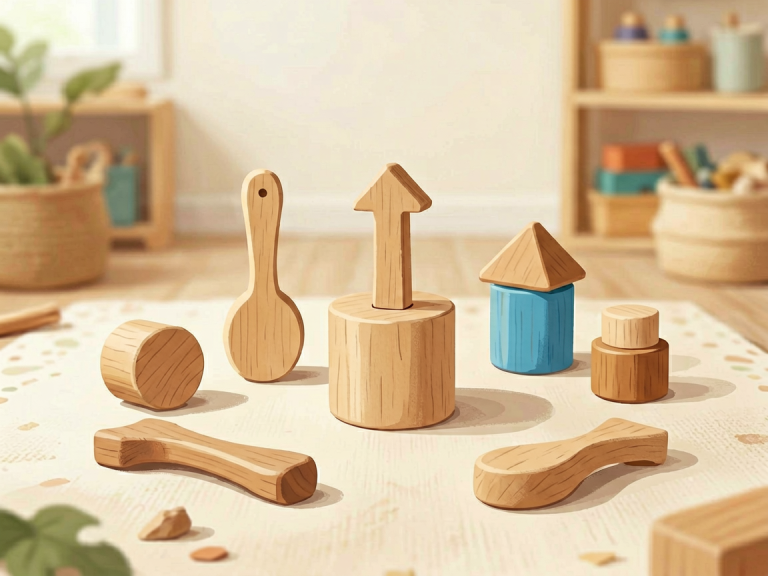
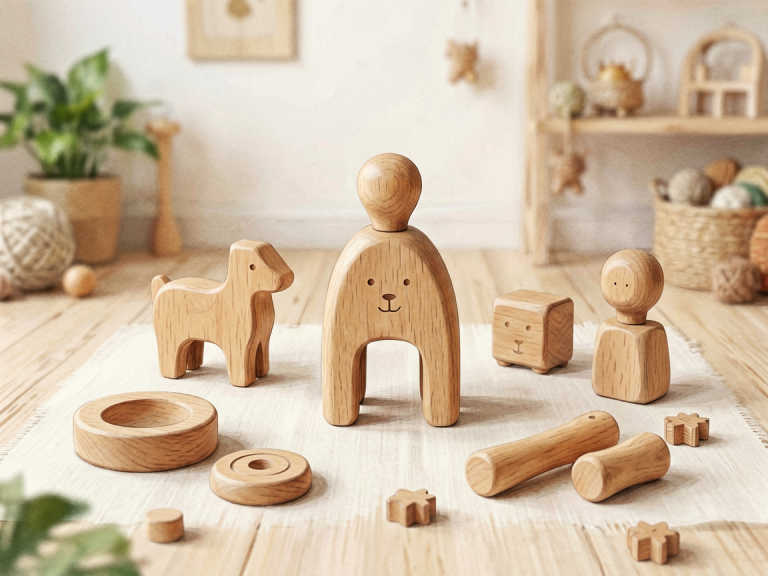
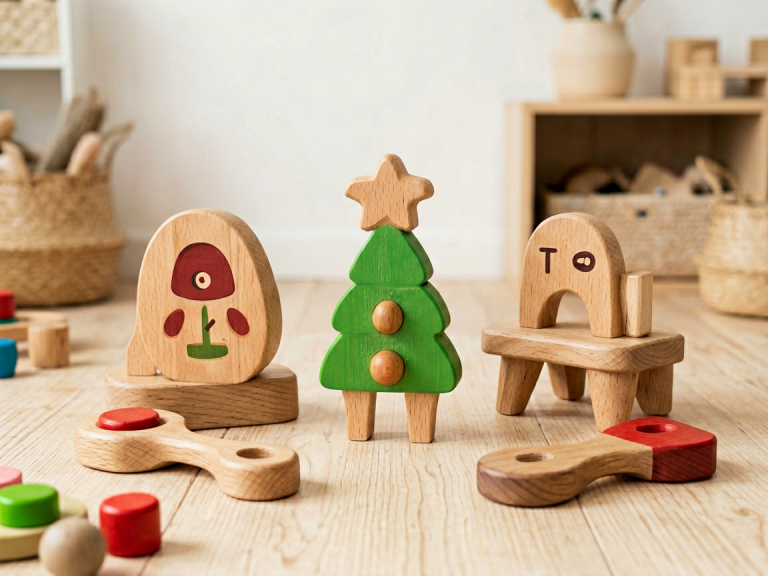
Consider a toy with a single function: a plastic phone that chirps when a button is pushed. The infant quickly learns “push button = sound.” That is a closed equation. There is no further mystery. The brain, hungry for novelty, moves on. Contrast this with a set of wooden blocks. A six-month-old might simply grasp and mouth them. A ten-month-old may knock them over. An eighteen-month-old may stack them. A three-year-old may build a castle. The same physical object supports radically different forms of play at different ages, which is the hallmark of high play value. It grows with the child.
Limited-play-value toys also fail to support the development of executive function, the mental skill used for planning, focus, and impulse control. Open-ended toys require a child to decide: What will I do with this? Should I stack the block high or put it inside the cup? Should I shake it softly or hard? Each choice is a small exercise in decision-making. A passive toy makes no such demand. It simply performs, and the child’s role is reduced to that of a spectator. Over time, an environment filled with such toys can even train children to expect external entertainment rather than creating their own engagement. That is a dangerous habit to form in the first two years of life.
The Hidden Costs of Overstimulation
Another insidious consequence of limited-play-value toys is overstimulation. Many of these products are designed to maximize sensory noise: flashing LEDs, loud synthesized melodies, unpredictable vibrations. While a single drum beat might interest a newborn, a barrage of unrelated stimuli can overwhelm a developing nervous system. Instead of promoting focused exploration, such toys fragment attention. The baby’s eyes dart from light to light, ears hear randomly changing tones, and no cohesive experience forms. Research on cognitive development suggests that babies learn best when they can make sense of their environment through predictable, contingent feedback—that is, when their own actions cause a clear and consistent result. A toy that randomly flashes different colors and sounds without reference to the child’s actions provides chaotic feedback. It undermines the very sensorimotor learning that infants need.
Moreover, the overstimulation from such toys can interfere with social play. A baby playing with a responsive adult—rolling a ball back and forth, or making a block tower together—learns turn-taking, emotion sharing, and language. But when an electronic toy takes center stage, the adult’s role often shifts from play partner to mechanic, someone who points out buttons and tries to keep the toy functioning. The interpersonal interaction, the most valuable “toy” for a baby, is replaced by a one-way broadcast. The cost is not just boredom; it is a missed opportunity for attachment and communication.
Recognizing the Signs of Limited Play Value
So how can a parent, overwhelmed by marketing, identify toys with limited play value before bringing them home? Look for these red flags.
First, ask whether the toy has a single clear purpose that does not depend on the child’s imagination. If a toy is a plastic fire truck that only rolls forward or back, and it cannot be loaded, unloaded, taken apart, transformed, or used in unexpected ways, its play value is capped very early. If a toy is a plush bear that says “I love you” when squeezed, the play script is already written. There is no room for the child to invent.
Second, consider whether the toy requires the child to do something or merely to watch something happen. Toys with batteries, motion sensors, and pre-recorded sounds often fall into the “watch” category. They perform for the baby. A simple wooden car, on the other hand, does nothing until the child pushes it. The child is the actor, the cause, the agent. This is the core of developmental play.
Third, think about the toy’s longevity. Will it still be interesting next month? Next year? Limited-play-value toys are usually fad-driven, tied to a popular cartoon character or a viral YouTube video. Their appeal depends on external branding rather than on the child’s internal developmental needs. When the character fades from popularity, the toy becomes worthless to the child. In contrast, a set of nesting cups is timeless because it appeals to fundamental motor and cognitive challenges that never go away.
Fourth, be suspicious of toys that do too much. If a toy has twenty buttons and performs twelve different songs, it may claim to be “educational,” but in reality it offers scattered, superficial experiences. High-quality toys are often beautifully simple: a ball, a set of rings, a shape sorter, fabric textures, pots and pans. The more a toy does automatically, the less a child has to do mentally.
Choosing Better: Principles for Meaningful Toy Selection
The antidote to limited play value is not to stop buying toys, but to choose wisely. A simple set of principles can guide any parent.
Principle one: prefer open-ended materials. Blocks, stacking cups, balls, soft animals without electronic parts, pieces of fabric, cardboard boxes, and wooden spoons all have the virtue of being manipulable in endless ways. They do not prescribe a single use. A cardboard box can be a hat, a bed for a doll, a fort, a drum, or a race car. That is limitless play value.
Principle two: minimize electronic features. With the possible exception of carefully designed musical instruments (real tambourines, xylophones, or shakers), battery-operated noise and lighting are more likely to distract than to educate. If a toy can survive happily without a battery, it is probably a better choice.
Principle three: choose toys that encourage the child’s own actions. A toy should respond to the baby, not the other way around. A ball responds to a push by rolling. A cup responds to a drop by making a satisfying clatter. These cause-and-effect relationships teach physics and agency. The baby learns that she can influence the world, which is the foundation of confidence and curiosity.
Principle four: keep toys developmentally matched. A six-month-old does not need a complex puzzle. A twelve-month-old does not need a remote-control car. The best toy for a given age is one that offers a small but surmountable challenge—hard enough to stretch the mind, easy enough to encourage effort. This is how play becomes “flow,” that deeply satisfying state of absorption.
Finally, remember that the infant’s most powerful toy is the attentive adult. A parent who plays peek-a-boo, sings, or rolls a ball provides relational play value that no object can match. When we focus too much on selecting toys, we risk forgetting that toys are simply tools for interaction. The very best “toy” in a baby’s life is a human face that lights up in response to the baby’s smile.
Conclusion: Less Noise, More Wonder
The next time you stand in the toy aisle, dazzled by plastic and blinking promises, pause and ask yourself: “Does this toy invite my child to act, imagine, and discover? Or does it merely perform for her?” The answer will often reveal that the most expensive, most advertised toy has the least to offer. Choosing toys for your baby is not about buying the newest gadget or keeping up with commercial trends. It is about creating an environment that respects the baby’s dignity as a learner, a thinker, and a creator. By rejecting limited-play-value toys, we reject a passive culture of entertainment and choose instead to nurture active, open-ended, soulful play. And in that play, babies do not just amuse themselves—they grow. They learn that their hands can shape the world, that their voices can make things happen, that their ideas are worth exploring. That is the ultimate play value, and it cannot be bought. It must be cultivated. So give your baby a cardboard box, a wooden ladder, a set of cups, and your full attention. You will be surprised how far they will go.