How to Choose a Toy: A 10-Minute Decision Framework for Parents
Most toy purchases are not decided by a child’s interests. They are decided in about eleven seconds, in an aisle or a scrolling feed, by a box. The box has a character on it, the character is doing something exciting, and the price is not outrageous enough to force a conversation. Then the toy comes home, gets twenty minutes of attention, and migrates to the bottom of the toy bin.
That pattern is not a character flaw in your kid and it is not bad luck. It is a predictable result of buying on presentation instead of fit. This guide is a decision framework you can run in about ten minutes, before you pay, that answers one question honestly: will this toy still be in use in three months? It is written for the parent standing in a store, the grandparent shopping online at 11 p.m., and the caregiver who has been asked for “the thing from the video.”
Why most toy purchases go wrong
Toys fail at home for four reasons, and only one of them is about the toy itself.
The toy does one thing. A toy that performs a single trick — a light flashes, a phrase plays, a figure spins — delivers its entire value in the first session. There is nothing left to discover. Toys with staying power are the ones a child can use in several different ways on several different days.
The toy does the playing. The more a toy entertains by itself, the less the child has to do. A toy that beeps on its own schedule teaches a child to watch. A toy that waits for a decision teaches a child to decide.
The setup costs more than the play. If a parent has to assemble, charge, download, calibrate, or supervise closely, the toy gets used on days when everyone has energy — which is not most days.
The toy does not match the child you actually have. A child who wants to build will tolerate a lot of frustration to build. A child who wants to move will not sit through a forty-piece assembly. Fit beats quality every time; a mediocre toy that matches the child gets played with more than an excellent toy that does not.
Everything below is a way of testing those four failure modes before you spend money.
Step 1: Name the interest, not the toy
Before you look at products, finish this sentence with something specific: “Lately, this child spends their free time ______.”
Good answers sound like verbs: taking things apart, lining objects up, drawing faces, building ramps for cars, sorting small pieces by color, telling long stories with figures, negotiating rules with friends. Weak answers sound like product categories: “likes LEGO,” “into robots,” “wants a tablet.”
The verb tells you what the toy needs to support. A child who builds ramps for cars needs track, height, and weight — not another car. A child who sorts and arranges needs many small pieces and a surface to lay them out — not a single large playset. When you shop by verb, you filter out about 80 percent of what marketing puts in front of you, and you stop paying for features your child will ignore.
If you are buying for a child you do not see often, use the parent’s verb instead of your guess. One question — “what does she do when nobody is organizing her?” — is worth more than an hour of browsing.
Step 2: Treat the age label as a floor
Age grading is a safety statement, not a difficulty rating. In the United States, toys intended for children under three are subject to small-parts requirements, and manufacturers label products with the youngest age at which the toy is considered safe. That is why a well-made building set might carry a “3+” mark even though a five-year-old gets more out of it.
So the label answers “is this safe for my child to handle?” It does not answer “will my child enjoy this?” The practical reading is:
- Below the label, do not buy. This is the one rule with no flexibility, particularly for anything with small parts, magnets, or button batteries. If a toy is labeled for ages three and up, it does not belong in a home with a two-year-old who puts things in her mouth, even if the toy is a gift for her older brother. See our guide to choking hazards and age recommendations for how small parts are assessed.
- At the label, expect supervision. The toy is safe to use, not safe to leave with a child who has not yet learned the rules of it.
- Two or three years above the label is usually the sweet spot for construction toys, puzzles, and craft kits, where the age mark tracks small parts rather than challenge.
- Well above the label is a red flag for anything with real tools, heat, projectiles, or electronics. A toy that is physically demanding for a small child is not a growth opportunity; it is a frustration machine or a hazard.
If you want the longer version of this judgment call, we wrote a separate piece on avoiding age-inappropriate toys.
Step 3: Count the play patterns
This is the single most predictive question in the whole framework. Look at the toy and count how many different things a child can do with it.
A ride-on car: sit, push, ride. Three patterns, and two of them are the same motion. A set of wooden blocks: stack, sort, build a wall, build a road, make a tower for figures, knock it down, use a block as a phone, a car, a piece of toast. The block set has a higher ceiling because the child supplies the ideas.
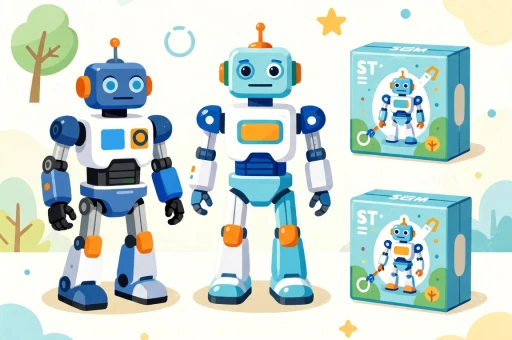
You do not need to be dogmatic about open-ended toys. A single-purpose toy with real depth — a good marble run, a doll with articulated joints, a set of realistic animal figures — can hold a child for years. What you want to avoid is the toy with high surface appeal and exactly one play pattern, because that is the toy that dies in a week.
A fast field test: imagine the toy in the hands of a child who is bored with the intended activity. Can it become something else? If the answer is no, you are buying twenty minutes.
Step 4: Judge the setup friction
Ask who does the work before play begins, and how many steps stand between the child and the first moment of play.
Low friction: a bin of blocks, a stack of paper and markers, a doll, a ball. The child walks over and starts. High friction: a kit that requires an adult to snap 200 pieces, a robot that needs a charged battery and a paired app, a craft set that needs a covered table and a drying rack.
High friction is not disqualifying — some of the best toys require setup — but it changes the math. A toy with fifteen minutes of adult setup will get used on weekends, not Tuesdays. If you are buying to fill weekday afternoons, buy low friction. If you are buying for a rainy Sunday together, buy high friction on purpose and treat the setup as part of the activity.
Related question: how much of the toy’s value depends on consumables? Kits that run out of clay, beads, or refill packs are a subscription in disguise. Check the refill price before you buy, not after.
Step 5: Run a five-minute safety pass
You do not need a lab. You need to check the hazards that cause the most serious injuries.
- Small parts. If any component fits inside a toilet-paper tube, it is a choking hazard for a child under three. Look for detached eyes, loose screws, and pieces that snap off under a firm pull.
- Magnets. Small high-powered magnets are a surgical emergency if two or more are swallowed; they find each other across loops of intestine. Avoid magnet toys in homes with children who still mouth objects, and inspect magnet sets for cracked housings.
- Button and coin batteries. These cause severe internal burns within hours of swallowing and are found in singing books, light-up wands, and remote controls. Prefer toys with screw-secured battery compartments, and read our piece on button batteries in toys.
- Projectiles, strings, and hinges. Anything that fires, anything with a cord longer than about seven inches, and anything that can pinch a finger.
- Materials and finishes. For teething-age children, prefer unpainted or water-based-finished wood and avoid vintage or inherited painted toys of unknown origin.
- Noise. Hold the toy to your own ear at the volume a child will use it. Toys held close to the face can be louder than they seem in a store.
Also do a two-second check for recalls on anything secondhand. Recalls are common, and a hand-me-down has no purchase receipt to trigger a notification.
Step 6: Do the cost-per-play math
Price tags compare badly across toys. A $90 building set and a $25 light-up wand are not in the same category of value, because one is a platform and the other is an event.
A rough formula: price ÷ realistic number of play sessions in the first year. A $25 toy used twice costs $12.50 a session. A $90 set used twice a week for a year costs about $0.90 a session. The expensive toy is the cheap one.
Two honest adjustments to that math:
Resale and hand-down value. Wooden blocks, quality building sets, and metal ride-ons hold value and survive siblings. Trend toys with licensed characters and thin plastic usually do not.
Parent cost. A toy that requires you to run it is not free. If the toy only works when an adult is driving the activity, price your own time into the decision, especially if you are buying it to buy yourself a quiet half hour.
If you are weighing a specific purchase right now, our “Worth It?” guides walk through this same math for individual toy categories — coding robots, STEM kits, craft subscriptions, and more.
Step 7: Look for the cheaper equivalent
Before you buy, ask what job the toy is doing and whether something cheaper does the same job.
Expensive STEM kits often bundle a small number of specialty parts with a booklet of projects — a bundle of craft materials plus a library book can cover the same ground for a fraction of the price. Elaborate play sets often sell the setting; a few figures plus a cardboard box frequently out-performs them, because the child builds the setting. Electronic “learning” toys often replace a conversation you could have for free.
This is not an argument against buying nice things. It is an argument against paying for packaging, licensing, and a play pattern your child will not use. Our alternatives guides exist for exactly this comparison, and a good example is longer-lasting alternatives to jigsaw puzzles.
Step 8: Decide where it will live
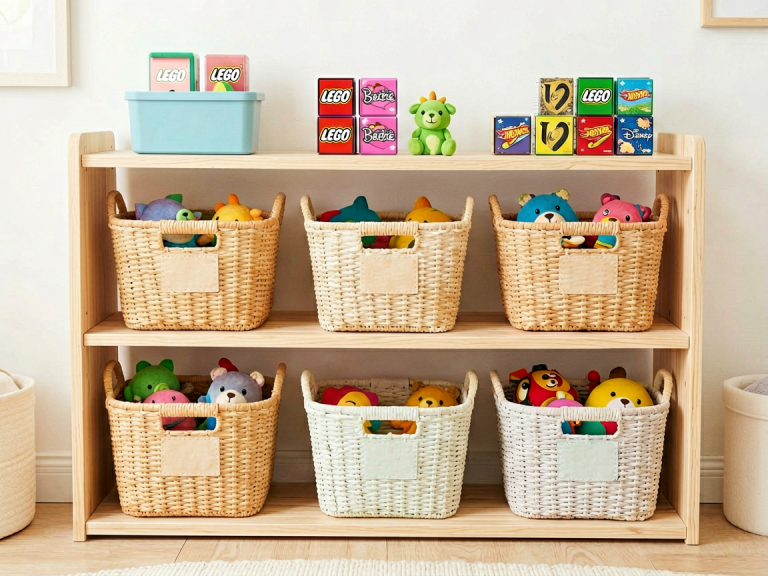
This step is skipped constantly and it is the reason so many good toys never get used. A toy without a home becomes clutter, and clutter suppresses play: children play less in a room where everything is a pile.
Before buying, answer: which shelf, bin, or basket does this go in, and does it fit? Does it need a flat surface larger than your table? Does it come with 300 pieces and no container? If the answer requires buying storage, add that to the price.
A useful rule for families with full toy boxes: one in, one out. If you cannot name the toy that leaves, you are not buying a toy, you are adding to the pile.
The one-page toy checklist
Run this before you pay. Any “no” is worth a second thought; two “no” answers mean walk away.
- Can I name the interest this supports, as a verb?
- Is my child at or above the age on the label — with no younger sibling in the house?
- Can I list at least three different ways to play with it?
- Will it get used on a normal weekday, not just a special one?
- Did I check small parts, magnets, batteries, cords, and noise?
- Does the cost per play session make sense next to the alternative?
- Is there a cheaper toy that does the same job?
- Do I know where it will live?
Ten minutes, eight questions. It will not make you immune to a persuasive box, but it will catch the purchases you would otherwise regret by Thursday.
When the right answer is no
Sometimes the correct decision is to buy nothing. Skip the purchase when the toy duplicates something already in the house, when the child’s interest is a two-week phase that a library book or a borrowed toy would satisfy, when the toy requires supervision you cannot promise, or when you are buying to end a negotiation rather than to add play.
A child who is told “not this one, and here is why” is learning the same skill this guide is teaching you: separating the pitch from the product. That lesson is worth more than the toy.
Frequently asked questions
What is the best age to introduce building toys?
Most children can start with large, lightweight blocks around 12 to 18 months, moving to standard interlocking bricks around four or five, once they have the hand strength and the patience to press pieces together. The age on the box is usually about small parts, not about readiness to build.
Are expensive toys better than cheap ones?
Not reliably. Price tracks brand, licensing, electronics, and packaging more than it tracks play value. A cheap toy with many play patterns beats an expensive toy with one, and the reverse is also true: a well-made single-purpose toy can be worth every dollar if the child is genuinely drawn to that activity.
How many toys should a child have?
Few enough that everything gets used, and few enough that the child can see what is available. Many families find that rotating a smaller set in and out of storage produces more play than adding more toys. If a bin has not been opened in a month, that is your signal.
Is it okay to buy a toy above my child’s age label?
Only when you are confident the hazard the label warns about is not present in your home — and only for toys whose risk is small parts rather than tools, heat, or projectiles. When in doubt, wait. A toy bought a year early is usually played with badly and then abandoned.
What is the biggest mistake parents make when buying toys?
Buying the toy the child asked for instead of the toy the child will use. The request is data about what caught their eye, not a forecast of what they will do at home. Translate the request into an interest, then buy for the interest.
If you want to go deeper on a specific category, start with our toy buying decisions section, or read the companion piece on how to compare two toys before you choose.
Fresh from the Guide
- Age-by-Age Toy Guide: What Actually Fits Kids From 1 to 10 2026年10月23日
- How to Compare Two Toys Before You Buy: 8 Criteria That Matter 2026年10月23日
- How to Choose a Toy: A 10-Minute Decision Framework for Parents 2026年10月23日
- Coding Toys for Kindergarteners: Worth the Hype or Just a Gimmick? 2026年8月27日
- Coding Toys for 13-Year-Olds: Are They Worth the Hype and the Price? 2026年8月27日
- Engineering Kits for Tweens: Choosing the Right Build 2026年8月6日