The Pitfall of Premature Playthings: How to Avoid Choosing Toys That 2-Year-Olds Outgrow Too Fast
Every parent of a two-year-old knows the familiar scene: a brightly colored, seemingly perfect toy is unwrapped with great fanfare, played with for exactly three days, and then relegated to a dark corner of the toy bin, never to be touched again. The child has moved on—not because the toy is broken, but because their rapidly developing brain has already outstripped its capacity to engage. Choosing toys that kids outgrow fast is a universal frustration for families with toddlers, yet it remains a surprisingly common mistake. The market is flooded with products marketed as “educational” or “age-appropriate,” but many of them are designed with a short shelf life in mind—either because they are too simplistic, too passive, or too narrowly focused on a single skill that a two-year-old masters in a matter of weeks. Understanding why certain toys become obsolete so quickly, and learning how to identify them before you hand over your credit card, can save not only money but also the precious resource of your child’s attention span. This article explores the developmental realities of two-year-olds, the common categories of toys that fail the test of time, the hidden costs of fast-outgrown toys, and practical strategies for choosing playthings that grow with your child rather than being left behind.
The Developmental Reality of a Two-Year-Old
To understand why so many toys are outgrown in a flash, we must first appreciate the breathtaking pace of development during the second year of life. A two-year-old is not a static being; they are a whirlwind of emerging skills. At 24 months, a child might be just beginning to string together two-word phrases, enjoy simple cause-and-effect toys, and engage in parallel play. By 30 months, the same child may be forming short sentences, solving simple puzzles, and showing preferences for pretend play. By 36 months, they are often capable of complex narratives, social cooperation, and fine-motor tasks like buttoning or drawing circles. This rapid progression means that a toy that perfectly matches a child’s skill level in January may feel babyish by April. The problem is exacerbated by the fact that toy manufacturers often target the lower end of an age range to capture the broadest market. For example, a toy labeled “ages 18 months to 3 years” may be designed primarily for the 18-month-old, leaving the older toddler bored. Additionally, two-year-olds are driven by novelty-seeking behavior. Their brains are wired to explore and learn, and once a toy’s mechanism is fully understood—whether it’s a shape sorter, a pop-up toy, or a musical instrument with limited sounds—the novelty wears off. The child’s cognitive hunger demands new challenges, and the toy that once delighted them becomes a relic. This is not a sign of a spoiled child; it is a hallmark of healthy development. Parents who fail to anticipate this trajectory will inevitably accumulate a pile of toys that are outgrown before their warranty expires.
Common Toy Categories That Become Obsolete Quickly
Not all toys are created equal when it comes to longevity. Certain categories are particularly notorious for being outgrown rapidly by two-year-olds, and recognizing them can help you avoid costly missteps.
Single-Skill Toys are perhaps the most obvious offenders. These are toys that teach exactly one concept or skill: a shape sorter that only has four shapes, a stacking ring set that offers no variation, or a simple push-button toy that does the same thing every time. A two-year-old might spend a week mastering the shape sorter, but once they can place every shape correctly without hesitation, the toy offers no further challenge. Similarly, a basic puzzle with four large pieces may be solved within minutes on the first day, and after that, the child’s interest plummets. While these toys serve a purpose during the brief window of acquisition, they fail to provide ongoing engagement. The solution is not to avoid them entirely, but to choose versions that offer progression—a shape sorter with multiple difficulty levels, a stacking toy that can be used for counting or color sorting later, or puzzles that increase in piece count as the child grows.
Passive Electronic Toys are another major category that kids outgrow fast. Think of the plastic tablet that sings the ABCs, the light-up button that plays a single tune, or the talking plush animal that repeats three phrases. These toys do the work for the child—they require no creative input, no problem-solving, and no physical manipulation beyond pressing a button. At first, the flashing lights and sounds are mesmerizing. But a two-year-old quickly learns the pattern: press button A, get sound B. The relationship is too simple, and once the novelty of the sound wears off, the toy holds no interest. Worse, these toys often have batteries that die, adding frustration. They also fail to support the complex, open-ended play that sustains a child’s attention over weeks and months. By contrast, a simple set of wooden blocks or a collection of play scarves offers infinite possibilities—stacking, sorting, hiding, building, pretending—and a child can revisit them with a new approach each time.
Themed Playsets that are too specific can also be outgrown quickly. A fire station playset with a single fire truck, a few figures, and a fixed scenario may captivate a child for a week of imaginative play, but once every possible firefighting story has been enacted, the set loses its magic. Two-year-olds are not yet capable of elaborate, self-sustaining narratives; they rely on adult modeling and simple scripts. A rigid playset that dictates a single storyline restricts their creativity. More durable are open-ended theme elements—a collection of animal figures, a generic playhouse, or a set of vehicles that can be used in multiple contexts. These allow the child to invent their own scenarios, and as their language and cognition develop, the toys take on new meanings.
The Hidden Costs of Fast-Outgrown Toys
Beyond the obvious financial drain—spending $30 on a toy that is abandoned in a month—there are subtler costs that affect both parent and child. First, there is the environmental cost. The toy industry produces vast amounts of plastic waste, and toys that are quickly discarded end up in landfills or, worse, in donation bins where they are often unsellable due to missing parts or worn-out batteries. Second, there is the storage cost. A house cluttered with outgrown toys creates visual noise and reduces a child’s ability to focus. When a toy bin overflows with options, a two-year-old may become overwhelmed and unable to engage deeply with any single item. Research in early childhood education suggests that fewer, better-chosen toys lead to more sustained, creative play. Third, there is the emotional cost for the parent. The cycle of buying, disappointing, and discarding can lead to a sense of frustration and guilt. Parents may feel they are failing to provide stimulating playthings, or they may resort to buying more toys in a futile attempt to capture the child’s fleeting interest. This can create a habit of consumerist parenting that does not serve the child’s developmental needs. Finally, there is the opportunity cost: every toy that is outgrown fast represents a missed chance to offer a toy that could have supported months of growth. For example, a simple wooden train set may start as a push-along toy, evolve into a track-building activity, and later become a tool for storytelling and spatial reasoning. The same money spent on a single-use electronic toy buys only a moment of passive entertainment.
Strategies for Choosing Long-Lasting Playthings
Given the pitfalls, how can a parent navigate the toy aisle wisely? The key is to adopt a mindset of “slow toys”—playthings that are open-ended, multi-functional, and adaptable to different developmental stages.
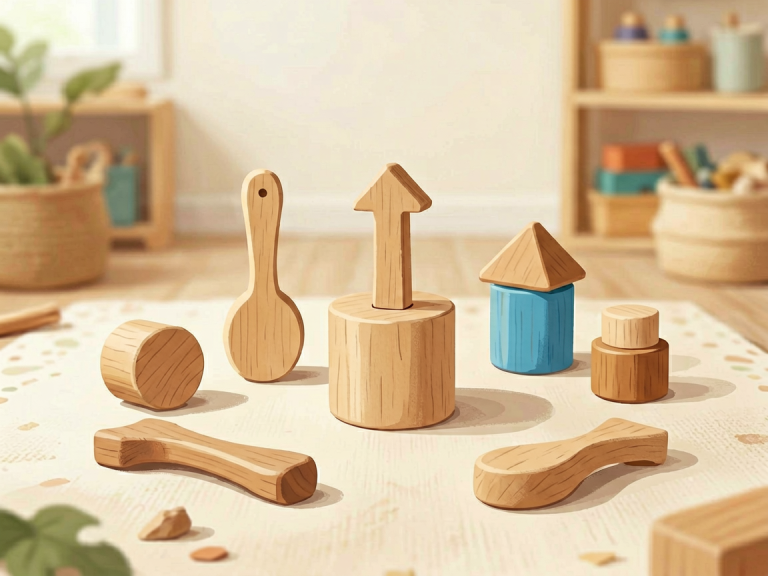
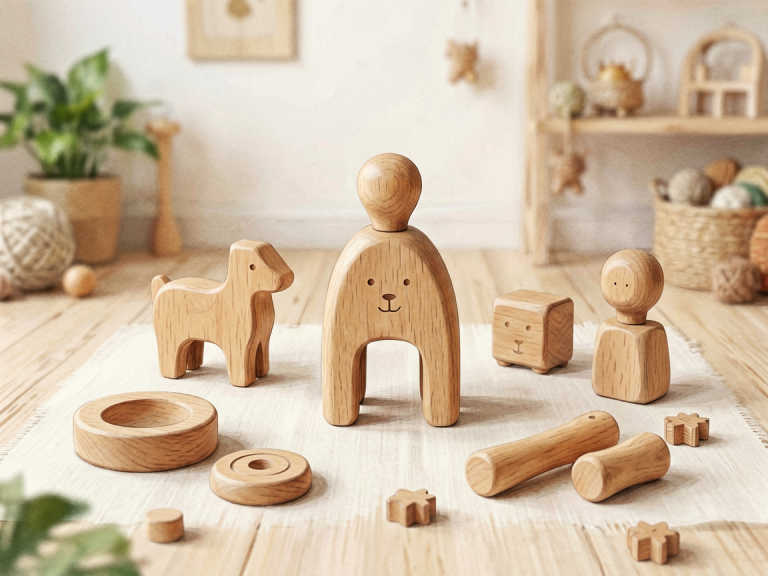
Prioritize open-ended materials. Blocks, stacking cups, loose parts (like safe wooden rings, fabric scraps, or large beads), play dough, and water/sand play tools are classic examples. These toys have no single correct use; a two-year-old can stack them, knock them down, sort them, fill them, and later use them in pretend play. A set of 20 wooden blocks can occupy a child for years, with the complexity of their constructions growing alongside their cognitive abilities. Similarly, a set of simple animal figures can be used for naming, sorting, counting, storytelling, and even sensory play with a tub of rice.
Look for toys that “grow” with the child. Many manufacturers now offer toys with multiple difficulty levels. For example, a shape sorter may have interchangeable panels with more complex shapes, or a puzzle may include a base that allows for increased piece count. Magnetic building tiles are another excellent choice: at two, a child may simply stick them together and pull them apart; at three, they may build simple structures; at four, they may create complex 3D models. When considering a purchase, ask yourself: “Will my child still want to play with this in six months? In a year? If the answer is no, reconsider.
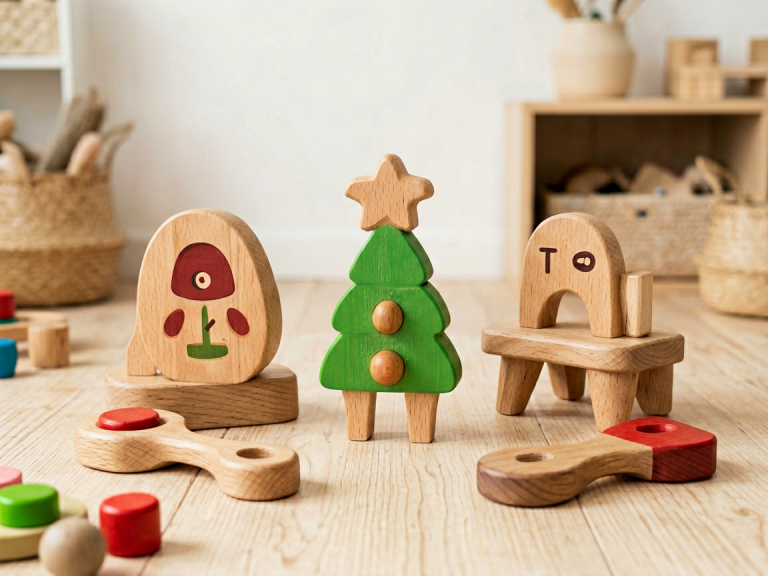
Avoid toys that do too much. The more a toy does on its own—singing, moving, flashing—the less a child has to do. The most durable toys are those that require the child’s active participation. Simple wooden trains, dolls, puppets, and pretend food items invite the child to imagine, create, and interact. Even a cardboard box can become a car, a house, or a spaceship, and it is free.
Borrow or buy secondhand. Because two-year-olds outgrow toys so fast, the secondary market is rich with barely used items. Toy libraries, consignment shops, and online marketplaces allow you to rotate toys without breaking the bank. This also aligns with the developmental reality: a child may be ready for a new challenge in a few months, and rather than storing a toy they’ve outgrown, you can pass it on and acquire something new.
Observe your child’s current interests. Instead of buying based on a label’s age recommendation, watch what your child gravitates toward in daily life. Do they love stacking pots and pans? Then a set of nesting cups or wooden blocks is a perfect fit. Do they enjoy imitating you while cooking? Then a simple play kitchen with a few utensils will serve them far longer than a fancy electronic oven. Aligning toys with genuine, observed interests increases the likelihood that the toy will be used for weeks, not days.
Embrace the “less is more” philosophy. A small, curated collection of high-quality open-ended toys is far more valuable than a mountain of single-use plastic. When a child has fewer options, they are forced to engage more deeply with each toy, discovering new ways to use it. This deep engagement is what prevents boredom and early outgrowing.
Conclusion
The journey of choosing toys for a two-year-old is fraught with the risk of selecting items that will be outgrown faster than a toddler’s attention span. Yet this challenge is also an opportunity—an invitation to think critically about what truly supports a child’s development. By understanding the rapid cognitive and physical changes of the second year, recognizing the common categories of toys that fail the test of time, and weighing the hidden costs of premature obsolescence, parents can make more intentional choices. The most successful toys are not the ones with the most bells and whistles, but the ones that invite a child to bring their own imagination, creativity, and evolving skills to the table. A simple set of blocks, a collection of fabric scraps, a few animal figures, and a sturdy cardboard box will outlast any electronic gadget, because they do not dictate play—they enable it. In the end, the best way to avoid choosing toys that kids outgrow fast is to choose toys that grow with the child, adapting to their changing mind rather than being left behind by it. The money saved, the space reclaimed, and the deeper engagement fostered are rewards that far exceed the fleeting thrill of a new purchase.