The Fast-Outgrow Trap: Why Many Toys for 18-Month-Olds Are Wasted and How to Choose Smarter
—
Introduction: The $50 Lesson
Every parent has been there. You walk into a brightly lit toy store, scan the shelves labeled “12–24 months,” and pick up a plastic activity table covered with buttons, lights, and sounds. It promises to teach numbers, colors, and animal noises. Your 18-month-old seems fascinated for exactly three days. By day four, the toy sits in the corner, untouched. By the next month, your child has moved on to crawling under chairs and banging pots. The expensive toy now serves as a dust collector.
This scenario is not a failure of your child’s attention span; it is a predictable consequence of choosing toys that children *outgrow fast*. For 18-month-olds, the developmental window is incredibly narrow. A toy that is perfectly engaging at 18 months can become boring, frustrating, or even developmentally irrelevant by the time the child turns 20 months. Understanding why this happens—and how to avoid it—can save money, reduce clutter, and actually support your toddler’s growth.
This article explores the phenomenon of “fast-outgrow toys,” the developmental reasons behind it, and actionable strategies for selecting playthings that offer long-term value for 18-month-olds—or at least for recognizing when a toy’s short shelf life is acceptable.
—
The Developmental Landscape at 18 Months: A Moving Target
To understand why some toys become obsolete so quickly, we must first appreciate what is happening inside a toddler’s brain and body at 18 months. This age sits at a unique crossroads between infant and preschooler.
Motor skills are exploding. At 18 months, most children can walk confidently, some can run, and many enjoy pushing, pulling, and climbing. Fine motor skills are still developing: they can grasp small objects with a pincer grip, but they lack the precision for tasks that require complex bilateral coordination. A toy that requires twisting a knob or stacking several small rings may be too advanced today but far too simple two months later.
Cognitive development is equally rapid. Eighteen-month-olds are in the sensorimotor stage (according to Piaget), transitioning to early symbolic thought. They love cause-and-effect toys—press a button, hear a sound—but they quickly learn the pattern. Once the novelty of a single action wears off, the toy loses all mystery. They also begin to engage in simple pretend play, but still heavily rely on concrete, physical experiences.
Language is just emerging. Many 18-month-olds understand far more than they can say. A toy that talks and names objects can be intriguing, but the child soon memorizes all the phrases. After that, the electronic voice becomes noise rather than a learning tool.
Social-emotional needs shift rapidly. At 18 months, children are often in a phase of intense exploration and separation anxiety. They want to be near a caregiver but also crave independence. Toys that require constant adult facilitation may frustrate both parties.
Because these domains change so fast—often on a weekly basis—a toy designed for a precise 18-month skill level may be outgrown within weeks. The key is recognizing which features accelerate that obsolescence.
—
Common Toy Categories That Quickly Lose Appeal
To illustrate the “fast-outgrow” problem, let us examine three categories of toys frequently marketed for 18-month-olds but notorious for short play spans.
1. Single-Function Electronic Toys
These include battery-operated pianos with only one melody, remote-controlled cars that move in one direction, or light-up wands that do one trick. At 18 months, a child may press the button 50 times in a row. Then they press it once more and realize nothing new happens. The toy offers no variation, no challenge, and no room for imagination. Within a week, it becomes background noise.
2. Low-Complexity Stacking or Sorting Toys
Many stacking rings, simple shape sorters, or nesting cups promise to teach colors and sizes. However, an 18-month-old can master a three-ring stacker in a single session. Once the child can place the rings in any order and the toy still stands (or falls predictably), there is nothing left to discover. The toy becomes an object to throw or ignore.
3. Passive Plush Toys with No Interactive Potential
Soft animals or dolls without movable parts, Velcro, or pockets might be comforting for cuddling, but they offer no challenge. An 18-month-old will hug a teddy bear for a few minutes, then drop it to chase a rolling ball. Unless the plush toy has some active feature (like a squeaker, a removable outfit, or a hidden mirror), it fails to sustain engagement.
—
Why Do Children Outgrow Toys So Fast? The Underlying Mechanisms
Understanding the *why* behind rapid toy outgrowing helps parents make better decisions. Here are the primary drivers:
The Curiosity Ceiling
Young children are natural scientists. They explore until they have fully mapped the toy’s input–output relationship. Once the toy’s repertoire is exhausted, the curious brain labels it “known” and moves on. Single-function toys have a very low curiosity ceiling.
The Skill Gap Shift
An 18-month-old’s motor and cognitive skills can leapfrog in a matter of weeks. A toy that was perfect when they could only grasp with a whole hand becomes trivial once they master finger dexterity. Conversely, a toy that was just slightly beyond their ability two weeks ago suddenly becomes too easy. The window of “Goldilocks challenge”—not too hard, not too easy—is alarmingly narrow.
The Lack of Open-Endedness
Toys that prescribe a single correct outcome (e.g., “press the red button to hear ‘A’”) are closed-ended. Open-ended toys—like blocks, dolls, or modeling clay—have no fixed goal. They allow the child to create, change, and reinterpret. Closed-ended toys are outgrown when the child finishes the predetermined challenge.
The Overstimulation Trap
Paradoxically, some toys are so stimulating that they cause rapid habituation. Bright flashing lights and loud sounds produce a strong but fleeting dopamine release. After repeated exposure, the brain tunes out the sensory overload. The child becomes literally bored of the excitement.
—
How to Spot a “Fast-Outgrow” Toy Before Buying
To avoid wasted purchases, use these diagnostic questions when evaluating any toy for an 18-month-old:
- Does it have only one way to play? If yes, expect a short lifespan.
- Can the child modify the toy’s behavior? If pressing a button always produces the same sound, the toy offers no variation.
- Does it require batteries? Not always a problem, but many battery-operated toys are designed for a single trick.
- Does the toy do the work for the child? A toy that automatically moves or makes noise leaves no room for the child to be the agent.
- Is the skill required too narrow? For example, a shape sorter with exactly four shapes teaches shape recognition, but once mastered, it offers no further cognitive growth.
- Would the toy still be interesting in two months? Imagine your child’s skills advancing: will this toy still offer a challenge or become a relic?
Conversely, toys that score well on these criteria—multiple play modes, no fixed outcome, ability to combine with other toys, and the need for child-initiated action—tend to have longer staying power.
—
Strategies for Choosing Toys with Longer Lifespan
Fortunately, it is possible to select playthings that survive the 18-month explosion and remain engaging into the second and third year of life. Here are four evidence-based strategies:
1. Prioritize Open-Ended Materials
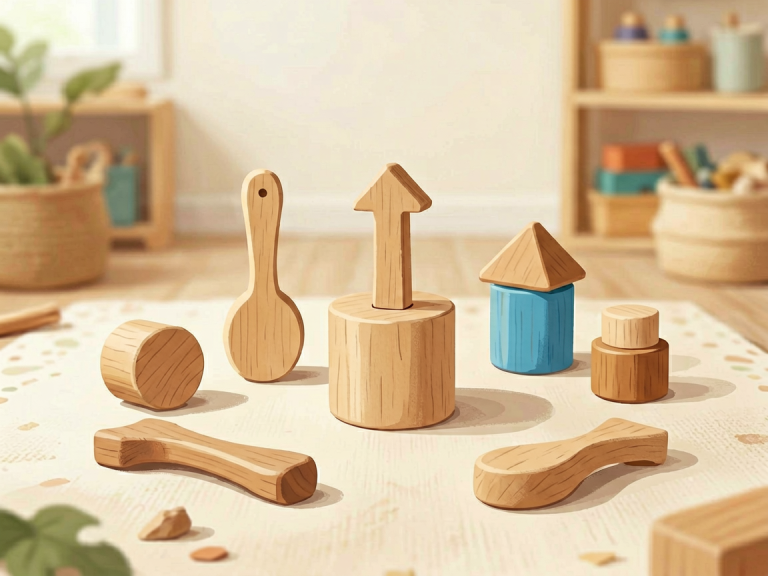
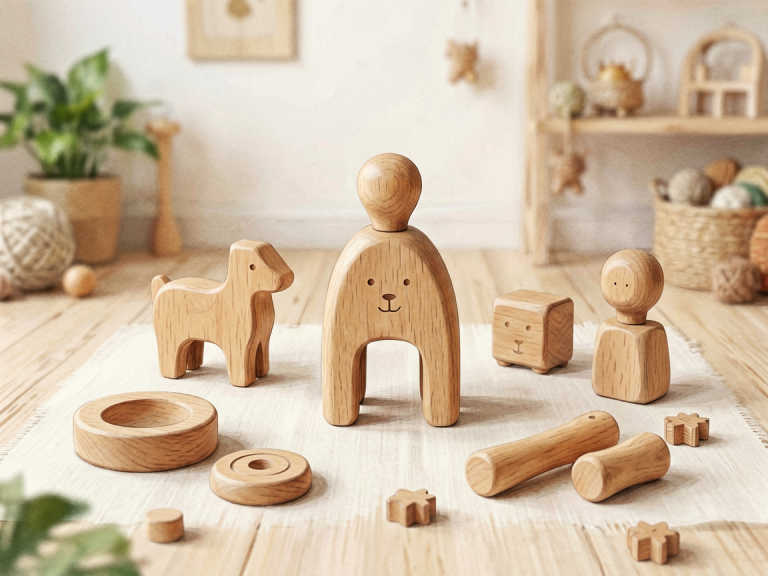
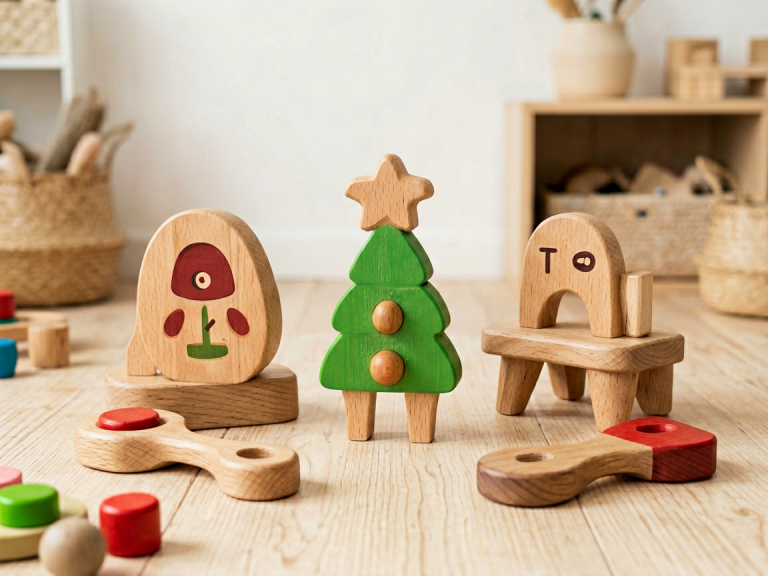
Wooden blocks, large interlocking bricks (like Duplo), stacking cups, and simple dolls or animal figures can be used in countless ways. An 18-month-old can stack blocks haphazardly; at 24 months, they can build towers and pretend they are castles. These toys grow with the child because they do not dictate how to play.
2. Look for “Slightly Ahead” Challenges
Instead of buying a toy that precisely matches the child’s current ability, choose one that requires slightly more advanced skills but can be simplified. For example, a set of plastic nuts and bolts that require twisting—while frustrating at first—can be used as simple building pieces before the child learns to twist. This extends the toy’s useful life.
3. Embrace Real-World Objects and Imaginative Props
Pots, wooden spoons, empty boxes, scarves, and cardboard tubes are free, endlessly variable, and never outgrown. They have no prescribed function. An 18-month-old can bang a pot, then later pretend it is a drum, a hat, or a car. Parents should not underestimate the value of “junk” play.
4. Rotate, Don’t Abandon
Even the best toys can lose appeal if left in the same bin for weeks. A rotation system—storing half the toys out of sight and swapping them every week—restores novelty without buying new items. This strategy effectively resets the “outgrow clock” for many toys.
—
The Role of Open-Ended Play: Why Less Is More
In the quest for toys that do not outgrow fast, one principle shines above all: open-ended play. Educational researchers have long emphasized that the most valuable playthings are those that encourage *divergent thinking*—the ability to generate multiple solutions. For 18-month-olds, open-ended toys include:
- Stacking cups – can be nested, stacked, used as scoops, or as “hats.”
- Ride-on toys without electronics – push cars that the child powers; they develop gross motor skills and allow for multiple play scenarios.
- Large floor puzzles with knobs – as the child’s fine motor skills improve, they can tackle more pieces.
- Sensory bins – rice, sand, water (supervised) with scoops and containers offer endless exploration and change every time.
Open-ended toys are not immune to being outgrown entirely, but they evolve. A set of stacking cups remains interesting for months because the child invents new ways to use them. Compare that to a shape sorter: once all shapes are matched, the game is over.
—
When “Fast Outgrow” Is Actually Fine
Before condemning all short-lived toys, recognize that some fast-outgrow toys serve a purpose. A simple musical toy that provides five minutes of laughter during diaper changes is not a waste if it makes caregiving easier. The problem is not a toy that a child outgrows quickly—it is when that toy cost $40 and was expected to last a year.
Parents can consciously purchase “transitional” toys with the understanding they will be donated or passed on within weeks. The key is to set realistic expectations. For instance, a cheap set of plastic keys that rattle might entertain an 18-month-old for a few days. That is fine—as long as you paid $2 and not $20.
Furthermore, some families embrace a minimalist or Montessori-inspired approach, deliberately avoiding fast-outgrow toys altogether. This is a valid choice but not the only path. The crucial lesson is to match your purchase to the toy’s likely lifespan, not to its marketing label.
—
Conclusion: Buying for the Child, Not for the Shelf
Choosing toys for an 18-month-old in a market flooded with “developmental” gadgets can be overwhelming. The reality is that most children will outgrow many toys faster than parents expect. This is not a sign that the toy was bad or that the child is difficult—it is a natural consequence of rapid growth.
By understanding the developmental trajectory, identifying closed-ended versus open-ended designs, and adopting rotation strategies, parents can reduce waste, save money, and foster deeper engagement. The best toy for an 18-month-old is one that invites the child to act as the agent, creator, and explorer—not a passive recipient of light and sound.
The next time you see a brightly colored package promising “3–5 years of learning,” ask yourself: will this still be fun in two months? If the answer is no, walk away. Your 18-month-old will thank you by playing—with a cardboard box instead.
(Word count: approximately 1,520 words)