The Hidden Cost of Fast-Outgrown Toys: A Guide for Parents of 1-Year-Olds
Introduction
Every parent of a one-year-old knows the scene: you spend hours researching the “perfect” toy, unwrap it with excitement, and watch your child engage with it for exactly three days before tossing it aside forever. The bright, musical plastic phone that once elicited squeals of joy becomes a forgotten relic under the sofa. The squishy stacking rings that seemed so developmentally appropriate are now too simple for your rapidly growing explorer. This phenomenon—toys that children outgrow almost as soon as they learn to use them—is particularly acute during the first year of life, when developmental leaps occur in weeks rather than months. But why does this happen, and more importantly, how can you choose toys that will not become instant clutter? The answer lies in understanding the unique trajectory of a one-year-old’s growth and in rethinking what “good play” really means. In this article, we will dissect the biology behind rapid outgrowth, identify the worst offenders on the toy shelf, and provide a practical framework for selecting lasting, investment-worthy playthings that grow *with* your child rather than being left behind.
—
Understanding a 1-Year-Old’s Rapid Development
To appreciate why certain toys become obsolete so quickly, you must first grasp the remarkable pace at which a 12-to-24-month-old transforms. At twelve months, many children are still mastering the pincer grasp, taking their first wobbly steps, and beginning to understand cause and effect in its most basic form—press a button, hear a sound. By fourteen months, walking is often steady, fine motor control has improved, and the child is now actively experimenting with object permanence, container play, and simple problem-solving. By eighteen months, language is exploding, symbolic play emerges (a block becomes a phone), and the child craves challenges that involve matching, sorting, and manipulation. By two years old, the same child may be building simple towers, engaging in pretend play with dolls, and using tools like crayons and spoons with increasing precision.
This developmental sprint means that a toy designed for the precise motor needs of a 12-month-old—say, a simple rattle that requires only shaking—is already intellectually and physically insufficient by 14 months. The rattle does not grow; it remains static. Meanwhile, the child’s neural circuits are making new connections every day, seeking novelty, complexity, and open-ended interaction. The mismatch between static toy design and dynamic child development is the primary reason for fast outgrowth. A one-year-old is not a miniature version of a six-month-old; she is a rapidly evolving organism whose cognitive, physical, and social needs change faster than most toy manufacturers account for. Recognizing this reality is the first step toward making smarter purchases.
—
The Common Offenders: Toys That Are Outgrown Almost Immediately
Despite the abundance of “age-appropriate” labeling, many toys marketed for 1-year-olds have a built-in expiration date that arrives after mere weeks. Understanding these categories will save you both money and storage space.
Single-Action Electronic Toys
The classic example is the light-up, music-playing toy that does only one thing: press a button to trigger a jingle. At first, the cause-and-effect revelation is fascinating. But once the novelty of the sound wears off—which can happen in as little as three or four sessions—the toy offers nothing else. The child cannot repurpose it, cannot combine it with other toys, and cannot adjust its difficulty. It is a one-trick pony that quickly becomes background noise. Worse, many such toys inhibit creativity because they dictate the play script rather than allowing the child to invent one.
Overly Simple Manipulatives
Stacking cups and rings are classic toys for a reason: they teach spatial reasoning and hand-eye coordination. However, the simplest versions—four identical rings that fit onto a single peg in only one order—are mastered by most 12-month-olds in a matter of days. Once the child can stack them perfectly every time, the challenge disappears. Without incremental complexity (e.g., varying ring sizes, irregular pegs, or multiple stacking bases), the toy loses all educational value and becomes just another piece of plastic.
All-in-One “Activity Centers”
Those large plastic tables with dozens of buttons, knobs, and sliding beads look like a parent’s dream: everything a baby needs in one place. In reality, the sheer number of features can be overwhelming, but more critically, none of the activities evolve. The same spinner, the same sliding door, the same squeaky wheel—they all offer a fixed level of difficulty. A child quickly memorizes every possible interaction and then has no reason to return. Moreover, these centers take up enormous floor space, making their short lifespan particularly wasteful.
Plush Toys with Limited Interaction
Soft stuffed animals are comforting, but for a curious 1-year-old, they are often passive. Unless the plush toy has multiple textures, hidden sounds, or removable parts (like a soft doll with a zippered pocket), it tends to be ignored after the initial hug. A child at this age wants to *do* things to the toy, not merely hold it. A stationary teddy bear offers no problem to solve, no action to repeat, and no variation.
Toys Tied to a Single Skill
Some toys are designed to target exactly one developmental milestone—for example, a shape sorter with only four large shapes. While this is perfect for a 9-month-old just learning to match, by 14 months the child may be ready for more complex sorting (by color, by pattern, by size) or for puzzles with 8–12 pieces. A four-shape sorter, once mastered, becomes boring. The same is true for simple push-and-pull toys without any additional mechanism: the child learns to walk while pushing a cart, but once walking is stable, the cart offers no further challenge.
—
Criteria for Longevity: What Makes a Toy Last Through the Toddler Years
Given that many toys are designed to be outgrown, how can you identify the rare gems that will captivate your child for months or even years? The answer lies in a set of specific, evidence-based criteria that prioritize open-endedness, adaptability, and developmental depth.
Open-Ended Play Potential
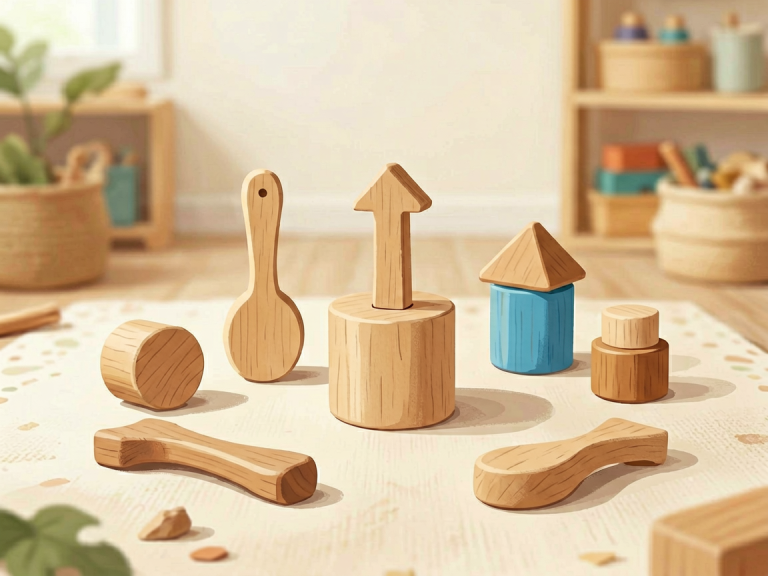
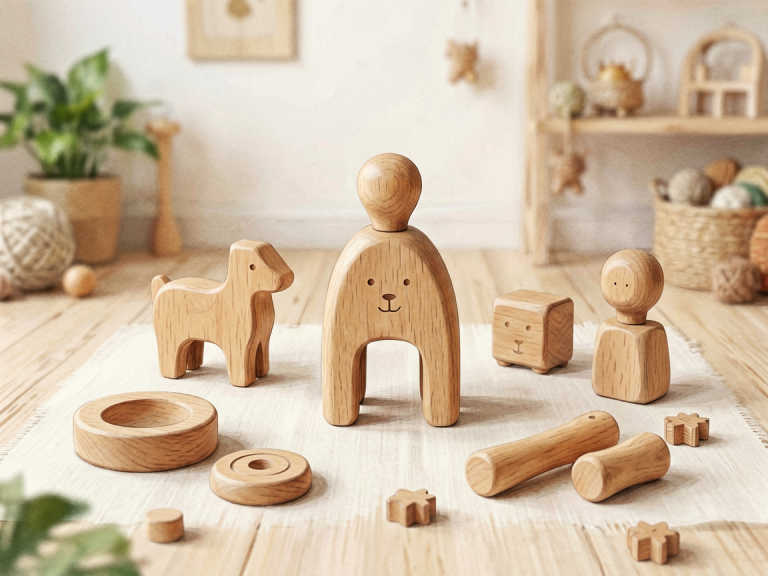
The single most important predictor of a toy’s longevity is whether it can be used in multiple ways that both increase in complexity and allow for creative reinterpretation. Classic examples include wooden blocks, nesting cups with multiple sizes, and simple doll figures with few defined features. A set of 20 wooden blocks, for instance, can be used at 12 months for banging and stacking, at 15 months for building simple towers, at 18 months for pattern creation and color sorting, and at 24 months for symbolic play (a block becomes a car, a phone, a cake). Each new stage of development unlocks a new way to interact with the same object. This “depth” is the opposite of the shallow engagement offered by a single-action toy.
Graduated Complexity
The best toys for 1-year-olds are those that contain an inherent progression of difficulty. Consider a shape sorter that includes not only basic geometric shapes but also irregular ones, or a stacking toy that has rings of varying weights and textures. A puzzle set that starts with three-piece knobbed puzzles and expands to twelve-piece interlocking puzzles allows the child to grow *into* the toy system. Look for toys that are described as “grows with the child” or that come with multiple stages of play instructions. Montessori-inspired materials, such as the “pink tower” or “brown stairs,” are designed precisely to offer a sequence of increasing challenge within a single, elegant set.
Multi-Sensory and Manipulative
Toys that engage multiple senses—touch, sight, hearing, and even smell—tend to hold attention longer because they offer varied feedback. A simple wooden ring that is smooth, heavy, and cool to the touch changes sensation as the child explores it, whereas a plastic rattle offers only one consistent feel. Moreover, toys that require active manipulation (pulling, twisting, turning, threading) rather than passive observation (watching lights flash) build stronger neural connections and encourage repeated engagement. A lacing bead set, for example, invites the child to practice fine motor skills in a progressively challenging way: first just sliding beads along a string, later sorting by color or shape, and eventually lacing them in patterns.
Encourages Social and Pretend Play
A toy that supports interaction with parents or peers will have a longer shelf life because human interaction is infinitely variable. Simple puppets, dollhouses with furniture, toy food sets, and play cars with people figures allow for narrative creation. At 12 months, a child may just bang the car on the floor; at 18 months, they may push it around and say “vroom”; at 24 months, they can create a whole story about driving to the store. This social and imaginative dimension expands the toy’s utility far beyond its initial physical features.
Durability and Aesthetics
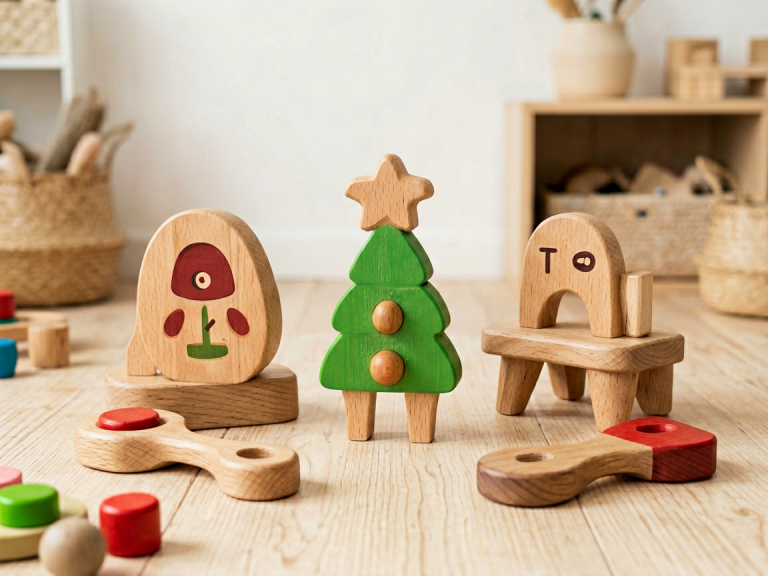
While not directly related to developmental fit, a toy’s physical quality matters for longevity. Well-made wooden toys can be passed down through siblings, while flimsy plastic pieces break easily and become frustrating. Moreover, aesthetically pleasing toys—those made with natural materials, muted colors, and simple designs—tend to appeal to children over a longer period because they do not overstimulate. A plastic fire truck with flashing lights and loud sirens may be exciting for a day, but it quickly becomes overwhelming; a simple wooden truck, by contrast, can be a quiet companion for years of imaginative play.
—
Practical Tips for Parents: Shopping Strategies and Mindset
Armed with developmental knowledge and criteria for longevity, you can now approach the toy aisle—or the online marketplace—with a more discerning eye. Here are actionable strategies to minimize waste and maximize play value.
Prioritize Quality over Quantity
The biggest trap for parents of 1-year-olds is buying too many toys, often in an attempt to provide “enrichment.” In reality, a small number of high-quality, open-ended toys—say, a set of large wooden blocks, a few nesting cups, a simple doll, and a push toy—will offer more sustained engagement than a room full of single-use plastic items. Rotating toys periodically (keeping only 5–7 out at a time) also prolongs interest, as the “new” toy after a two-week break feels fresh again.
Look for Secondhand and Heirloom Quality
Since 1-year-olds outgrow toys so quickly, the secondhand market (thrift stores, Facebook Marketplace, consignment sales) is a goldmine for gently used, high-quality toys. Wooden puzzles, building sets, and natural fiber dolls often last for decades and can be found at a fraction of retail price. Additionally, consider toys that can be passed down: a sturdy wooden train set, for example, might entertain a 1-year-old with simple pushing and later captivate a 3-year-old with track-building and storytelling.
Observe Your Child’s Actual Play Patterns
Rather than buying based on marketing or age labels, watch how your child naturally plays. Does she prefer to fill containers and dump them out? Then a set of graduated nesting bowls will be far more valuable than a remote-control car. Does he love to bang objects together? Then a small wooden hammer and pounding bench (which also teaches cause and effect and hand strength) will have longer appeal than a soft plush toy. Tailoring purchases to observed interests ensures that the toy aligns with current developmental focus, and if the child’s interests shift, open-ended toys can be repurposed.
Avoid “Developmental Promises” without Evidence
Many toys claim to boost cognitive skills, language, or motor abilities, but these claims are often unsupported. Instead of being swayed by buzzwords, ask yourself: Does this toy require my child to think actively, solve a problem, or invent something? If the answer is no, it is likely a short-term entertainer. Focus on toys that encourage the child to be the agent—the one who pushes, pulls, balances, and decides—rather than the passive recipient of stimulation.
Embrace the Reality of Fast Outgrowth
Finally, accept that some degree of outgrowth is inevitable and even healthy. A toy that perfectly matches a 12-month-old’s ability will naturally become too easy by 15 months. The goal is not to find toys that last forever, but to choose toys that offer a *broad* developmental window. Investing in a few excellent pieces that span the entire first two years—like a simple doll, a set of blocks, and a push toy—will yield far more playtime per dollar than a dozen disposable toys. And when you do need to rotate or pass along toys that have been outgrown, do so without guilt. The child’s growth is the point; the toys are merely tools.
—
Conclusion
Choosing toys for a 1-year-old is an exercise in foresight, patience, and a deep understanding of child development. The trap of fast-outgrown playthings is real—and expensive—but it is also entirely avoidable. By recognizing that a one-year-old is a moving target of abilities, by avoiding the most common short-lived toy categories, and by prioritizing open-ended, adaptable, and durable playthings, you can build a toy collection that supports your child’s growth without cluttering your home. The best toys are not the ones that do the most but the ones that leave room for a child to do the most. So next time you face a bin of flashing, singing plastic gadgets, remember: a simple set of wooden blocks may not win an award for flashiest packaging, but it will be the toy your child returns to again and again—long after the batteries in the other toys have died, and long after the outgrown toys have been donated. Invest in depth, and your child will reward you with years of meaningful play.