Beyond the Hype: How to Choose Toys for 3-Year-Olds That Won’t Be Outgrown in a Flash
Introduction
Every parent knows the scene: you carefully select a colorful, age-labeled toy for your three-year-old, present it with a flourish, and watch as the child either loses interest within minutes or masters it completely by the next afternoon. The toy, once promising hours of engagement, is now shoved into a corner, ignored, or—worse—broken in an attempt to make it “harder.” This frustrating cycle is not a sign of a spoiled child or a lazy shopper; it is a direct consequence of the rapid cognitive, physical, and emotional development children undergo between ages two and four. For three-year-olds, the gap between “just right” and “too easy” can be shockingly narrow.
The challenge for caregivers is not merely to find a toy that occupies a child for an afternoon, but to invest in playthings that grow with the child, that adapt to their expanding abilities, and that continue to spark curiosity beyond the first week. This article explores why many traditional toys for three-year-olds become “outgrown” so quickly, identifies common categories of these fast-fading favorites, and offers practical strategies for selecting toys that deliver lasting value—both developmental and economic.
Why Three-Year-Olds Outgrow Toys So Fast
The age of three is a developmental whirlwind. A child at this stage is emerging from toddlerhood into early childhood, with language skills exploding, fine and gross motor abilities refining daily, and imaginative play beginning to dominate. What fascinated them at age two—a simple shape sorter, a light-up musical cube—now feels trivial because their brain is hungry for more complex challenges. They want cause and effect, narrative, manipulation, and social interaction.
Consider the cognitive shift: a three-year-old can typically recognize basic colors, count to ten, follow two-step instructions, and engage in pretend play. They are also beginning to understand rules and sequences. A toy that offers only one action—pressing a button to hear a sound—will be mastered in minutes and discarded. The toy has no “depth.” It does not allow for variation, problem-solving, or creativity. The child’s brain, however, is rapidly building neural connections; it craves novelty and adaptive difficulty. If the toy cannot change, the child moves on.
Additionally, three-year-olds are developing autonomy and a sense of mastery. They take pride in “doing it myself.” A toy that is too simple offers no sense of achievement; one that is too complex leads to frustration. The sweet spot is narrow, and many mass-market toys miss it entirely by aiming for the lowest common denominator of a wide age range (e.g., “ages 2–4”)—which often means they are too easy for the older end of that range from day one.
The Usual Suspects: Toy Categories That Become Obsolete Fast
*Single-Use Electronic Toys*
Perhaps the most notorious offenders are battery-operated toys that perform a single trick: a talking flashlight that says one phrase, a dancing robot that repeats the same five moves, a plastic phone that beeps when you press a button. These toys promise instant gratification, but because the interaction is entirely predetermined, the child exhausts all possible outcomes in minutes. There is no room for the child to invent a new game. The toy cannot be repurposed. Once the novelty fades, it becomes a static object.
Many parents find that such toys end up in a bin, their batteries dead, their buttons worn, yet the child has not played with them in months. The problem is not just boredom; it is that the toy fails to engage any of the higher-order thinking that three-year-olds are starting to develop—planning, sequencing, storytelling, or even simple problem-solving.
*Character-Branded, Single-Purpose Playsets*
A fire truck that only rolls and makes siren sounds, or a princess castle that has only one function—to place a figure inside—are classic examples. The child loves the character or theme initially, but the play possibilities are rigid. After half an hour of rolling the truck back and forth, the three-year-old wants to know: can it carry something? Can it go through a tunnel? Can we pretend there is a fire? The toy offers no answer. Its design is static.
Furthermore, branding often ties the toy to a specific media property (a cartoon, a movie). When the child’s interest shifts to a different show—which happens quickly at this age—the toy loses all emotional resonance. It becomes a relic of a past obsession, unwanted.
*Puzzles and Games with Limited Difficulty Levels*
Simple jigsaw puzzles with three to six pieces are wonderful for a two-year-old, but by three years old, many children can confidently complete a twelve-piece puzzle. If the only puzzle you provide has six pieces, it will be solved once and then set aside. The same applies to matching games, memory cards with only four pairs, or simple shape sorters with large openings. These toys have a ceiling; once the child reaches it, the toy has no further value.
It is not that puzzles are bad—far from it. The issue is choosing a puzzle with a fixed, low difficulty that does not allow for progression without buying a new one. Three-year-olds need challenges that are just slightly beyond their current capability, with room to grow.
How to Choose Toys That Grow with Your Three-Year-Old
*Prioritize Open-Ended Play*
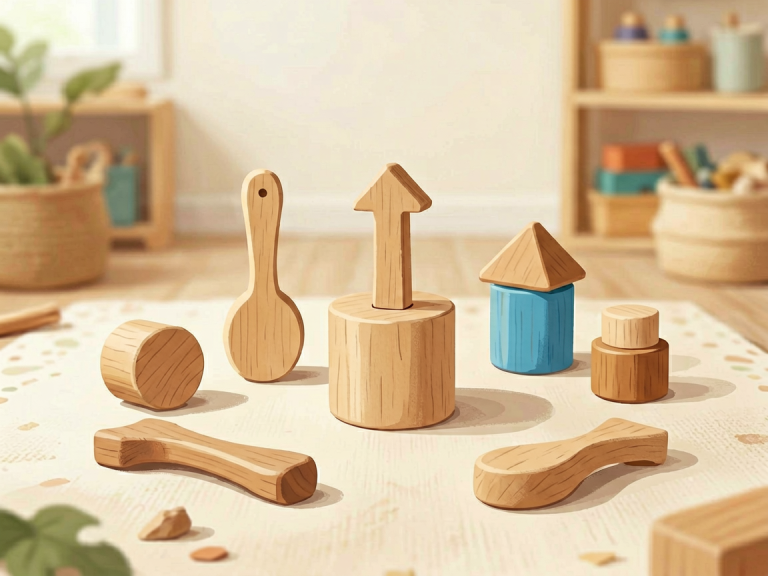
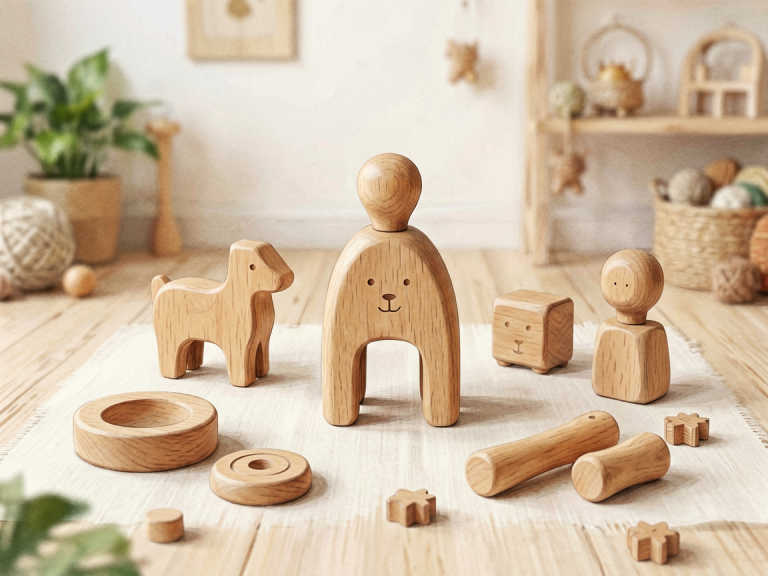
The single most effective strategy for avoiding toys that are outgrown quickly is to choose open-ended toys. Open-ended toys have no single “correct” way to play. They can be used in countless ways, limited only by a child’s imagination. Blocks, for example: wooden blocks can be stacked into towers, arranged into roads, used as pretend food, sorted by color, counted, knocked down, combined with other toys, and turned into castles. A three-year-old can play with blocks at age two (piling them up) and still find them challenging at age five (building symmetrical structures or creating narratives around a block city).
Other excellent open-ended options include:
- Play dough (with simple tools like plastic knives, rolling pins, and cookie cutters)
- Magnetic tiles or building sets (magnetics allow for more complex 3D structures)
- Dolls and action figures with minimal features (clothes can be changed, stories invented)
- Art supplies (crayons, washable markers, paper, scissors, glue sticks, paint)
- Loose parts (pompoms, bottle caps, fabric scraps, cardboard boxes—supervised, of course)
Open-ended toys may not look as flashy on the shelf, but they earn their price tag many times over because they adapt to the child’s growing skills. A three-year-old might start by simply rolling a ball of play dough, but months later they will be forming letters, animals, or pretend food. The toy itself does not become obsolete; the child’s use of it evolves.
*Look for Toys with Adaptive Difficulty*
Some toys are designed specifically to offer multiple levels of challenge. For instance, a shape-sorter with different sized openings and corresponding blocks that require spatial reasoning can be used at first just to drop shapes in, later to sort by color, and later still to match patterns. Similarly, stacking rings can be used simply for stacking, but also for sequencing by size or for color sorting.
Construction toys like LEGO Duplo are a prime example: a set with a few bricks might become boring quickly if it only builds one model, but a larger set or a basic brick collection allows for endless configurations. Many Duplo sets include special pieces (wheels, windows, people) that inspire different types of builds. As the child grows, they can follow more complex instructions or create their own designs. The toy does not top out.
*Consider Toys That Encourage Social and Cooperative Play*
A toy that is played alone often gets boring faster than one that involves another person. Board games designed for ages three and up—simple ones like “Hoot Owl Hoot!” (cooperative, no reading required) or “My First Orchard” (a cooperative memory game)—can be played over and over because the outcome changes each time. The child is also learning turn-taking, patience, and strategy, which develop slowly, keeping the game fresh.
Other social toys include simple puppets, toy telephones for pretend conversations, and play kitchen sets where children can take turns “cooking” and “serving.” These toys thrive on interaction, and as the child’s language and social skills grow, the play becomes richer.
*Invest in Quality over Quantity*
A common mistake is buying many cheap, single-purpose toys because they are inexpensive. However, ten cheap toys that are each played with for a week collectively provide less total engagement—and more clutter—than one high-quality, open-ended toy that lasts for years. Quality does not necessarily mean expensive; it means durable, versatile, and thoughtfully designed. A set of plain wooden blocks may cost more than a plastic car, but the blocks will be used daily for months or years, while the car gathers dust.
*Avoid the Trap of “Next Stage” Hype*
Many toys are marketed with labels like “ages 3–5,” but this is often a marketing gimmick. A toy labeled for ages 3–5 may contain parts too difficult for a three-year-old (small pieces, complex rules) or too simple for a five-year-old. Instead of trusting the box, observe the child’s current abilities. What can they do? What do they struggle with just a little? Choose a toy that challenges the struggle, but not one that is so easy it is immediately mastered.
Practical Tips for Evaluating a Toy’s Longevity in the Store
Before buying a toy for a three-year-old, ask these questions:
- Can this toy be used in more than one way? If the answer is “no,” pass.
- Does the toy allow the child to be the creator, not just a button-pusher?
- Will the toy still be interesting in six months, or will the child have exhausted all possibilities?
- Can the toy be combined with other toys (blocks, dolls, art supplies) to create new experiences?
- Is the toy made of materials that can withstand rough play? (Three-year-olds are not gentle.)
Conclusion
Choosing toys for a three-year-old that won’t be outgrown within weeks requires a shift in perspective: from seeking the latest, most exciting plaything to seeking the most adaptable one. The goal is not to entertain the child passively, but to provide tools for the child to entertain themselves actively. Open-ended toys, construction sets, art materials, and cooperative games are the best investments because they evolve with the child’s cognitive leaps.
The frustration of buying a toy only to see it abandoned is avoidable. By understanding the developmental trajectory of a three-year-old—their need for challenge, their drive for mastery, and their expanding imagination—parents and caregivers can curate a small collection of toys that remain fresh, engaging, and educational for much longer. In the end, the best toys are not the ones that do the most; they are the ones that let the child do the most. And that is a lesson that will serve families well beyond the toddler years.