How to Choose LEGO Style Bricks for Preschoolers: A Parent’s Complete Guide
Building blocks are more than just toys—they are the foundation of creativity, problem-solving, and fine motor development. For preschoolers aged three to five, the right set of LEGO-style bricks can turn playtime into a rich learning experience. However, with countless brands, sizes, themes, and price points on the market, choosing the perfect set can feel overwhelming. This article provides a comprehensive, step-by-step guide to help parents and caregivers select the most appropriate LEGO-style bricks for their little builders. From safety concerns to cognitive benefits, we will explore every angle so you can make an informed decision that sparks joy and supports early childhood development.
Safety First: Size, Material, and Durability
The golden rule for preschoolers is bigger is safer. Young children have a natural tendency to explore with their mouths, and small parts pose a serious choking hazard. When selecting LEGO-style bricks, always check the packaging for age recommendations. Reputable brands explicitly label products for ages 3+ or 4+, which means the bricks are large enough to prevent accidental swallowing. Typical “Duplo” size (roughly twice the dimensions of standard LEGO bricks) is ideal for little hands. These oversized bricks are easy to grasp, snap together with minimal force, and are too large to fit through a standard toilet paper roll—a common safety test.
Material quality matters just as much. Look for bricks made from non-toxic, BPA-free, and phthalate-free plastics. Many trusted brands comply with international safety standards like ASTM F963 (USA) or EN71 (Europe). Even if you opt for a generic or off-brand set, verify that the product meets these certifications. Additionally, inspect the bricks for sharp edges, rough seams, or weak points. High-quality bricks have smooth, rounded corners and snap together firmly without cracking. Avoid sets with detachable small accessories (like tiny wheels, eyes, or decorations) unless they are fully embedded in a larger piece.
Durability is another key factor. Preschoolers are notoriously rough with toys—they drop, throw, and stomp on bricks. Choose bricks that can withstand repeated falls and heavy play. Well-known brands like LEGO Duplo, Mega Bloks First Builders, or Mould King’s junior lines are engineered to resist deformation. While cheaper alternatives may save money upfront, they often warp over time, making it difficult for small fingers to connect them. Investing in sturdy bricks means longer-lasting play and fewer frustrations.
Age-Appropriate Complexity: Balancing Challenge and Frustration
Preschoolers’ cognitive and motor skills are rapidly developing, but their attention spans remain short. The ideal LEGO-style set should offer a level of challenge that encourages exploration without causing frustration. For three-year-olds, start with simple, chunky bricks that allow free-form stacking. Sets with a few basic shapes—rectangles, squares, and a few arches—are perfect. Avoid sets with intricate instructions or dozens of tiny specialized pieces. At this age, the goal is to build tall towers, simple walls, or imaginative creatures without worrying about matching a picture.
For four- and five-year-olds, you can introduce introductory themed sets that include a few recognizable characters or vehicles. For example, a Duplo fire truck with a firefighter figure or a farm set with animals lets children engage in pretend play while building. However, keep the piece count modest—between 20 and 50 pieces is ideal. Too many pieces overwhelm a preschooler, leading to messy piles and lost motivation. Also, look for sets that offer multiple build possibilities. Some boxes include simple instructions for three or four different models, which extends replay value and teaches basic problem-solving. Alternatively, purchase a larger “bucket” of classic bricks and let your child’s imagination lead the way. The freedom to create anything is often more valuable than following rigid instructions.
Theme and Interest: Fueling Imagination
Preschoolers learn best when they are genuinely excited. Pay attention to your child’s current obsessions—whether dinosaurs, princesses, trucks, or animals—and choose a theme that aligns with their interests. LEGO-style brick manufacturers produce countless themed lines: LEGO Duplo has everything from Disney characters to construction vehicles; Mega Bloks offers licensed sets like Paw Patrol or Thomas & Friends; and budget brands like Sluban or JMBricklayer also produce affordable themed options. A child who loves trains will spend hours connecting tracks and building stations, while a little animal lover will cherish creating a zoo.
However, avoid the trap of over-specialization. A hyper-specific set (e.g., a exact replica of a castle from a movie) may lose appeal after the initial excitement fades. Instead, choose sets that combine a theme with open-ended elements. For instance, a jungle-themed set that includes a few tree pieces, an animal, and a simple vehicle allows for storytelling beyond the instruction manual. Similarly, a set with basic bricks plus a theme-based figurine encourages the child to build environments around the character. Rotating a few themed sets over time keeps play fresh without overwhelming the toy shelf.
Educational Value: More Than Just Fun
Beyond entertainment, LEGO-style bricks offer profound educational benefits for preschoolers. When choosing a set, consider how it can support developmental milestones:
- Fine motor skills: Bricks that require precise alignment and pressing help strengthen hand muscles and improve hand-eye coordination. Look for sets with a variety of shapes—squares, rectangles, and curves—to challenge different grasps.
- Spatial awareness and geometry: As children stack and arrange bricks, they learn concepts like balance, symmetry, and volume. Sets that include wheels, axles, or simple hinges introduce basic mechanics.
- Problem-solving and persistence: Open-ended building teaches trial and error. When a tower falls, a child learns to adjust the base or distribute weight. Sets that include a few “challenge cards” (e.g., “build a bridge that can hold a toy car”) can guide this learning without dictating every step.
- Language and social skills: Playing with siblings or parents encourages cooperation, negotiation, and vocabulary building (e.g., “Can you hand me the blue brick?”). Choose sets with multiple figures or elements that promote role-playing, such as a family set or a doctor’s kit.
To maximize educational impact, avoid sets that are entirely step-by-step replicas of a single model. While following instructions has some benefits, too much direction stifles creativity. Opt for sets that blend structured and free play, offering a small model idea booklet but primarily consisting of generic bricks.
Brand and Compatibility: Mixing and Matching
The term “LEGO style” refers to bricks that are compatible with genuine LEGO Duplo bricks. Compatibility is crucial because it allows you to expand your child’s collection over time without being locked into a single brand. However, not all generic bricks fit perfectly. Some are slightly larger or have looser connections, leading to frustrating stacks that collapse. To ensure a smooth building experience, stick to brands known for high compatibility: LEGO Duplo is the gold standard; Mega Bloks First Builders are generally well-regarded; and brands like Hubelino and Mould King also maintain good tolerances. Read online reviews from other parents to confirm fit before purchasing.
When mixing brands, be aware of color consistency. Some generic bricks have slightly different hues or glossy finishes, which may bother perfectionist children (or parents). If you care about a uniform look, buy all bricks from the same line. For most preschoolers, however, a rainbow of mismatched colors actually adds to the fun and visual stimulation.
Price is another consideration. Genuine LEGO Duplo sets cost significantly more than unbranded alternatives. If your budget is tight, consider buying a “base” set of high-quality Duplo bricks (around 50–100 pieces) and supplementing with cheaper generic bricks for bulk. Just test a few generic pieces first to ensure they click securely. Also, watch for sales on online marketplaces or second-hand bundles. Many parents sell gently used Duplo sets at a fraction of the retail price, and since these bricks are built to last, second-hand can be an excellent value.
Storage, Organization, and Portability
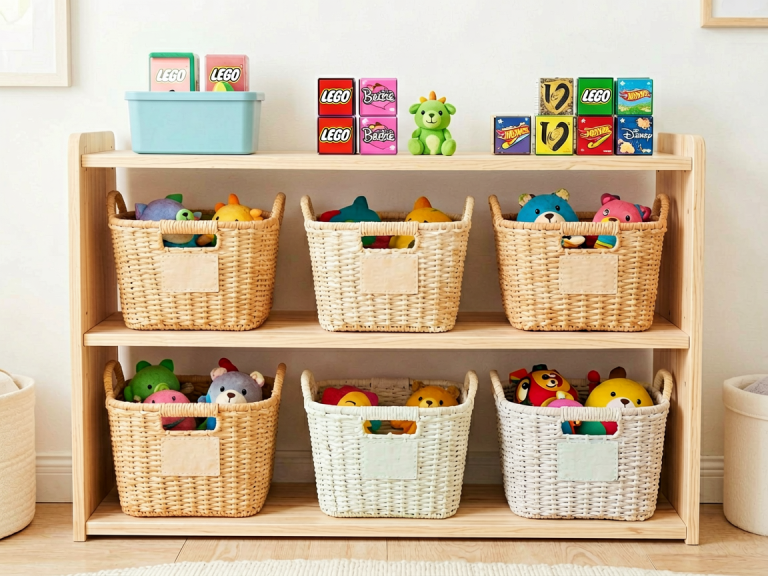
Preschoolers’ playrooms quickly become chaotic. Choose LEGO-style bricks that come with practical storage solutions. Many sets include a plastic tub or a reusable bag, which makes cleanup a breeze. For larger collections, invest in separate storage bins with compartments or stackable drawers. Sorting bricks by color or shape can turn cleanup into a learning game—for example, “Let’s put all the red bricks in this box!”.
Portability matters for families on the go. Lightweight sets with a carrying case or a mat that can be rolled up (like a playmat with a drawstring) allow your child to bring their building fun to the car, a restaurant, or a grandparent’s house. Avoid sets with hundreds of tiny loose pieces for travel; instead, pack a small selection of 15–20 bricks in a zippered pouch.
Final Recommendations: A Balanced Approach
Choosing LEGO-style bricks for preschoolers doesn’t need to be complicated. Start with a large, safe, and versatile starter set of around 40–80 chunky bricks in bright, primary colors. Supplement with a themed set that matches your child’s favorite interest. As your child grows, add a few specialized pieces—wheels, windows, simple figures—to expand possibilities. Always prioritize safety certifications and compatibility, and don’t be afraid to mix brands if quality is assured.
Remember that the true magic of building blocks lies not in the set itself but in the hands that bring it to life. A simple pile of identical bricks can become a spaceship, a castle, or a birthday cake in the mind of a preschooler. Your role is to provide the raw material, a safe environment, and a little encouragement—and then step back to watch the creativity unfold. Happy building!