A Parent’s Complete Guide: How to Choose LEGO‑Style Bricks for Toddlers
Introduction: Why Brick Play Matters for Toddlers
Toddlerhood is a magical window of rapid cognitive, motor, and sensory development. During these early years, children explore the world through touch, manipulation, and imaginative trial‑and‑error. Building bricks—whether genuine LEGO® or compatible “LEGO‑style” blocks—offer an ideal medium for fostering fine motor skills, spatial awareness, problem‑solving, and creative expression. However, not all bricks are created equal, and selecting the right set for a child between one and three years old requires careful consideration of safety, developmental appropriateness, durability, and engagement.
This guide unpacks every critical factor parents, caregivers, and educators should evaluate before purchasing LEGO‑style bricks for toddlers. From material safety and piece size to educational value and storage solutions, you will learn how to transform a simple pile of plastic into a powerful learning tool while keeping your little builder safe and delighted.
—
1. Safety First: Non‑Toxic Materials and Choking Hazards
When toddlers are involved, safety is non‑negotiable. The first step in choosing any building set is verifying that the bricks are free from harmful chemicals and designed to prevent ingestion or injury.
1.1 Material Certification and Labeling
Look for bricks made from virgin ABS (acrylonitrile butadiene styrene) plastic or high‑quality, BPA‑free, phthalate‑free alternatives. Many reputable LEGO‑style manufacturers, such as Mega Bloks (a Mattel brand), Duplo (LEGO’s own line for younger builders), and Cobi, prominently display safety certifications like ASTM (American Society for Testing and Materials) F963 or EN71 (European standard for toy safety). Avoid cheap, unbranded bricks sold in unmarked bulk bags, as they may contain lead, cadmium, or other toxic additives that can leach out when a toddler inevitably mouths the pieces.
1.2 Size Matters: The “No‑Choke” Rule
The single most important safety criterion is piece size. Traditional LEGO bricks (approximately 9.6 mm tall) are not suitable for toddlers because they easily fit into a small child’s mouth and airway. Instead, choose bricks that exceed the small‑parts test cylinder (1.25 inches in diameter and 2.25 inches in length). LEGO Duplo is the gold standard here: each brick is about twice the size of a standard LEGO brick—roughly 2 cm high and 4 cm long—making them impossible to swallow. Mega Bloks First Builders and comparable toddler‑friendly lines also use oversized, chunky shapes designed for tiny hands.
Even with large bricks, always supervise play and regularly inspect pieces for cracks or breakage. A broken piece can produce small, sharp fragments that pose a choking hazard.
1.3 Edge and Surface Quality
Run your fingers along every brick before giving it to your child. The edges should be smooth, with no burrs, sharp corners, or rough mold lines. High‑quality manufacturers round the corners of toddler bricks intentionally. Also check that the bricks connect and disconnect with moderate force—if they are too tight, a toddler may get frustrated or hurt their fingers; if too loose, the structures will collapse too easily, leading to discouragement.
—
2. Age‑Appropriate Design: What to Look For in Toddler Bricks
Toddlers develop motor skills in a predictable sequence: gross motor (pushing, pulling) comes before fine motor (pincer grasp, twisting). The bricks you choose should align with your child’s current abilities.
2.1 Size and Weight for Sensory Feedback
For a 12‑ to 18‑month‑old, choose bricks that are large enough to be grasped with two hands—like Duplo’s 2×2 or 2×4 blocks. The weight should be substantial enough to provide proprioceptive feedback (the sense of body position and movement) but light enough that a child can lift and stack several without tipping over. Mega Bloks’ lightweight plastic is a good option for early stackers, while Duplo’s slightly heavier, denser bricks give a satisfying “clack” when joined.
2.2 Baseplates and Starter Sets
Many toddler brick sets include a rigid baseplate (a large, flat board with studs). Baseplates anchor the construction and prevent towers from sliding on a smooth floor. For beginners, a small baseplate (e.g., 8×8 studs) is ideal—large enough to build on but portable enough to carry. Some sets have raised edges to contain the bricks, which helps toddlers who are still learning coordination.
2.3 The Role of Colors and Themes
Toddlers are drawn to high‑contrast, bright primary colors (red, blue, yellow, green). While pastels might look beautiful in a nursery, they do not stimulate visual development as effectively. Choose sets that include a variety of vivid hues to help your child learn color names and discrimination. Themed sets—such as animals, vehicles, or farm scenes—add narrative context, encouraging language development as you describe the “pig” or “truck” your toddler builds.
Avoid sets with many tiny decorative pieces (e.g., miniature flowers, eyes, wheels) that could detach and become choking hazards. Instead, look for specialty bricks that are molded as one solid piece, like a Duplo elephant or a Mega Bloks train engine.
—
3. Compatibility and Expandability: Future‑Proofing Your Investment
Toddlers grow fast, and what is perfect for a 15‑month‑old may bore an almost‑three‑year‑old. Choosing a system that expands with your child saves money and reduces toy clutter.
3.1 Inter‑Brand Compatibility
Not all LEGO‑style bricks work together. LEGO Duplo is designed to be incompatible with standard LEGO (the studs are too large for standard pieces to grip, though some creative builders manage to force them). Mega Bloks and Cobi have their own locking systems. For maximum longevity, stick to one ecosystem. Duplo is the most versatile because it seamlessly transitions into standard LEGO: around age four, children can start combining Duplo bases with small LEGO figures and accessories (the Duplo studs match the spacing of LEGO standard bricks, even if the connection is slightly loose).
If budget is a primary concern, consider generic “big brick” brands that claim compatibility with Duplo. Always test a sample first—cheap knockoffs often have imprecise stud dimensions, leading to bricks that either fall apart or require excessive force to connect.
3.2 Adding Complexity Gradually
Start with a simple bucket of 40–60 basic bricks. After a few months, introduce specialty pieces (wheels, windows, arches) and then a small figure set. By age two and a half, your toddler can follow simple picture instructions (like a Duplo “first animals” booklet) that teach sequencing and following directions. This gradual increase in complexity prevents overwhelm and sustains curiosity.
—
4. Educational Value: More Than Just Stacking
While stacking towers is fun, carefully chosen bricks can target many developmental milestones.
4.1 Fine Motor and Bilateral Coordination
Stacking bricks requires hand‑eye coordination, a pincer grip, and the ability to align studs with cavities. For toddlers struggling with dexterity, look for bricks with extra‑large studs (like those in the Duplo “My First” series) or bricks that can be linked end‑to‑end to form trains or snakes—these movements strengthen the same muscles used later for writing.
4.2 Early Math and Spatial Reasoning
Counting bricks aloud, sorting by color, and building symmetrical structures introduces foundational math concepts. LEGO‑style bricks naturally teach one‑to‑one correspondence (one stud fits into one cavity) and early addition/subtraction (two bricks plus one brick makes three). Choose sets that include number bricks (Duplo number train sets) or shape‑sorting bricks (triangles, half‑circles) to expand spatial vocabulary.
4.3 Language and Social Skills
Building with a caregiver or sibling fosters turn‑taking, negotiation (“I want the red one!”), and descriptive language (“big tower,” “blue roof”). Themed sets—like a Duplo doctor’s office or farm—promote pretend play, which is crucial for theory of mind development. If your toddler is shy, a brick set that includes a “friend” figure can become a safe conversational partner.
4.4 Problem‑Solving and Resilience
Toddlers will inevitably watch their tower tumble. The right bricks make falling safe and encourage trying again. Choose sets that are sturdy enough to withstand a few knocks—Duplo structures hold together well yet separate easily. Praise the process (“You worked so hard on that!”), not the outcome, to build a growth mindset.
—
5. Durability, Clean‑ability, and Storage
Toddler toys endure constant drooling, throwing, and stepping on. Your bricks must survive.
5.1 Material Hardness and Colorfastness
High‑quality ABS plastic resists cracking and fading. Cheaper bricks may yellow after a few weeks in sunlight or develop a powdery residue. To test, scratch a brick gently with a coin—if it leaves a visible scratch, the plastic is too soft. Also check that colors are molded into the plastic, not painted on. Painted bricks (common in very cheap sets) chip easily, and the flakes can become choking hazards.
5.2 Cleaning Protocols
Bricks should be dishwasher‑safe (top rack, low temperature) or easy to hand‑wash in warm soapy water. Avoid bricks with glued‑on felt or paper labels—they will disintegrate. Duplo and Mega Bloks can be tossed into a mesh laundry bag and run through a gentle cycle, then air‑dried. Always sanitize secondhand bricks before giving them to your toddler.
5.3 Storage Solutions
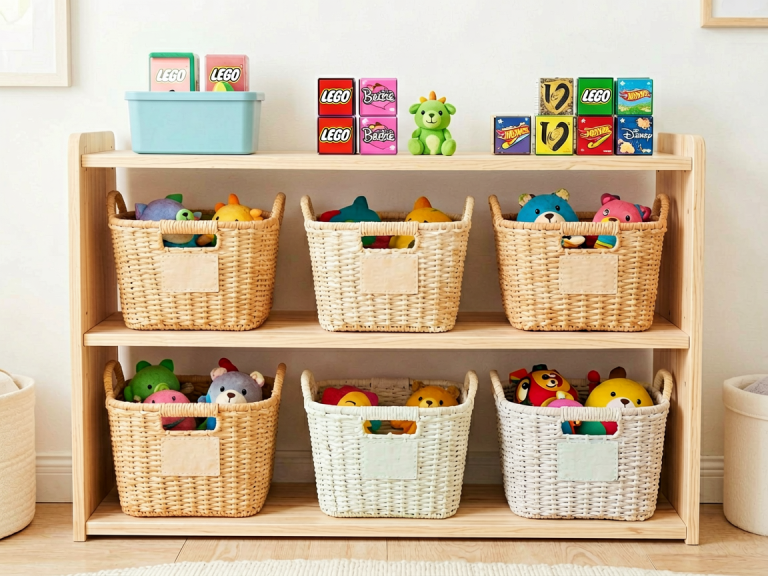
Toddlers love dumping and sorting. A clear, wide bin with a lid works well for daily use, but consider a sorting tray with compartments (like a muffin tin) for color‑coded play. Some sets come with a reusable storage bag or a bucket that doubles as a carrying case. Label the storage with a picture of a brick so your toddler can learn to tidy up independently.
—
6. Budget Considerations and Where to Buy
LEGO‑style bricks for toddlers do not have to break the bank, but extreme cheapness often compromises safety.
6.1 Starter Budgets
A high‑quality starter set (e.g., Duplo “My First Number Train” or Mega Bloks “80‑Piece Big Building Bag”) costs between $15 and $30. Avoid “mega‑deals” of 1000 bricks for $10—those are almost certainly made of low‑grade, possibly unsafe plastic. A reasonable price point for toddler bricks is roughly $0.20–$0.35 per piece.
6.2 Where to Buy
- New: Amazon, Target, Walmart, or the official LEGO/Mega Bloks stores. Watch for sales during Black Friday or after Christmas.
- Secondhand: eBay, Facebook Marketplace, and thrift stores often have large Duplo lots at 50% off retail. Just sanitize thoroughly and check for cracked pieces.
- Library or toy‑sharing programs: Some communities offer brick lending libraries—an excellent way to test different sets before investing.
6.3 Avoiding Common Pitfalls
Don’t fall for “educational” claims on flimsy sets. A toddler does not need a 500‑piece set—more pieces simply lead to overwhelm. Also, avoid sets with small magnets or batteries, which pose ingestion or electrical risks. Stick to simple, mechanical bricks.
—
Conclusion: Choosing Joy, Not Just Bricks
Selecting LEGO‑style bricks for your toddler is about more than picking a toy off a shelf. It is an investment in your child’s sensory world, their fine motor foundation, and their first taste of independent creation. Prioritize safety above all—choose certified, oversized bricks—then layer in educational value through colors, themes, and expandability. Respect your toddler’s developmental stage: a one‑year‑old needs chunky, forgiving blocks, while a near‑three‑year‑old can handle slightly smaller pieces and simple instructions.
Remember that the best brick set is the one your toddler actually wants to play with—again and again. Observe their interests: do they love stacking high? Take them apart and make roads? Imitate a favorite animal? Let their curiosity guide your choices. And when the inevitable tower crashes, smile, hand them another brick, and say, “Let’s build it even taller this time.”
With the right bricks in their hands, your toddler is not just playing—they are laying the cognitive and emotional foundation for a lifelong love of learning. Choose wisely, build together, and watch their world grow one brick at a time.