Should I Buy LEGO-Style Bricks for Toddlers? A Balanced Guide for Parents
Introduction
As a parent, you’ve probably seen the colorful plastic bricks scattered across playrooms, daycare centers, and Instagram feeds. LEGO-style bricks—those interlocking blocks that resemble the iconic brand but come from countless generic manufacturers—are a staple in many households. But when your child is a toddler, between the ages of one and three, the question isn’t simply “Are these toys fun?” It’s a more nuanced one: *Should I buy LEGO-style bricks for my toddler?* With safety concerns, developmental milestones, and the sheer volume of parenting advice online, making this decision can feel overwhelming. In this article, I’ll walk you through the key benefits, potential risks, and practical considerations so you can make an informed choice that suits your child’s age, temperament, and your family’s values.
The Developmental Benefits of Building Bricks for Toddlers
Fine Motor Skills and Hand-Eye Coordination
One of the strongest arguments in favor of LEGO-style bricks is their ability to boost fine motor skills. Toddlers are at a critical stage where their small hand muscles are developing rapidly. Picking up a brick, aligning it with another, and pressing down until it clicks requires precise finger movements. This repeated action strengthens the pincer grip—the same grip needed later for holding a pencil or using scissors. Even simple tasks like stacking two or three bricks help a toddler practice control and coordination. Over time, they learn to adjust their force: too hard and the tower topples, too soft and the bricks won’t connect. This trial-and-error process is invaluable for cognitive and physical development.
Cognitive Growth: Problem-Solving and Spatial Awareness
When a toddler plays with bricks, they are essentially experimenting with cause and effect, balance, and spatial relationships. Why does this tower fall when I put a big brick on top of a small one? How can I make a bridge? These questions, even if unspoken, drive their curiosity. Building bricks also introduce early concepts of geometry, size comparison, and symmetry. A child who repeatedly tries to fit a square peg into a round hole—or, in this case, a large brick onto a small base—is learning to differentiate shapes and sizes. Moreover, the act of planning a structure (even a simple two-brick “house”) encourages sequential thinking: first this, then that. As toddlers grow, they begin to imitate real-world objects (a car, a tower, a fence), which fosters imagination and symbolic play.
Language and Social Skills
Bricks are not just a solitary activity. When siblings or parents join in, toddlers learn turn-taking, sharing, and negotiating. “Can I have the red one?” “Let’s build a tall tower together!” These interactions expand vocabulary and teach social norms. Even when playing alone, many toddlers narrate their actions: “Now I put blue. Now it fall!” This self-talk is a precursor to internal dialogue and storytelling. In group settings, such as daycare, bricks can be a bridge to collaborative play, helping toddlers navigate friendships and conflicts.
Safety Considerations That Cannot Be Ignored
Choking Hazard: The Number One Concern
The most serious risk associated with LEGO-style bricks for toddlers is choking. Standard LEGO bricks (and most generic versions) are small enough to fit entirely into a young child’s mouth. The American Academy of Pediatrics recommends that toys for children under three should be at least 1.25 inches in diameter and 2.25 inches in length to avoid airway obstruction. Many standard-size bricks are smaller than that. Even the larger “Duplo”-style bricks—which are twice the size—can still pose a risk if a toddler manages to bite off a piece or if the brick has loose parts. The danger is real: according to the U.S. Consumer Product Safety Commission, small toy parts account for hundreds of emergency room visits each year among toddlers. Therefore, if you decide to buy LEGO-style bricks, you must choose age-appropriate sizes. Look for sets explicitly labeled for ages 1.5 or 2+, or opt for extra-large blocks that cannot be swallowed.
Material and Chemical Safety
Not all LEGO-style bricks are created equal. While genuine LEGO brand bricks are made from high-quality ABS plastic that meets strict safety standards (e.g., EN71 in Europe, ASTM in the US), generic brands may use cheaper materials that contain phthalates, lead, or other harmful chemicals. Toddlers put everything in their mouths—bricks are no exception. Cheap, off-brand bricks may have sharp edges, rough surfaces, or toxic paint that can chip off. Always check for certification labels. If the price seems too good to be true, the safety might be compromised. A good rule of thumb: buy from reputable brands (LEGO Duplo, Mega Bloks First Builders, or well-reviewed generic sets that explicitly state they are BPA-free and phthalate-free).
Sharp Edges and Breakage
Cheap plastic bricks often have molding imperfections: sharp burrs or uneven seams that can cut tender gums or fingers. Also, some generic bricks are brittle and can crack into small, sharp shards when a toddler throws them or steps on them. Toddlers are not gentle; they drop, toss, and sometimes even bite the bricks. Inspect the bricks yourself before giving them to your child. Run your fingers along the edges. If they feel rough, return them. Remember that even one broken brick can become a choking hazard.
Comparing LEGO-Style Bricks with Other Toddler Toys
Wooden Blocks vs. Plastic Bricks
Wooden blocks are a classic alternative. They are heavier, which can be a plus for stability, and they don’t have the “click” mechanism that plastic bricks do. For a young toddler (12–18 months), wooden blocks are often safer because they are larger, have no small parts, and are less likely to break. However, plastic bricks offer the satisfying interlocking feature that allows for more complex constructions—something that becomes more appealing as the child approaches age two and a half. Wooden blocks are also prone to splinters if not sanded well, and they can be just as painful when stepped on.
Other Construction Toys: Mega Bloks and Duplo
Mega Bloks (First Builders) and LEGO Duplo are specifically designed for toddlers. Their bricks are about twice the size of standard LEGO bricks, making them less of a choking risk. They are also easier for tiny hands to grasp and connect. Duplo bricks, in particular, are compatible with standard LEGO bricks, so your investment grows with your child. The downside? They are more expensive than generic brands. But the safety reassurance and durability often justify the cost. If you are on a tight budget, look for second-hand Duplo sets—they hold up well and can be sanitized.
The Verdict on Alternatives
For toddlers under 18 months, I would strongly recommend starting with larger, chunkier blocks (wooden or Duplo-sized) and avoiding standard LEGO-style bricks entirely. For older toddlers (18–36 months) who are past the mouthing stage and have better coordination, you can introduce Duplo-style bricks or high-quality generic jumbo bricks. But always supervise play, and have a strict policy of picking up all bricks after each session to keep them away from younger siblings.
Practical Tips for Parents Considering a Purchase
Age Labels and Supervision
Never rely solely on the age label on the box. A label that says “1.5+” might still contain small accessories (e.g., flowers, animals) that are choking hazards. Inspect the set’s actual pieces. For a toddler, the ideal brick size is at least 2 inches long. If you can fit the brick inside a toilet paper tube, it’s too small. Even with large bricks, always supervise your toddler during play. A child can still fall and hit their head on a hard brick, or try to eat a piece despite your best efforts.
Start Simple: Quantity and Complexity
You don’t need a giant bucket of bricks. In fact, too many pieces can overwhelm a toddler. Start with a small set—say, 20 to 40 large bricks in primary colors. Bright, contrasting colors are visually stimulating. Avoid sets with tiny decorative parts (like wheels or eyes) at first. Let your child explore the basic act of stacking and knocking down. As they show interest, you can gradually add more pieces. Also, consider buying a soft play mat or rug so that dropped bricks don’t damage floors or make too much noise (and to cushion falls).
Cleanliness and Storage
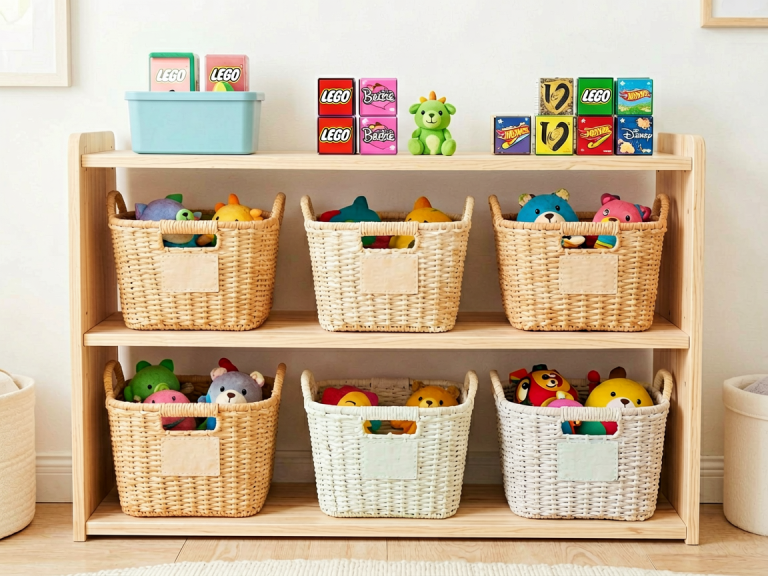
Toddlers’ bricks get dirty quickly—dropped on the floor, drooled on, even used as teethers. Wash them regularly in warm soapy water or run them through the top rack of the dishwasher (if they are dishwasher-safe—check the label). Store them in a lidded container out of reach when not in use. This not only prevents a younger sibling from accessing them but also teaches the toddler a cleaning routine (though they will likely need help).
The “Should I Buy” Decision Checklist
Before purchasing, ask yourself these questions:
- Is my toddler still putting non-food objects in their mouth? If yes, choose extra-large bricks only.
- Does my child have an older sibling who plays with small bricks? If yes, you’ll need strict separation zones.
- Am I willing to supervise every single play session? If not, consider a different toy.
- What is my budget? Generic brands can be safe, but you must research reviews.
Conclusion: A Qualified “Yes” with Conditions
So, should you buy LEGO-style bricks for your toddler? My answer is: yes, but with careful planning. The developmental benefits—fine motor skills, spatial reasoning, creativity, and social interaction—are substantial. However, the risks of choking, toxic materials, and injury are equally real. The key is to choose age-appropriate, large-sized bricks (such as Duplo or equivalent), from reputable brands, and to commit to active supervision. Avoid standard LEGO bricks until your child is at least three years old and reliably past the mouthing phase. For the youngest toddlers, wooden blocks or soft foam blocks may be a safer starting point.
Ultimately, every child is different. Some toddlers are cautious and rarely put toys in their mouths; others are determined oral explorers. Trust your observation of your own child. If you feel uneasy, wait a few months. The bricks will still be there, and your child’s readiness will make the experience far more rewarding. Remember, the goal is not to check a box on a parenting checklist, but to provide a tool that fosters joy, learning, and safe exploration. With the right precautions, LEGO-style bricks can become a beloved part of your toddler’s early years.