Screen-Free or Smart? Rethinking Learning Toys for One-Year-Olds
The first year of life is a period of breathtaking neurological growth. By twelve months, a child’s brain has already formed trillions of neural connections, shaped primarily by sensory experiences, movement, and human interaction. Parents today face an unprecedented dilemma: should they introduce interactive learning tablets designed for infants, or stick with traditional screen-free toys that have occupied babies for generations? The market is flooded with “educational” digital devices promising to boost vocabulary, math skills, and even emotional intelligence, but child development experts are increasingly cautious. This article explores the developmental needs of one-year-olds, weighs the pros and cons of learning tablets versus screen-free toys, and offers practical guidance for making informed choices that truly support a child’s growth.
—
The Developmental Milestones of a One-Year-Old: What Matters Most?
Understanding what a one-year-old actually needs is the foundation for any toy decision. At this age, critical developmental domains include:
Sensorimotor exploration. According to Jean Piaget’s theory, children aged 0 to 24 months are in the sensorimotor stage. They learn by touching, tasting, grasping, shaking, and dropping objects. A one-year-old is discovering cause and effect—when they push a ball, it rolls; when they bang a block, it makes a sound. These real-world physics lessons require physical interaction with three-dimensional objects.
Fine and gross motor skill development. Crawling, pulling up to stand, and taking first steps dominate gross motor skills. Fine motor skills involve picking up small objects with pincer grasp, transferring items from hand to hand, and fitting shapes into holes. Toys that encourage gripping, stacking, twisting, and pulling strengthen muscles and coordinate hand-eye movements essential for later writing and self-care.
Language acquisition and social-emotional bonding. One-year-olds understand far more words than they can produce. They are learning from every spoken interaction, especially face-to-face conversations, singing, and reading. Emotional regulation develops through responsive caregiving—when a parent notices a child’s frustration and offers comfort or a new activity, the child builds trust and a sense of security.
Attention span and executive function. At twelve months, attention is fleeting, typically lasting only a few minutes. True executive functions—like inhibiting impulses, focusing on a task, and shifting attention—are just emerging. The best learning environment provides low-distraction, open-ended play that allows the child to lead and explore at their own pace.
Given these developmental priorities, any toy—digital or analog—must be evaluated by how well it supports these natural processes.
—
The Allure of Learning Tablets: Digital Exposure at a Tender Age
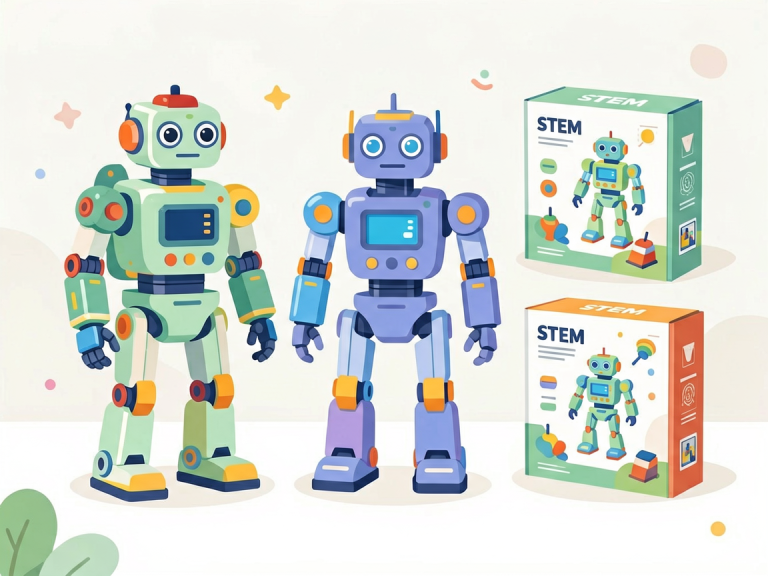
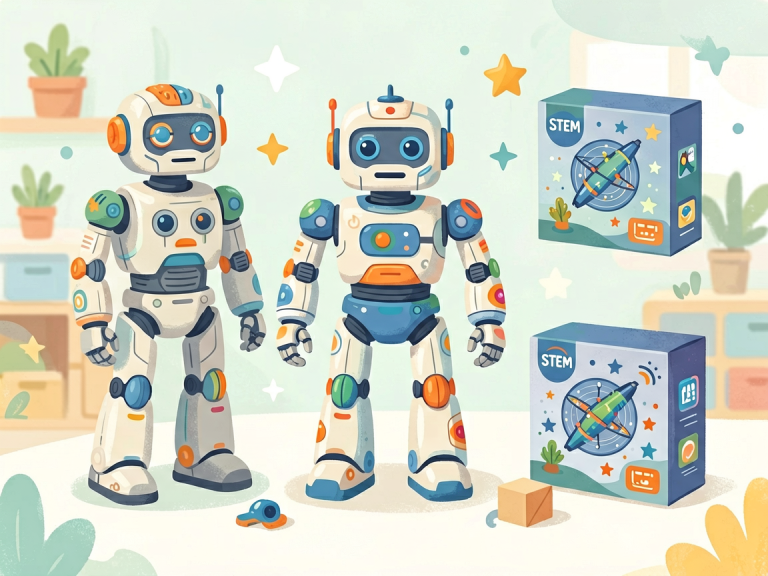
Learning tablets for toddlers, such as those marketed by LeapFrog, VTech, or even child-friendly apps on standard tablets, have gained popularity for several reasons. They promise early exposure to letters, numbers, colors, and shapes through bright animations, catchy songs, and interactive touch responses. Some devices claim to teach bilingual vocabulary or even basic phonics before a child turns two.
Potential benefits are often cited by manufacturers: tablets can be highly motivating because they provide immediate audio-visual feedback. A toddler taps a picture of a cat and hears “meow” or sees a cat dance. This conditional stimulation can hold a child’s attention longer than a static picture book. For parents juggling multiple responsibilities, a tablet can serve as a reliable distractor during diaper changes, car rides, or brief moments when a caregiver needs both hands free.
However, the evidence against early screen exposure is substantial. The American Academy of Pediatrics (AAP) recommends no screen time for children under 18 months, with the exception of live video chatting. Why? Because screens are fundamentally passive compared to real-world play. A one-year-old watching a tablet is receiving pre-packaged stimuli that require little cognitive effort. The child does not need to reach, grasp, manipulate, or coordinate multiple senses. The brain’s reward system can become conditioned to expect rapid, bright, noisy stimuli, making ordinary toys seem boring by comparison.
Moreover, research on infant attention suggests that what looks like “engagement” with a tablet is often a reflex to motion and sound, not deep learning. A baby may stare at a flashing screen, but is she really learning the concept of “duck” or simply habituating to a moving image? Language acquisition, in particular, requires human contingency. Studies show that infants learn words best when a real person labels an object while the child is holding or pointing to it. A screen cannot respond to a baby’s babbled attempt to say “duh” by saying “Yes! Duck!” with a warm smile and eye contact.
Another concern is the impact on sleep, attention regulation, and parent-child interaction. Screen time at this age has been linked to shorter sleep duration, less communicative interaction with caregivers, and reduced opportunities for imaginative play. Even so-called “educational” apps rarely adapt to the child’s individual developmental level. A one-year-old’s motor control is still imprecise—they may accidentally swipe to a new screen, become confused, and cry in frustration. The technology can easily overstimulate rather than calm an immature nervous system.
—
The Case for Screen-Free Toys: Hands-On, Sensory-Rich Exploration
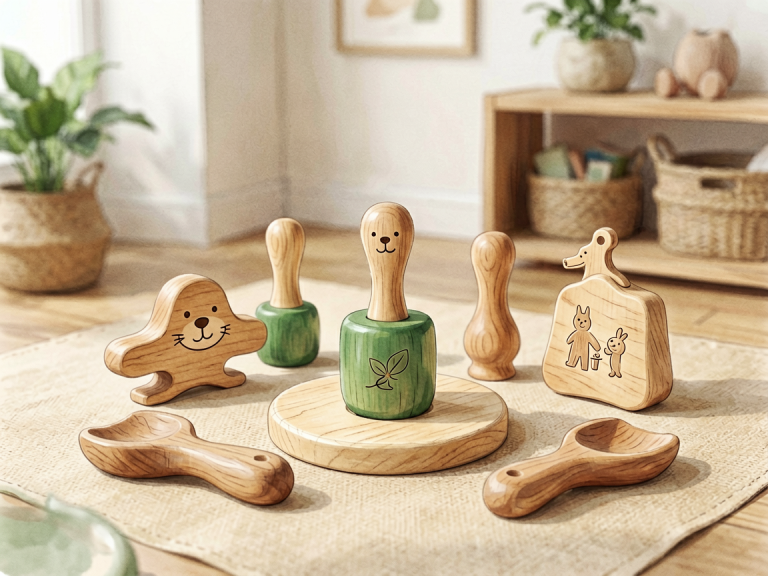
Traditional screen-free toys—simple wooden blocks, stacking cups, soft cloth books, push-and-pull toys, rattles, shape sorters, and sensory balls—have stood the test of time for good reason. They align perfectly with how a one-year-old’s brain is wired to learn.
Tactile and proprioceptive feedback. When a baby picks up a wooden block, the weight, texture, and temperature provide rich sensory input. Pressing a shape into a sorter requires precise hand-eye coordination and force regulation. Dropping a ball and watching it roll teaches gravity and trajectory. These experiences build neural pathways that a tablet’s smooth glass surface cannot replicate. Touch is the primary learning modality for infants; screens deprive them of this essential channel.
Open-ended possibilities. A set of simple wooden blocks can become a tower to knock down, a bridge for a toy car, a phone to hold to the ear, or a “cake” to pretend-bite. No app offers this level of creative flexibility. Open-ended toys encourage divergent thinking, problem-solving, and symbolic play—all precursors to later academic success. A one-year-old is not yet capable of complex pretend play, but they are beginning to experiment with object use: a bowl becomes a hat, a spoon becomes a drumstick. Screen-free toys allow these emerging cognitive schemas to blossom without digital constraints.
Promotion of language and social interaction. Screen-free play naturally draws caregivers into the activity. When a parent sits on the floor and stacks blocks with a toddler, they talk: “Let’s put the red block on top. Wow, it fell! Can you pick it up?” This back-and-forth exchange, filled with gesture, eye contact, and turn-taking, is the gold standard for language development. A tablet, by contrast, often isolates the child from the parent; the caregiver may look at their phone while the baby stares at the screen, missing thousands of conversational opportunities each week.
Physical development and sensory integration. Toys that require crawling after a rolling ball, pushing a wooden cart, or bending down to pick up a dropped rattle strengthen large muscles and improve balance. Sensory play with sand, water, or playdough (supervised) helps the brain integrate tactile, vestibular, and proprioceptive input. Screen-free toys also encourage repetition, which is crucial for myelin formation in the brain’s motor pathways. A child who repeatedly fits a square peg into a square hole is not being boring; she is consolidating a neural circuit that will serve her for a lifetime.
Furthermore, screen-free toys pose no risk of overstimulation from blue light, loud sounds, or rapidly changing images. They allow the child to control the pace of play. Boredom with a toy is actually valuable—it forces the child to invent new ways to use it, sustaining attention through intrinsic motivation rather than external rewards.
—
Balancing Act: How to Choose Wisely for Your One-Year-Old
Given the developmental science, the clear recommendation is to prioritize screen-free toys for the vast majority of playtime. However, technology is not inherently evil, and some families may find limited, intentional use of learning tablets acceptable under strict conditions.
Guidelines for screen-free toy selection:
- Choose toys made from natural materials (wood, fabric, silicone) that are safe, durable, and easy to clean.
- Look for toys that engage multiple senses: rattles with different sounds, textured balls, stacking rings with varying weights.
- Avoid toys with excessive batteries, lights, or sounds that play automatically without the child’s initiative. The toy should be a tool, not the driver of play.
- Rotate toys to maintain novelty without overwhelming the child. A few well-chosen objects at a time support deeper exploration.
If you consider using a learning tablet:
- Wait until after 18 months, ideally closer to 24 months, as per AAP guidelines. Even then, limit screen time to 15–20 minutes per day, and always co-use or co-view. Sit with your child, name what you see, and expand on the content.
- Choose apps that are simple, slow-paced, and require real interaction (e.g., tapping to respond) rather than passive watching. Avoid apps with distracting animations or rewards.
- Never use the tablet as a substitute for human interaction or as a default pacifier. Screen time should be a shared activity, not a babysitter.
- Monitor your child’s reaction. If she becomes irritable, “glassy-eyed,” or resistant when the tablet is turned off, that is a red flag to reconsider.
Most importantly, remember that a one-year-old’s most powerful “learning tablet” is her parent’s face. Nothing compares to the sight of a smiling caregiver, the sound of a familiar voice reading a picture book, or the feeling of being held while exploring a new object. The best investment for a one-year-old’s cognitive, emotional, and physical development is a rich, responsive, screen-free environment filled with love, conversation, and simple toys that invite discovery.
—
Conclusion: Nurturing the Whole Child
The debate between learning tablets and screen-free toys for one-year-olds is not really about technology versus tradition; it is about understanding what early learning actually looks like. True learning in infancy is messy, slow, physical, and deeply relational. It is the joy of stacking a tower and watching it crash, the concentration of fitting a puzzle piece, the glee of hearing a parent’s voice echo their own babbling. No app, no matter how sophisticated, can replicate the million tiny lessons that happen when a child explores the real world with her hands, her mouth, and her whole body.
Parents today feel immense pressure to optimize their child’s development from birth. But the research is clear: for one-year-olds, less is more. A simple cardboard box, a set of nesting cups, and a loving lap are far more educational than any glowing screen. By choosing screen-free toys and embracing the unhurried, hands-on nature of toddler play, we give our children the richest possible start—one that builds not only skills but also curiosity, resilience, and a lifelong love of learning. Let the tablets wait. The first years of life deserve the real thing.