How to Avoid Choosing Toys with Limited Play Value
Understand What "Play Value" Really Means
Many parents and gift-givers have experienced the same disappointment: a child tears open a brightly wrapped box, plays with the new toy for ten minutes, and then tosses it aside to return to an old cardboard box or a set of wooden blocks. The cause of this letdown is almost always a lack of play value. Play value is not about how expensive, flashy, or technologically advanced a toy is. It is about how deeply, creatively, and repeatedly a child can engage with it over time. A toy with high play value invites open-ended exploration, adapts to different stages of development, encourages social interaction, and sparks imagination. A toy with limited play value, in contrast, does one specific thing and then exhausts its novelty. To avoid purchasing such toys, you need to develop a sharp eye for the features that sustain long-term engagement.
Look for Open-Ended Rather Than Fixed-Ended Play
The most important step in avoiding toys with limited play value is to ask a simple question: Can this toy be used in many different ways, or does it only have one obvious function? Fixed-ended toys, such as a plastic guitar that plays a single pre-recorded melody or a flashlight-shaped puzzle that only assembles into one shape, usually lose their appeal after a few sessions. Open-ended toys, however, have no single "correct" outcome. Building blocks, magnetic tiles, wooden train tracks, fabric dress-up clothes, and simple dolls allow children to invent new games, stories, and structures each time they play. When evaluating any toy, imagine how a child might use it in three completely different scenarios. If you struggle to come up with more than two, the toy likely has limited play value. For example, a realistic plastic dinosaur may be fun to arrange in a row, but a simple dinosaur figurine combined with blocks and a sandbox becomes a star of endless prehistoric adventures. The key is to choose toys that act as tools for imagination, not as scripts for a single experience.
Check for Adjustable Complexity and Age Adaptability
Another common cause of limited play value is a narrow window of age appropriateness. Toys that are too simple for a child's cognitive level will be abandoned quickly, while toys that are too complicated will cause frustration and be ignored. High-play-value toys grow with a child. They offer different levels of complexity and can be revisited as the child's skills develop. For instance, a set of interlocking plastic gears can be used by a toddler to practice pushing pieces together, by a preschooler to create patterns and moving machines, and by an older child to design elaborate mechanical systems. In contrast, a single-purpose toy that requires a child to press a button and watch a light blink will not challenge a four-year-old and will bore a six-year-old completely. Before buying, check the suggested age range, but also think beyond it. Ask yourself: Will this toy still be interesting in six months? In two years? Can it be combined with other toys to create more complex play? If the answer is no, it is likely a limited-play-value purchase, no matter how appealing it looks in the store.
Beware of Overly Passive and Screen-Based Features
The toy market is flooded with electronic gadgets, app-connected devices, and battery-operated plush animals that sing, dance, or talk on their own. These toys often provide entertainment for a short while, but they shift the child into a passive role. The toy does the action; the child simply watches or listens. This type of play is usually one-directional and quickly becomes repetitive. A doll that says five phrases will be exhausting after the fiftieth repetition, whereas a silent, soft doll can be anything the child wants—a baby to care for, a friend to travel with, a superhero in a complex rescue mission. Likewise, a plastic screen with a simple game might hold focus for a long time, but its play value is actually quite low because it offers a prescribed goal with limited room for original thought. To avoid these traps, prefer toys that require the child's active input: ones that need pushing, pulling, stacking, sorting, building, balancing, or social pretend play. If the toy requires a battery, check whether the battery powers genuine interaction or merely noise and lights. If it is just noise and lights, skip it.
Pay Attention to the "Second Game" Test
One practical technique for evaluating play value is what I call the "second game test." Imagine that a child has just played with the toy in the most obvious way. Then ask: What can they do with it next that is different? Can they use it to make a game with another friend? Can they incorporate it into their current make-believe world? For example, a set of plastic fruit might first be used for a pretend grocery store. Later, the same fruit can become projectiles for a silly game, counting tools for mathematics practice, part of a tea party, or weights in a homemade scale. A toy that passes the second game test has real play value. A toy that fails—like a foam dart gun that only shoots darts at a target—has a single mechanic. Even if the child plays with it for an hour, the play pattern is repetitive. However, if you combine that dart gun with obstacle courses, knights in armor, or target practice with a scoring system invented by the child, it can gain more value. Still, the less structured the toy, the easier this becomes. So when you stand in the toy aisle, mentally put the toy in a child's hands and try to invent the third, fourth, and fifth games they might play with it. If you cannot, put it back on the shelf.
Evaluate Materials, Durability, and Sensory Quality
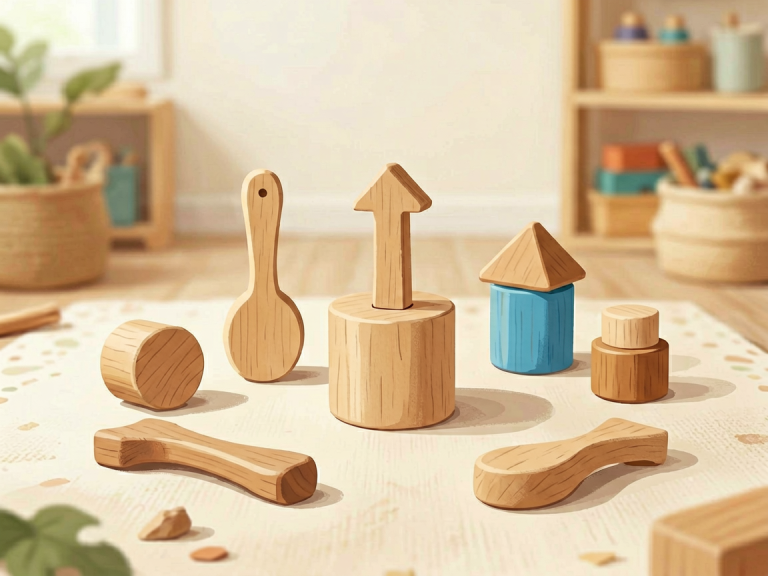
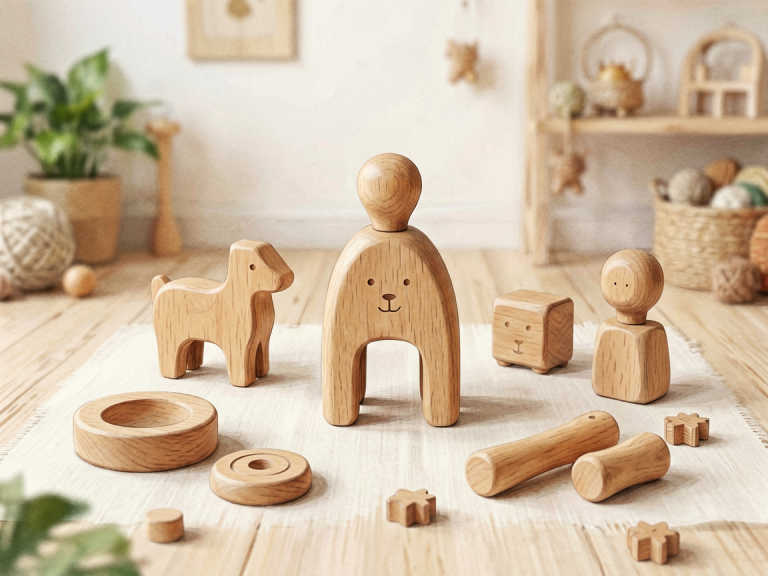
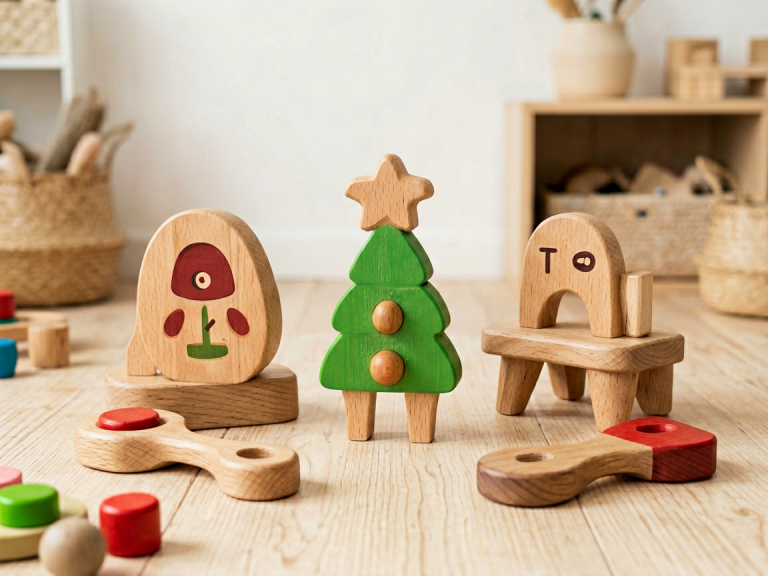
Limited play value is often linked to poor construction or unpleasant sensory experiences. A toy that breaks after a week of enthusiastic play cannot provide lasting value. But durability is more than just physical toughness; it also relates to how the toy feels and looks. Toys made of harsh, brittle plastic with sharp edges and garish colors are less likely to earn a place in a child's heart than those made of wood, fabric, natural rubber, or high-quality recycled materials. Children are drawn to textures, weights, temperatures, and subtle details. A smooth wooden block feels comfortable and can be stacked, thrown, chewed (for toddlers), or used as a pretend phone. A thin plastic token that feels cheap and flimsy is less satisfying and often becomes litter. Furthermore, aesthetically beautiful toys—think of simple wooden animals, rainbow-colored silk scarves, or well-designed metal cars—encourage respectful and imaginative play. They invite children to integrate them into deeper stories. Avoid toys with loud, irritating sounds, flashing strobe lights, or off-putting smells. These features may grab attention in the store, but they quickly overwhelm the senses and reduce the child's willingness to explore quietly and creatively.
Consider Social and Cooperative Potential
A toy that can be shared by two or more children usually has higher play value than a toy designed for solitary use. This is because social play multiplies the possibilities. A single-person electronic game console can only be used by one child at a time, and if another child wants to play, the conflict immediately reduces the fun. In contrast, a set of wooden ramps and balls can be used by one child alone, but it becomes far more interesting with two: one can build the ramp structure while the other adjusts the angles and predicts where the ball will land. Dress-up clothes, puppets, board games, and construction sets naturally promote negotiation, cooperation, and communication. When choosing toys, consider whether they can support at least two different roles for different children. If a toy is a single item with almost no way to share—like a motorized spinning top that just spins—then its play value is limited no matter how mesmerizing it seems. However, even a spinning top can be shared if you add a battle arena, but the toy itself is still a one-trick object. So lean toward toys that are inherently social, such as large floor puzzles, duplo-style blocks, or a cardboard playhouse that several kids can decorate together.
Resist the Allure of Trending and Media-Linked Toys
Marketing campaigns and movie tie-ins create a false sense of play value. A toy based on a popular cartoon character might be irresistible at the moment, especially under the influence of a child's pleading and peer pressure. But media-linked toys are often designed to reproduce scenes from the show rather than to inspire original play. Once the novelty of the character fades, or the child watches a different movie, the toy loses its relevance. That is why so many superhero action figures and princess-themed plastic accessories end up in donation boxes within a few weeks. To avoid this, distinguish between a toy and a collectible. Collectibles are meant to be owned, displayed, or swapped; they are not necessarily tools for rich play. If you want to give a child a character toy, choose one that is flexible, such as a simple articulated action figure with no electronic parts, and encourage the child to create new stories beyond the original plot. But better yet, choose generic toys that allow the child to project their own characters and narratives onto them. A plain wooden unicorn figurine can be a princess, a wild forest creature, a lost pet, or a magical guardian. A molded "Magic Unicorn from the Rainbow Kingdom" with a fixed expression and a specific backstory is much more limiting.
Final Reflections: Less Is More, But Better Is Best
Ultimately, the goal is not to buy fewer toys, nor to become a toy snob. The goal is to invest in toys that will earn their keep through hours, weeks, and years of meaningful play. When you are in doubt, default to the classics: unit blocks, art supplies, magnifying glasses, small world people, balls, sand and water tools, simple construction sets, and books with rich pictures and language. These have proven their play value across generations. Ask yourself whether the toy offers a child the chance to be the creator, the director, the explorer, or the protagonist—not just the spectator. If the answer is yes, then you are well on your way to avoiding the disappointment of limited play value. And your child will thank you by returning to that same toy again and again, long after the shiny packaging is forgotten.