The Siren Song of the Shiny Box: Why Packaging Shouldnt Decide the Toys for Your 18-Month-Old
Walk into any toy store, and you are immediately engulfed by a cacophony of color. Bright reds, electric blues, and neon yellows scream for attention. Cartoon characters with oversized eyes beam from every shelf. The packaging promises wonders: "Stimulates Cognitive Development!" "Features 50 Sounds and Lights!" "The Ultimate Sensory Experience!" For a parent of an 18-month-old, these boxes are more than just containers; they are silent salespeople, whispering compelling arguments about intelligence, happiness, and future potential. It is almost impossible not to be swayed. Yet, if you look closely at how an 18-month-old actually plays, you will discover a profound disconnect between the dazzling package and the real-world value of its contents. The truth is that for toddlers under two, the packaging is often the least reliable guide to what will truly engage, educate, and delight them. Buying toys based on packaging at this age is not just a misguided marketing trap; it is a disservice to a child’s natural and idiosyncratic way of exploring the world.
The Anatomy of a Tempting Package
To understand why parents fall for packaging, we must first recognize how deliberately it is engineered. Modern toy packaging is not designed to inform; it is designed to convert. It uses a combination of visual triggers that appeal directly to adult anxieties and aspirations. The prominent display of an age range—"18 months+"—provides a false sense of scientific precision. It suggests that a committee of child development experts has determined that this exact toy is perfectly calibrated for your child's current neural stage. Similarly, the use of the word "educational" acts as a magical incantation. In an era of competitive parenting, the fear of falling behind is real. A box that promises to teach "shapes, colors, and cause-and-effect" feels like an investment in future academic success, rather than a mere purchase of a plastic object.
Furthermore, the packaging often features photographs of beaming children engaged in focused, joyful play with the toy. These images are staged, often using children who are older than the target demographic, and they omit the inevitable reality of an 18-month-old's attention span, which might last three minutes before they are more interested in the packaging itself. The box also highlights the toy's "features" in bullet points: buttons that light up, phrases that speak in cheerful voices, and parts that spin or pop. These features seem to offer enormous interactive value. But here lies the crux of the problem: these features are designed for the package to *look* good in a two-dimensional photograph, not necessarily to *feel* good in a tiny, grubby hand.
The Real World of an 18-Month-Old
What does an 18-month-old genuinely need from a toy? At this age, a child is not a passive consumer of entertainment. They are a scientist conducting rigorous experiments. Their primary tools are their senses: taste, touch, sight, sound, and proprioception. Their play is dominated by what developmental psychologists call "functional play" and the beginning of "constructive play." They are fascinated by simple physical laws: the way a ball rolls under a couch, the way blocks stack and tumble, the way a lid fits on a pot. Their cognitive development is driven by repetition, by exploring cause and effect in a tangible, physical way—not by the abstract cause-and-effect of pressing a button to hear a pre-recorded phrase.
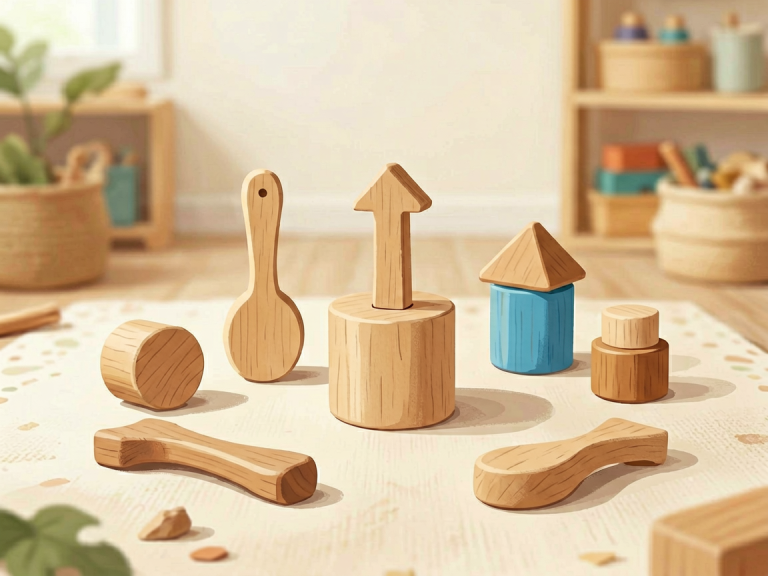
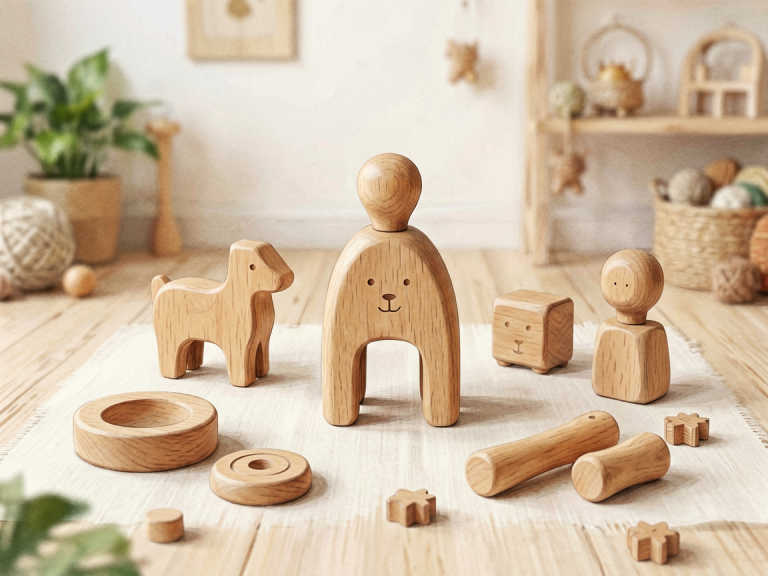
The greatest sensory feedback for an 18-month-old is not a flashing LED array. It is the gritty texture of a wooden block, the soft give of a plush fabric, the satisfying heavy "clunk" of a wooden train hitting the floor. This age is also about motor development. A child who is just learning to walk, climb, and grasp needs toys that challenge their balance and fine-motor coordination. A chunky puzzle with a knob is perfect for a developing pincer grasp. A wagon to push and pull helps develop gross motor skills and balance. These toys do not require batteries; they require a child's own physical energy. In contrast, a battery-operated toy that plays a melody when a button is pressed might be engaging for a moment, but it quickly becomes a passive experience. The child learns only to press the button, not to manipulate the world. The toy, in a sense, does the playing for the child.
The Dishonesty of the Shiny Box
The most significant problem with packaging-driven purchasing is that it actively misleads the parent about what the toy will deliver. A package showing a complex electronic activity center might look like a cornucopia of developmental opportunities. In reality, for an 18-month-old, it often results in over-stimulation and frustration. Too many lights, sounds, and moving parts can cause a toddler to shut down; they cannot process all the input. Instead of fostering deep, focused attention—which is the cornerstone of future learning—such toys encourage a frantic, short-burst interaction, flitting from one flashing button to the next without deeper engagement.
Moreover, consider the perfect packaging itself. The box is glossy, with sharp corners, plastic windows, and zip ties. For an 18-month-old, breaking into the toy requires adult help. But once the toy is out, the package often becomes a more compelling play object. A sturdy shoebox-sized carton can be a "house," a "boat," or a "drum." The crinkling tissue paper inside is an endless source of amusement. The irony is profound: parents spend a significant amount of money on a toy showcased on expensive packaging, while the toddler might ignore the toy for an hour and happily play with the cardboard it came in. This is not a criticism of toddlers; it is a lesson in their developmental needs. They value the creative possibility of the container over the predetermined function of the contained object.
A Better Way to Choose: Beyond the Box
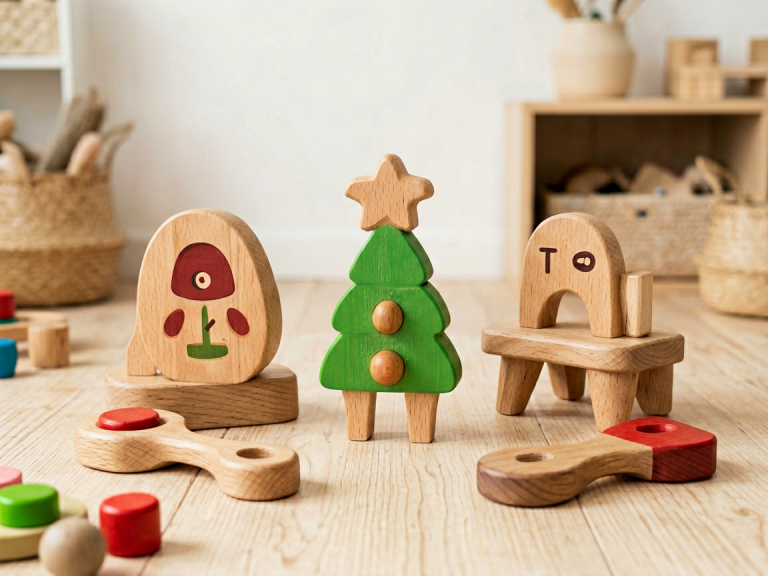
So, what is a worried or well-meaning parent to do? The first instinct should be to discard the packaging before making a decision. Read the description, but ignore the marketing adjectives. Look at the *materials*. Is the toy made of natural materials like wood, cotton, or natural rubber? Can it withstand being thrown, chewed, and drooled on? Does it have sharp edges or small, detachable parts? Safety is paramount, but safety is only one metric. The second question is about the toy's *open-endedness*. Does the toy have a fixed function, like a toy smartphone that "rings"? Or can it be used in multiple ways? A set of simple wooden blocks is the ultimate open-ended toy. It can be a tower, a bridge, a phone, a person, a car. An 18-month-old uses blocks in dozens of different ways, limited only by their imagination. A set of stacking cups is equally brilliant. They can be stacked, nested, banged together, filled with water or sand, or used as molds. The package for stacking cups is visually bland. The package for the toy smartphone is visually explosive. Yet the cups will provide ten times more meaningful development.
Another practical strategy is to ignore the age range on the package in favor of the child's actual developmental stage. An 18-month-old might be ready for some toys labeled "3+," especially if they are constructed with safe, large parts. Conversely, some toys labeled "18M+" are far too complicated. The best judge is not the cardboard; it is the child. Bring the child to the store (if possible) and let them touch the toys outside their boxes. Observe what their hands and eyes are drawn to. Is it the bulky, fire-engine-red plastic truck with sirens? Or is it the simple, smooth wooden pull-toy dog? The choice is often revealing.
Conclusion: Trust the Child, Not the Marketing
In the modern marketplace, the packaging is a weapon of mass distraction. It targets the parent's insecurities, not the child's needs. It promises academic brilliance, emotional intelligence, and sensory perfection—all for 34.99. But an 18-month-old is having none of it. They are not evaluating their playthings by their nutritional labels or their educational claims. They see the world as a place of wonder, and they will engage with any object that feels good, moves in an interesting way, or can be transformed into something else. The best toys are often quiet, humble, and unassuming. They are the wooden blocks, the fabric balls, the cardboard boxes, and the measuring spoons. Therefore, the next time you find yourself seduced by the glossy images and bold promises on the toy shelf, take a deep breath and turn the box over. Look at the wood, the paint, the weight. Ask yourself, "What will my child *do* with this? Not what will this do to my child?" In that simple shift of perspective, you will find the true answer—far more reliable than any marketing slogan. The child is the ultimate unboxing experience, and their delight in a simple object is the only packaging you should ever trust.