The Packaging Trap: Why Buying Baby Toys Based on Packaging Is a Mistake
Introduction: A Bright Box Can Fool Anyone
Walk into any baby toy store, and you will be bombarded by a riot of colors, cartoon animals, and promises printed in bold letters: “Stimulates Brain Development!” “Certified Organic!” “The Ultimate Sensory Experience!” For exhausted new parents, these glossy boxes often feel like a lifeline—a quick, visual guarantee that they are buying something good for their baby. Yet the reality is that buying toys for babies based on packaging is a widespread and costly error. The box art is designed by marketing experts to sell to adults, not to be a window into how a baby will actually play with the object inside. When parents choose toys because the package looks impressive, they often end up with overpriced plastic junk that sits untouched, while the baby happily plays with the cardboard box itself. This article explores why packaging has such a powerful influence, what it hides, and how parents can make smarter choices for their infants.
The Allure of the Box: Why Parents Fall for Packaging
The first reason packaging works so well is simple: babies cannot tell us what they want. Parents must guess, and a bright, cheerful box reduces anxiety. It feels like a trustworthy guide. Manufacturers know this. They spend millions on focus groups, color psychology, and font selection to create packaging that triggers adult emotions—especially nostalgia, aspiration, and fear of falling behind. A box that shows a smiling baby surrounded by stars and rainbows whispers, “If you love your child, you will buy this.”
Another powerful force is the “milestone myth.” Many toy packages feature numbered stages: “0-3 months,” “6-12 months,” and so on. These labels appear scientific but are often arbitrary. A box with a baby’s face achieving a magical grin suggests that opening it will transport your child to that same state. But the package does not tell you that the toy’s actual play value may last only two days. It does not tell you that the baby will ignore the colorful rattle in favor of the crinkly paper inside the box. The packaging appeals to the parent’s desire to be a good provider, while the baby’s real needs—simple, repetitive, open-ended objects—are forgotten.
Furthermore, modern packaging is engineered for shelves. It must stand out among hundreds of competitors. This means loud colors, exaggerated claims, and clear plastic windows showing a tiny piece of the toy. These windows are often strategically placed to show the most attractive feature: a fluffy bear ear, a shiny button, a bright fabric tag. The rest of the toy remains hidden. Parents buy the whole package based on a glimpse. They are not buying a toy; they are buying a promise. And promises, as any parent learns, are easier made than kept.
What’s Really Inside: The Disconnect Between Packaging and Play Value
One of the biggest problems with packaging-based buying is the disconnect between the image and the actual experience. On the box, the toy looks large, soft, and engaging. In reality, it may be tiny, poorly stitched, or designed to entertain for a few minutes. For babies, the true play value lies in what the toy does: does it make a satisfying sound? Does it have different textures? Can it be mouthed safely? Can it be dropped, banged, and thrown without breaking? Packaging cannot answer these questions.
Consider a typical example: a “musical activity gym” boxed with a picture of a delighted baby lying under a colorful canopy. Inside, the gym may have flimsy plastic clips, a battery-operated mobile that plays an annoying tune, and dangling toys that the baby cannot grasp. Meanwhile, a simple rubber ball, a wooden spoon, or an empty plastic bottle offers more developmental opportunities. Babies are natural scientists. They learn through mouthing, shaking, dropping, and exploring cause and effect. A toy that requires batteries to beep is actually less interactive than a simple object that responds to the baby’s own actions. The package, however, never shows the baby’s bored expression after ten minutes. It only shows the ecstatic model baby on the cover—a baby who was paid to smile and who probably cried off-camera.
Moreover, many toys marketed as “educational” use packaging buzzwords that sound impressive but are meaningless. “STEAM,” “Montessori-inspired,” “sensory-rich” are plastered on boxes for toys that have no relation to these pedagogies. A plastic tablet with flashing lights is not Montessori-inspired; it is a battery-operated distraction. The packaging is designed to sell to parents who want to give their child a head start, but the baby’s brain does not care about a label. It cares about the weight, texture, and taste of the object. The box art is a story told to adults, while the real story—the interaction between baby and toy—is unwritten and often disappointing.
The Hidden Dangers of Over-Packaged Toys
Beyond disappointment, packaging-based purchases can actually harm babies in subtle ways. First, there is the physical danger of packaging itself. Most toys for babies come in plastic boxes, twist ties, zip ties, and foam inserts. Even a sturdy cardboard box can have sharp edges. Parents with a newborn may be too exhausted to inspect every corner. If the packaging is attractive, they might assume it is also safe. Yet the biggest hazard is not the package but the toy that the package advertises. Because the package emphasizes visual appeal, manufacturers may cut corners on materials that are not visible through the plastic window. A toy that looks bright and sturdy may contain toxic paint, small parts that detach, or plastic that cracks into sharp pieces. The package does not disclose these risks; it only shows smiles.
Second, over-packaging contributes to environmental waste. Millions of tons of plastic and cardboard are discarded every year from baby toys. A parent who buys five toys based on clever packaging ends up with five boxes to recycle, five layers of plastic, and five toys that may not satisfy the baby. This waste is not just an ecological problem; it is a moral issue. We teach babies to care about the world, but we fill their nurseries with disposable junk. The packaging is designed to be thrown away quickly, which means the transaction is designed to be wasteful. A better approach would be to buy fewer, higher-quality toys—but those rarely have the loudest boxes.
Third, there is a psychological danger. When parents repeatedly buy toys based on packaging and the baby ignores them, parents may feel failure or frustration. They might buy more toys, thinking the problem is their selection. This creates a cycle of consumption driven by guilt. Meanwhile, the baby does not need more toys; the baby needs more attention, more physical contact, more time outside. Packaging exploits this parental insecurity. It sells a false solution to an emotional need. The child does not suffer from a lack of toys; the parent suffers from a lack of confidence. And that insecurity is manufactured by the same companies that sell the packaging.
How to Choose Toys for Babies Beyond the Box
So what should a parent do? The first rule is to ignore the front of the box entirely. Flip it over. Read the boring fine print: the materials, the safety standards, the recommended age. If the box does not list the materials clearly, that is a red flag. Look for simple, honest packaging—or better yet, packaging that is minimal and recyclable. A toy that does not need a giant plastic prison to be sold is often a toy made by a company with real confidence in its product.
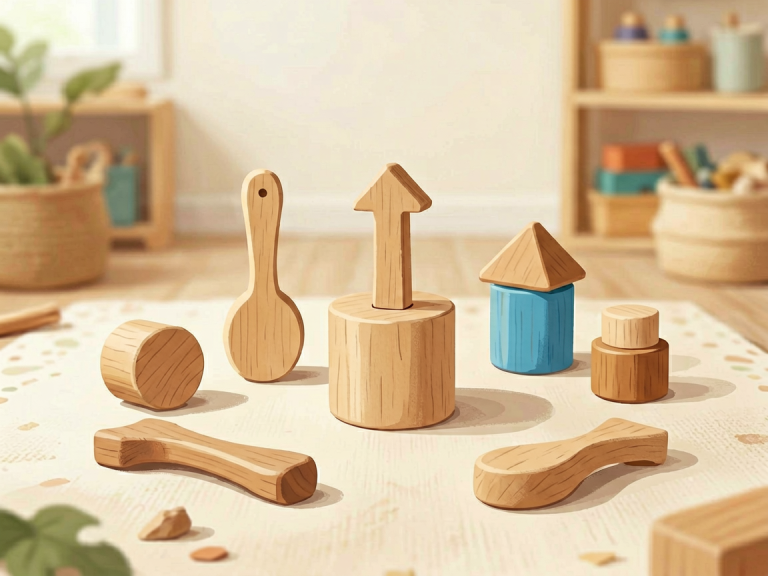
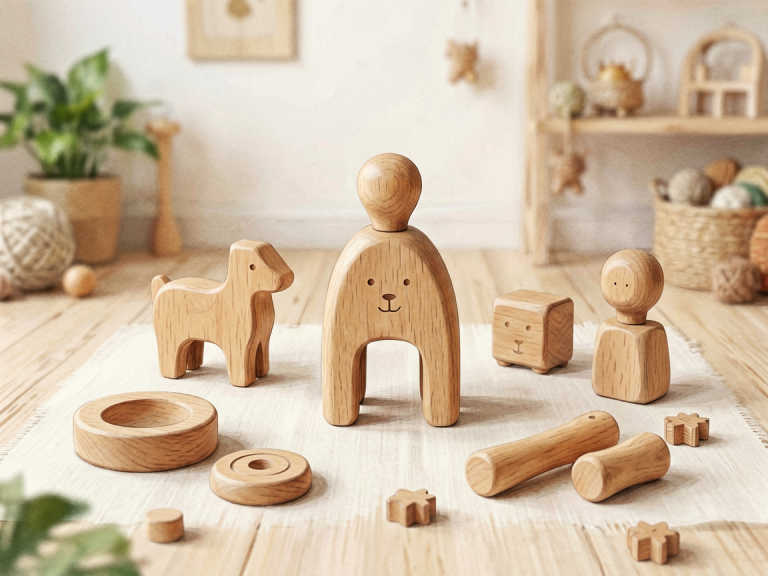
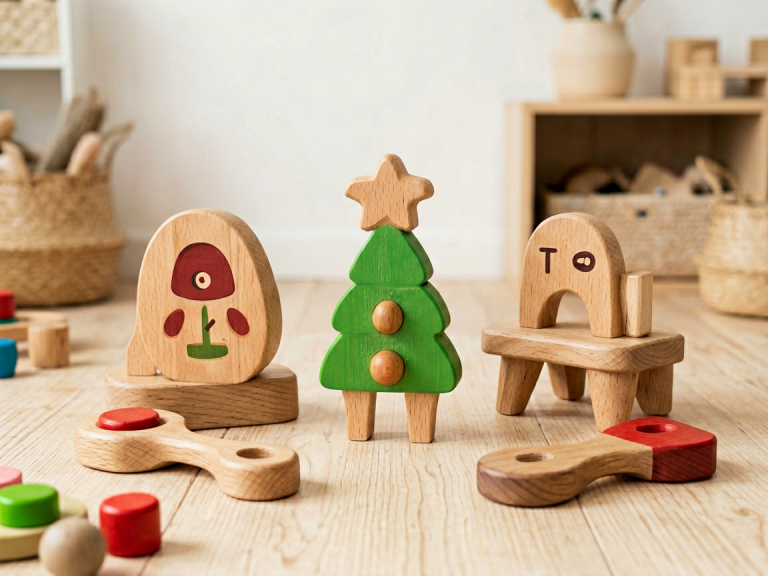
Second, think like a baby, not like a marketer. Babies do not see “educational” or “premium” or “award-winner.” They see an object with a shape, a color, a texture, a weight. Choose toys that are open-ended: wooden blocks, stacking cups, soft cloth balls, rings on a pole, simple rattles. These toys allow babies to use them in many different ways over months. A stuffed animal is lovely, but it can only be hugged and chewed. A set of nested cups can be stacked, knocked down, hidden, filled, banged, and rolled. That is true play value. The packaging for such toys is usually plain, because the toy sells itself through tradition and usefulness.
Third, seek out toys that encourage the baby to act, not to be passively entertained. A toy with lights and sounds is a passive experience: the baby presses a button and the toy performs. A simple bell or a shaker bottle requires the baby to create the sound. This active participation is essential for motor skills, cognitive development, and problem-solving. Packaging rarely shows this distinction because it is hard to photograph. Instead, it shows a baby staring with wide eyes at a flashing screen. That image is powerful but misleading.
Fourth, consider the “box test” before buying. If a baby is more likely to enjoy the cardboard box than the toy inside, then the toy is probably not worth the money. Many parents have learned that their baby prefers the wrapping paper, the ribbon, and the empty pizza box to any expensive gift. This is not a comment on the baby’s taste; it is a comment on the way toys are designed. The simplest objects have the most open-ended play potential. Therefore, the next time you are tempted by a gorgeous package, step back and ask: “Would my baby be just as happy with a cardboard box?” If the answer is yes, you have saved yourself money and guilt.
Finally, ignore age labels slightly and focus on developmental readiness. Age labels on packaging are often set by marketing departments to increase sales. A toy labeled “for 3+” may be perfectly safe and engaging for a 12-month-old if it has no small parts. Conversely, a toy labeled “0+” may be boring or even dangerous if it has long strings. Use the label as a rough guide, not a gospel. Look for toys that match your baby’s current interests: does she love putting things in her mouth? Choose large, smooth, washable items. Does he love dropping things from his high chair? Choose soft or unbreakable items with interesting sounds. Does she love opening doors and closets? Choose toys with hinges, flaps, and containers. These interests are invisible on any package.
Conclusion: The Best Packaging Is No Packaging
In the end, buying toys based on packaging for babies is a trap set by the very industry that claims to nurture young minds. The box art is a lie—not a malicious lie, but a commercial one. It tells you that happiness comes in a sealed plastic shell, that learning can be unwrapped, that love can be expressed in a purchase. But babies do not live in the world of marketing. They live in a world of touch, taste, sound, and movement. The best toy for a baby is often the one that is not advertised at all: a wooden spoon, a cloth napkin, a cardboard carton, your own fingers and face.
As a parent, you have the power to reject the packaging trap. You can choose toys that are simple, natural, and open-ended. You can ignore the glitter and the ridiculous claims. You can read the fine print. And most importantly, you can spend less time shopping and more time playing. Because the most valuable thing you can give your baby is not a toy in a bright box—it is your presence. The box will be recycled, the toy will break, but the memory of your laughter together will last a lifetime. And that is the one thing no package can ever contain.
Word count: approximately 1,260.