The Smart Parent’s Guide to Choosing Toys for 3-Year-Olds: Play That Grows With Your Child
As your child turns three, the world of toys transforms. The toddler who once chewed on everything is now asking “why?” and building castles on the living-room floor. Choosing toys for this age is not about keeping them busy—it’s about nurturing their growing brain, body, and sense of self. This guide will walk you through the essential factors, from safety to developmental value, so that every purchase supports playful learning without overwhelming your child or your budget.
Understanding the Three-Year-Old: A Quick Developmental Snapshot
Three-year-olds are in a magical phase between babyhood and childhood. They are becoming fiercely independent, often insisting, “I want to do it myself!” At the same time, their language skills are exploding. The average three-year-old uses sentences of three to five words, asks endless questions, and can follow simple two-step instructions. Cognitively, they are entering what psychologists call the preoperational stage: they can think symbolically, which means a cardboard box can become a rocket ship, and a stick can become a magic wand.
Their physical abilities are also growing fast. Most three-year-olds can walk down stairs with alternating feet, pedal a tricycle, throw and catch a ball with slightly open arms, and build a tower of nine or ten blocks. Their fine motor skills allow them to draw circles, use child-safe scissors, and manipulate large buttons. Socially, they are moving from parallel play to cooperative play—they are beginning to play *with* other children, though sharing is still a work in progress. They also have big emotions and no filter, so tantrums are common.
All this means that the ideal toys for a three-year-old are those that challenge their emerging skills without causing frustration. A toy that is too easy will bore them; one that is too advanced will make them cry in defeat. The sweet spot is something that requires just a bit of problem-solving—something they can master with a little effort and then adapt into their own imaginative world.
Safety First: The Non-Negotiable Filter
Before you think about fun, education, or price, think about safety. Three-year-olds still explore with their mouths, though less than toddlers. The biggest risk is choking on small parts. As a rule, anything that fits inside a toilet paper roll is too small for a three-year-old. This includes marble toys, small magnets, button batteries, and even some doll shoes. Always check the manufacturer’s age recommendation, but remember that age labels are minimums, not guarantees. A toy labeled “3+” should still be inspected for loose pieces.
Check for sharp edges, brittle plastic, and long cords. Drawstrings and cords longer than 12 inches can pose a strangulation hazard, so avoid hanging toys, jump ropes, or anything with a loop. Choose paints and finishes that are non-toxic and free of BPA and phthalates. Wooden toys should be sanded smooth with no splinters. Fabric toys should be washable and flame-resistant. Also, beware of tiny accessories—even if the main toy is big, the extra pieces may not be safe. Finally, check for recalls before buying second-hand toys, and clean any used item thoroughly. Safety is not the most glamorous part of toy shopping, but it is the foundation on which all play stands.
Top Toy Categories That Deliver Real Value
Once the safety filter is applied, you can focus on toys that actually support development. Here are the categories that consistently earn their place in a three-year-old’s toy box.
First, building sets—large wooden blocks, soft bricks, or magnatiles. These teach spatial reasoning, gravity, balance, and persistence. A child who builds a tower that falls is learning how to rebuild, which is resilience in action.
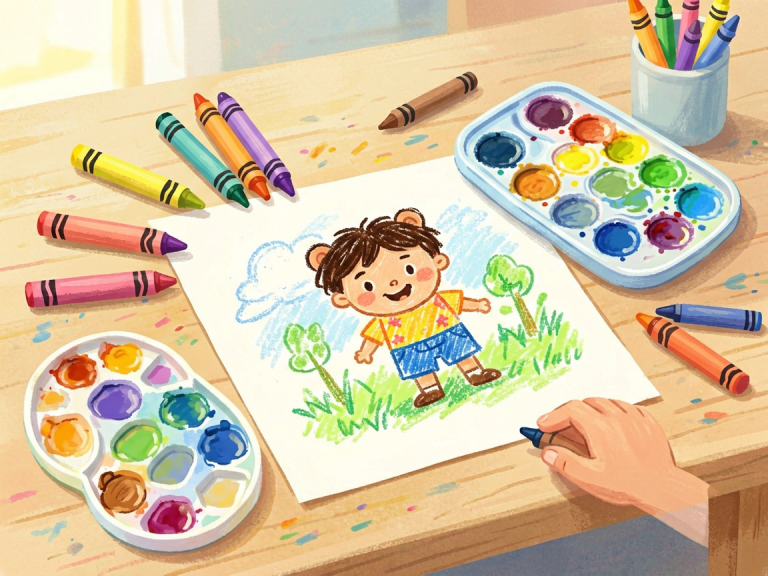
Second, art supplies: washable markers, thick crayons, finger paints, play-dough, and safety scissors. These develop fine motor strength, hand-eye coordination, and emotional expression. Art also lets children make choices—“I want the red crayon”—which supports independence.
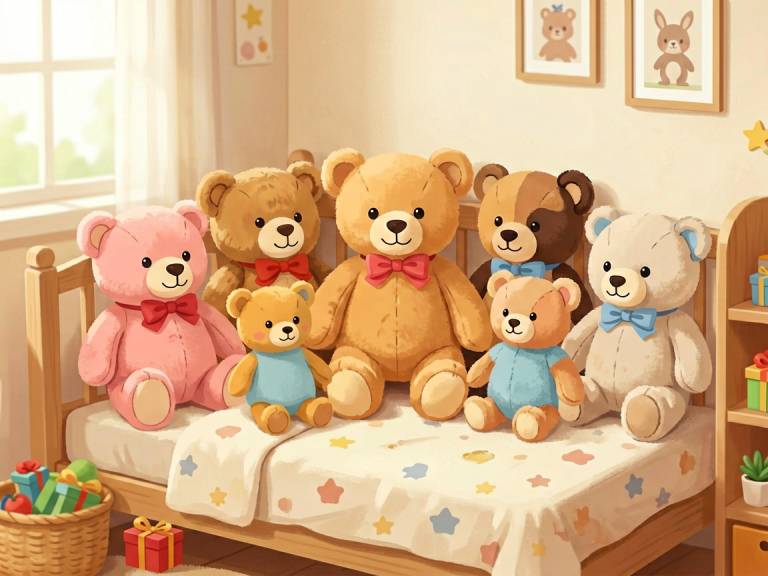
Third, pretend-play props: a play kitchen, a tool bench, dress-up costumes, dolls, stuffed animals, toy phones, and tea sets. Pretend play is the engine of the three-year-old mind. It builds vocabulary, social skills, empathy, and narrative thinking. A child pretending to feed a teddy bear is learning to understand the needs of others.
Fourth, simple puzzles with 4 to 12 pieces. Chunky wooden puzzles with knobs are perfect. They train problem-solving, visual perception, and patience. Choose puzzles with favorite characters, animals, or vehicles to spark interest.
Fifth, ride-ons, balls, tunnels, and small tricycles. Gross motor play is essential for this age. Running, jumping, climbing, and pedaling improve balance, coordination, and body awareness. A simple inflatable ball can provide hours of chasing and kicking.
Sixth, musical instruments such as shakers, tambourines, xylophones, and drums. They explore cause and effect, rhythm, and sensory regulation. Music also helps with mood and language development.
Why Open-Ended Toys Beat Gimmicks
The best toys for a three-year-old are not toys at all—they are *materials*. Open-ended toys are those that have no single prescribed use. A set of wooden blocks can become a castle, a road, a bridge, or a telephone. A plain doll can be a baby, a friend, a superhero, or a patient at a doctor’s office. Open-ended toys change with the child’s imagination, so they stay interesting far longer than toys that only do one thing.
Contrast that with many electronic gadgets. A plastic fire truck that flashes lights and plays sirens might delight a child for a week, but then the novelty fades. The child had no opportunity to create anything—they just pressed a button and watched. Excessive lights, sounds, and animations can overstimulate a three-year-old’s developing nervous system, leading to shorter attention spans and more tantrums. That doesn’t mean all electronics are bad. A simple audio player that lets your child listen to songs and stories can be wonderful. A basic tablet with carefully chosen educational apps can be fine if used sparingly. But the default should always lean toward open-ended materials: things that require the child to *do*, not simply *watch*. Open-ended toys are also easier on the wallet because they adapt to new stages. A set of play animals works for a three-year-old pretending on a farm, and later for a six-year-old creating a diorama for a school project.
Common Toy Pitfalls to Avoid
With so many toys on the market, it is easy to make a mistake. Let’s look at the most common pitfalls.
The “too advanced” toy. Buying a toy for a five- or six-year-old because your three-year-old is quirky and smart usually backfires. The pieces are smaller, the rules are harder, and the frustration is real. Respect the current stage.
The fragile toy. Toys with thin plastic, tiny hinges, or delicate parts will break within a week. Broken toys are not only wasteful, they can also create sharp edges. Three-year-olds are rough with things—not because they are destructive, but because they are still learning to control their force. Choose toys made to be dropped, thrown, and even sat on.
The “educational” scam. Beware of packages that scream “GAME! BUILDS YOUR CHILD’S IQ!” A $50 toy that teaches letters is not necessarily better than a $5 set of cardboard boxes and crayons. Real learning comes from interaction. The toy is only a tool.
The licensed-character trap. Toys with popular characters from TV shows are often more expensive and less imaginative. A Paw Patrol figure only looks like that character; it cannot be anything else. A generic toy, however, can be endlessly transformed. If your child loves a character, save that love for a book or a movie. Choose open-ended toys for play.
Too many toys. This is the biggest thief of attention. When a child is surrounded by fifty bright, noisy toys, they can easily become overwhelmed and end up playing with nothing. Instead of buying more, rotate the toys. Keep only seven to ten choices on the shelf, and store the rest in a closet. Rotate them every few weeks—the old toys will feel brand new again.
Practical Shopping Tips for Budget-Conscious Parents
You do not need to spend a fortune to build a great toy collection. In fact, homemade and second-hand options often have more charm. Start by checking local thrift stores, garage sales, and online marketplaces for wooden blocks, trains, dollhouses, and puzzles. Sanitize everything with soap and hot water or a mild bleek solution (but air-dry well). Look for toy libraries or groups that swap toys with other families. These are perfect for trying things without commitment.
When you do buy new, focus on the classics: quality wooden blocks, a sturdy wagon, a set of washable markers, a good play-dough set, a large wooden train track. These may cost more upfront, but they can last for years—and often for younger siblings. Ask yourself, “How many different things can my child do with this?” If the answer is “many,” it is worth the money. If