The Hidden Cost of Fragile Toys: Why Buying Breakable Playthings for Three-Year-Olds Is a Mistake
Introduction: A Familiar Scene in Every Toy Aisle
Every parent has been there: standing in a brightly lit toy store, watching a three-year-old’s eyes light up at a colorful plastic spaceship with flimsy wings, a delicate doll with tiny snap-on shoes, or a toy car that looks fast but feels hollow. The child grabs it, hugs it, and pleads, “Please, Mommy, please!” Against better judgment, you buy it. Two days later, the spaceship is missing a wing, the doll’s shoe is lost forever, and the toy car’s wheels have come off. You sigh, throw it in the bin, and wonder why you bothered. This scenario is so common that it has become a running joke among parents. Yet the habit of buying toys that break easily for three-year-olds is not just a minor annoyance—it has real emotional, financial, and developmental consequences. Understanding why we fall into this trap, and how to escape it, can save money, reduce frustration, and create far better play experiences for young children.
The Problem with Fragile Toys: More Than Just a Broken Object
At first glance, a broken toy seems like a small misfortune. But for a three-year-old, the loss is deeply felt. Children at this age are not yet capable of abstract reasoning or emotional regulation. A toy that crumbles in their hands feels like a personal failure, a betrayal by the object itself. They do not understand that the toy was cheaply made or that the plastic was too thin. They only know that their favorite new thing has failed them. This leads to tears, tantrums, and a lingering sense of disappointment that parents then have to manage.
Moreover, fragile toys send a subtle but damaging message: that things are disposable, that when something breaks you simply replace it, and that care and maintenance are irrelevant. At three years old, children are forming their earliest attitudes toward property, responsibility, and the environment. If every toy they own is thrown away within a week, they never learn to value their possessions. They also miss out on the important lesson that some things require gentle handling. While it is true that three-year-olds are naturally rough, they are also capable of learning how to treat objects with respect—if the objects are worth respecting. A toy that breaks at the slightest pressure teaches the opposite: “Why bother being careful? It will break anyway.”
There is also a safety dimension. Toys that break easily often break into sharp pieces. A cracked plastic body can leave razor-sharp edges; a detached wheel can become a choking hazard; a snapped hinge can pinch small fingers. For a three-year-old, who loves to put things in their mouth and explore with their hands, a broken toy is not just a disappointment—it can be a genuine danger. The Consumer Product Safety Commission regularly recalls toys for exactly this reason, yet many cheap, fragile toys still slip through the cracks. When parents buy such toys, they are unwittingly bringing hazards into their own homes.
Why Parents Still Buy Them: The Psychology of Cheap Toys
If fragile toys are so problematic, why do we keep buying them? The answer lies in a combination of marketing, guilt, and wishful thinking. Toy manufacturers know that parents are busy and that children are easily swayed by flashing lights and cartoon characters. A toy that looks exciting in the package—with bold colors and a familiar licensed character—can overpower rational judgment. The price tag is often low, which makes the purchase feel harmless. “It’s only five dollars,” we tell ourselves. “If it breaks, it’s no big deal.” But this is a classic fallacy: the small cost multiplies every time we replace it. Over a year, a parent might spend far more on twenty disposable five-dollar toys than on five sturdy, well-made toys that last.
There is also the emotional pull of giving our children what they want. Saying “no” to a pleading three-year-old is exhausting. It is easier to give in, even when we know the toy is junk. This is especially true when the child is having a tantrum in the middle of the store, or when the parent feels guilty about working long hours and wants to compensate with a small treat. The momentary peace of the purchase outweighs the future frustration of the inevitable breakage. But this is a short-term solution with long-term costs. The cycle of buying, breaking, and buying again teaches children that tantrums work, and that material objects are not meant to last.
Another factor is the false sense of “age-appropriateness.” Many package labels say “for ages 3 and up,” which parents interpret as “suitable for a three-year-old.” But that label often refers only to small parts and choking hazards, not to durability or developmental fit. A toy can be technically safe for a three-year-old yet still be completely inappropriate for how a three-year-old actually plays. They throw, drop, step on, and yank at toys with a force that astonishes adults. Manufacturers who cut production costs know this, and they also know that most parents will not complain loudly enough to matter. They count on the “someone else’s problem” mentality.
The Developmental Impact: What Fragile Toys Rob from Children
Beyond the immediate disappointment, fragile toys do real harm to a child’s development. Play is how three-year-olds learn about the world. Through play, they build fine motor skills, problem-solving abilities, creativity, and social competence. But these gains require toys that can withstand active exploration. A toy that breaks on the first or second use interrupts the play narrative. The child cannot complete the imaginary game, cannot build the tower, cannot figure out how the pieces fit together. Instead of fostering persistence and creativity, the broken toy teaches frustration and learned helplessness. The child quietly learns that effort does not pay off, because the tools keep failing.
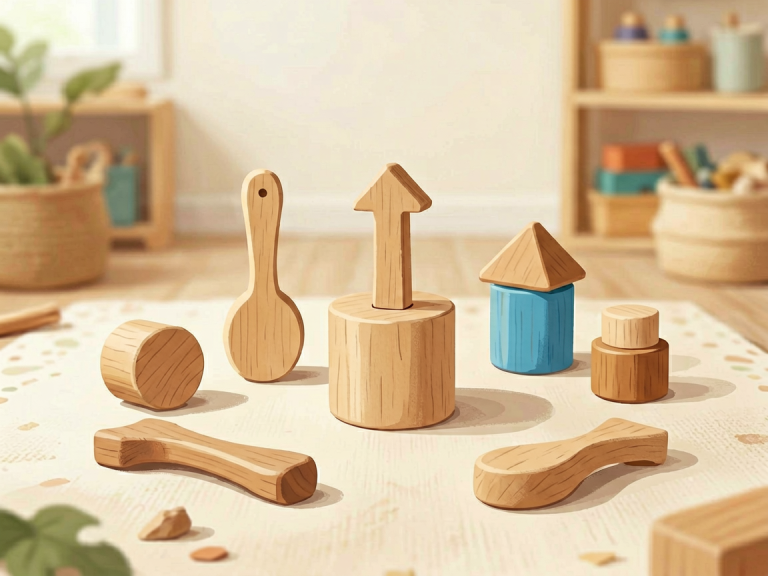
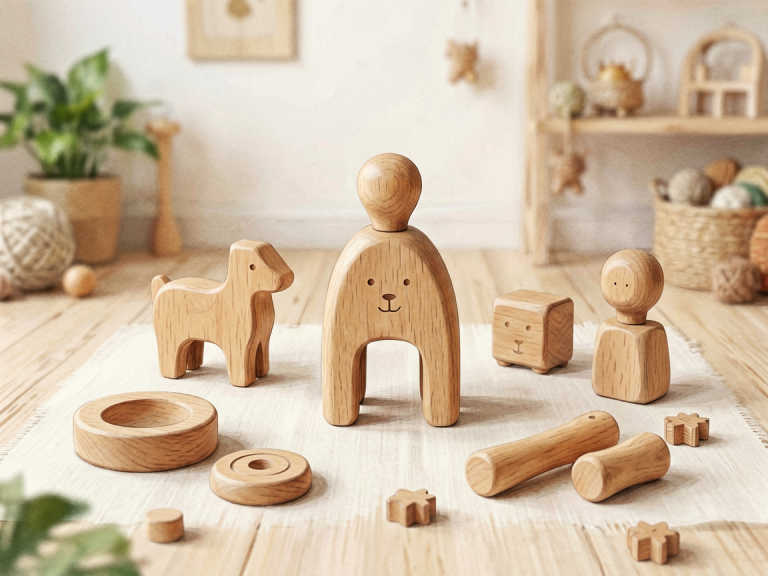
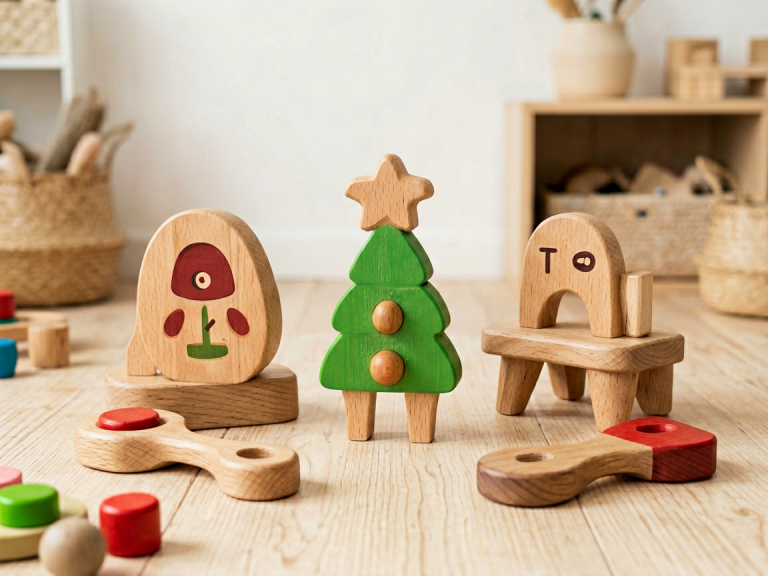
Consider a simple wooden block. A three-year-old can stack it, knock it down, stack it again, use it as a pretend phone, a bridge, or a cookie. The block does not care if it is dropped. It supports open-ended play. Now consider a fragile plastic robot that shoots rubber bands. It is exciting for exactly five minutes, then a rubber band snaps and the robot’s arm falls off. The child is left with a broken artifact that cannot be repaired or repurposed. The play stops. There is no continuation, no creative adaptation. Over time, a child who repeatedly experiences these interruptions may develop a shorter attention span and a preference for passive, screen-based entertainment, because screens never break and always respond. The humble, durable toy, in contrast, teaches resilience, patience, and imagination. By choosing fragile toys, we are inadvertently training our children to give up.
There is also a social dimension. When children play together, toys are often shared and grabbed. A fragile toy becomes a source of conflict, because any tug can break it. The child who owns it becomes anxious and possessive, while the other child is blamed for the breakage. Durable toys, on the other hand, can withstand a little roughhousing and allow children to practice negotiation and cooperation without fear of accidental destruction. In this way, the sturdiness of a toy directly influences the quality of social interaction. Fragile toys turn play into stress; durable toys turn play into joy.
Smarter Choices for Durable Play: What Parents Should Look For
The good news is that choosing better toys is not difficult, if you know what to look for. First, prioritize materials over flash: wood, heavy-duty fabric, solid molded plastic (not thin, brittle plastic), and metal are usually good choices. Avoid toys with many small glued-on parts, such as sequins, tiny buttons, or decorative elements that will peel off. Second, consider the toy’s design. Does it have a simple shape that can be used in multiple ways? Can it be thrown, dropped, and stepped on without breaking? A good test is to ask yourself: would I trust this toy to survive a two-story drop onto concrete? If not, it is too fragile for a three-year-old.
Third, resist licensing pressure. Character-based toys are often the most fragile, because the money goes toward the licensing fee rather than the manufacturing quality. Your child will not love a well-made plain wooden train any less than a branded plastic one—in fact, they will likely love it more, because it will still be working next month. Fourth, buy fewer, better toys. A three-year-old does not need a mountain of objects; they need a small collection of high-quality items that inspire deep, repeated play. Rotate them every few weeks to keep them fresh. This not only saves money but also reduces clutter and teaches children to appreciate what they have.
Fifth, and perhaps most importantly, embrace repair. When a toy does break, and it will occasionally, involve your child in fixing it. Use tape, glue, or simple tools. Show them that broken things can be rescued, that value endures beyond a crack. This is a powerful lesson in resourcefulness and care. And when a toy is truly beyond repair, explain the loss respectfully and let the child help decide whether to recycle it or put it in a “memory box.” Do not simply toss it in the trash with a shrug. These rituals teach children that objects have a life cycle and that we are responsible for them.
Conclusion: Investing in the Right Kind of Play
Buying toys that break easily for three-year-olds is an easy mistake to make, but an expensive one in every sense of the word. It wastes money, creates safety hazards, fosters emotional distress, and undermines the very benefits of play. The next time you find yourself reaching for a plastic trinket that will not survive the weekend, pause. Remember that your child is not asking for a disposable object—they are asking for an experience, a companion in imagination, a tool for discovery. Give them something that can keep up with them. Give them something that will break only after years of loving use, and by then, it will have broken their heart because they have grown out of it, not because it fell apart. That is the mark of a truly good toy. Choose durability. Choose quality. Choose the gift of play that lasts.