Unplugged Learning: Top Alternatives to Tablets for Your Three-Year-Old
Introduction
In an era where even toddlers seem to master swiping before speaking, many parents feel pressured to introduce “learning tablets” as early as age three. These devices promise alphabet drills, colorful animations, and interactive quizzes designed to jumpstart cognitive development. Yet growing evidence from child development experts raises serious concerns about excessive screen time for very young children, including diminished attention spans, reduced social interaction, and disrupted sleep patterns. More importantly, a three-year-old’s brain is wired for hands-on, sensory-rich, and movement-based learning—not passive pixel tapping. The best educational tools for this age are not digital at all. They are tactile, open-ended, and deeply engaging in ways that touch, sound, and human connection provide. This article explores five outstanding alternatives to learning tablets that foster creativity, problem-solving, motor skills, and emotional growth, all without a single battery or screen. Each option has been carefully selected to meet the developmental needs of three-year-olds, offering richer, more natural learning experiences than any app can replicate.
—
Wooden Puzzles and Shape Sorters: Building Foundational Skills
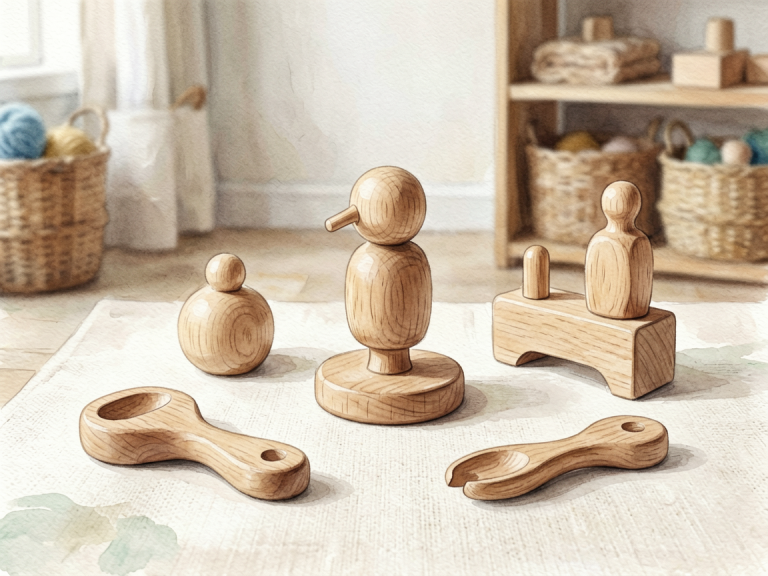
Wooden puzzles and shape sorters are timeless classics for a reason: they perfectly match the developmental stage of a three-year-old. At this age, children are mastering fine motor control, hand-eye coordination, and early problem-solving. A simple wooden puzzle with four-to-six chunky pieces requires a child to visually discriminate shapes, rotate pieces in space, and apply pressure to fit them correctly. Unlike a tablet game that gives instant audio feedback, a physical puzzle provides tangible proprioceptive feedback—the feel of wood, the satisfying click when a piece drops into place, and the sense of accomplishment when the entire picture is complete. Shape sorters go a step further by introducing geometry and categorization. A child must match a triangle block to a triangular hole, learning about angles and dimensions through trial and error.
What makes these toys superior to digital versions is their allowance for “productive struggle.” On a tablet, an incorrect answer often triggers a hint or a new animation, which can short-circuit the child’s natural perseverance. With a wooden puzzle, the child must physically manipulate the object and learn from the resistance of the wood. This builds patience, spatial reasoning, and self-correction. Moreover, puzzles encourage language development when parents name the shapes, colors, and animals. There is no algorithm rushing the child; the pace is entirely their own. For a three-year-old, this kind of unhurried, embodied learning lays a stronger foundation for future math and reading skills than any phonics app.
—
Building Blocks and Construction Sets: The Power of Open-Ended Play
Few toys rival the versatility of a set of simple wooden or large plastic building blocks. Unlike a learning tablet’s pre-programmed activities, blocks offer infinite possibilities. A three-year-old can stack them into a tower, line them up as a train, or use them to create a pretend castle. This open-ended play directly stimulates creativity, spatial awareness, and early engineering concepts. When a tower collapses, the child learns about balance and gravity in a real-world context. They must adjust the base, redistribute weight, or try a different arrangement—skills that translate directly to later STEM learning.
Construction sets that include interlocking pieces, like large Duplo bricks (not small Lego, which are a choking hazard), add another dimension. Children learn to match notches and holes, develop bilateral coordination, and practice sequencing. Crucially, blocks invite social play. Two three-year-olds building together must negotiate space, share pieces, and coordinate their plans—something a solitary tablet experience cannot replicate. The open-ended nature also means that the toy grows with the child: at three, they may simply stack; at four, they might build a simple house; at five, they can follow a pattern. Digital learning apps, by contrast, often have a fixed scope and quickly become boring or frustrating. A block set, once purchased, remains a source of daily discovery for years, making it one of the most cost-effective and developmentally rich alternatives to a learning tablet.
—
Art and Sensory Materials: Unleashing Creativity Without a Screen
A three-year-old’s natural inclination to smear, squish, and scribble is not just messy fun—it is the foundation of symbolic thought and emotional expression. Art and sensory materials, such as finger paints, playdough, crayons, and water-based markers, provide an irreplaceable alternative to tablet-based drawing apps. On a tablet, a child drags a stylus or finger to create neat digital lines that can be undone with a tap. In reality, dipping a finger in cold, squishy paint and dragging it across paper engages multiple senses simultaneously: tactile, visual, and even olfactory (if the paint is non-toxic and scented). This multisensory input strengthens neural connections in ways a flat screen cannot.
Playdough, for example, allows a child to roll, pinch, and flatten it, building hand muscles crucial for later writing. They learn about cause and effect: if you press too hard, the dough flattens; if you roll it evenly, you get a long snake. Mixing colors with paint teaches basic color theory. Furthermore, art is a powerful emotional outlet. A frustrated three-year-old can pound playdough or make bold, angry marks on paper, releasing tension constructively. Digital art apps often limit choices (only certain colors or stamps) and can cause frustration when the child’s real hand movements do not match the digital outcome. Real art materials encourage open-ended exploration, where the process is far more valuable than the product. For a three-year-old, this process—the feeling of gooey paint, the smell of crayons, the pride in a messy masterpiece—builds confidence and a love of learning that no app can rival.
—
Musical Instruments: A Symphony for Cognitive Development
Before a child can learn ABCs on a tablet, they can learn rhythm, pitch, and listening skills by banging on a toy drum or shaking a maraca. Musical instruments designed for toddlers—such as a simple xylophone, a set of rhythm sticks, a small tambourine, or a rainstick—offer an unparalleled alternative to screen-based music apps. When a three-year-old hits a xylophone key, they instantly hear a clear, acoustic tone that changes with force and location. This real-time audio feedback teaches cause and effect: a gentle tap produces a soft sound; a hard whack makes a loud one. They begin to recognize patterns and sequences, the very building blocks of both music and mathematics.
Moreover, making music with others—even just one parent—encourages turn-taking, listening, and social responsiveness. A tablet music game might prompt a child to tap a picture to hear a note, but it removes the physical connection between action and sound. Real instruments also support gross and fine motor skills: shaking a maraca requires wrist rotation, while tapping a drum develops arm strength and coordination. Singing along with a simple instrument enhances language development, as children link sounds to words. There is also the profound emotional benefit: a three-year-old can express joy, excitement, or calm through music. Unlike a tablet that often demands quick responses, musical play is self-directed. A child can explore a single note for minutes, fascinated by its vibration. This deep, focused engagement is exactly what young brains need to build attention and curiosity. In a world of instant digital gratification, the simple act of making a sound with one’s own hands is a powerful, grounding lesson.
—
Outdoor Exploration Kits: Nature’s Classroom
Perhaps the most overlooked alternative to learning tablets is the great outdoors. Three-year-olds are natural explorers, and the world outside offers an endless, ever-changing curriculum. An outdoor exploration kit—which can be as simple as a small bucket, a magnifying glass, a pair of child-safe tweezers, and a nature journal (or just a cardboard box)—transforms any backyard or park into a learning laboratory. Picking up leaves, examining a worm, or pouring water from one cup to another engages all senses and teaches concepts that tablets can only simulate. For example, a child who pours water into a sand pit learns volume, absorption, and gravity in a hands-on way. A child who watches a caterpillar crawl understands life cycles and movement patterns intrinsically.
Unlike a tablet’s two-dimensional images, nature provides authentic textures, smells, temperatures, and sounds. The rough bark of a tree, the cold sensation of a puddle, the scent of wet grass—these experiences wire the brain for real-world understanding. Outdoor play also promotes physical health: running, jumping, climbing, and balancing develop gross motor skills, reduce stress, and improve sleep. Socially, outdoor exploration encourages cooperative play—digging with a friend, sharing a found treasure, or pretending to be a bug. A learning tablet, even the most “educational,” isolates a child from this rich sensory and social environment. Furthermore, weather and seasonal changes introduce natural cycles and cause-and-effect relationships (snow melts in the sun, puddles dry up). For a three-year-old, these concrete experiences are far more meaningful than a screen-based weather app. Creating a simple “nature bag” with a small magnifying glass, a collection jar, and a crayon for leaf rubbings costs next to nothing and yields hours of engaged, screen-free learning.
—
Conclusion
While learning tablets promise convenience and measurable progress, they cannot replace the messy, tactile, and deeply interactive experiences that three-year-olds crave and need. The alternatives explored here—wooden puzzles, building blocks, art supplies, musical instruments, and outdoor exploration—each offer unique developmental benefits that support problem-solving, creativity, motor skills, and social-emotional growth. These tools encourage children to move, touch, experiment, and interact with the real world and real people. They also empower parents to become active participants in their child’s learning, rather than passive observers of a screen. By choosing these unplugged alternatives, families can foster a lifelong love of discovery that is rooted in the senses, the imagination, and the joy of hands-on play. In the end, the best “learning tablet” for a three-year-old is not a tablet at all—it is a world waiting to be explored.