The Smart Parent’s Toy Buying Guide for 2-Year-Olds Under $30
Why Under $30 Is the Sweet Spot for Toddler Toys
Let’s face it: two-year-olds are unpredictable, energetic, and endlessly curious. They will love a cardboard box one minute and ignore a fancy $100 toy the next. When you are shopping for a toddler, spending a fortune is not just unnecessary—it is often counterproductive. A tight budget of $30 forces you to focus on what truly matters: open-ended play, developmental value, and safety. At age two, children are rapidly developing language, motor skills, problem-solving abilities, and social-emotional understanding. The right toy, chosen wisely, can support all of these areas without breaking the bank. This guide will walk you through the best categories of toys, what to look for, and specific examples that fit comfortably under $30—while also being durable enough to survive the toddler whirlwind.
What a Two-Year-Old Actually Needs from a Toy
Before diving into specific product types, it is essential to understand the developmental milestones of a typical two-year-old. At this age, children are walking confidently, running, climbing, and exploring their physical limits. Their fine motor skills are improving, allowing them to stack blocks, turn pages, and manipulate small objects—though still not too small. Language is exploding: a two-year-old may know 50 to 300 words and is starting to combine two or three words into short sentences. They engage in parallel play (playing alongside other children rather than with them), and they are beginning to understand pretend play, cause and effect, and basic categorization like colors, shapes, and sizes.
Therefore, the ideal toy for a two-year-old should:
- Encourage movement and gross motor skills.
- Promote hand-eye coordination and fine motor practice.
- Stimulate language and vocabulary through naming, storytelling, or sounds.
- Be safe: no small parts that can be swallowed, no sharp edges, no toxic paints, and no long cords.
- Be durable enough to withstand throwing, biting, and dropping.
- Offer open-ended play, so the child can use it in multiple ways, not just one prescribed function.
- Be easy to clean (because everything ends up in the mouth at some point).
Under $30, these criteria are entirely achievable. You just need to know where to look.
Top Toy Categories That Deliver Maximum Value
Building and Stacking Toys
One of the best investments for a two-year-old is a set of sturdy building blocks. Wooden blocks, chunky plastic blocks, or even magnetic tiles (in smaller sets) all fall within the $20–$30 range. Blocks encourage spatial awareness, creativity, and fine motor control. A two-year-old will start by knocking down towers, then progress to stacking two or three blocks, and eventually create simple structures. They also learn about balance, gravity, and cause and effect. Look for blocks that are large enough to avoid choking hazards—at least 1.25 inches in diameter—and made from non-toxic materials. A classic set of 40–60 wooden unit blocks can cost around $25–$30 from many retailers. Alternatively, a small set of magnetic tiles with 20–30 pieces often retails for $25–$30, and their satisfying “click” provides sensory feedback that toddlers adore.
Shape Sorters and Puzzles
Shape sorters are timeless for good reason. They teach shape recognition, problem solving, and hand-eye coordination. Today’s versions often incorporate sounds, lights, or animals, but a simple plastic or wooden shape sorter works just as well. Many quality shape sorters cost between $10 and $20. To add challenge, some have multiple openings or require the child to rotate pieces to fit them through. Wooden puzzles with large knobs and four to eight pieces are another excellent choice. They help with grip, matching, and vocabulary as you name each animal or vehicle. Look for puzzles featuring familiar objects—fruits, farm animals, cars—to spark conversation. A good wooden peg puzzle set typically costs $12–$18, making it an easy budget-friendly addition.
Pretend Play: Play Kitchens, Tools, and Dolls
At two, imagination begins to blossom. Children mimic adult actions: they pretend to cook, sweep, talk on the phone, feed a doll, or hammer a toy nail. Pretend play builds empathy, language, and social skills. You do not need a massive play kitchen (which often costs over $100). Instead, consider individual accessories: a toy telephone, a set of plastic play food, a small shopping basket, a doctor’s kit, or a toolbox with plastic tools. These items usually cost between $10 and $25. For example, a 25-piece play food set with fruits, vegetables, and pizza slices ranges from $15 to $25. A toddler-sized toaster or blender (with fake buttons that click) is around $15. Dolls are also superb—simple soft-bodied baby dolls are $12–$20. The key is to let the child’s imagination lead, so avoid toys with too many electronic sounds that dictate the play narrative.
Ride-On Toys and Push/Pull Toys
Physical activity is crucial for two-year-olds. They love anything that moves with or against them. Push toys, like a wooden shopping cart or a walker with wheels, encourage walking and balance. Pull toys with strings (like a wooden duck on wheels) also develop coordination and teach about cause and effect. Many quality wooden push/pull toys cost $15–$25. Ride-on cars or scooters designed for toddlers can be found for $25–$30, especially if you choose a simple no-pedal model that the child propels with his or her feet. Safety note: always check for stable bases, low center of gravity, and no pinch points. A mini basketball hoop with a soft ball is another fantastic option, available for around $20. It encourages aiming, jumping, and throwing—all essential gross motor skills.
Musical Instruments and Sound Toys
Two-year-olds are natural musicians. They love making noise—which is actually a sign of growth. Instruments help with rhythm, cause and effect, and auditory discrimination. A small set of percussion instruments (shaker eggs, maracas, a tambourine, a drum) can be purchased for $15–$25. Look for sets that are well-made with sealed edges and non-toxic finishes. Keyboard or xylophone toys with chunky keys are also popular; many simple models cost under $30. These toys allow toddlers to experiment with volume, tempo, and the joy of creating sound. Even a set of metal or wooden bells that the child can shake or ring gives immediate sensory gratification. Just be mindful of the volume—no one wants a toy that blasts at 110 decibels.
Art Supplies and Sensory Play
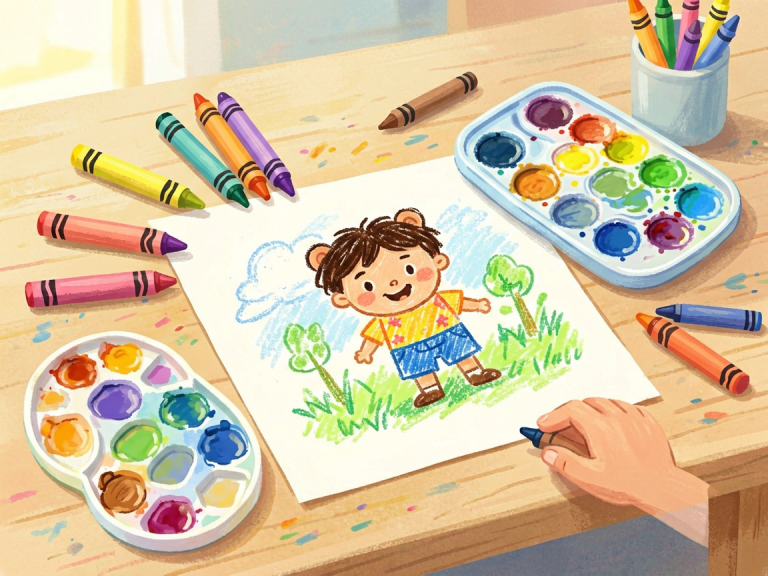
Art is a huge hit at this age, even if the final product looks like a scribble mess. Crayons (jumbo-sized, washable), finger paints, stampers, and play dough are all excellent choices. A pack of large, washable crayons costs $5–$8. A set of three or four tubs of non-toxic play dough with basic tools is $10–$15. Finger paint paper and washable paints together can be under $15. Sensory bins—filled with kinetic sand, water beads, or rice—are also wonderful, but you can create your own using a plastic bin and household items. If you prefer a ready-made sensory toy, a kinetic sand set with molds and tools is around $20. These activities strengthen fine motor skills, foster creativity, and provide calming sensory input. Always supervise art play to prevent messy—but harmless—outcomes.
What to Avoid When Shopping for a Two-Year-Old
Even with a good budget, some toys are red flags. Avoid anything with small batteries (button batteries are a serious choking and ingestion hazard). Avoid toys with magnets that can be swallowed. Avoid items with long strings or cords longer than 12 inches, which pose strangulation risks. Many electronic toys are overstimulating and limit imaginative play; they also tend to break quickly. Be wary of toys labeled for ages 3+ if the child is still mouthing objects. Always read the manufacturer’s age recommendations, but also use your judgment. And remember that packaging can be a hazard—plastic wrappers should be removed immediately.
Another thing to avoid is buying the same type of toy repeatedly. A two-year-old does not need five different shape sorters. Instead, choose variety across categories: one building set, one puzzle, one pretend play item, one physical toy, and one art supply. This approach maximizes developmental benefits without clutter.
Where to Find Great Toys for Under $30
You do not need to wait for a sale to find budget-friendly toys. Dollar sections in big-box stores sometimes carry surprisingly good items, though quality varies. Thrift stores and garage sales are treasure troves for wooden blocks, puzzles, and play food—just clean them thoroughly and check for damage. Online marketplaces (like Amazon or Walmart) have extensive filters by price. However, be cautious about off-brand toys that may not meet safety standards. Look for reputable brands that prioritize non-toxic materials and rigorous testing. Some well-known names with budget options include Melissa & Doug (wooden puzzles and play food), Green Toys (made from recycled plastic), Fisher-Price (classic sorters and pull toys), Hape (wooden instruments and blocks), and B. toys (colorful, quirky designs). Many of these brands have items priced between $10 and $30.
Three Sample Budget-Friendly Toy Sets
To give you a head start, here are three complete toy bundles, each under $30 total:
Bundle One: The Builder
- 30-piece wooden block set ($22)
- A small plastic shape sorter ($6)
Total: $28
This bundle covers spatial reasoning, fine motor, and problem-solving.
Bundle Two: The Pretender
- A plastic play food set with 20 pieces ($15)
- A soft baby doll with a simple cloth diaper ($10)
Total: $25
This bundle encourages empathy, vocabulary, and social mimicry.
Bundle Three: The Little Athlete
- A mini basketball hoop with soft ball ($18)
- A set of four shaker eggs ($8)
Total: $26
This bundle targets gross motor skills and sensory rhythm.
Final Tips for Making the Right Choice
When you are standing in the aisle or scrolling online, ask yourself three questions: Can my child use this in more than one way? Is it robust enough to survive being tossed across the room? Will it inspire interaction—either with me, with another child, or with the environment? If the answer is yes, then even a $15 toy is worth far more than a $60 plastic gadget that lights up and then sits forgotten.
Also, remember that the toy is not the end goal; the relationship is. A two-year-old learns most through you. Sit on the floor, stack a block tower, make animal sounds, and let the child knock it down with glee. That interaction is the real magic, and it costs nothing. A budget of $30 is more than enough to provide a rich, joyful, and developmentally powerful toy collection for your toddler. Smart buying means prioritizing simplicity, safety, and open-ended play—all of which are easy on both your wallet and your sanity.
So next time you are shopping for a two-year-old’s birthday or a just-because treat, remember: the best toy is the one that gets used, loved, and even chewed on a little. With this guide, you are officially ready to navigate the toy aisle with confidence—and keep $10 to spare for coffee.