The Right Play: An Age-Appropriate Toy Guide for 3-Year-Olds
Why the Right Toy Matters at Age Three
At three years old, a child is no longer a toddler in the fragile sense, nor yet a preschooler with advanced logic. This is a magical window of rapid brain development, language explosion, and social awakening. The toys a three-year-old interacts with are not mere distractions; they are tools for building neural pathways, refining motor skills, and understanding the world. Choosing age-appropriate toys for this stage is both an art and a science. The wrong toy can lead to frustration or boredom, while the right toy can spark curiosity, confidence, and joy. This guide will help parents, grandparents, and caregivers navigate the overwhelming toy aisle with clarity, focusing on safety, developmental benefits, and genuine play value for a child who is at once independent and still deeply dependent on guided play.
Safety First: Non-Negotiable Rules for Three-Year-Olds
Before discussing specific categories, we must address the foundation of any toy guide: safety. At age three, children still explore with their mouths, though less frequently than at two. They also run, climb, throw, and sometimes test the structural integrity of everything they touch. Therefore, any toy considered must meet strict safety standards. Look for toys with no small parts that could become choking hazards—a common benchmark is that any part smaller than a 1.25-inch diameter is too small. Avoid toys with sharp edges, brittle plastic that can shatter, or long cords that pose strangulation risks. Batteries should be securely enclosed, and any painted surfaces should be non-toxic and lead-free. Additionally, consider durability. A three-year-old can be surprisingly rough on toys, and a toy that breaks easily not only disappoints but can create dangerous fragments. Always check for age labels, but remember that these are minimum guidelines; your child's individual maturity matters just as much. When in doubt, choose larger, sturdier, and simpler.
Building Big Muscles: Gross Motor Toys
Three-year-olds are perpetual motion machines. They love to run, jump, climb, and balance. The best gross motor toys for this age harness that energy while building coordination, strength, and spatial awareness. A small, low-to-the-ground tricycle is a classic choice that gives a child a sense of speed and control without the instability of a two-wheeler. Look for one with wide wheels and a low seat. Push-and-pull toys, such as a wooden wagon or a cart with a long handle, are also excellent. They encourage walking, pulling, and problem-solving as the child learns to navigate corners and obstacles. Balance bikes, which have no pedals and are propelled by the child’s feet, are fantastic for developing balance and confidence, setting the stage for a smooth transition to a pedal bike later. For indoor energy, consider a soft foam climbing set with ramps and blocks, or a small indoor trampoline with a safety handle. Always supervise active play, and provide clear play spaces free of furniture corners. Remember that the goal is not to exhaust the child, but to let them experience the joy of moving their body in new ways.
Refining Small Hands: Fine Motor and Manipulative Toys
While gross motor play engages the whole body, fine motor skills require precision and dexterity. At three, a child’s fingers are becoming more agile, and they can now perform actions that require more careful coordination. Toys that encourage this include large wooden beads for stringing, chunky puzzles with knobs, and interlocking blocks like DUPLO (not LEGO, which is too small). Shape sorters are still valuable, but look for more complex versions with multiple shapes and variations. Lacing cards, where a child threads a shoelace through holes around a picture, are excellent for hand-eye coordination. Playdough is a universal favorite; rolling, squeezing, pinching, and cutting with safe scissors strengthens small hand muscles and fosters creativity. For a more structured challenge, try a simple pegboard with large pegs. These toys do more than entertain; they prepare a child for writing, drawing, and self-care tasks like buttoning and zipping. The key is to offer a variety but not too many at once—rotating toys keeps interest high and prevents overwhelm.
Imagination Unlocked: Pretend Play and Role-Playing Sets
The three-year-old imagination is a powerful engine. This is the age when a cardboard box becomes a spaceship, and a stick becomes a magic wand. Pretend play is not just adorable; it is critical for social-emotional development, language growth, and problem-solving. The right toys for this category are those that allow open-ended scenarios. A play kitchen with plastic or wooden food, pots, and pans is a staple. A dollhouse with simple furniture and small doll figures (but with no tiny choking hazards) invites narrative creation. Dress-up clothes—including capes, hats, old adult shirts, and child-safe accessories—transform a child into a doctor, a firefighter, or a princess. Tool benches with plastic tools are perfect for the child who wants to "fix" everything. Puppets are especially powerful; a simple hand puppet can become a best friend, a scary monster, or a baby in need of comfort. When choosing pretend play toys, avoid those with pre-recorded sounds or fixed narratives. The more open-ended the toy, the more it allows the child to exercise their own creativity. Also consider mirror play; a child-safe unbreakable mirror can enhance self-awareness during role-play.
Language and Learning: Books, Games, and Early Literacy Tools
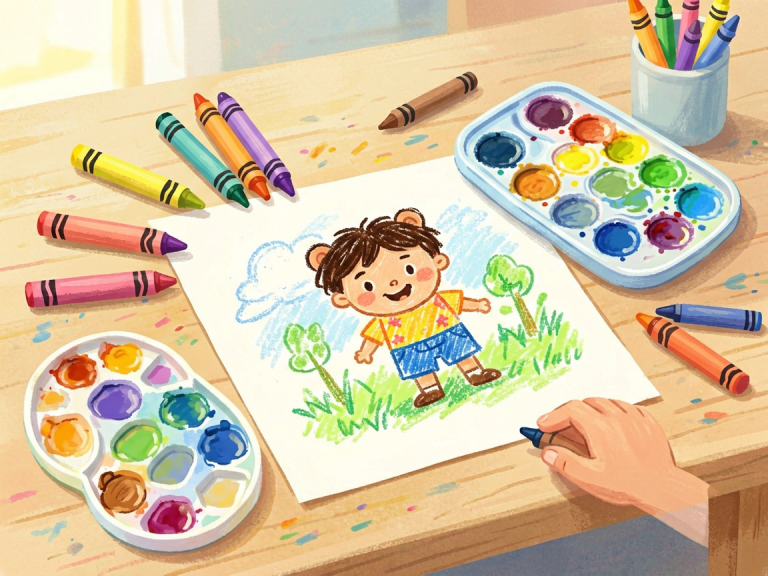
At three, vocabulary grows from roughly 200 to 1,000 words in a single year. Toys that support this explosion are invaluable. Board books and paper-page picture books with colorful, detailed illustrations are ideal. Look for books with repetitive phrases, rhyming patterns, and simple stories about everyday experiences like going to the doctor or making friends. Alphabet puzzles and magnetic letters introduce letter shapes and sounds, but avoid forcing rote memorization—play, not drilling, is the goal. Matching games and simple memory card games (with large, thick cards) train visual memory and concentration. A basic "I Spy" game or a set of picture cards with everyday objects can spark vocabulary building. Also excellent are simple audio players designed for kids, such as a child-friendly CD player or a Yoto-style player that plays story cards. These allow a child to independently choose a story or song, fostering listening skills and narrative understanding. Do not underestimate the power of a simple notebook and crayons; drawing and "writing" scribbles are the precursors to literacy. The best language toys are those that invite conversation between the child and an adult or sibling.
Social and Emotional Growth: Cooperative Games and Feeling Toys
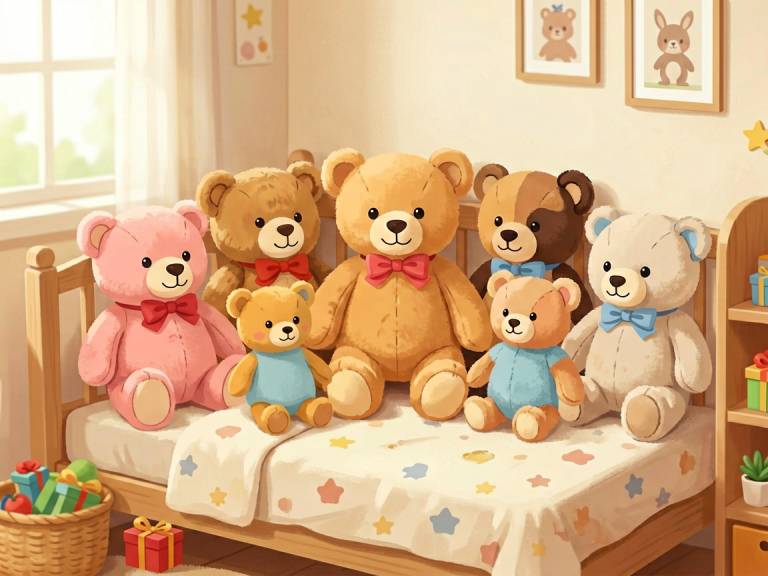
Three-year-olds are beginning to understand rules, taking turns, and the feelings of others, though they still need lots of practice. Toys that facilitate social-emotional learning are treasures. Simple board games designed for ages 3 and up, such as "Cooperative cooperative" games where everyone works together to finish a race before the "bad weather" arrives, teach patience, empathy, and shared joy—without the pain of losing, which many three-year-olds cannot handle. Puzzles with faces showing different emotions can help a child label and express feelings. Puppets and stuffed animals are also powerful tools for emotional rehearsal; a child may project their own anxiety or anger onto a bear and then soothe it, which is a healthy coping mechanism. Consider a set of feelings cards with pictures of happy, sad, angry, surprised, and scared faces. Ask, "How does this face feel?" and then talk about a time the child felt that way. There are also games like "Feelings Bingo" that are age-appropriate. Additionally, any set involving play people and a house or a school setting can allow the child to act out social scenarios, such as sharing a toy or saying sorry. The adult's role is to narrate and model, not to instruct or correct harshly.
The Classics: Simple Building Blocks and Trains
In the age of flashing, buzzing electronic toys, it is easy to forget the power of the simplest materials. Wooden unit blocks—plain, unpainted, or with a gentle water-based stain—are arguably the single best toy for a three-year-old. Stacking, knocking down, building bridges, and creating enclosures teach physics, balance, and spatial reasoning. They also encourage complex pretend scenarios: a block becomes a phone, a sandwich, or a bed for a toy elephant. Similarly, a basic wooden train set with grooved tracks and wooden trains with magnetic couplings is a perennial winner. It develops fine motor skills as children connect tracks and cars, and it offers endless possibilities for rearrangement. The trains themselves become characters in stories. Classic wooden puzzles, nesting cups, and stackers also belong in this category. These toys do not require batteries, never break easily, and often last for generations. They are also easier on the eyes and the home environment than plastic gear. When selecting these, prioritize quality wood, smooth edges, and non-toxic finishes.
Independence and Daily Living: Dolls, Strollers, and Chore Toys
A three-year-old is on a quest for autonomy. They want to do "big kid" things. Toys that mirror real-life tasks support this drive and build confidence. A baby doll with a stroller or a crib allows the child to practice nurturing and caregiving. A small broom, dustpan, or a set of snap-together cleaning tools lets them imitate adults sweeping up "mess" (which they will thoroughly enjoy). A toy kitchen is perfect for "cooking" dinner, and a cash register with play food can turn the living room into a grocery store. These toys are not just about fun; they teach responsibility in a playful way. They also provide an opportunity for a child to feel useful and competent. When a child puts a doll to bed, they are practicing empathy and routine. When they "wash" dishes, they are developing sequencing and motor planning. Choose role-play items that are sturdy and child-sized, so the child can manage them without adult help. Avoid overly cute or fragile miniatures; they should be able to withstand being dropped and thrown on occasion.
What to Avoid: The Pitfalls of the Modern Toy Market
Just as important as choosing good toys is knowing what to skip. For three-year-olds, avoid toys with small parts, as mentioned. Also avoid toys with high-pitched, loud, or repetitive electronic sounds; these can overstimulate the nervous system and lead to shorter attention spans. Many "educational" tablets and apps are not developmentally appropriate, as they encourage passive consumption rather than active, hands-on exploration. Avoid toys that claim to teach too much too soon—like those with flashy flashcards for advanced math—because they can create frustration. Stay away from toys with gender stereotypes that limit a child's options; a truck is for everyone, and a doll is for everyone. Also, be wary of toys connected to popular movie franchises that are designed as marketing tie-ins; they often have limited play value and are fragile. Finally, do not overbuy. Too many toys can overwhelm a three-year-old, making it hard to choose and play deeply. A curated collection of ten to fifteen excellent toys is far better than a closet full of clutter. Regularly rotate toys every few weeks; old favorites return with fresh enthusiasm.
How to Play Along: The Grown-Up's Role
The best toy in the world is useless without a caring adult to share in the experience. When you give a child a toy, sit on the floor and play with them, at least some of the time. Follow their lead. If they want to stack blocks into a tower, do not correct them or show them "the right way." Ask open-ended questions: "What happens if you put the big block on top?" "How does the doll feel when she falls?" "What should we cook for the bear's birthday?" This kind of play builds vocabulary, problem-solving, and trust. Also, let the child struggle a little; do not immediately solve a puzzle for them. The process of trial and error is where learning happens. As the child grows confident, step back and let them play independently, checking in periodically. This balance gives them the message that their play is valuable, and that you are a safe and interested partner.
Conclusion: A Toy Is More Than a Gift
Choosing age-appropriate toys for a three-year-old is not about following a trend or buying the most expensive item. It is about understanding the developmental needs of a child who is discovering who they are, how the world works, and how to relate to others. The right toy respects their size, their safety, their curiosity, and their growing independence. Whether it is a simple wooden block, a dress-up cape, a tricycle, or a picture book, each toy is an invitation to learn, imagine, and grow. The best guide is always the child themselves; watch what they are drawn to, observe how they play, and choose items that extend their interests without overwhelming them. Remember that the most powerful plaything in any home is the attention and love of an adult. Pair that with a thoughtful toy selection, and you have given a three-year-old the world.