Less Is More: Rethinking Overbuying Holiday Toys for 2-Year-Olds
The holiday season transforms ordinary living rooms into glittering wonderlands, and for parents of toddlers, the pressure to make it magical often translates into a mountain of wrapped boxes. Yet the annual ritual of overbuying holiday toys for 2-year-olds deserves a closer look. While the impulse stems from love, the outcome is frequently stress, clutter, and missed opportunities for genuine learning. Understanding why we overspend and what young children truly benefit from can help families create holidays that are both joyful and developmentally sound. The brightly colored shelves, the relentless commercials, and the fear of a disappointed little face all feed a cycle that benefits toy makers far more than it benefits children. It is time to step back and ask a simple but challenging question: Does more really mean better for a two-year-old?
The Roots of Overbuying: Guilt, Marketing, and Social Pressure
Why do parents buy so much? First, there is parental guilt. Many caregivers work long hours and fear that not providing a lavish holiday will disappoint their children. They worry that their toddler will remember a sparse tree and feel unloved. Second, marketing aggressively targets toddlers and their parents. Toys are advertised with colorful characters, catchy jingles, and “educational” labels that imply that without them, a child will fall behind. Third, social pressure plays a role: seeing relatives arrive with armloads of gifts, or scrolling through photos of other families’ holiday hauls, makes parents feel inadequate. These forces combine to create a belief that more toys equal more love. Yet research in child development consistently shows that toddlers do not need dozens of new objects; they need comfort, routine, and responsive interaction with adults. The guilt-driven purchase is a short-term fix that leaves long-term consequences—financial strain, physical clutter, and a child who is paradoxically less engaged with any one item.
What a Two-Year-Old Actually Needs from a Toy
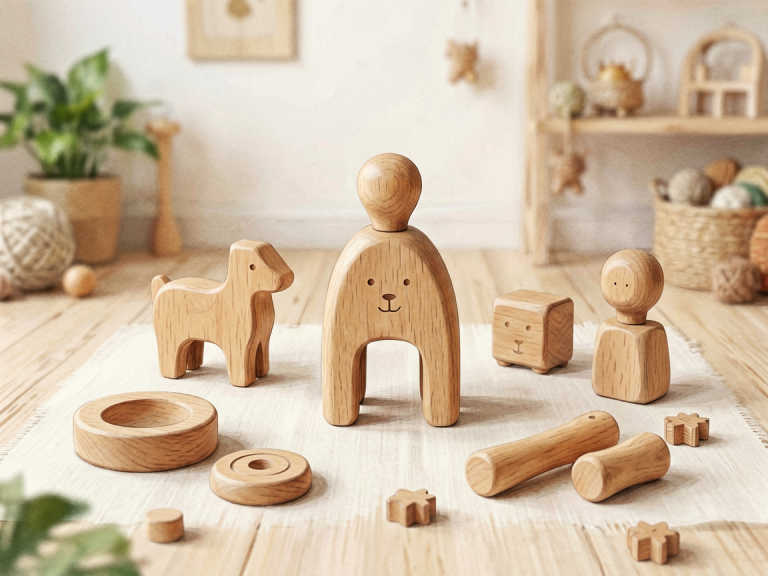
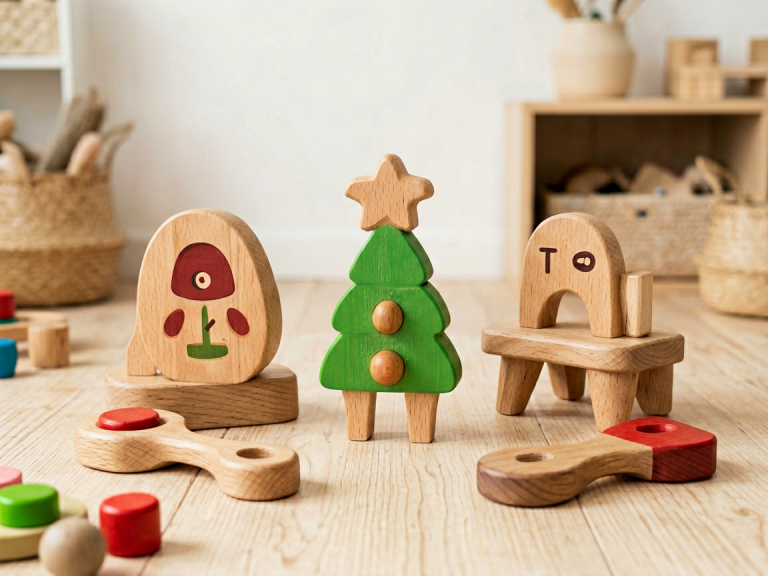
At age two, children are developing rapidly in motor skills, language, and emotional regulation. Their play is simple, repetitive, and sensory. A cardboard box can be a car, a house, or a drum. Open-ended toys—blocks, stacking cups, puzzles, shape sorters, and simple pretend-play items like a doll or a stuffed animal—offer far more developmental value than flashy electronic gadgets that perform actions at the push of a button. Two-year-olds are also easily overstimulated. A room filled with dozens of new toys at once can lead to “can’t choose” behavior, where the child flits from one object to another without engaging deeply. In fact, child psychologists recommend rotating a small selection of toys rather than presenting everything at once. When parents overbuy holiday toys for 2-year-olds, they inadvertently undermine the very learning opportunities they hope to create. A toddler who can focus on one toy for ten minutes is practicing attention, persistence, and problem-solving—skills that a mountain of bells and whistles can never teach. The best toy for a two-year-old is not the most expensive one; it is the one that invites imagination and requires a parent to participate.
The Evidence Against Toy Overload
Research supports the idea that fewer toys lead to better play. A well-known study at the University of Toledo observed toddlers playing with either four toys or sixteen toys. The children with four toys played with each toy for longer, engaged in more creative uses, and demonstrated more focused attention. The group with sixteen toys was easily distracted, switching toys frequently, and their play was more chaotic. This finding has direct implications for the holiday season. When grandparents, aunts, uncles, and parents all contribute to a massive pile of gifts, the two-year-old is overwhelmed, not delighted. Furthermore, many holiday toys for this age are battery-operated and include flashing lights and loud sounds. Such toys can actually reduce the amount and quality of language because they replace conversation with noise. A toddler learns best through back-and-forth interactions with people, not through a plastic robot that says the alphabet once every minute. Thus, overbuying is not a harmless indulgence; it is an active barrier to healthy cognitive development. The child becomes a passive observer of the toy’s effects, rather than an active creator of his or her own play world.
Beyond the Toys: The Financial and Environmental Toll
The impact of overbuying extends beyond the child. For the family budget, holiday spending on toys for a two-year-old often exceeds what is reasonable. A child at this age does not understand the price tag or the brand; he or she is equally happy with a set of measuring cups from the kitchen. The money spent on a dozen expensive toys could instead fund a college savings account, a family experience, or a charitable donation in the child’s name. Additionally, the environmental cost is significant. Most plastic toys are not recyclable, and many break within months, ending up in landfills. The production of these toys consumes resources and energy, contributing to a culture of disposability. By overbuying holiday toys for 2-year-olds, we are teaching the next generation—albeit unintentionally—that consumption is the path to happiness. This is a heavy price to pay for a momentary burst of wrapping-paper frenzy. Every package that gets ripped open and forgotten by New Year’s Day represents not just wasted money, but also a wasted opportunity to prioritize what truly sustains a family.
How to Break the Overbuying Habit This Holiday
Fortunately, it is possible to resist the pressure. First, set a concrete number of gifts. Some families adopt the “want, need, wear, read” rule: four gifts that cover each category. Others choose a one-gift-per-family-member policy. Second, communicate