The Gift of Less: Why Overbuying Holiday Toys for Four-Year-Olds Does More Harm Than Good
The holiday season descends upon us every year with a familiar rhythm: twinkling lights, familiar carols, and, for millions of families, the inevitable mountain of gifts beneath the tree. For a four-year-old, the scene looks like paradise—bright wrapping paper, overflowing boxes, and the promise of immediate pleasure. For parents, the aftermath often tells a different story: a disconcerted child overwhelmed by choices, mounds of discarded packaging, and dozens of toys that will be forgotten within a week. Overbuying holiday toys for four-year-olds has become a cultural default, driven by aggressive marketing, parental guilt, and the mistaken belief that more gifts equal more love. Yet a growing body of developmental research and practical parenting wisdom suggests that the opposite is true. A four-year-old does not need an avalanche of presents; she needs the space to play, the freedom to focus, and the chance to genuinely treasure the few special things she receives. This essay argues that overbuying holiday toys for four-year-olds is not just wasteful—it is actively harmful to their cognitive, emotional, and social development, and that a shift toward thoughtful, limited gifting can transform the holidays for the better.
The Four-Year-Old’s Brain: A Landscape in Progress
To understand why overbuying is a mistake, one must first understand what is happening inside the mind of a four-year-old. At this age, children are not miniature adults with refined preferences; they are rapidly developing human beings whose brains are still learning how to filter, focus, and regulate emotion. The frontal lobe, which governs impulse control and decision-making, is still years away from maturity. A four-year-old lives firmly in the present moment, driven by curiosity and sensation rather than logic and long-term planning. She is in what developmental psychologists call the "preoperational stage," where symbolic play, imagination, and magical thinking bloom. A cardboard box can become a spaceship; a wooden stick can become a magic wand.
This period of cognitive and emotional growth demands something that an excessive pile of toys actively undermines: simplicity. A child learns best in an environment that is predictable, manageable, and free from overwhelming stimuli. When she is presented with dozens of new toys at once, her nervous system is bombarded. The brain does not yet have the executive functioning skills to organize and prioritize this flood of novelty. Instead of feeling joy, she may feel disoriented. Parents often observe the classic “gift frenzy” followed by a crash: the child rips open present after present, barely glancing at each item, and then quickly declares, “I’m bored.” This is not ingratitude. It is the predictable result of a developing brain facing cognitive overload. Four-year-olds need time to absorb, process, and connect. They need repetition and routine to build neural pathways. A single new toy, introduced calmly and with intention, has far greater developmental value than a dozen toys thrown into a chaotic unwrapping session.
The Paradox of Plenty: How Choice Overload Stifles Play
One of the most robust findings in modern psychology is the “paradox of choice.” When people are offered too many options, they become anxious, dissatisfied, and less able to commit. This is true for adults choosing jam in a supermarket, and it is even more true for young children choosing what to play with. Researchers have found that toddlers and preschoolers who have fewer toys available actually engage in more sustained, imaginative, and creative play. In a well-known study, researchers observed children playing with either four toys or sixteen toys. The children with four toys played for significantly longer periods, invented more varied and complex scenarios, and showed greater concentration. The children with sixteen toys, by contrast, flitted nervously from one object to another, failed to dive deeply into any single game, and appeared more distracted and frustrated.
Why does this happen? Because play is not simply entertainment; it is the child’s primary mode of learning. Deep play requires paying attention long enough to create a narrative, test an idea, solve a problem, or practice a skill. When a four-year-old is surrounded by excess, her attention is continuously fractured by the presence of competing possibilities. Every toy becomes a temptation to abandon the current activity. The result is “popcorn play”—jumping from one thing to the next, never committing, never achieving the state of flow that is so crucial for cognitive development. Overbuying thus robs a child of the most valuable ingredient in play: constraint. Boundaries, ironically, liberate imagination. A child with one set of wooden blocks and a few animal figures will construct elaborate habitats and rescue missions. A child with twenty battery-operated, blinking, noise-making machines will spend her time pressing buttons and waiting for the next distraction. The former builds flexible, creative, problem-solving neural connections; the latter builds only the habit of passive consumption.
Furthermore, the sheer physical clutter of an over-filled playroom has measurable effects on stress. A cluttered environment raises cortisol levels in both adults and children. For a four-year-old, whose emotional regulation is still fragile, an overstimulating room can lead to more tantrums, more anxiety, and greater difficulty settling down at naptime or bedtime. The child is not being “spoiled” by too many gifts; she is being overwhelmed by an environment that her immature brain cannot filter. Parents who have ever tried to clean up a sea of tiny plastic pieces while their child cries in the corner understand this intuitively. The abundance we intended as a gift becomes an emotional burden.
What the Research Says: Attention, Creativity, and Gratitude
The negative effects of overbuying extend beyond the moment of unwrapping. Research on attention indicates that capacity for sustained focus is built through practice, much like a muscle. A four-year-old given a manageable number of toys has daily opportunities to practice deep engagement. She can revisit the same dollhouse over several days, inventing increasingly complex stories, learning to solve social conflicts, and developing what psychologists call “object mastery.” In contrast, a child with a rotating collection of new toys is encouraged to habituate quickly and always seek novelty. This pattern, repeated over months and years, can lay the foundation for shorter attention spans and a diminished ability to tolerate the quiet boredom that sparks creativity.
Creativity itself is not born from receiving more inputs; it is born from making more connections among fewer inputs. When a child has only a few toys, she is forced to improvise. A bath towel becomes a cape; a cardboard tube becomes a telescope; a single toy train becomes a whole passenger journey. These imaginative transformations are the very essence of divergent thinking, a skill that predicts resilience and innovation in later life. Overbuying, by contrast, floods the child with ready-made, finished products. The toy does the thinking for the child. A singing, flashing plastic cell phone that plays pre-recorded phrases offers little room for symbolic invention. A simple wooden stack of rings, however, can be a tower, a drum, a hat, or a cookie. The fewer bells and whistles a toy has, the more work the child’s brain must do—and that work is the true gift.
Perhaps the most profound damage from overbuying is its effect on gratitude. Gratitude is not an automatic response to receiving; it is a developed emotional capacity that requires noticing, reflecting, and appreciating the thought behind the gift. For a four-year-old, the ability to feel gratitude is still nascent. It emerges when an adult helps the child connect the object with the giver’s intention: “Grandma remembered how much you love dinosaurs. She chose this special T-Rex just for you.” When there is a pile of fifty presents, no single gift gets this attention. The child’s brain enters a survival mode of rapid intake, and the emotional significance of each item is lost. Moreover, social science research on generosity suggests that children who receive everything they want often develop lower levels of satisfaction and higher expectations that gifts are simply the baseline. They learn that holidays are about acquisition rather than connection. In the long run, the child who experiences the joy of wanting something for months and then receiving it in one special moment learns a far deeper lesson about delayed gratification and value than the child who receives everything at once.
The Hidden Costs: Parental Stress and Environmental Waste
The damage from overbuying is not limited to the child. Parents pay a steep price, both financially and emotionally. The pressure to create a “magical Christmas” often translates into hours of online shopping, credit card debts that linger into spring, and a deep, gnawing anxiety that whatever has been purchased will not be enough. This parental stress is felt by children. Young children are exquisitely attuned to their caregivers’ emotional states. A parent who is tense, worried, or exhausted during the holidays sends a signal that the celebration is a burden. The irony is acute: we buy more to make our children happy, and the buying itself makes us less present, less patient, and less available—which makes our children unhappier. Research on well-being consistently shows that experiences, not material objects, bring lasting joy. What a four-year-old remembers from the holidays is not the specific toy she unwrapped, but the snuggling on the couch, the smell of pancakes, the sound of her father’s laugh, and the feeling of being securely loved. No battery-powered item can substitute for that.
There is also a growing ecological cost. The global toy industry produces billions of items each year, the vast majority made from non-recyclable plastics and shipped in layers of wrapping and packaging. According to environmental studies, toys are among the least-resold and most-sent-to-landfill consumer products. Holiday overbuying accelerates this cycle. A child who is given twenty toys will inevitably break, discard, or outgrow most of them within months—often within weeks. The plastic pieces that scatter across the living room end up in the trash, contributing to the immense waste problem that will inherit our children’s future. Teaching a four-year-old to care for a small number of beloved objects is not just a lesson in materialism; it is an early lesson in stewardship of the planet. When we choose quality over quantity, we model the values of sustainability, mindfulness, and respect for resources.
A Better Approach: Curated Gifting and the Joy of Anticipation
Fortunately, there is a better way. Overbuying is a habit, not a necessity, and habits can be changed. The first step is to redefine what a “successful” holiday means. Instead of measuring success by the height of the gift pile, measure it by the depth of the child’s engagement with each present. Adopt a simple framework such as the “four gifts rule”: something to read, something to wear, something they want, and something they need. This structure imposes a healthy limit while still providing variety. For a four-year-old, the “want” gift can be a single special item chosen with her input; the “need” gift might be new pajamas or a backpack; the “read” gift might be a beautifully illustrated picture book; and the “wear” gift could be a cozy sweater that makes her feel big. This approach turns gift-giving into a thoughtful act rather than a spending frenzy.
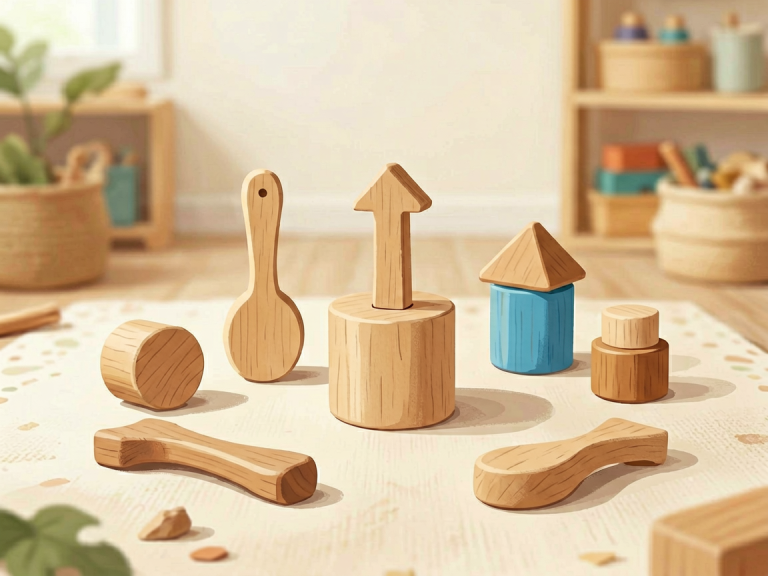
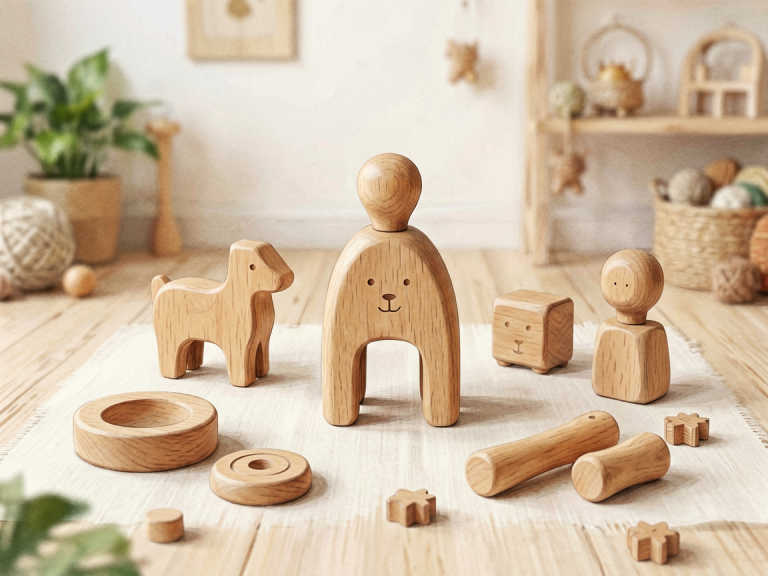
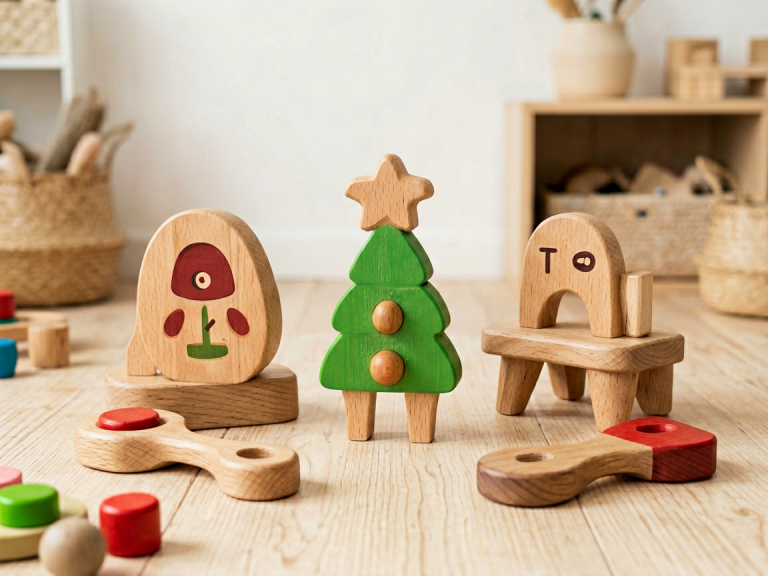
When selecting toys, parents should prioritize open-ended materials over passive entertainment. Wooden blocks, magnetic tiles, art supplies, play silks, dress-up clothes, simple animal figures, and a well-made dollhouse or train set can provide hundreds of hours of imaginative play across many years. These toys grow with the child because they do not dictate their own purpose. They invite the child to create. In contrast, licensed character toys, electronic gadgets, and single-purpose items lose their charm quickly. Before making a purchase, ask: “Will my child be actively creating, thinking, or moving, or just passively observing? Will this toy still be interesting in six months? Does it require my child to use her imagination?” If the answer to those questions is no, do not buy it.
Another crucial strategy is to separate the unwrapping experience from the entire holiday. Many families find it helpful to spread gifts across several days, perhaps one gift on Christmas Eve, one on Christmas morning, and one later in the day. This allows the child time to absorb each gift, to play with it, and to talk about it. Anticipation, delayed in this gentle way, is also a powerful emotional teacher. A four-year-old who is excited about one specific gift for a few days learns to hold a feeling, to manage desire, and to savor the eventual fulfillment. In a culture of instant gratification, this is an invaluable gift itself.
It is also important to manage the influence of well-meaning relatives. Grandparents and aunts often equate gift-giving with love and may feel hurt by requests to limit gifts. Parents can frame the conversation around the child’s well-being: “We’re trying to keep things calm and focused this year. We’d love it if you contributed to a savings account for her future” or “She is so much happier with one or two meaningful gifts. Could we coordinate together?” Experiences make wonderful gifts as well—a museum membership, a day trip to the zoo, a cooking class for the two of them, or a special subscription of art projects delivered monthly. These gifts create memories and strengthen relationships, and they do not clog the playroom.
Finally, involve the child in giving to others. A powerful antidote to overbuying is to shift attention away from receiving and toward generosity. Even a four-year-old can participate in selecting a toy to donate to a child in need, wrapping it, and delivering it to a collection box. She can help draw pictures for an older relative or bake cookies for a neighbor. These acts teach that the holiday is not about the pile under the tree but about the warmth in the heart. The child who learns to give will grow into an adult who understands that love cannot be purchased—it must be practiced.
Conclusion: Rethink the Pile
The image of a four-year-old surrounded by a mountain of shredded wrapping paper has become a sentimental cliché, but the reality is far less endearing. Overbuying holiday toys for four-year-olds burdens their developing brains, fragments their attention, undermines their creativity, and blocks the very gratitude we hope to cultivate. It strains parents financially and emotionally, and it sends a message to children that abundance is synonymous with joy. When we strip away the commercial noise, we discover that children do not need more. They need more time, more presence, more connection, and more room for their own imaginations. The greatest gift a four-year-old can receive is not another plastic thing—it is a parent who kneels down to play, a grandparent who tells a story, and a holiday that feels safe, calm, and full of love. So this season, resist the urge to overbuy. Choose fewer, better gifts. Leave space under the tree and in the child’s heart. In that space, something far more precious will grow: the deep and lasting joy of having enough, and of being enough.