The Generosity Trap: Why Overbuying Holiday Toys for 5-Year-Olds Does More Harm Than Good
Introduction: A Mountain of Wrapping Paper, a Puddle of Attention
Every December, millions of parents find themselves standing in crowded toy aisles, arms overflowing with colorful boxes, guided by a single, well-intentioned thought: *"I want to make this the best Christmas ever."* For a five-year-old, the holiday season is a magical blur of twinkling lights, sugar cookies, and the visceral thrill of tearing open gift after gift. Yet in recent years, the concept of "the best Christmas ever" has become dangerously conflated with the sheer *quantity* of presents under the tree. Overbuying holiday toys for 5-year-olds has become a widespread phenomenon, driven by advertising, social pressure, and parental guilt. But what seems like an expression of love is actually a developmental misstep. For a child who is just beginning to understand the world, an overwhelming avalanche of toys can undermine creativity, foster anxiety, and distort the very meaning of gratitude. This article unpacks the hidden costs of holiday excess and offers a more thoughtful approach—one that prioritizes connection over consumption.
The Developmental Reality of a 5-Year-Old
A Brain Designed for Depth, Not Diversity
At age five, a child’s brain is undergoing remarkable changes. The prefrontal cortex—the area responsible for focus, self-regulation, and sustained attention—is still very much under construction. A five-year-old is not a miniature adult with an adult’s capacity for filtering stimuli. In developmental psychology, this stage is characterized by "single-channel attention": a child can deeply engage with one activity at a time, but when dozens of new items surround them, their cognitive systems become overloaded. Research on "choice overload" demonstrates that when young children are presented with too many options, they actually play *less* creatively. Instead of inventing a story for one doll or building an elaborate castle with one set of blocks, they flit from toy to toy, unable to commit to any sustained narrative. The result is fragmented, shallow play—the opposite of the deep, imaginative play that builds problem-solving skills and emotional resilience.
The Curse of "More, More, More"
Moreover, a five-year-old is developmentally egocentric and highly sensitive to novelty. They have not yet developed the logical ability to understand work, money, or sacrifice. When they see a giant pile of gifts, they ask, "Where's the next one?"—not out of greed, but out of genuine neurological appetite. Overbuying literally trains their reward system to expect constant novelty. The dopamine hit of unwrapping a new toy fades within minutes, and the child immediately scans for the *next* package. This sets a dangerous precedent: happiness becomes externalized, tied to acquisition rather than experience. Parents who overbuy are inadvertently teaching their five-year-old that love is measured in cardboard boxes and that anticipation is always better than satiation.
The Emotional and Behavioral Toll
Gratitude Overload: When "Thank You" Becomes Hollow
Every parent dreams of a child who says "thank you" with sincere, sparkling eyes. But here is the uncomfortable truth: a five-year-old cannot feel genuine gratitude for the eighteenth gift. Gratitude requires a sense of scarcity—a recognition that something was given that could have been withheld. When toys are abundant, they are depreciated in value. Psychologists call this "hedonic adaptation": the human mind quickly habituates to positive stimuli. A child who receives fifteen presents on Christmas morning will, by lunchtime, be complaining that there is "nothing to do." This is not brattiness; it is a natural, predictable response to overstimulation. By overbuying, we rob children of the opportunity to feel *delighted* by a single, cherished object. We also rob them of the gentle disappointment that teaches them to value what they have.
Anxiety, Clutter, and the Overwhelmed Child
The physical clutter of an overstocked playroom has a direct emotional impact. For a five-year-old, a chaotic environment translates into a chaotic inner state. Child development experts have long noted that young children thrive in spaces with limited, organized options. When a bedroom is flooded with toys—many of them broken, forgotten, or still in packaging—the child's sense of security is compromised. They cannot find what they want, they become frustrated, and they often resort to demanding *more* new things to fill the void. This creates a negative feedback loop: the more they have, the more they need. Moreover, many holiday toys for five-year-olds are designed to be overstimulating: flashing lights, loud noises, and fragmented digital interactions. These toys can actually raise cortisol levels in young children, making them irritable and prone to tantrums. The exact opposite of the "peace on earth" the holiday season is supposed to promise.
The Social Pressure and the Parental Trap
Keeping Up with the Joneses (Ages 5 and Under)
Let’s be honest: much of the pressure to overbuy comes from the social environment. Playdates, preschool pickup lines, and social media feeds filled with "gift guides" that list 20 hot toys for a five-year-old create a subtle panic. Parents fear that their child will feel left out, or worse, that they will be judged as less loving. There is even a name for this: "competitive gift giving." It is fueled by grandparents, relatives, and well-meaning friends who each want to be the "favorite." Before long, a single holiday season can deliver 50 or 60 new items to one small child. The child cannot process this abundance. The parent then spends January sifting through broken pieces and wondering why the child only plays with the cardboard box. The true cost is not just financial—it is the exhaustion of the caregiver, who must manage, clean, and store all of these things.
Guilt as a Fuel
Another driver of overbuying is parental guilt. Many parents work long hours, and the holiday season is a chance to "make up" for lost time. Buying a toy is easy; spending an hour playing on the floor is hard. The toy becomes a substitute for presence. But a five-year-old does not need another plastic spaceship; they need a parent who sits beside them, builds a fort, and laughs at the same silly joke for the tenth time. Handing over a pile of gifts communicates a subtle message: *"I don't have time to be with you, but I have money to buy things for you."* And the child internalizes that. Overbuying is, at its core, an avoidance strategy—it lets parents feel generous while avoiding the emotional labor of true connection.
A Better Path: Quality, Experience, and Restraint
The 4-Gift Rule and Its Magic
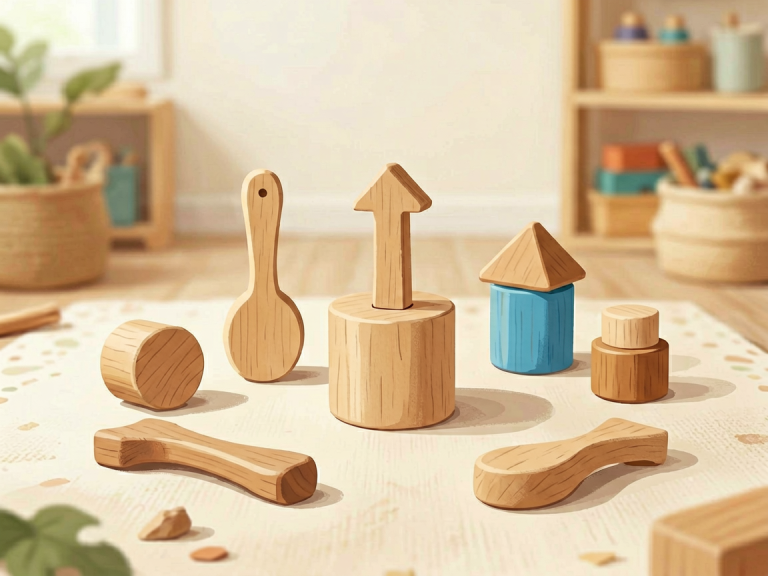
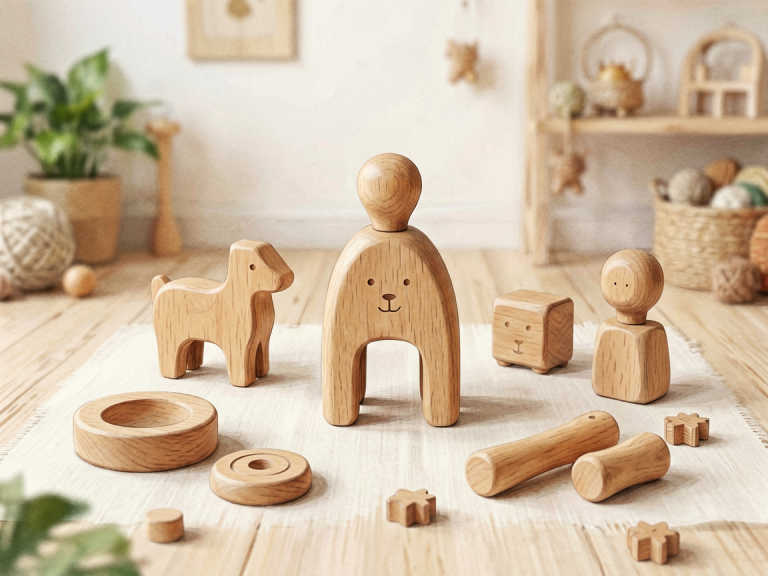
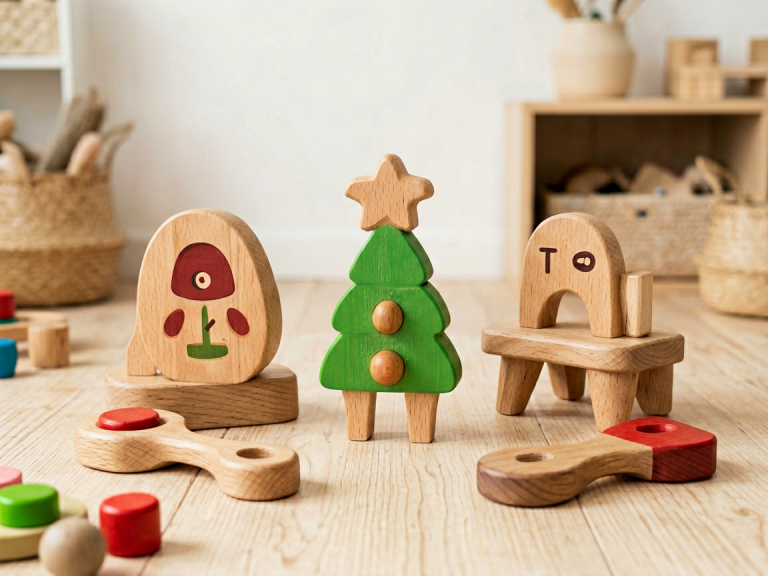
So what does a healthier holiday look like for a five-year-old? Child psychologists and minimalist parenting experts often recommend the "four-gift rule": something they want, something they need, something to wear, and something to read. That's it. Four carefully chosen items. Why does this work? Because it satisfies the child’s desire for novelty without overwhelming their senses. Each gift can be savored. Each gift can be appreciated. And the unwrapping experience—which should last more than five minutes—becomes a ritual rather than a feeding frenzy. The "want" gift satisfies the child's consumer fantasy. The "need" gift (like a new bike helmet or warm pajamas) grounds the exchange in practicality. The "wear" gift adds a tactile, personal element. The "read" gift opens a door to shared time. This structure also creates a powerful teaching moment: a five-year-old can begin to learn that boundaries exist, and that love is thoughtful, not indiscriminate.
The Gift of Time and Experience
Even better than a fourth toy is a non-material gift. For a five-year-old, experiences create memories that last far longer than plastic. Consider gifting a "ticket" to a day at the zoo, a certificate for a weekly parent-child art class, a trip to a local bakery to decorate cookies, or a "rainy day adventure box" with a map and a scavenger hunt. These are gifts that require the one thing money cannot buy: attention. They also align with how five-year-olds actually learn—through doing, touching, and connecting with loved ones. An experience gift offers delayed gratification and anticipation, both of which are essential emotional skills. When you give a child a museum pass instead of a remote-control robot, you are telling them: *"I want to share a moment with you, not just hand you a thing."*
Subtraction Breeds Appreciation
Finally, consider the radical idea of subtracting. Before the holidays, involve your five-year-old in a gentle "toy audit." Together, sort through the playroom and select toys to donate to children in need. Frame it positively: "Let's find toys that other children will love now." This not only clears physical space but also plants the seed of empathy. When the holiday arrives, the child will receive fewer gifts—but they will also understand that giving is a two-way street. And on the morning itself, an unwritten rule can transform the experience: open one gift, then play with it for a while before opening another. Slow down the unwrapping. Let each gift breathe. You will be astonished at how a five-year-old’s face lights up with real joy when they are given the time to *become familiar* with what they have.
Conclusion: Less Is Truly More
The holiday season is not a competition in which the parent with the tallest pile of wrapped boxes wins. It is a window into childhood—a fleeting, fragile time when a five-year-old is still learning how to love, how to dream, and how to be satisfied. Overbuying holiday toys for a five-year-old is an act of misplaced affection. It drowns the child in noise, teaches them that happiness is disposable, and exhausts the parents who only wanted the best. By choosing restraint, by curating a small, meaningful selection of gifts, and by investing in time rather than objects, we give a far more precious present: the ability to be happy with what is already in front of them. That is a lesson that will outlast any toy, any battery, and any wrapping paper. And it is the only gift that truly keeps on giving.