Are Engineering Kits Worth It for 4-Year-Olds? A Balanced Look at Early STEM Play
Introduction: The Growing Trend of Engineering Toys for Preschoolers
In recent years, the market for educational toys has exploded, with engineering kits becoming increasingly popular among parents eager to give their children a head start in science, technology, engineering, and mathematics (STEM). These kits promise to turn playtime into a learning experience, introducing concepts like building, mechanics, and problem-solving at an age when children’s brains are rapidly developing. But when it comes to 4-year-olds, a critical question arises: are engineering kits truly worth the investment? At this tender age, children are just beginning to develop fine motor skills, attention spans, and the ability to follow multi-step instructions. While some parents swear by the cognitive benefits of these kits, others argue that simpler, open-ended toys provide more value. This article explores the pros and cons, examines key developmental considerations, and offers practical advice to help parents decide whether engineering kits are a wise purchase for their preschooler.
The Developmental Landscape of a 4-Year-Old
Cognitive and Motor Skills at Age Four
Before evaluating any toy, it is essential to understand what a typical 4-year-old is capable of. At this stage, children are in the midst of what developmental psychologists call the “preoperational stage,” characterized by symbolic thinking, imaginative play, and a rapidly expanding vocabulary. However, they still struggle with logical reasoning and abstract concepts. Fine motor skills have improved significantly compared to a toddler, but tasks requiring precise manipulation—such as screwing tiny bolts or aligning small pieces—can still be challenging. Most 4-year-olds can stack blocks, complete simple puzzles, and use child-safe scissors, but they tire easily and may become frustrated with tasks that demand sustained concentration for more than 10 to 15 minutes.
The Role of Play in Learning
Child development experts overwhelmingly agree that play is the primary vehicle for learning in early childhood. Through play, children practice social skills, experiment with cause and effect, and build foundational cognitive abilities. However, not all play is created equal. The best toys for 4-year-olds are those that encourage exploration without imposing rigid outcomes. Engineering kits, by their very nature, often come with specific instructions and end goals—a car, a bridge, a working pulley system. This structured approach can be beneficial, but only if it aligns with the child’s current abilities and interests.
The Potential Benefits of Engineering Kits for 4-Year-Olds
Introducing STEM Concepts Through Hands-On Experience
One of the strongest arguments in favor of engineering kits is their ability to introduce foundational STEM concepts in a tangible, concrete way. For example, a simple building kit with gears and axles can demonstrate how rotating motion transfers force—a concept that is abstract in a textbook but immediately visible when a child turns a crank and sees a wheel spin. At age four, children learn best through sensory experience and direct manipulation. Engineering kits that allow them to build, test, and rebuild foster an intuitive understanding of balance, stability, and cause and effect. This early exposure can spark curiosity and lay the groundwork for more formal science education later.
Developing Fine Motor Skills and Hand-Eye Coordination
Many engineering kits require children to grasp small pieces, snap connectors together, or fit pegs into holes. These actions strengthen the small muscles in the hands and improve the coordination between eyes and hands—skills that are critical for writing, drawing, and self-care tasks like buttoning clothes. Unlike passive screen time, engineering kits demand active physical engagement. For a 4-year-old who is still refining these abilities, the repeated practice of picking up, positioning, and connecting parts can be highly beneficial.
Encouraging Problem-Solving and Persistence
A well-designed engineering kit presents a challenge: “Can you build a tower that doesn’t fall?” or “How can you make the car move forward?” When a child’s first attempt fails—and it often will—they must figure out what went wrong and try a different approach. This process of trial and error is a powerful learning tool. It teaches resilience, critical thinking, and the understanding that mistakes are stepping stones to success. For a 4-year-old, this kind of guided problem-solving, especially with an adult nearby to offer gentle hints, can boost confidence and cognitive flexibility.
The Drawbacks and Limitations of Engineering Kits for This Age Group
Potential for Frustration and Over-Stimulation
The most significant downside of many engineering kits is that they are designed with older children in mind. A kit labeled “ages 4 and up” may still contain pieces that are too small, instructions that are too complex, or goals that are too abstract. A 4-year-old who cannot fit a piece correctly or who loses interest halfway through may become frustrated, leading to tears—or worse, a permanent aversion to building toys. Moreover, the sheer number of small components can overwhelm a preschooler’s developing executive function. Instead of fostering creativity, the kit can become a source of anxiety.
Cost vs. Longevity
Quality engineering kits are not cheap. A well-known brand like LEGO Duplo or a specialized STEM kit can cost anywhere from $30 to $100 or more. Given that a 4-year-old’s interests change rapidly and that their ability to engage with complex instructions is limited, many parents find that the kit is used intensively for a week or two and then abandoned. Compare this to a set of basic wooden blocks, which may cost half as much and provide years of open-ended play. The cost-per-play-hour for a specialized engineering kit can be surprisingly high.
The Need for Adult Supervision and Involvement
Very few 4-year-olds can use an engineering kit independently. Most require an adult to explain the instructions, help with difficult connections, and keep them on track. For busy parents, this may not be realistic on a daily basis. If the kit is left for the child to explore alone, it may quickly become a pile of plastic pieces with no educational value. The true benefit of these kits often depends on the quality of adult-child interaction, which means the investment is not just in the toy but also in the parent’s time and energy.
How to Choose the Right Engineering Kit for a 4-Year-Old
Look for Large, Safe Pieces and Simple Goals
Not all engineering kits are created equal. For a 4-year-old, safety comes first. Avoid kits with small parts that pose a choking hazard. Instead, opt for sets with chunky pieces that are easy to grip and connect. The instructions should be minimal—ideally, a picture guide with only two or three steps. The best kits for this age group are those that emphasize open-ended building rather than replicating a specific model. For example, a set of magnetic tiles or large snap-together gears allows a child to experiment freely without the pressure of “getting it right.”
Prioritize Durability and Reusability
Choose kits that can be taken apart and rebuilt in countless ways. A set that offers multiple building options—like a collection of plastic connectors, wheels, and rods—will outlast one designed for a single project. Also, consider whether the kit can be combined with other toys. If the pieces are compatible with popular block systems, the value increases dramatically because the child can integrate them into existing play.
Consider the Child’s Temperament
Every 4-year-old is different. A child who loves puzzles, enjoys following routines, and stays calm when things don’t work may thrive with a structured engineering kit. A child who is more impulsive, easily frustrated, or prefers pretend play might benefit more from a simple set of blocks or a toy tool bench. Observing your child’s natural play style is the best guide. There is no shame in waiting until age 5 or 6 to introduce more complex engineering toys.
Alternatives to Engineering Kits That Offer Similar Benefits
Open-Ended Building Materials
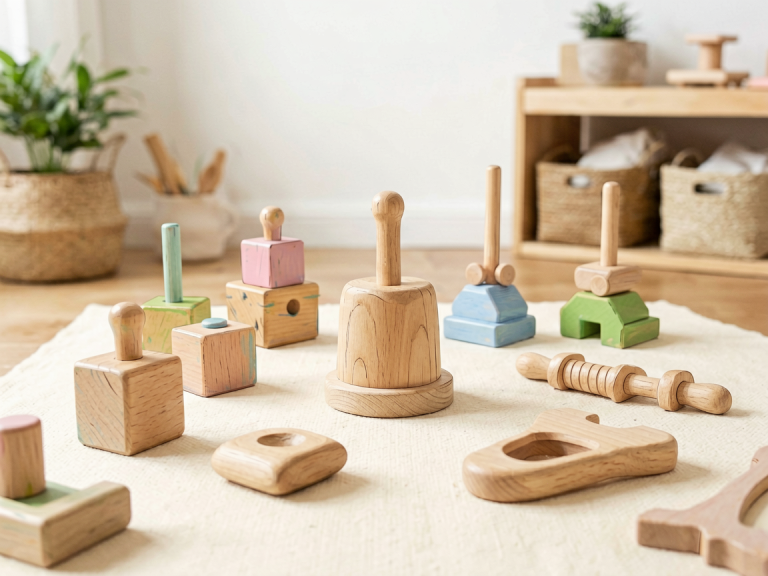
Sometimes the simplest toys are the most effective. A set of wooden unit blocks, Duplo bricks, or magnetic tiles can provide all the same engineering challenges—balancing, stacking, creating structures—without the pressure of a predetermined outcome. These materials allow children to build a tower, knock it down, and build something entirely different. The learning happens naturally through self-directed play.
Everyday Household Items and Loose Parts
You do not need to spend money on a specialized kit to introduce engineering concepts. Empty cardboard boxes, paper towel tubes, plastic containers, and clothespins can be combined with tape and string to create ramps, bridges, and simple machines. This kind of “loose parts” play encourages creativity, problem-solving, and an understanding of how things fit together—all at zero cost. Moreover, it teaches children that engineering is not something you buy, but something you do.
Nature-Based Building and Outdoor Play
Finally, don’t underestimate the engineering potential of outdoor play. Building a fort with sticks, digging channels in sand, or creating a dam in a stream are all rich engineering experiences. These activities develop spatial reasoning, planning, and an intuitive grasp of physics—without any plastic parts. For a 4-year-old, fresh air and physical activity are additional bonuses that no kit can replicate.
Conclusion: Worth It, But With Caveats
So, are engineering kits worth it for 4-year-olds? The answer is nuanced. For the right child, with the right kit, and with ample adult involvement, they can be a valuable tool for introducing STEM concepts, refining motor skills, and fostering persistence. However, for many 4-year-olds, simpler, open-ended toys—or even household items—may offer equal or greater developmental benefits with less frustration and lower cost. The key is to view engineering kits as one option among many, not a necessity for early learning. Parents should prioritize their child’s natural interests, choose kits that are age-appropriate and flexible, and be prepared to participate actively in the play. Ultimately, the most important factor is not the toy itself, but the quality of the interaction it inspires. A loving adult building alongside a child, asking questions, and celebrating failures as learning moments—that is what truly makes any engineering kit worth it.