Are Engineering Kits Worth It for 3 Year Olds? A Comprehensive Guide for Parents
Introduction: The Growing Trend of STEM Toys for Toddlers
In recent years, the market for educational toys has exploded, with STEM (Science, Technology, Engineering, and Mathematics) products targeting ever-younger age groups. Among the most popular are engineering kits marketed to children as young as three. These kits promise to introduce foundational concepts in building, problem-solving, and spatial reasoning through hands-on play. But as a parent or caregiver, you may find yourself wondering: Are these kits genuinely beneficial for a three-year-old, or are they simply a marketing gimmick designed to exploit parental anxiety about early academic achievement? This article explores the developmental appropriateness, potential benefits, and practical drawbacks of engineering kits for three-year-olds, helping you make an informed decision that aligns with your child’s unique needs and interests.
The Developmental Reality of a Three-Year-Old Mind
Cognitive and Motor Skills at Age Three
Before evaluating engineering kits, it is essential to understand the typical capabilities of a three-year-old. At this age, children are in the midst of rapid cognitive growth. They can follow simple two-step instructions, engage in pretend play, and demonstrate burgeoning curiosity about how things work. Fine motor skills are improving, but many three-year-olds still struggle with precise hand-eye coordination. They can stack blocks, turn pages, and manipulate large knobs, but tasks requiring tiny snaps, precise alignment, or strong grip strength can be frustrating.
Engineering kits vary widely in complexity. Some cater to this age group with oversized pieces, magnetic connections, or snap-together components that require minimal force. Others, however, are essentially scaled-down versions of kits meant for older children and demand abilities that three-year-olds simply do not possess. The key question is not whether the kit is labeled “ages 3+” but whether the specific components match your child’s physical and cognitive development.
Attention Span and Frustration Tolerance
A three-year-old’s attention span typically ranges from six to twelve minutes for a self-directed activity. They are easily distracted and prone to frustration when a task proves too difficult. Engineering kits often involve step-by-step assembly, which can be a significant challenge for children who lack the patience to follow sequential instructions. If a kit requires adult assistance at every step, it may cease to be a child-led activity and instead become a parent-led demonstration. This dynamic can undermine the very independence and exploratory learning that these kits are supposed to foster.
Potential Benefits: What Engineering Kits Can Offer Three-Year-Olds
Encouraging Fine Motor Development and Hand-Eye Coordination
One of the most tangible benefits of engineering kits is their ability to strengthen fine motor skills. Activities such as snapping plastic beams together, sliding wheels onto axles, or connecting magnetic blocks require precise finger movements. Repeated practice helps children develop the dexterity needed for later skills like writing, buttoning clothes, and using scissors. Many kits designed for three-year-olds use large, easy-to-grasp pieces that are safe and encourage repeated manipulation.
For example, a simple kit that allows a child to build a tower or a vehicle by joining rods and connectors can provide hours of motor practice. The child learns to coordinate visual input with hand movements, a skill that is foundational for all future construction activities. Unlike passive toys that merely light up or make sounds, engineering kits demand active engagement from the child, which can be highly beneficial for neural development.
Sparking Early Spatial Reasoning and Problem-Solving
Three-year-olds are natural pattern seekers. They love to stack blocks, arrange objects by size, and figure out how things fit together. Engineering kits can extend these innate tendencies into structured problem-solving. When a child tries to build a bridge that stays upright or a car that rolls, they are engaging in trial-and-error reasoning. They learn that if a piece is placed incorrectly, the structure collapses, and they must adjust their approach.
This type of cognitive challenge is valuable because it builds resilience and flexibility. A child who fails to make a tower stand learns that failure is a step toward success, not a dead end. Over time, these experiences cultivate a growth mindset—the belief that abilities can be developed through effort and persistence. However, this benefit depends heavily on the child’s ability to experience success within a reasonable timeframe. If the kit is too difficult, the child may become discouraged and associate construction with frustration rather than accomplishment.
Promoting Parent-Child Interaction and Language Development
Engineering kits can also serve as a platform for rich parent-child interaction. When you sit with your three-year-old and build together, you naturally engage in conversation: “Which piece goes next?” “Can you find the red block?” “What happens if we put this wheel on the other side?” These exchanges introduce vocabulary related to shapes, colors, positions (e.g., above, below, beside), and action words (e.g., twist, push, slide). They also model problem-solving language: “Let’s try turning it the other way.”
Research consistently shows that quality parent-child verbal interaction during play is a strong predictor of early language development and later academic success. An engineering kit that encourages such interaction is far more valuable than one that a child plays with alone. However, this benefit is not automatic. If the parent takes over the building process, the child may become a passive observer. The ideal scenario is one where the parent provides scaffolded support—offering just enough help to keep the child engaged without taking control.
Potential Drawbacks and Risks
Overstimulation and Frustration
Not all three-year-olds are ready for the structured nature of engineering kits. Some children thrive on open-ended play with simple blocks or loose parts, where they can create without constraints. Engineering kits, especially those with predetermined models, impose a goal that may conflict with a child’s natural exploratory style. If a child wants to use the pieces to make a “cake” instead of a “car,” the kit’s instructions become irrelevant. This mismatch can lead to power struggles or a loss of interest.
Moreover, many kits include small parts that are choking hazards. While manufacturers typically label their products for appropriate ages, parents must be vigilant. A three-year-old’s tendency to put objects in their mouth is well-documented, and even “large” pieces can be small enough to lodge in a throat. The American Academy of Pediatrics recommends avoiding any toy with parts that can fit inside a toilet paper tube for children under three. Some engineering kits marketed for ages three and up still contain pieces that barely meet this criterion.
The Risk of Over-Structuring Play
Another concern is the potential for engineering kits to replace open-ended, imaginative play. Play is the primary way three-year-olds learn about the world, and the most valuable play is often unstructured. Building a fort from couch cushions, arranging pebbles in a pattern, or pretending a cardboard box is a spaceship allows children to exercise creativity, negotiate social roles, and explore cause and effect in a freeform manner. Engineering kits, by contrast, direct the child toward a specific outcome. While some kits offer free building modes, many emphasize following instructions to create a predetermined structure.
When a child becomes accustomed to guided play, they may struggle to initiate their own ideas. They might wait for an adult to tell them what to build rather than inventing their own projects. The key is to use engineering kits as one tool among many, not as the central focus of playtime.
Financial Considerations
Engineering kits can be expensive, with prices ranging from fifteen to fifty dollars or more for a set with a modest number of pieces. Three-year-olds also lose interest quickly, and many kits are designed to be used only a few times before the novelty wears off. A parent who invests in a high-end magnetic tile set may find that their child prefers to simply throw the tiles rather than build with them. While some kits offer high replay value through multiple building possibilities, others are essentially one-time projects. Considering that a three-year-old’s play preferences can change rapidly, it is wise to evaluate whether the cost justifies the expected lifespan of the toy.
How to Choose an Appropriate Engineering Kit for a Three-Year-Old
Look for Open-Ended Designs
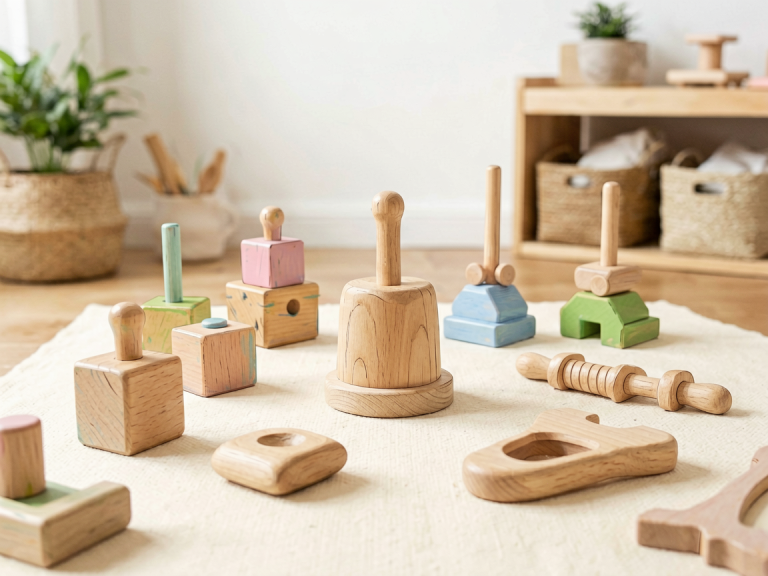
The best engineering kits for three-year-olds are those that allow for multiple configurations rather than a single model. Magnetic tiles (like Magna-Tiles), large snap-together blocks (like Duplo), and stacking pegboards are excellent choices because they encourage creative building without rigid instructions. Children can create houses, towers, animals, or abstract shapes. This open-endedness preserves the benefits of problem-solving while accommodating the child’s developmental need for unstructured exploration.
Prioritize Safety and Durability
Always check the age recommendation on the box, but also inspect the pieces yourself. Are they too small? Are the edges smooth? Is the material non-toxic? Avoid kits with small screws, batteries, or parts that could break into sharp fragments. For three-year-olds, pieces should be chunky, easy to grasp, and difficult to swallow. Also consider durability: tubes, rods, and connectors should withstand being thrown, stepped on, and chewed (as children often mouth toys). Well-known brands such as LEGO Duplo, Learning Resources, and Melissa & Doug have strong safety records.
Consider the Level of Adult Involvement Required
Be realistic about how much time and energy you can dedicate to helping your child use the kit. Some kits require a parent to pre-assemble parts or read complex instructions. If you are short on time or patience, a simpler set with intuitive connections (like magnetic tiles) is preferable. On the other hand, if you enjoy hands-on time with your child, a slightly more structured kit can be a wonderful bonding opportunity. The key is to choose a kit that matches your parenting style and schedule.
Practical Tips for Maximizing the Value of Engineering Kits
Use the Kit as a Starting Point, Not a Script
When your child opens a new engineering kit, resist the urge to immediately follow the instruction booklet. Instead, let them explore the pieces freely for a few days. Encourage them to build whatever they imagine. Then, after they have become familiar with the components, you can introduce the idea of trying to build a specific model together. This approach respects the child’s curiosity and avoids the frustration of a step-by-step process that they may not be ready for.
Combine Engineering Kits with Other Play Materials
Engineering kits do not have to exist in isolation. For example, you can add toy animals, cars, or people to a block structure to create a play scenario. A child who builds a simple house with magnetic tiles might then pretend that a stuffed bear lives there. This integration of construction and imaginative play enriches the experience and keeps the child engaged for longer periods. It also demonstrates that building is a tool for storytelling, not just a technical exercise.
Follow Your Child’s Lead
Ultimately, the worth of an engineering kit depends on your child’s interest. If they show excitement, ask questions, and initiate building on their own, the kit is likely a good investment. If they ignore it, become frustrated, or prefer other toys, do not force it. Return the kit or donate it, and try a different type of construction toy. Every child develops at their own pace, and what works for one three-year-old may not work for another. Trust your observations and your child’s cues.
Conclusion: A Balanced Verdict
Are engineering kits worth it for three-year-olds? The answer is a qualified yes—but with important caveats. These kits can provide genuine developmental benefits, including fine motor practice, spatial reasoning, problem-solving skills, and rich opportunities for parent-child interaction. However, they are not a magic solution, and their value depends heavily on the specific kit, the child’s temperament, and the way they are used.
A kit that is open-ended, safe, and appropriately challenging can be a wonderful addition to a three-year-old’s playroom. A kit that is overly prescriptive, frustrating, or filled with tiny pieces can be a waste of money and a source of upset. The best approach is to view engineering kits as one tool in a diverse play arsenal—alongside simple blocks, art supplies, sand, water, and outdoor exploration. No single toy can replace the richness of free, child-led play.
If you choose to invest in an engineering kit for your three-year-old, do so with realistic expectations. Your child may not build the complex crane pictured on the box. They may, instead, build a wobbly tower that falls down, then laugh and try again. And that, in many ways, is exactly the kind of learning that matters most at this age. Engineering kits are not a shortcut to raising a prodigy. They are, at their best, a vehicle for curiosity, resilience, and joy—qualities that no kit can teach, but that a thoughtfully chosen one can help nurture.