Engaging, Safe, and Growth-Boosting: The Best Toy Features for 2-Year-Olds
At the age of two, children are no longer babies but not quite preschoolers. This remarkable stage, often called the "terrible twos," is actually a period of explosive growth in language, motor skills, social awareness, and cognitive ability. A two-year-old is curious about everything, constantly moving, testing boundaries, and absorbing the world through every sense. The right toys can channel this energy into meaningful learning and joyful play. However, not all toys are created equal, and many products marketed for toddlers miss the mark. To make the best choices, parents and caregivers need to focus on specific features that align with how two-year-olds actually develop and play. The best toys for this age share several key characteristics—they are safe, stimulating, physically engaging, cognitively challenging, socially interactive, and open-ended. Understanding these features is the key to building a toy collection that will entertain, educate, and grow with a child. This article explores the most important toy features to look for when selecting gifts or play items for a two-year-old.
Safety First: Durable, Non-Toxic, and Age-Appropriate Design
The most non-negotiable feature of any toy for a two-year-old is safety. At this age, children still explore objects by putting them in their mouths, throwing them, and banging them against surfaces. Therefore, toys must be free of small parts that could be choking hazards. A good rule of thumb is to avoid any toy with pieces smaller than a toilet paper roll. Eyes on stuffed animals, buttons on toy phones, and detachable wheels on cars all pose risks. Instead, look for toys with securely fastened parts, or better yet, ones that are molded as single pieces.
Non-toxic materials are equally important. Two-year-olds often chew on toys, so paints, plastics, and wood finishes must be labeled non-toxic and free from harmful chemicals like BPA, phthalates, and lead. Natural, untreated wood and food-grade silicone are excellent choices. Durability is another safety feature. A flimsy toy that breaks easily can create sharp edges or tiny fragments. Sturdy construction with reinforced seams and solid joints ensures the toy can withstand rough toddler handling. Additionally, the design should have smooth edges, rounded corners, and no sharp points. Even something as simple as a wooden block should be sanded perfectly smooth to prevent splinters. Finally, consider the size and weight of the toy. It should be light enough for a two-year-old to lift and carry but large enough to avoid being swallowed. Safety features are not boring limitations; they are the foundation that allows a child to play freely without unnecessary danger.
Sensory Stimulation: Colors, Sounds, Textures, and Movement
A two-year-old's brain is building neural connections at lightning speed, and sensory input is the fuel for that growth. The best toys deliberately engage multiple senses at once. Visual stimulation comes from bold, contrasting colors, patterns, and moving parts. Toys with bright primary colors, high-contrast black-and-white designs, or mirrors capture attention and help develop visual tracking. Auditory features are equally engaging. Soft rattles, musical instruments like tambourines and xylophones, and toys that squeak or make gentle melodic sounds help a child learn cause and effect while refining their hearing. However, the sounds should not be jarring or overly loud, which can overwhelm a child’s sensitive ears. Adjustable volume controls are a plus.
Texture variety is another crucial sensory feature. Two-year-olds love to touch everything. Toys made with a mix of smooth, rough, bumpy, fuzzy, and squishy surfaces provide rich tactile exploration. Think of fabric books with crinkly pages, sensory balls with different nubs, or wooden puzzles with chunky, textured knobs. Movement is also a form of sensory input. Toys that spin, roll, bounce, or wobble teach a child about motion and gravity. A classic example is a ramping car or a ball that rattles as it rolls. Even simple things like scarves that flutter in the air or bubbles to chase offer powerful visual and kinesthetic feedback. The ideal sensory toy is not overstimulating with flashing lights and loud noises, but rather offers a balanced palette of tactile, auditory, and visual experiences that invite exploration and discovery.
Fine and Gross Motor Skill Development
At two years old, children are gaining remarkable control over their bodies. Toys that encourage physical activity are essential for building both fine motor skills—the small muscles in hands and fingers—and gross motor skills, which involve larger muscles in the arms, legs, and torso.
For fine motor development, look for toys that require grasping, twisting, stacking, and fitting. Stacking rings or cups are timeless because they teach hand-eye coordination and size differentiation. Chunky wooden puzzles with large pegs help children practice pincer grip and spatial reasoning. Toy hammers and peg benches allow toddlers to pound, which strengthens arm muscles and coordination. Play-dough and other malleable materials let little fingers squeeze, roll, and shape, building dexterity. Beads on a string or large lacing cards, while still challenging for some two-year-olds, are excellent for perfecting fine motor skills. Also consider toys with buttons, snaps, zippers, or latches, such as busy boards, which prepare fingers for dressing themselves later.
Gross motor development is equally vital. Two-year-olds are walking confidently, running, climbing, and jumping. The best toys for this include push toys and pull toys, like a wooden grocery cart or a puppy on a string. These teach balance, coordination, and forward movement. Ride-on toys that are low to the ground, such as foot-operated scoot cars or balance bikes without pedals, strengthen leg muscles and improve spatial awareness. Soft climbing blocks or a toddler-sized slide encourage climbing, which builds core strength and confidence. Balls of various sizes are also incredible—they invite throwing, kicking, rolling, and chasing, all of which train motor planning and body awareness. Toys that encourage big body movements are not just fun; they are vital for a child’s physical health and brain development, as movement literally wires the brain for balance and coordination.
Cognitive Challenges: Cause and Effect, Problem Solving, and Early Logic
A two-year-old is a natural scientist, constantly experimenting to understand how the world works. The best toys feed this curiosity by offering clear cause-and-effect relationships and simple problem-solving opportunities. A toy where pressing a button makes a pop-up animal appear teaches a child that their actions have predictable results. This understanding is a cornerstone of logical thinking. Musical instruments, wind-up toys, and simple electronic toys that respond to touch are all excellent for this purpose. However, the response should be immediate and consistent, allowing the child to make mental connections.
Problem-solving toys are also crucial. Shape sorters, where a child must match a cube to a square hole and a star to a star hole, are perfect for two-year-olds. They force a child to analyze shapes, rotate objects mentally, and persist through trial and error. Simple jigsaw puzzles with two to four large pieces teach spatial reasoning and the concept of part-to-whole. Nesting cups or boxes, which fit inside one another, promote size comparison and sequencing. Even everyday household items like plastic containers and lids serve as excellent problem-solving toys. Another feature to look for is toys with multiple steps. For example, a toy where you have to put a ball in a hole, then turn a knob to make it come out, requires planning and memory. Early logic is also developed through toys that sort by color or size. A sorting barn that asks a child to match colored animals to their matching doors is both engaging and educational. These cognitive challenges are not about achieving perfect results but about the process of exploring, guessing, and discovering.
Language and Social-Emotional Growth: Imaginative Play and Interaction
Two-year-olds are beginning to talk in short phrases and are intensely interested in the people around them. Toys that encourage language and social-emotional development are therefore indispensable. One of the best features is an open-ended, pretend-play element. Toy kitchens, dollhouses, and workbenches invite a child to imitate adult activities. When a two-year-old pretends to feed a baby doll or stir soup in a pot, they are practicing language skills by narrating their actions ("baby eat," "soup hot") and experimenting with social roles. A simple toy phone is excellent for babbling conversations, teaching turn-taking in dialogue. Puppets are another fantastic tool; they can talk to a child, ask questions, and model appropriate emotional responses, helping a toddler understand feelings like happy, sad, or angry.
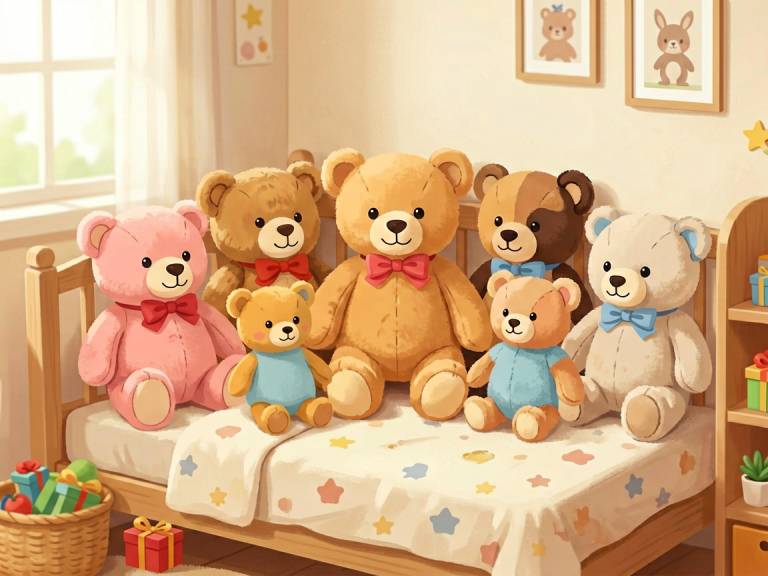
Look for toys that feature human or animal characters with friendly faces. Dolls and stuffed animals serve as "practice friends" for empathy and caregiving. A child learns to hug, comfort, and even scold a toy, which reflects their emotional world. Toys that include mirrors also support self-awareness, as a two-year-old begins to recognize their own reflection and emotions. Interactive features such as simple musical responses or recorded phrases in a comforting voice can be helpful, but they should not replace the real human interaction. The best toys are those that a parent can sit with and enjoy alongside the child. Board games made for toddlers, like a simple matching game, teach waiting, taking turns, and handling winning or losing. Also, books with flaps, textures, and sound buttons are technically toys and are outstanding for vocabulary building. The social-emotional feature to prioritize is anything that draws a child into shared or imaginative play, because this is how they learn to understand themselves and others.
Open-Ended Play Potential: Versatility and Longevity
Finally, the best toys for two-year-olds are open-ended, meaning they can be used in many different ways. Closed-ended toys, like a plastic bowling set, have one specific function and quickly lose their novelty. Open-ended toys, however, adapt to a child’s growing imagination and skill level. The ultimate example is a set of wooden blocks. At two, a child stacks them; at three, they build towers; at four, they create entire cities and stories. Blocks foster creativity, problem-solving, spatial reasoning, and even social cooperation when playing with others. They never outgrow their usefulness.
Other open-ended features include toy cars and trains that can be raced, lined up, parked in ramps, or even used to "feed" a toy animal. Loose parts like rings, scarves, cardboard boxes, and fabric pieces inspire endless imaginative scenarios. A cardboard box is arguably the most open-ended toy of all—it can be a spaceship, a car, a house, or a fort. When choosing toys, ask yourself: Can this toy be played with in more than one way? Does it require the child to create their own story or has the story already been decided? Also consider longevity. A great toy grows with the child. For example, a play kitchen can be used for simple pretend eating at two, but at four it can involve sorting food by color, counting plates, and role-playing complex restaurant scenarios. Choosing open-ended toys reduces clutter, saves money, and ensures that a child remains creatively engaged for years. It also prevents the "toy boredom" that comes from too many single-purpose gadgets. In summary, the most valuable toy features are those that allow the child to lead the play, not the toy.
In conclusion, selecting toys for a two-year-old goes beyond picking the brightest or most advertised product. The best toy features are rooted in a deep understanding of childhood development. Safety is the absolute prerequisite, and it includes non-toxic materials, durability, and age-appropriate sizing. Sensory stimulation through colors, sounds, textures, and movement enriches a toddler’s perception of the world. Motor skill features strengthen both the small muscles in the hands and the large muscles used for running and climbing. Cognitive features that teach cause, effect, and simple problem-solving lay the foundation for logic and scientific thinking. Language and social-emotional features, especially those that encourage imaginative and interactive play, help a child navigate feelings and communication. Finally, open-ended play potential ensures that a toy remains engaging and valuable over time. When these features come together, a toy becomes more than just entertainment—it becomes a tool for growth, discovery, and joy. For parents, the goal is not to find the perfect toy, but to find toys that perfectly match the amazing, ever-changing capabilities of their two-year-old. By focusing on these essential features, you will not only keep your toddler happily occupied but also support their healthy development in the most natural way possible—through play.