Building Blocks of Genius: The Essential Parent Guide to Buying Engineering Kits for 18-Month-Olds
Introduction: Why Engineering Kits for Toddlers?
When you hear the phrase “engineering kit,” your mind likely leaps to complex circuit boards, miniature motors, and screwdrivers. But for an 18-month-old, the concept of engineering is far simpler—and far more magical. At this tender age, a child’s brain is undergoing a rapid explosion of neural connections. Every time they stack a block, push a shape into a hole, or pull apart a magnetic piece, they are engaging in the very essence of engineering: problem-solving, spatial reasoning, cause-and-effect, and design thinking. The right engineering kit, specifically curated for a toddler’s developmental stage, can transform everyday play into a foundation for lifelong curiosity and cognitive growth. Yet, with an overwhelming array of products on the market—many mislabeled as “STEM” but actually unsafe or inappropriate—parents need a clear, research-backed roadmap. This guide will walk you through every critical consideration, from safety to skill-building, so that your purchase becomes a true investment in your child’s future.
Understanding the Developmental Needs of an 18-Month-Old
Before you even browse a single product, you must understand what your toddler is capable of—and what they are not. At 18 months, most children are walking confidently, beginning to run, and exploring their environment with relentless curiosity. Their fine motor skills are improving but still limited: they can grasp objects with the whole hand (palmar grasp) and are starting to use a pincer grasp (thumb and forefinger) for smaller items. They also engage in parallel play (playing alongside, not with, others) and are highly sensory-driven. They love to mouth objects, bang them together, and drop them repeatedly to test gravity. Critically, their attention span is short—often just a few minutes per activity.
An engineering kit for this age must therefore respect these limitations. It should not require complex sequences (e.g., “put the red block on top of the blue, then insert the yellow cylinder”). Instead, it should invite open-ended exploration: stacking, nesting, pulling apart, and fitting. The best kits support what developmental psychologists call “schema play”—repetitive actions like transporting, connecting, and enveloping that help children build mental models of how the world works. An 18-month-old is also just beginning to understand object permanence (items still exist when hidden) and simple cause-effect relationships. A kit that allows them to make a tower fall, a ball roll, or a piece click into place will provide both delight and learning.
Key Safety Considerations: Non-Negotiable First
Safety must be your absolute top priority. At 18 months, children still explore with their mouths, and their airways are small. Any part that can fit entirely inside a toilet paper roll (roughly 1.25 inches in diameter) is a choking hazard. Furthermore, the materials must be non-toxic, BPA-free, and free of sharp edges or splinters. Here are the specific red flags to avoid:
- Small parts: Avoid any kit that includes pieces smaller than 1.5 inches in any dimension. Even if the box says “ages 3+,” do not assume it is safe for an 18-month-old. Some kits labeled “STEM” contain tiny gears, screws, or beads that are dangerous.
- Magnets: While magnetic building tiles are popular, loose magnets (especially rare-earth magnets) are extremely hazardous if swallowed. Only choose kits where magnets are fully enclosed inside thick, sealed plastic or wood, and repeatedly test that the housing cannot be pried open by tiny fingers or teeth.
- Sharp or pointy components: Avoid any piece with a sharp edge, a pointy tip, or a wire that could poke.
- Toxic paints and finishes: Look for water-based, non-toxic paints and untreated or food-grade finishes. Avoid kits that have a strong chemical smell, which may indicate volatile organic compounds (VOCs).
- Long strings or cords: Avoid cords longer than 12 inches, which pose a strangulation risk. Some kits include pull-along strings; ensure they are short and breakaway.
Always check for certifications like ASTM International (ASTM F963) for toy safety in the United States, EN71 in Europe, or the CE mark. These indicate that the product has been tested for mechanical and chemical hazards.
Types of Engineering Kits Suitable for 18-Month-Olds
Now that you know what to avoid, let’s look at the categories of kits that genuinely deliver engineering concepts in a toddler-safe format.
1. Stacking and Nesting Kits
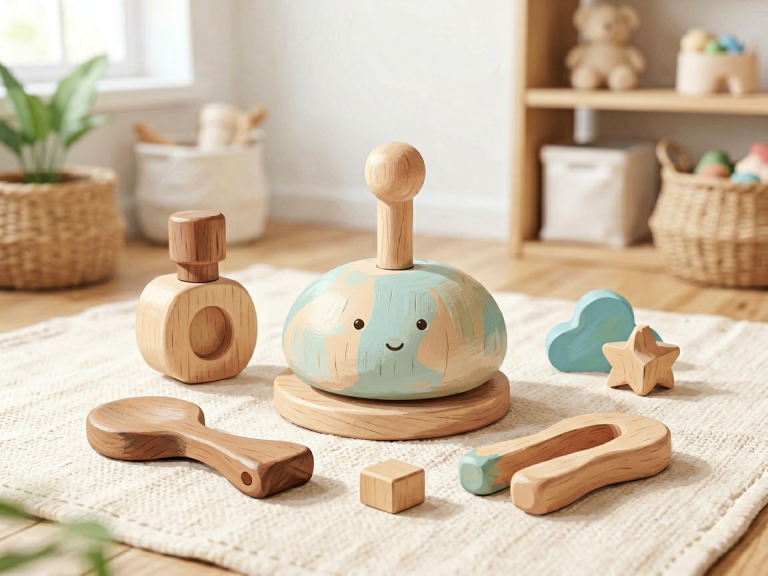
These are the most classic and effective. Think of graduated cups, rings that stack on a post, or wooden blocks of varying sizes. Engineering skills at play: understanding size relationships (bigger vs. smaller), stability (why does this stack fall?), and order (which ring goes first?). Look for kits with large, chunky pieces that are easy for little hands to grasp.
2. Shape Sorters and Puzzle Boards
A shape sorter is a pure engineering challenge: “Which hole does this shape fit into? How do I rotate it to make it go in?” For an 18-month-old, choose sorters with only 3–5 distinct shapes (circle, square, triangle, star) and pieces that are at least 2 inches in diameter. Avoid complicated multi-layered puzzles. The best ones have a simple lid that lifts off so the child can dump and start again—a classic engineering feedback loop.
3. Soft Building Blocks and Fabric Kits
Foam, cloth, or silicone blocks are ideal for this age. They are safe to throw, chew, and fall on. Some kits include interlocking pieces that press together with gentle force (like soft plastic gears or snap-together cubes). These teach cause and effect (“I push this, and it sticks”). Additionally, soft blocks are quieter and less likely to damage floors or furniture, which is a bonus for parents.
4. Simple Magnetic Construction Sets (with Caution)
Large magnetic tiles designed for toddlers—such as those with thick plastic edges and embedded, non-removable magnets—can be wonderful. They allow a child to attach two pieces, create a 2D shape, or build a simple 3D structure. Engineering principles: polarity (attraction/repulsion), balance, and geometry. Ensure each tile is at least 3 inches on each side, and that the magnets cannot be accessed. Popular brands like Magna-Tiles (their “Little” series) or PicassoTiles for toddlers often meet these criteria, but always check the age recommendation.
5. Connector-Style Kits with Large Pieces
Some kits use large, chunky plastic or wooden rods and connectors (like oversized Tinkertoys or Duplo-type blocks). The key is that the pieces are too large to swallow and require minimal force to connect. For an 18-month-old, Duplo (the larger Lego bricks) is perfect—they can stack two or three bricks, knock them over, and start again. Avoid standard Lego or any small connector that requires precise alignment.
What to Look for in Materials and Design
Beyond safety, the materials and design of the kit affect how long your child will engage with it. Here are the critical factors:
- Weight and texture: Pieces should be lightweight enough for a toddler to lift easily but substantial enough to provide feedback when dropped. Textured surfaces (ribbed, smooth, bumpy) engage sensory exploration. Wood is a fantastic choice if it is smooth, splinter-free, and coated with non-toxic finish. Silicone is also excellent—it is grippy, soft, and teething-safe.
- Bright but not overstimulating colors: While toddlers love color, overly saturated or clashing hues can overstimulate a developing brain. Opt for kits with primary or pastel colors in a limited palette (e.g., red, blue, yellow, green). Avoid kits with flashing lights or electronic sounds—these can distract from the pure engineering experience.
- Versatility and open-endedness: The best kits are not prescriptive. A set of 20 plain wooden blocks can be used for a thousand different activities: stacking, lining up, knocking down, sorting by color, pretending they are food. In contrast, a kit that only builds one specific model (e.g., a car) will quickly lose its appeal. Look for kits that invite your child to create their own structures.
- Ease of cleaning: Toddlers are messy. Choose materials that can be wiped clean or tossed in the dishwasher (silicone, plastic). Avoid fabric kits that are not machine-washable, as they will accumulate saliva and dirt.
The Role of Open-Ended Play in Engineering Thinking
One of the biggest mistakes parents make is assuming that an engineering kit must include instructions or a finished product. For an 18-month-old, the process is the product. Open-ended play—where there is no right or wrong way to use the pieces—is what builds a true engineering mindset. When a child repeatedly builds a tower and knocks it down, they are experimenting with structural integrity and gravity. When they try to fit a square block into a round hole, they are developing a hypothesis and testing it. When they place a block on top of a wobbly base and watch it fall, they are learning about balance.
Therefore, resist the urge to demonstrate or correct. Let your child explore on their own terms. Your role is to observe, narrate (“You put the big block on top of the small one – it wobbled!”), and provide encouragement. Do not treat the kit as a puzzle that must be solved. The moment you impose a goal, you risk stifling the very curiosity that engineering kits are meant to nurture.
How to Engage Your Toddler with the Kit: Practical Tips for Parents
Even the best kit will gather dust if you don’t know how to introduce it. Here are actionable strategies to maximize engagement:
- Model play without directing: Sit down and start playing with the kit yourself, but do not tell your child what to do. Simply stack two blocks, then watch them tumble. Make delighted noises. Your child’s natural imitation instinct will kick in.
- Follow their lead: If your child wants to throw the blocks instead of stacking, allow it. That, too, is physics exploration. After a few throws, gently suggest, “I wonder what happens if we stack them?” Never force a specific activity.
- Create a “dialogue” with the materials: Use descriptive language: “That block is heavy,” “The cylinder rolls,” “The square doesn’t fit in the circle.” This builds vocabulary and analytical thinking.
- Rotate toys: Toddlers can get bored quickly. If your child ignores the kit for a few days, put it away for a week, then reintroduce it. The novelty will reignite interest.
- Combine with sensory play: Place the kit on a tray of water (for floating/sinking experiments) or in a sandbox. Supervise closely, but this adds a new dimension to engineering exploration.
Top Recommendations (with Safety and Developmental Notes)
While I cannot endorse specific brands, I can guide you toward the types of products that consistently meet the criteria discussed:
- Large wooden unit blocks (e.g., from Melissa & Doug or Hape): Look for sets with at least 20 blocks in various shapes (cubes, rectangles, triangles, arches). Ensure the blocks are at least 1.5 inches thick and have rounded edges.
- Silicone stacking cups (e.g., from Mushie or Oli & Carol): These are soft, flexible, and can be used for stacking, nesting, and bath play. They often have numbers or textures on the bottom.
- Duplo-style bricks (Lego Duplo): The classic excellent choice. Start with a small bucket of 20–30 bricks. Avoid themed sets with small figurines that might be choking hazards.
- Magnetic tiles for toddlers (e.g., Magna-Tiles Clear Colors or PicassoTiles 100-piece set for ages 3+ but with larger tiles): Check that each tile is at least 3 inches. Always supervise, and regularly inspect for cracks.
- Wooden shape sorters with 4–5 large shapes (e.g., from PlanToys or Tender Leaf Toys): Look for sorters where the shapes are chunky (at least 2 inches) and the box is sturdy.
Avoid any kit that claims to teach “programming” or “robotics” for toddlers—these are gimmicks that often include small parts or screens, which are not developmentally appropriate for 18-month-olds.
Conclusion: Engineering a Bright Future, One Block at a Time
Buying an engineering kit for an 18-month-old is not about turning your child into a mini-engineer overnight. It is about providing a rich, safe, and stimulating environment where the natural drive to explore, build, and problem-solve can flourish. The right kit will be simple, open-ended, and made of safe materials—nothing more. It will not require batteries, instruction manuals, or your constant intervention. Instead, it will become a tool for your child to discover the fundamental laws of physics, geometry, and cause and effect through their own hands-on experiments.
As you shop, keep these guiding principles close: prioritize safety above all, choose large pieces, value open-ended play over prescribed outcomes, and trust your child’s innate curiosity. The blocks you buy today may not build a skyscraper, but they will build a mind that knows how to wonder, test, and create—and that is the truest foundation of engineering. So go ahead, fill that toy bin with chunky shapes and textured cubes. Then sit back, watch, and marvel as your little one constructs their first theories about the world, one wobbly tower at a time.