Beyond Screens: The Best Alternatives to Learning Tablets for 18-Month-Olds
Introduction: Why Rethink the Tablet for a Toddler?
In an age where digital devices are marketed as essential learning tools for even the youngest children, many parents find themselves wondering whether a learning tablet is the right choice for their 18-month-old. After all, brightly colored apps promise to teach letters, numbers, and shapes with the tap of a finger. Yet developmental psychologists, pediatricians, and early childhood educators increasingly warn that for toddlers under two, screen time offers limited benefits and may even hinder crucial developmental milestones. The American Academy of Pediatrics recommends no screen time for children under 18 months (with the exception of video chatting), and for 18–24 month-olds, only high-quality programming co-viewed with a caregiver. But what does that leave? Fortunately, the world offers an abundance of rich, hands-on alternatives that not only match—but far surpass—the educational potential of any tablet. This article explores the best alternatives to learning tablets for 18-month-olds, focusing on activities and tools that promote sensory exploration, motor development, language acquisition, and social-emotional growth.
The Problem with Learning Tablets for Toddlers
Before diving into alternatives, it is worth understanding why tablets fall short for this age group. An 18-month-old’s brain is developing at an astonishing rate, forming one million neural connections every second. These connections are built through real-world, multisensory experiences—touching, tasting, smelling, hearing, and moving. A tablet, by contrast, provides a two-dimensional, passive experience. The child taps a screen and receives an immediate, predictable response. While this can be engaging, it lacks the depth of physical interaction. For instance, a virtual puzzle on a tablet does not teach the toddler how to grip a piece, rotate it, or feel its weight and texture. Moreover, excessive screen time at this age has been linked to delays in language development, reduced attention spans, and poorer executive function. The blue light and fast-paced animations can overstimulate a developing nervous system, making it harder for the child to self-regulate. Perhaps most importantly, tablets replace valuable face-to-face interaction with caregivers, which is the primary vehicle for learning social cues, emotional bonding, and conversational skills. Therefore, the best alternatives are those that encourage active, embodied, and relational learning.
Sensory Play: The Foundation of Early Learning
Texture Boards, Sensory Bins, and Messy Play
One of the most powerful alternatives to a learning tablet is sensory play. At 18 months, children are natural explorers who learn through their senses. A simple sensory bin filled with dry rice, beans, or sand, accompanied by scoops, cups, and small toys, can occupy a toddler for far longer than any app. The child can pour, scoop, bury, and dig—all actions that refine fine motor skills and hand-eye coordination. Unlike a tablet’s sterile screen, sensory play offers tactile feedback: the coolness of sand, the roughness of uncooked pasta, the softness of a feather. You can enhance the experience by adding natural elements like pinecones, smooth stones, or water (always supervised). Another excellent option is a “texture board” made by attaching different fabrics—velvet, burlap, faux fur, corduroy—to a piece of cardboard. The toddler can touch, pat, and compare textures, building vocabulary as you name each one (“soft,” “rough,” “fuzzy”). This type of play is not only educational but also calming, as repetitive sensory actions help children regulate their emotions.
Water Play and Its Surprising Benefits
Water play deserves special mention. A shallow basin of warm water with plastic cups, sieves, and waterproof toys can teach concepts like volume, floatation, and cause and effect far more effectively than a digital simulation. The toddler learns that pouring water into a cup makes it heavier, that a sieve lets water through but holds a rubber duck, and that splashing creates a sound and a sensation. These are foundational lessons in physics and problem-solving. Moreover, water play is inherently social: a caregiver can sit beside the child, narrating actions (“You filled the blue cup! Now you’re pouring it into the red bowl!”), which builds language. The shared focus and turn-taking also foster attention and joint attention—key precursors to later academic skills.
Building and Manipulating: Developing Fine Motor Skills
Wooden Blocks and Stacking Toys
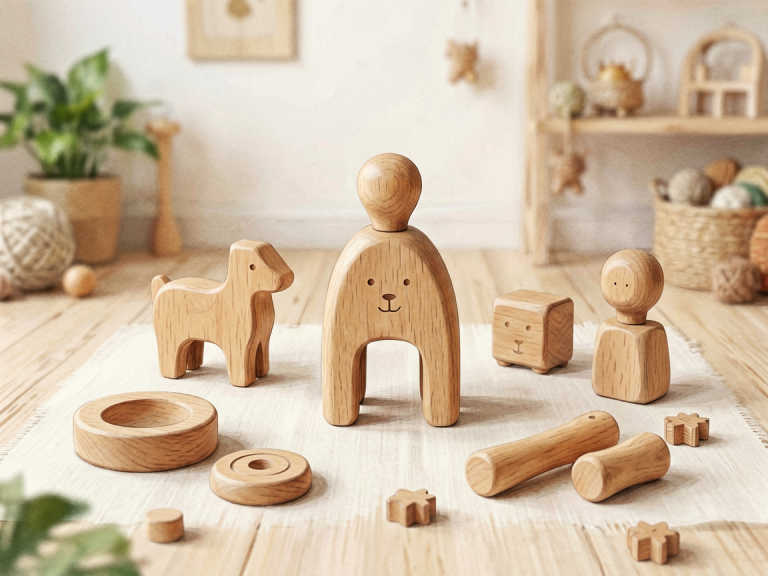
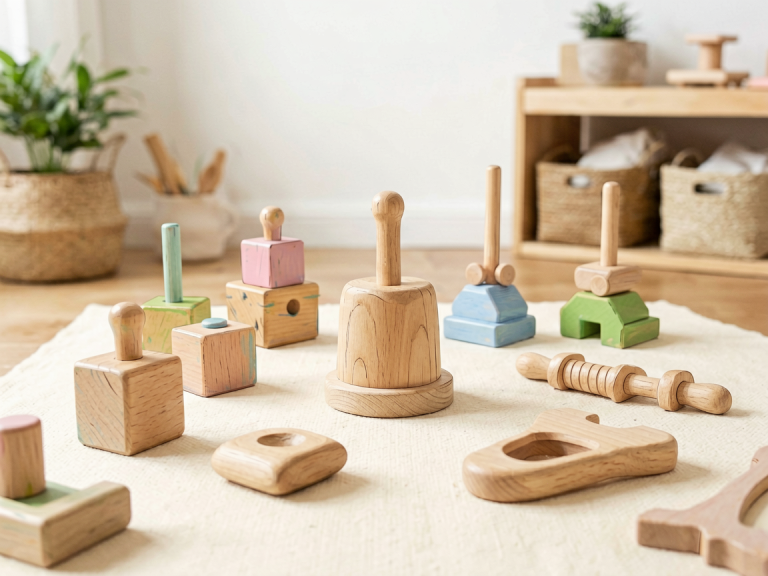
Learning tablets often include block-stacking apps, but they cannot replicate the kinesthetic learning of physical blocks. A set of simple wooden blocks—in various shapes, sizes, and colors—is arguably the single best learning tool for an 18-month-old. The child must grasp, lift, balance, and release, using small muscles in the hands and fingers. Stacking blocks teaches spatial awareness, gravity, and balance. When a tower falls, the toddler experiences disappointment and then the urge to rebuild—a lesson in resilience and problem-solving. Unlike the instant success of a tablet game, block play involves trial and error, which builds persistence. You can introduce blocks that interlock (like large Duplo) or simple nesting cups. The key is to choose open-ended materials that allow for creativity rather than a single correct outcome.
Puzzles and Shape Sorters
Real puzzles with chunky wooden pieces are far superior to digital puzzles. An 18-month-old benefits from physically aligning a shape with its hole, feeling the click as it drops in. This requires visual-spatial reasoning, hand-eye coordination, and fine motor precision. Shape sorters, where a block must be rotated to fit through a corresponding opening, offer an additional cognitive challenge. Again, the tactile feedback is irreplaceable. You can also make your own DIY “puzzles” by cutting simple shapes out of cardboard and letting your child match them to drawn outlines. These activities promote focus and satisfaction that no screen can provide.
Language and Literacy: Books and Real Conversations
Board Books, Cloth Books, and Interactive Reading
For language development, nothing beats a physical book. At 18 months, children love board books with bright, simple pictures and interactive elements like flaps, mirrors, or different textures. Reading together is a multisensory experience: the child sees the images, hears your voice, feels the pages, and turns them (which requires motor control). Unlike a tablet’s auto-narrated story, a live reading allows for pauses, questions, and expansions. You can point to a picture and say, “Look, a dog! Woof woof! Can you say dog?” This back-and-forth is crucial for language acquisition. Studies show that the number of conversational turns between a child and caregiver is a stronger predictor of later language skill than any app. Moreover, the physical act of holding a book and turning pages helps children understand how books work—a precursor to literacy. Choose books with rhyming text, repetitive phrases, and bold illustrations. Cloth books and waterproof bath books are great for messier moments.
Puppets and Pretend Play
Another powerful language tool is simple puppets. A sock puppet or a hand puppet can “talk” to your child, asking questions, making silly sounds, or pretending to eat a toy. Puppets encourage dialogue because they create a safe, playful distance. An 18-month-old might be more willing to imitate a puppet’s sounds than a direct request from a parent. Puppets also teach social-emotional concepts like empathy and turn-taking. Similarly, pretend play with dolls, stuffed animals, or toy phones allows the child to practice language in context. A toy kitchen with plastic fruits and vegetables invites naming and sorting. These activities are far richer than a vocabulary app because they embed words in meaningful, social interactions.
Gross Motor Play: Movement and Coordination
Push and Pull Toys, Ride-Ons, and Climbing
An 18-month-old is on the move: walking, running, climbing. Gross motor development is critical for overall health, balance, and even cognitive function. Learning tablets, by their nature, keep children sedentary. The best alternatives involve whole-body movement. Push toys (like a wooden cart or a lawnmower that makes sounds) encourage walking and provide stability. Pull toys (like a string of wooden animals) teach coordination and directionality. Ride-on toys that the child propels with feet strengthen leg muscles and give a sense of independence. Simple indoor climbing structures—a soft foam wedge, a small slide, or cushions arranged as an obstacle course—challenge balance and spatial judgement. Outdoors, a tricycle (with parent steering) or a simple ball for kicking and rolling provides endless fun. These activities not only build physical strength but also release pent-up energy, making the child more ready for quiet activities later.
Music and Movement: Dancing, Shakers, and Drums
Music is a universal learning tool. Instead of a tablet with a music app, give your child real instruments: a small drum, maracas, a xylophone, or even a set of pots and wooden spoons. Let them make noise—it’s a form of self-expression and cause-and-effect learning. Dance together to simple songs; this teaches rhythm, body awareness, and emotional regulation. Singing songs with gestures (like “The Wheels on the Bus” or “Itsy Bitsy Spider”) builds language, memory, and motor imitation. The beauty of music is that it engages the whole brain and can be done anywhere, anytime, without a screen.
Nature and Outdoor Exploration
Sand, Mud, and Leaves
If the weather permits, outdoor play is arguably the richest learning environment for a toddler. A trip to the park or even the backyard offers countless alternatives to a tablet. Let your child play in a sandbox with shovels and buckets. Digging, sifting, and building in sand require strength and coordination while teaching concepts like volume and texture. Mud play (yes, messy is good!) allows for creative sculpting and sensory feedback. Collecting leaves, sticks, and pebbles and sorting them by size or color is a natural classification activity. Watching ants, birds, or squirrels fosters curiosity and observation skills. The outdoor world is dynamic, unpredictable, and full of novelty—exactly what a toddler’s brain craves.
Water Table and Gardening
A water table (or a simple plastic tub) set outside with cups, funnels, and toys can occupy a toddler for an hour. Add natural elements like flower petals or floating leaves. Even simple gardening—digging a hole, planting a seed, watering it—teaches patience, cause and effect, and the joy of watching things grow. Gardening also involves messy hands and dirt, which, contrary to some fears, actually strengthens the immune system and provides beneficial microbes.
Social Interaction and Imitation
Playdates and Parallel Play
One of the greatest limitations of a learning tablet is that it is solitary. At 18 months, children learn a tremendous amount from watching and imitating other children. Organize playdates with similarly aged toddlers. Even if they engage in parallel play (playing side by side rather than together), they observe each other’s actions, sounds, and gestures. This is the foundation of social skills. Simple shared activities like rolling a ball back and forth, playing with a shared bucket of toys, or taking turns with a toy phone all teach cooperation and social norms. The caregiver’s role is to model gentle interaction and mediate conflicts.
Kitchen Help and Everyday Chores
Finally, don’t underestimate the educational value of everyday routines. An 18-month-old can “help” in the kitchen: stirring a bowl of dry ingredients, tearing lettuce, wiping a table with a cloth. These activities build fine motor skills, following directions, and a sense of competence. A child who participates in real-world tasks feels included and valued. That sense of belonging and accomplishment is something no app can provide.
Conclusion: Choosing Connection Over Convenience
The best alternatives to learning tablets for 18-month-olds are not expensive gadgets or complicated curricula. They are simple, sensory-rich, and relational: blocks, books, sand, water, music, movement, and—most importantly—loving human interaction. A tablet may offer a momentary distraction, but it cannot hug a child, laugh at a silly face, or celebrate a wobbly tower that stays upright. In the first two years of life, the brain is wired for three-dimensional, embodied, and emotional experiences. By choosing alternatives that prioritize touch, talk, and togetherness, parents give their toddlers the best possible start in life. So put down the tablet. Pick up a block. Read a book. Roll a ball. Sing a song. Your 18-month-old will thank you—with a smile, a babble, and a growing mind.