Beyond the Puzzle: The Best Alternatives to Jigsaw Puzzles for Preschoolers
Jigsaw puzzles have long been a staple of early childhood development, praised for building fine motor skills, spatial reasoning, and patience. But let’s be honest: for many preschoolers, a traditional jigsaw puzzle can just as easily become a source of frustration, a choking hazard for the very young, or simply an activity that loses its novelty after the tenth time assembling the same fire truck. The good news is that the educational goals behind jigsaw puzzles—problem solving, hand-eye coordination, visual discrimination, and perseverance—can be achieved through a wide variety of other engaging, open-ended, and often messier alternatives. In this article, we explore the best alternatives to jigsaw puzzles for preschoolers, each offering its own unique blend of fun and cognitive growth without requiring a single interlocking piece.
Why Look Beyond Traditional Jigsaw Puzzles?
Before diving into specific alternatives, it helps to understand why parents and educators might seek them out. For one, jigsaw puzzles have a fixed end point: there is only one correct solution, which can be limiting for a preschooler’s creative thinking. Many young children also lack the manual dexterity to manipulate tiny pieces, leading to tears and a quick abandonment of the activity. Additionally, puzzles can be expensive, easily lost, and difficult to store—especially the large floor puzzles that seem to take over the living room. The alternatives suggested below are not just “fallbacks”; they are superior in many ways because they encourage divergent thinking, social play, and multi-sensory exploration. They also adapt more readily to a child’s changing interests and skill levels.
Loose Parts Play: The Ultimate Open-Ended Builder
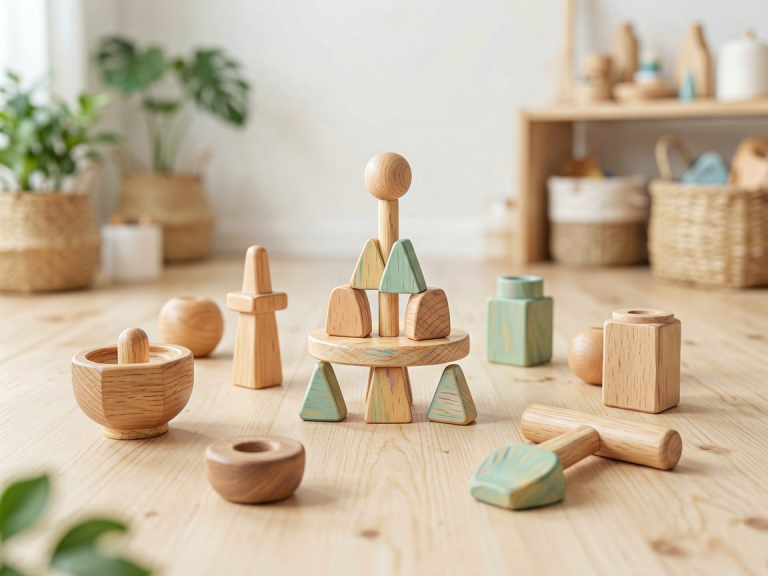
One of the most powerful alternatives to jigsaw puzzles is loose parts play. This involves providing children with collections of everyday objects—wooden blocks, bottle caps, corks, pebbles, fabric scraps, cardboard rings, pinecones, and large beads—and letting them arrange, stack, sort, and combine these items in infinite ways. Unlike a jigsaw puzzle, there is no pre-determined image to recreate. A child might sort the objects by color, build a tower that topples, create a pattern on the floor, or imagine that a set of red buttons are “apples” for a toy horse. This kind of play develops the same fine motor skills and spatial awareness as puzzles, but it also stimulates creativity, planning, and scientific thinking. Because loose parts can be grouped and regrouped, they offer endless novelty. For preschoolers, even a simple tray of wooden rings and sticks can occupy focused attention for far longer than a five-piece puzzle ever will.
Shape Sorters and Geoboards: Controlled Spatial Challenges
If you want to keep the “match the shape to the correct spot” concept but remove the frustration of tiny puzzle pieces, shape sorters are an excellent stepping stone. Modern shape sorters often come as chunky cubes, animals, or vehicles with large, easy-to-grip forms. They teach shape recognition, rotation, and trial-and-error in a forgiving way—if a triangle won’t fit into the square hole, the child simply tries another side. Geoboards take this idea further. A geoboard is a board with pegs arranged in a grid, where children stretch rubber bands around the pegs to create geometric shapes, letters, or pictures. This activity strengthens finger muscles and visual-motor integration. It also allows for open-ended creativity: one child might make a square, another might turn that square into a house, and a third might create an abstract star. For preschoolers who need more tactile feedback than a cardboard puzzle provides, geoboards are a superb alternative.
Matching and Memory Games: The Social Puzzle
Jigsaw puzzles are often solitary, but many preschoolers thrive in cooperative or lightly competitive settings. Matching games—where cards are flipped over to find pairs—offer the same cognitive workout of visual memory and categorization, but with a playful, social twist. For example, a set of cards featuring colorful animals, fruits, or simple shapes can be laid face down. Children take turns flipping two cards, trying to remember the location of each image. This builds working memory and attention to detail, skills that jigsaw puzzles also target. More importantly, matching games can be played with two or more children, teaching turn-taking and communication. There are also “non-puzzle” matching activities that are entirely hands-on, such as matching the correct plastic nut to the correct bolt, or pairing socks from a laundry basket. These everyday matching tasks are just as effective as jigsaw puzzles at developing the ability to compare and contrast visual information—without the need for a box lid reference image.
Building Blocks and Construction Sets: 3D Problem Solving
While jigsaw puzzles are flat, the world is three-dimensional. Construction toys like classic wooden blocks, magnetic tiles, LEGO Duplo, and interlocking plastic bricks offer a superior kind of spatial reasoning challenge. When a preschooler builds a tower, a bridge, or a castle, they must constantly solve mini-problems: “This block is too long; I need a shorter one.” “If I place this heavy block on top, the tower will fall.” “How can I make the arch stay upright?” These decisions require the same analytical thinking as fitting a puzzle piece into its place, but they add an extra layer of engineering and physics. Furthermore, construction play is inherently rewarding because the child’s original creation is unique and can be endlessly modified. Unlike a puzzle, which is discarded once completed, a block structure can become a spaceship, then a garage, then a dog house—all in a single play session. For preschoolers, large, light foam blocks are especially safe and versatile, allowing them to build structures as tall as themselves without risk of injury.
Sorting, Classifying, and Patterning Activities
Jigsaw puzzles require children to group pieces by color, edge, or internal image. This same sorting logic can be practiced with dedicated “puzzle-like” games such as counting bears, color chips, or nature finds. A simple activity: give a preschooler a bowl of mixed buttons and ask them to sort by color, then by size, then by number of holes. Each sorting rule is like completing a different puzzle—but with many possible solutions. Patterning activities, such as threading beads onto a string following a red-blue-red-blue sequence, also mimic the sequencing and prediction required for jigsaw solving. These tasks improve executive function, logical reasoning, and fine motor control. They can be done anywhere: in a doctor’s waiting room, at the kitchen table, or outdoors with leaves and acorns. Unlike jigsaw puzzles, sorting and patterning materials are typically inexpensive and easy to replace, making them ideal for messy or creative play.
Art-Based Alternatives: Collage, Sticker, and Dot-to-Dot
For preschoolers who love the visual satisfaction of a completed image but struggle with the precision of puzzle pieces, art-based activities are a fantastic substitute. Creating a collage from torn paper pieces, for instance, involves the same visual planning and hand-eye coordination as placing puzzle pieces—but the “pieces” can be any shape, and the final picture is entirely the child’s own. Sticker books with reusable stickers allow children to match shapes and locations on a scene, like placing a fish in a pond or a bird in a tree, which exercises spatial awareness without the need for interlocking tabs. Dot-to-dot drawings, where a child connects numbered or lettered dots to reveal a hidden picture, are another direct alternative. They teach sequencing, pencil control, and visual prediction. For a preschooler who wants the triumph of “I made this picture appear,” a dot-to-dot is far less frustrating than a 12-piece puzzle and can be printed for free from the internet.
Sensory Bins and Water Play
Sometimes the best alternative to a puzzle is not a structured game at all, but a rich sensory experience. A sensory bin filled with rice, pasta, sand, or water beads, along with scoops, funnels, and small animal figures, provides open-ended exploration that builds the same fine motor skills as manipulating puzzle pieces. Pouring, scooping, hiding, and digging require wrist rotation, pincer grip, and bilateral coordination—all essential for later writing and cutting. Sensory bins also foster imaginative play, which puzzles cannot do. For instance, a child might bury all the animals in the bin, then “rescue” them one by one, sorting them by species as they go. This activity combines the visual discrimination of a puzzle with the joy of messy, unstructured discovery. Honestly, for many preschoolers, a bin of colored pasta and a few cups is more engaging than any jigsaw puzzle—and it teaches just as much about cause and effect, classification, and spatial relationships.
Digital Puzzle Alternatives: Purposeful Screen Time
While hands-on activities are generally preferred, there are high-quality digital apps designed for young children that offer puzzle-like challenges without the physical pieces. Apps that let children drag shapes into outlines, tap matching pairs, or complete simple pattern sequences can be highly engaging. The key is choosing apps that are slow-paced, ad-free, and require real cognitive effort rather than mindless tapping. Digital alternatives also allow for infinite variations and immediate feedback, which can be motivating for children who give up easily on physical puzzles. However, screen time should be limited and balanced with tangible experiences. For families on the go, a tablet app can be a lifesaver in a waiting room, but it should never entirely replace the rich tactile learning of blocks, loose parts, or art supplies.
Practical Tips for Choosing the Right Alternative
When selecting any of these alternatives for your preschooler, consider their individual interests and developmental stage. A child who loves stories might prefer a collage or a buildable scene; a child who craves movement will enjoy a large floor-scale sorting game; a child who is easily frustrated benefits from open-ended loose parts with no “wrong” answer. Rotate materials frequently to maintain novelty. Store collections in clear, accessible bins so your child can choose their own activity. And remember, the goal is not to eliminate jigsaw puzzles forever—many children do enjoy them—but to broaden the range of problem-solving opportunities. By offering these alternatives, you are not just replacing an activity; you are upgrading your preschooler’s play experience with richer, more flexible, and more engaging learning opportunities.
In summary, the best alternatives to jigsaw puzzles for preschoolers are those that encourage active problem solving, creativity, and social interaction. Loose parts, shape sorters, geoboards, matching games, building blocks, sorting tasks, art projects, sensory bins, and even thoughtful digital apps all deliver the developmental benefits of jigsaw puzzles while avoiding their limitations. So next time your preschooler pushes away a puzzle box, don’t worry. Hand them a tray of buttons, a set of magnetic tiles, or a bin of rice—and watch a different kind of masterpiece emerge.