Beyond Screens: The Best Alternatives to Coding Toys for 1-Year-Olds
Introduction
In the modern parenting landscape, the term “coding toy” has become a buzzword, often marketed as a must-have for nurturing future engineers and problem-solvers. However, when it comes to a 1-year-old, the concept of coding is far beyond their cognitive and motor capabilities. At this tender age, children are not ready for screens, buttons, or abstract command sequences. Instead, they are in a critical phase of sensorimotor development, where they learn through touch, movement, repetition, and direct interaction with their environment. The true “coding” for a one-year-old is not about algorithms or programming languages—it is about understanding cause and effect, pattern recognition, spatial reasoning, and the joy of discovery. This article explores the best alternatives to coding toys for 1-year-olds, focusing on developmentally appropriate, screen-free, and engaging activities that lay the foundation for logical thinking and creativity without the pressure of early academics.
Why Coding Toys Are Not Suitable for 1-Year-Olds
Before diving into alternatives, it is essential to understand why coding toys designed for older children can be problematic for toddlers. Most commercial coding toys, such as robotic mice, sequencing blocks, or app-connected kits, require fine motor skills, symbolic thinking, and attention spans that 1-year-olds have not yet developed. A typical 12-month-old is mastering skills like standing, walking, and manipulating objects with their pincer grasp. They explore the world by mouthing, shaking, dropping, and throwing. A coding toy that demands pressing tiny buttons, following multi-step instructions, or understanding that a block represents a command is simply beyond their reach. Moreover, many coding toys include screens or flashing lights, which can overstimulate a young child’s developing visual system and reduce opportunities for real-world, open-ended play. The American Academy of Pediatrics recommends avoiding screen time for children under 18 months (except for video chatting), which makes most app-based coding toys inappropriate. Instead, the best alternatives focus on concrete, hands-on experiences that build the brain’s executive functions naturally.
The Core Skills That Matter at This Age
For a 1-year-old, the foundational skills that later support computational thinking are not taught directly but are nurtured through play. These include:
- Cause and effect: Understanding that an action produces a reaction (e.g., pushing a block makes it fall).
- Object permanence: Knowing that something exists even when out of sight.
- Pattern recognition: Noticing that a toy squeaks when squeezed, or that a cup goes on top of a stack.
- Spatial awareness: Learning how objects fit together, move, and relate in space.
- Problem-solving: Figuring out how to retrieve a toy that rolled under a couch.
- Fine and gross motor control: Coordinating hands and eyes to manipulate objects.
Any alternative to coding toys should address these areas without requiring abstract reasoning. The best options are simple, safe, and encourage repetitive exploration—the toddler’s natural mode of learning.
Top Alternative #1: Sensory Play with Cause-and-Effect Toys
Sensory bins filled with rice, beans, or water offer endless opportunities for discovery. While not a “coding toy” in the traditional sense, sensory play teaches children that their actions have outcomes. For example, scooping rice from one container to another demonstrates that a full scoop can be emptied; pressing a squishy toy produces a sound. Specific cause-and-effect toys such as pop-up toys (where a child presses a button and a character jumps) or simple marble runs (with large, toddler-safe pieces) are excellent. When a 1-year-old pushes a ball down a ramp and watches it roll, they are learning a basic sequence: *push → roll → stop*. This is the essence of algorithmic thinking—step-by-step actions leading to a result. Unlike coding toys that require understanding symbols, this is immediate, physical, and deeply satisfying. Parents can create homemade cause-and-effect toys using cardboard tubes, empty plastic bottles, and balls. The key is to let the child repeat the action many times, reinforcing neural pathways.
Top Alternative #2: Building Blocks and Stacking Toys
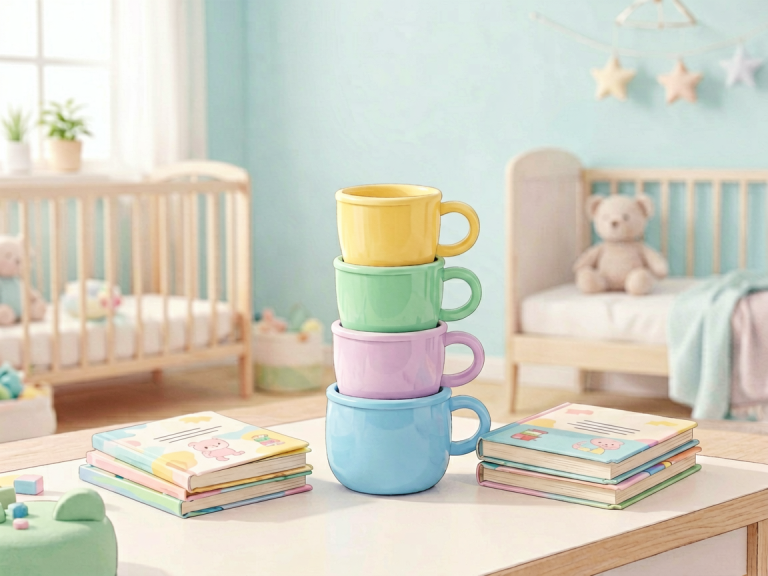
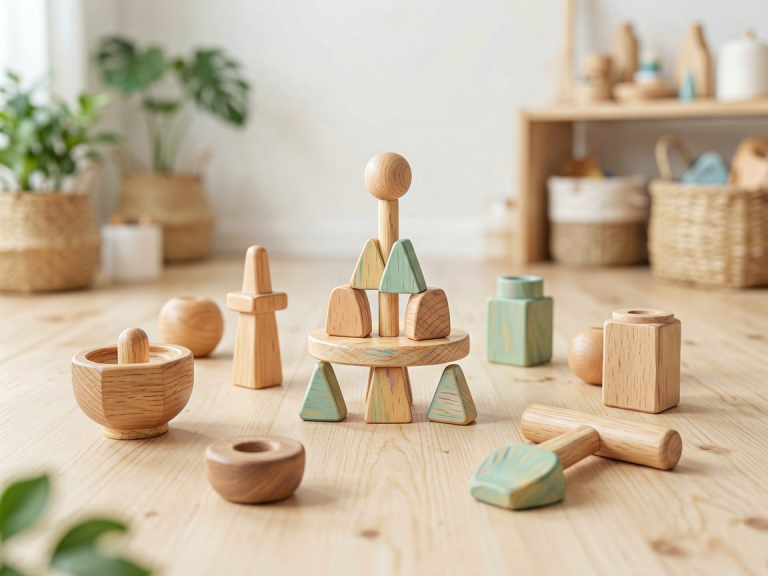
Blocks are perhaps the most timeless alternative to coding toys. For a 1-year-old, wooden or soft foam blocks provide a three-dimensional canvas for experimentation. Stacking a block on top of another requires balance, spatial judgment, and motor control. When the tower falls, the child learns about gravity and stability—a primitive version of debugging. Does the tower fall because the base was too small? Because the block was placed off-center? The toddler doesn’t verbalize this, but the brain registers the cause. Moreover, blocks encourage creativity and open-ended play. Unlike coding toys that have a single “correct” answer, blocks allow infinite configurations. This flexibility fosters divergent thinking, a key component of problem-solving. For 1-year-olds, large, chunky blocks (like Mega Bloks or soft fabric blocks) are ideal. Parents can model simple patterns, such as alternating colors (red, blue, red, blue), which is an early form of pattern recognition that underlies code. Even a simple set of nesting cups can teach sequencing: the child learns that the smallest cup goes inside the next size, and so on.
Top Alternative #3: Musical Instruments and Rhythm Games
Music and rhythm are powerful tools for developing sequencing and cause-and-effect understanding. A drum, a xylophone, or a set of shakers allow a 1-year-old to produce sounds by striking, shaking, or tapping. This immediate auditory feedback reinforces the connection between action and result. Furthermore, rhythm games—like patting a rhythm on a table or clapping hands to a song—teach temporal patterns. When a parent sings “Twinkle, Twinkle, Little Star” and pauses, the child may anticipate the next word or sound. This anticipation is a form of prediction, another cornerstone of computational thinking. Musical toys need not be electronic; simple wooden instruments are often safer and more durable. Additionally, dancing to music helps the child move different body parts in sequence (e.g., step-step-clap), which builds motor planning. While not a coding toy, learning to follow a beat is an early form of pattern recognition that will later help with understanding loops and series.
Top Alternative #4: Simple Puzzles and Shape Sorters
Shape sorters and simple peg puzzles are excellent alternatives that develop categorization and spatial reasoning. A 1-year-old who tries to fit a square peg into a round hole learns that not all shapes are interchangeable—a lesson in logic and constraints. Initially, the child may try force, then experiment, then eventually match the shape to the correct slot. This trial-and-error process is exactly how programmers debug code. Puzzles with only two or three large pieces (knob puzzles with chunky handles) are perfect for this age. The parent can narrate the process: “The circle goes here. Yes! Now the square.” This verbal reinforcement strengthens the link between shape, space, and success. Unlike a coding toy that might flash a light when correct, a shape sorter provides a physical, satisfying click when the piece drops. The intrinsic reward keeps the child engaged. Over time, the child will learn to repeat the successful action, building memory and pattern recognition.
Top Alternative #5: Interactive Books and Storytelling
Books may not seem like coding alternatives, but interactive books—lift-the-flap books, touch-and-feel books, or books with simple sliders—teach sequence and prediction. When a child lifts a flap, a picture is revealed. The child learns that “if I lift this, then I see the bunny.” This is a conditional statement (if-then) at its most basic level. Repetitive stories like *Brown Bear, Brown Bear, What Do You See?* or *The Very Hungry Caterpillar* use a predictable structure. The child begins to anticipate what comes next: “On Monday, he ate one apple…” This anticipation is a form of algorithmic thinking—the brain builds a mental model of the sequence. Moreover, pointing to pictures and naming objects builds vocabulary, which is essential for later symbolic representation (symbols are the building blocks of code). For a 1-year-old, board books with sturdy pages, bright colors, and simple illustrations are best. Reading aloud with animated voices and pauses invites the child to participate, turning storytime into an interactive computational exercise.
Top Alternative #6: Open-Ended Play with Everyday Objects
One of the most underrated alternatives to coding toys is the humble household object. A set of plastic bowls, wooden spoons, empty boxes, and fabric scarves can engage a toddler for hours. Why? Because they offer no prescribed outcome. A 1-year-old can stack bowls, bang spoons, hide scarves, or push boxes across the floor. Each action produces a consequence: the bowl clatters, the scarf disappears, the box slides. This unstructured play is vital for executive function development. The child must decide what to do next, test an idea, and adapt when something doesn’t work. For example, if a scarf falls off the head, the child may try to put it back differently. That iterative process is the heart of coding: test, fail, adjust, succeed. Parents can support this by providing a “treasure basket”—a collection of safe items with different textures, weights, and sounds. Rotate items regularly to maintain novelty. Unlike a coding toy that has a fixed play pattern, everyday objects encourage divergent thinking and sustained curiosity.
Top Alternative #7: Parent-Child Interaction Activities
Perhaps the most powerful “coding toy” alternative of all is direct, responsive interaction with a caring adult. Games like peek-a-boo teach object permanence and the simple rule: “I hide → you appear.” When a parent rolls a ball to a child and the child rolls it back, they are practicing turn-taking, which is a form of sequencing and cooperation. Singing action songs like “Itsy Bitsy Spider” or “If You’re Happy and You Know It” involve following a sequence of movements, which builds motor planning and memory. Even activities like pouring water from one cup to another during bath time provide feedback loops. The parent’s role is crucial: by narrating, asking questions (“Where is the block?”), and allowing the child to lead, the adult scaffolds learning. This cannot be replicated by any screen or automated toy. Research shows that responsive caregiving—where the parent follows the child’s focus of attention—boosts cognitive development more than any commercial product. So the best alternative to a coding toy for a 1-year-old is simply time spent together, exploring the world with open eyes and hands.
Conclusion
Coding toys for 1-year-olds are a marketing myth. At this age, children do not need digital logic or symbolic commands; they need rich, physical, sensory experiences that build the brain’s foundational structures. The alternatives discussed—sensory cause-and-effect toys, building blocks, musical instruments, shape sorters, interactive books, everyday objects, and parent-child interaction—all provide the same cognitive benefits that later support coding, but in a developmentally appropriate way. They encourage curiosity, resilience, pattern recognition, and problem-solving through concrete, hands-on play. Parents should feel confident skipping the expensive, flashy coding kits and instead embracing simple, open-ended materials. Remember: the best “code” a one-year-old can learn is the code of the real world—the relationship between action and reaction, the joy of discovery, and the love of learning through play. These are the true building blocks of a future programmer, scientist, or any creative thinker.