Bridging the Gap: Can STEM Kits Enhance Phonics Learning?
Introduction
In the landscape of early childhood education, two seemingly distinct domains have gained considerable traction: phonics instruction and STEM (Science, Technology, Engineering, and Mathematics) learning. Phonics, the method of teaching reading by correlating sounds with letters or groups of letters, has long been a cornerstone of literacy development. Meanwhile, STEM kits—hands-on activity boxes designed to introduce children to concepts in science, technology, engineering, and math—have become ubiquitous in classrooms and homes, promising to foster critical thinking and creativity. At first glance, these two fields appear unrelated: phonics deals with abstract symbol-sound relationships, while STEM kits emphasize concrete, often physical, problem-solving. Yet a growing number of educators and parents are asking: *Are STEM kits good for phonics?* This article explores the potential intersection of these two educational tools, examining whether the hands-on, multisensory nature of STEM kits can actually support phonics learning, and if so, under what conditions. By analyzing pedagogical principles, current research, and practical examples, we aim to provide a balanced answer that helps educators and caregivers make informed decisions.
Understanding Phonics and Its Traditional Approaches
Phonics instruction is grounded in the alphabetic principle—the idea that letters represent spoken sounds, and that blending these sounds enables decoding of written words. Effective phonics programs typically involve explicit teaching of letter-sound correspondences, followed by practice in blending, segmenting, and manipulating phonemes. Traditional approaches include direct instruction with flashcards, worksheets, decodable books, and teacher-led drills. While these methods are effective for many children, they often rely heavily on visual and auditory modalities. Young learners, particularly those with diverse learning styles or attention difficulties, may benefit from more kinesthetic and tactile engagement. This is where the multisensory principle—the idea of engaging multiple senses simultaneously—becomes relevant. The Orton-Gillingham approach, for instance, incorporates tracing letters in sand or on textured surfaces. STEM kits, with their emphasis on manipulation, construction, and experimentation, naturally lend themselves to such multisensory experiences.
The Rise of STEM Kits in Early Education
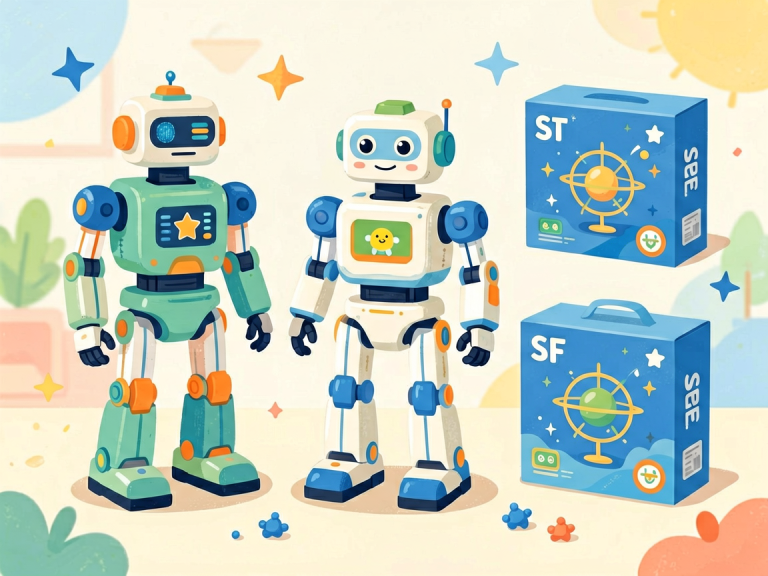
STEM kits have exploded in popularity over the past decade, fueled by concerns about children’s preparedness for a technology-driven world and by a growing recognition that early exposure to STEM can cultivate curiosity and problem-solving skills. These kits range from simple building blocks and magnetic tiles to complex robotics and coding sets. Their common thread is active, inquiry-based learning: children are encouraged to explore, hypothesize, build, test, and modify. For example, a typical kit might ask a child to construct a simple circuit to light an LED, or to design a catapult that launches a pom-pom. The benefits are well-documented: enhanced spatial reasoning, improved executive function, and greater persistence in the face of failure. However, STEM kits are often marketed for math and science skills, leaving literacy—especially phonics—as an afterthought. Yet the question remains: can the same hands-on principles that make STEM kits effective for numeric and scientific concepts be applied to the decoding of letters and sounds?
The Potential Synergy: How STEM Kits Can Support Phonics
Hands-On Letter Formation and Construction
One obvious way STEM kits can support phonics is by providing materials for children to physically form letters. Kits that include interlocking pieces, magnetic tiles, or even play dough can be used to build letters of the alphabet. When a child constructs the letter “b” using wooden blocks, traces its shape with a finger, and simultaneously says the /b/ sound, multiple sensory pathways are activated. This reinforces the neural connection between the visual symbol and the auditory phoneme. Moreover, constructing letters from components (e.g., a straight line and a circle) can deepen a child’s understanding of letter forms, reducing common confusions like “b” versus “d.” Some STEM kits specifically incorporate letter-building activities, such as “Alphabet Construction Set” or “Letter Lacing Cards,” but even generic building blocks can be repurposed for this goal.
Coding and Phonemic Awareness
Surprisingly, introductory coding kits—often considered the pinnacle of STEM—can also enhance phonics. Many early coding tools use physical blocks or tiles that children arrange to create sequences. These blocks can be customized or labeled with letters, allowing children to “code” words by placing the correct letters in order. For instance, a child might program a small robot to move to a picture of a cat only after placing the letters “c,” “a,” and “t” in a row. This process reinforces letter-sound correspondence (the child must know which letter goes with which sound to select the correct block) and sequencing, a critical skill for blending phonemes. Furthermore, the immediate feedback from the robot or app (success or failure) provides motivation and self-correction, aligning with the principles of mastery learning.
Multisensory Engagement and the Science of Reading
Research on the science of reading consistently emphasizes the importance of multisensory instruction for struggling readers, particularly those with dyslexia. STEM kits naturally engage sight, touch, and often sound (e.g., buzzing circuits, clicking gears). When phonics elements are integrated, these kits can provide the rich neural activation that facilitates encoding and retrieval. For example, a “phonics circuit” kit might require a child to match a sound to a letter, and if correct, a light turns on or a motor spins. This positive reinforcement, combined with tactile feedback, can make repeated practice feel less like drill and more like play. A 2019 study in the *Journal of Educational Psychology* found that children who used a multisensory letter-building tool (similar to a STEM kit) showed significantly greater gains in letter-sound knowledge compared to those using flashcards alone.
Practical Examples of STEM Kits with Phonics Elements
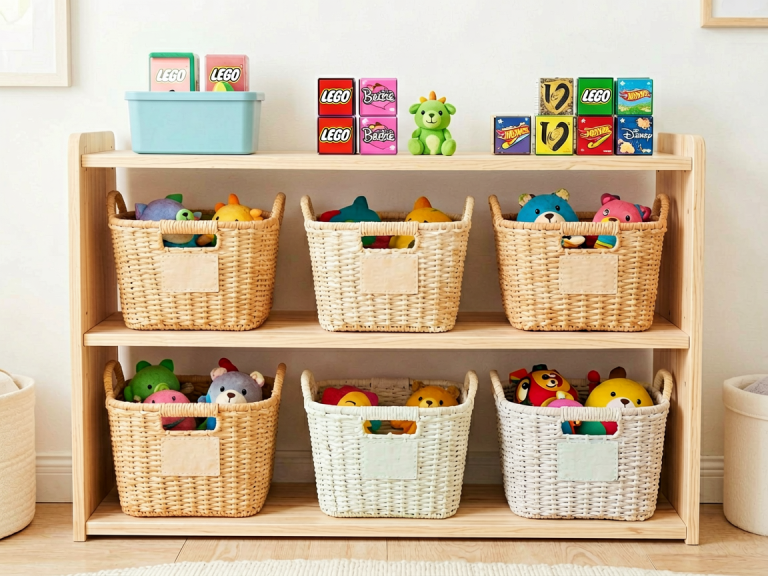
Several commercial products already blend STEM and phonics. The “Magnetic Alphabet Maze” is a simple but effective tool: children use a magnetic wand to guide a ball-shaped magnet through a maze, each section labeled with a letter. To navigate, they must say the letter’s sound. Similarly, “Osmo’s Words” for iPad combines physical letter tiles with a digital game that requires spelling words correctly to advance. More sophisticated kits like “Kibo” (a programmable wooden robot) allow educators to create phonics challenges, such as programming the robot to stop at a card displaying a word that starts with a specific sound. Even generic LEGO bricks can be used: write a grapheme on each brick, and ask children to connect bricks in order to build a word, then snap them together while blending the sounds. These examples illustrate that the boundary between STEM and literacy is permeable, and with intentional design, a STEM kit can become a powerful phonics tool.
Evidence and Research: What Studies Say
Direct empirical evidence on the question “Are STEM kits good for phonics?” is still limited, as most research treats phonics and STEM as separate domains. However, a growing body of work on “STEAM” (adding the Arts, including literacy) provides some clues. A 2021 meta-analysis in *Early Childhood Research Quarterly* examined 23 studies on technology-enhanced literacy interventions and found that hands-on, interactive tools (including some that would qualify as STEM kits) significantly improved phonemic awareness and letter knowledge in preschoolers. Another study, published in *Computers & Education* (2020), focused on a robotics-based literacy program for kindergarteners. Children who used a programmable robot to “drive” to letters and spell words outperformed peers who received traditional phonics instruction on a post-test of decoding skills. These findings suggest that the engagement and active learning inherent in STEM kits can boost phonics outcomes, especially when the kits are explicitly designed with literacy goals in mind.
Limitations and Considerations
Despite the promising synergy, it is crucial to avoid overgeneralization. Not all STEM kits are suitable for phonics; many are narrowly focused on math or physics and offer no literacy component. Merely having children build a tower while letters are written on the blocks does not automatically teach phonics—the activity must intentionally pair physical manipulation with phoneme awareness. Additionally, the cost of high-quality STEM kits can be prohibitive, and classroom time is finite. Educators must weigh whether the time spent on a STEM-phonics hybrid is more effective than dedicated phonics instruction other resources. There is also a risk of distraction: a colorful, engaging robot might capture a child’s attention, but if the child focuses on the movement rather than the letters, learning may suffer. Finally, phonics requires systematic, sequential instruction; STEM kits are often exploratory, which may not align with the explicit, direct teaching that struggling readers need. A balanced approach—using STEM kits as a supplement to, not a replacement for, evidence-based phonics programs—appears most prudent.
Conclusion
So, are STEM kits good for phonics? The answer is a qualified yes—but only when thoughtfully integrated. The hands-on, multisensory, and motivating nature of STEM kits aligns well with the principles of effective phonics instruction, particularly for young learners or those who benefit from kinesthetic engagement. When kits are designed or adapted to focus on letter-sound relationships, blending, and sequencing, they can transform repetitive practice into an exciting, discovery-driven experience. However, educators and parents must be discerning: the kit must prioritize phonics goals, not just STEM skills, and should be used as part of a comprehensive literacy curriculum. Future research that directly compares STEM-based phonics approaches with traditional methods will help clarify the conditions under which these tools are most effective. In the meantime, the message is clear: with intentional design, the bridge between STEM kits and phonics is not only possible but potentially powerful, offering a new avenue for nurturing both scientific minds and literate hearts.