Beyond the Screen: Quiet Alternatives to Learning Tablets for Deep Focus
Introduction
In the past decade, learning tablets have become ubiquitous in classrooms, libraries, and homes. Their bright screens, endless apps, and internet connectivity promise a world of knowledge at our fingertips. Yet for all their convenience, many learners have found that tablets come with a hidden cost: the constant buzz of notifications, the temptation to multitask, and the subtle fatigue that blue light brings. As educators and students alike search for more focused, intentional ways to learn, a growing movement champions “quiet alternatives”—tools and methods that replace digital noise with calm concentration. This article explores several such alternatives, each designed to foster deep learning without the glare of a screen. From the humble notebook to the tactile world of physical models, these approaches remind us that sometimes the quietest tools offer the loudest insights.
—
The Allure and Anxiety of Learning Tablets
Learning tablets—whether an iPad with a keyboard, a Samsung Galaxy Tab, or a dedicated e-reader—have transformed education. They store thousands of textbooks, provide interactive simulations, and enable instant feedback through quizzes and apps. For students with learning disabilities, text-to-speech and adjustable fonts can be game-changers. For teachers, tablets simplify lesson planning and grading.
Yet this digital paradise has a shadow. Studies show that the same device used for learning is also used for social media, gaming, and streaming. The cognitive cost of switching contexts is high: even a quick glance at a notification can derail a train of thought for up to 23 minutes. Furthermore, prolonged screen time is linked to eye strain, headaches, and disrupted sleep patterns. The very technology designed to accelerate learning can paradoxically slow it down by fragmenting attention.
This is not to say tablets have no place in education. Rather, the call for “quiet alternatives” is a reminder that intentionality matters. When the goal is deep understanding—not just surface-level skimming—analog and low-tech methods often outperform their digital counterparts. The following sections explore specific alternatives that prioritize calm, focus, and genuine comprehension.
—
The Humble Notebook: Pen and Paper as Cognitive Partners
Perhaps the simplest and most powerful quiet alternative is a paper notebook and a good pen. While it may seem archaic in an age of digital note-taking apps like Notion or OneNote, research consistently shows that handwriting improves learning. A landmark study by Mueller and Oppenheimer (2014) found that students who took notes by hand performed better on conceptual questions than those who typed, because handwriting forces the brain to process and paraphrase information rather than transcribe it verbatim.
Why it works:
- Slower pace encourages synthesis: Writing by hand is slower than typing, which naturally forces the learner to decide what is important and rephrase it in their own words. This deeper processing strengthens memory.
- No distractions: A notebook has no notifications, no hyperlinks, no autocorrect errors. It offers a blank canvas that invites full presence.
- Tactile feedback: The physical act of moving a pen across paper engages the sensorimotor system, creating a richer encoding of information. Many learners report that they remember diagrams or formulas better when they have drawn them by hand.
Practical tips:
- Use a fountain pen or a smooth gel pen for a more pleasant writing experience.
- Experiment with color coding: highlight key concepts with mildliners.
- Try the “Cornell Method” of note-taking, which divides the page into cues, notes, and summary sections—a structure that aids review.
For subjects like mathematics, foreign languages, or creative writing, the notebook is not just an alternative but often superior to a tablet. It imposes a gentle discipline: you cannot erase with a tap, so you learn to think before you write. The result is a quieter mind and a more durable understanding.
—
The Audio Way: Headphones and Silence
Another quiet alternative harnesses the power of sound—specifically, spoken-word audio. While tablets often bombard users with visual inputs, headphones can provide an immersive, screen-free learning experience. Podcasts, audiobooks, and voice-recorded lectures allow learners to absorb information while walking, exercising, or doing chores. But the key to making audio a true learning tool lies in active listening, not passive consumption.
Why it works:
- Eliminates visual fatigue: The brain can process spoken language for longer periods than it can handle screen glare.
- Encourages mental visualization: Without images or text, the listener must construct mental pictures, which strengthens imagination and memory.
- Portability and low friction: A pair of wireless earbuds and a smartphone (or even a basic MP3 player) can turn any environment into a classroom—without the bulk of a tablet.
How to make it effective:
- Practice the “L.A.W.” method: Listen, Articulate, Write. After listening to a 10-minute segment, pause and verbally summarize what you heard. Then jot down a few key points in a notebook (see previous section).
- Use variable speed playback: listening at 1.25x or 1.5x can improve processing speed, but only after you are comfortable with normal speed.
- Choose high-quality audio content that is dense with information, such as university lecture casts, long-form podcast episodes (e.g., *In Our Time*, *Hardcore History*), or unabridged audiobooks.
For language learners, audio is especially powerful. Listening to native speakers without visual aids trains the ear to recognize pronunciation, rhythm, and intonation. Paired with a transcript (optional), it becomes a bilingual workout that a tablet’s text-heavy interface cannot replicate. The quietness of this method lies not in silence, but in the focused stream of words that demands your full attention.
—
The Tactile World: Physical Models, Puzzles, and Manipulatives
Learning is not only a visual or auditory activity—it is also a physical one. Tablets offer swipes and taps, but they lack the three-dimensional richness of real objects. Quiet alternatives that engage the hands and the body can lead to breakthroughs in understanding, especially in STEM subjects.
Examples of tactile learning tools:
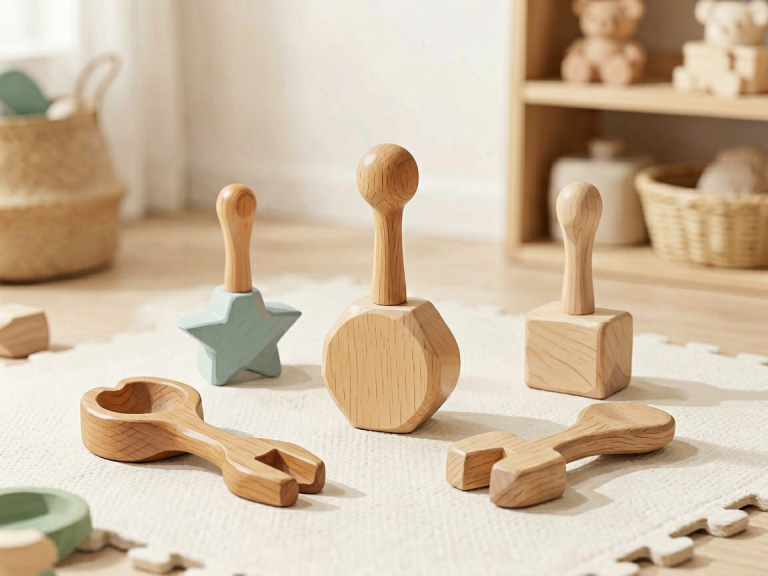
- Geometric building sets (e.g., Zometool, Magformers) for visualizing molecular structures or architectural principles.
- Physical puzzles (e.g., Rubik’s cubes, tangrams, dissection puzzles) that develop spatial reasoning and problem-solving without a screen.
- Model kits (e.g., anatomical models, planetariums, electronics snap circuits) that let learners build and disassemble systems.
- Clay or Play-Doh for sculpting topographical maps, cell organelles, or abstract concepts like wave forms.
Why it works:
- Kinesthetic learning: Many people learn best when moving their bodies. Holding a 3D molecule model in your hands gives an intuitive sense of symmetry that a 2D diagram on a tablet cannot convey.
- Flow state: Repeated physical actions—turning a puzzle piece, fitting a gear—induce a meditative focus known as “flow,” where time seems to disappear. This state is notoriously hard to achieve with a tablet’s constant interruptions.
- Low stimulation: Unlike the flashing transitions and animations of an app, physical objects are quiet in every sense. They do not buzz; they do not ping. They simply wait for you to act.
Practical integration:
- For a biology student: buy a disassemble-able frog model instead of using a virtual dissection app. The real texture and smell (even if synthetic) create unforgettable sensory associations.
- For a physics student: build a pendulum or a lever with household items. Seeing the relationship between weight, distance, and force with your own eyes beats any simulation.
The tactile approach reminds us that learning is not merely an information transfer—it is a dialogue between the mind and the material world. And that dialogue is best conducted in quiet.
—
The Social Element: Learning Partners and Group Discussions
At first glance, “quiet alternatives” might seem to exclude social learning, but the quiet I refer to here is about the absence of digital noise, not the absence of human voices. Face-to-face discussions, study groups, and one-on-one tutoring can be profoundly effective alternatives to tablet-based learning—as long as they are structured to minimize distractions.
Why it works:
- Active recall and explanation: When you teach a concept to a friend, you must retrieve it from memory and reformulate it in your own words. This “retrieval practice” is one of the most powerful learning strategies known to cognitive science.
- Immediate feedback: A human interlocutor can correct misunderstandings in real time, unlike a tablet app that may only offer binary right/wrong responses.
- Emotional connection: Learning with others builds motivation, accountability, and camaraderie. The quiet focus of a study session can be deepened by a shared goal.
How to keep it quiet and effective:
- Set a “no-screens” rule: put away all phones, laptops, and tablets during the session. Use printed handouts and physical whiteboards.
- Use the Socratic method: Instead of having one person lecture, pose questions that require reasoning. For example, “Why do you think the quadratic formula works?”
- Limit group size to 3–5 people: Larger groups invite side conversations and fragmentation. A small, focused circle creates a sanctuary of concentration.
For introverts, one-on-one tutoring or pair-study is often more comfortable than large groups. The key is to prioritize deep dialogue over shallow chatter. In this quiet social space, ideas are built and refined—without a single notification.
—
Conclusion: Choosing Quiet in a Noisy World
Learning tablets are not going away, nor should they. They have their place for quick reference, interactive simulations, and accessibility. But the quiet alternatives discussed here—notebooks, audio, tactile objects, and focused social interaction—offer something that screens often cannot: a path to deep, sustained attention.
In an age where attention is the scarcest resource, choosing a pen over a screen, a piece of clay over a simulation, or a whispered conversation over a video call is a radical act of self-discipline. It is a declaration that learning is not about consuming information faster, but about understanding it better.
So next time you reach for a tablet to study a new topic, consider pausing. Ask yourself: *What would help me truly learn this—the noise of a thousand apps, or the quiet of a single tool?* The answer, more often than not, lies beyond the screen.