The Ultimate Age-Appropriate Toy Guide for 2-Year-Olds: Play That Grows with Your Toddler
Why Age Matters at Two
At age two, a child is no longer a baby and not quite a preschooler. This transitional year is marked by explosive language development, newfound independence, and a powerful urge to explore the physical world. Toddlers at this age are learning to walk steadily, run, climb, and manipulate small objects with increasing precision. They are also beginning to engage in symbolic play, which means a cardboard box can become a car, and a stuffed animal can become a best friend. Choosing age-appropriate toys is not simply about safety—though that is critical—it is about matching the toy's demands to the child's current cognitive, physical, and emotional abilities. A toy that is too advanced leads to frustration; a toy that is too simple leads to boredom. The right toy at two years old should sit at the perfect intersection of challenge and joy, encouraging trial and error without overwhelming a still-developing brain.
Two-year-olds are famously stubborn and emotional, and their play reflects this. They want to make choices, and they thrive when they feel a sense of control over their environment. Toys that offer open-ended possibilities—blocks, play dough, simple puzzles—are ideal because they allow the child to decide what happens next. Conversely, toys with a single correct answer or a rigid electronic script can quickly become a source of meltdowns. The best guide for this age is to prioritize process over product. The goal of play is not to achieve a perfect outcome but to explore materials, test hypotheses, and build confidence. When we choose toys with this philosophy in mind, we support the toddler's emerging identity as a capable, creative person.
What to Look For in Toys for 2-Year-Olds
Before diving into specific categories, it helps to establish a general checklist for evaluating any toy for a two-year-old. First, durability matters. Two-year-olds are not gentle. They throw, drop, step on, and occasionally bite their toys. A toy that breaks easily not only wastes money but can create sharp edges or small parts that become choking hazards. Look for solid wood, sturdy plastic, and tightly sewn fabrics. Second, size and safety go hand in hand. Any toy or component smaller than a toilet paper roll should be avoided, as two-year-olds still explore with their mouths. Avoid magnets, button batteries, and any detachable small pieces. Third, consider the sensory experience. At this age, children learn through all five senses, so toys that offer varied textures, sounds, colors, and even gentle smells are highly engaging. Finally, think about the toy's "play value" over time. A great toy for a two-year-old will still be interesting at age three or four, perhaps in a different way. For example, a set of wooden blocks can be stacked at two, used to build a tower at three, and turned into a castle for dolls at four. This longevity is a hallmark of truly age-appropriate design.
Another critical factor is the balance between active and quiet play. Two-year-olds have high energy, but they also need downtime to process their experiences. A well-stocked play area should include toys that encourage gross motor movement, such as balls, ride-on cars, and push-pull toys, alongside calming activities like books, puzzles, and art supplies. Additionally, be wary of battery-operated toys that do everything for the child. While a singing, flashing toy might initially capture attention, research suggests that simpler toys often foster deeper, more sustained engagement. When a toy sings the song, the child has no reason to sing it herself. Instead, look for toys that respond to the child's actions—a xylophone that makes sound when struck, a shape-sorter that clicks when the piece drops in—because these give the child a real sense of cause and effect.
Top Toy Categories and Recommendations
Building and Construction Toys
Blocks are the undisputed king of toddler toys. For a two-year-old, choose large, lightweight wooden or cardboard blocks that are easy to grasp and stack. A set of 20 to 30 blocks in different shapes and colors is perfect. The child can build a tower and knock it down, line blocks up like a train, or use them as "food" in a pretend kitchen. Also consider magnetic tiles, which are incredibly popular and for good reason. Two-year-olds can connect the squares and triangles to make flat shapes or simple 3D structures. Magnetic tiles have the added benefit of satisfying the toddler's fascination with things that stick together and pull apart, which builds spatial reasoning and fine motor control. Just ensure the magnets are securely enclosed in thick plastic.
Puzzles and Shape Sorters
Puzzles are excellent for developing problem-solving skills and hand-eye coordination. At two, children are ready for chunky wooden puzzles with knobs or large pieces that fit into matching cutouts. Start with puzzles of animals, vehicles, or familiar objects, and keep the number of pieces low—four to six is ideal. A shape sorter is another classic. Look for one with a box or bucket and a variety of 3D shapes. The toddler will experiment, trying to force a square into a round hole, and eventually, through trial and error, learn to match the shapes. This process teaches perseverance and spatial awareness. Avoid puzzles with too many pieces or similar shapes, as they can cause frustration. The key is to let the child work at their own pace and offer help only when they seem truly stuck.
Pretend Play Toys
At two, the imagination switches on. This is the perfect time to introduce simple pretend play props. A play kitchen with pots, pans, and plastic food is usually a huge hit. Toddlers love to mimic adults, and stirring a pot or feeding a baby doll is deeply satisfying. Similarly, a dollhouse with basic furniture and small dolls allows for narrative play. Dress-up clothes, such as hats, scarves, and oversized shoes, are also wonderful because they are open-ended and easy to put on and take off. Remember that pretend play does not require expensive sets. A cardboard box with a few fabric squares can be a magical cave, a boat, or a spaceship. When selecting pretend play items, avoid anything with too many tiny accessories that could go missing or be swallowed. Instead, choose large, realistic props that encourage the child to invent scenarios.
Art and Sensory Materials
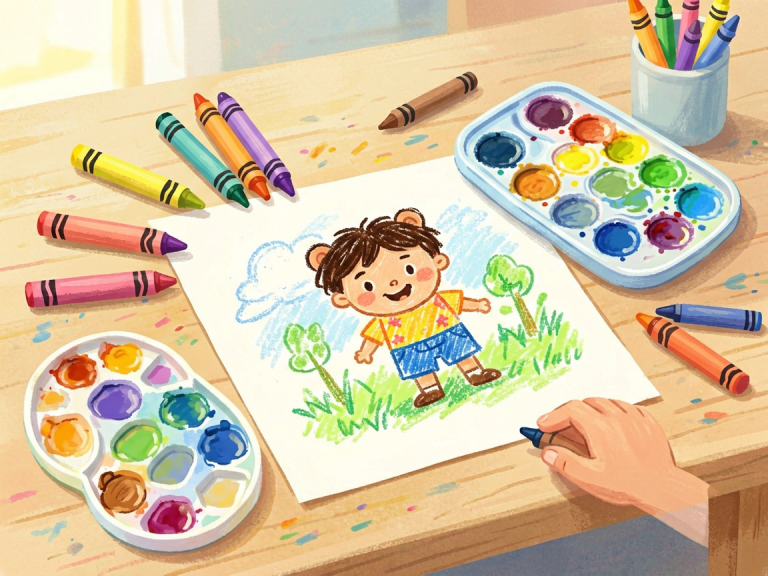
Two-year-olds are natural artists. They love to scribble, smear, and squish. Provide thick, non-toxic crayons, washable markers, and large sheets of paper. Finger paints are excellent, as are stampers with chunky handles. Play dough is another sensory staple. You can buy it or make it at home; the process of poking, rolling, and cutting the dough builds hand strength and creativity. Add safe tools like a plastic rolling pin, cookie cutters, and a child-safe knife. Sensory bins—plastic containers filled with rice, dry pasta, or water beads—also offer rich tactile exploration. However, always supervise sensory play with small materials like rice or beads, as they are choking hazards. For a safer option, use large pom-poms or cotton balls. Finally, don't forget musical instruments: a tambourine, maracas, or a small drum let the child experiment with rhythm and cause and effect.
Active Play and Gross Motor Toys
Running, jumping, and climbing are essential at this age. Ride-on toys without pedals, such as balance bikes or simple push cars, help develop leg strength and coordination. A small slide or a padded climbing ramp can provide hours of safe physical challenge. Balls of various sizes are also perfect—toddlers can throw, roll, kick, and chase them. Push-and-pull toys, like a wooden animal on wheels that the child pulls behind them, are ideal for early walking skills. If you have outdoor space, consider a small sandbox with scoops, buckets, and shovels. Sand play engages the senses and encourages social play when siblings or friends are around. Indoors, an indoor tunnel or a child-sized tent can create a dedicated play space that encourages crawling and hiding. Always check that active toys are stable and the recommended age range matches the child's size and ability.
Safety First: Non-Negotiables
No toy guide is complete without a strong emphasis on safety. The Consumer Product Safety Commission and pediatric organizations consistently warn about the dangers of small parts, cords, and toxic materials. For a two-year-old, the golden rule is the choke tube test: if an object can fit inside a standard toilet paper roll, it is too small. Regularly inspect toys for damage. A wooden block that splinters, a plastic car with a cracked wheel, or a stuffed animal with a loose eye should be repaired or discarded immediately. Avoid toys with long strings or cords longer than 12 inches, as these pose a strangulation risk. Make sure that any art supplies are labeled non-toxic and washable. Also, be mindful of second-hand toys, which may no longer meet current safety standards. Check for recalls online, especially for toys that might have lead paint or small magnets. Finally, remember that even the best, most age-appropriate toy cannot replace adult supervision, especially when children are playing with items that involve water, food, or small loose parts.
Another safety consideration is the play space itself. Store toys in low, open bins so toddlers can see and choose what they want without climbing. Anchor heavy furniture to the wall to prevent tip-overs, and avoid placing toys on high shelves where they might fall. Toy chests with heavy lids are dangerous; use lightweight baskets or child-friendly bins instead. It is also wise to rotate toys every few weeks. This keeps the child interested but also gives you a chance to check for damage and clean the toys properly. Washing plastic toys with warm, soapy water, wiping down wooden blocks with a damp cloth, and washing stuffed toys in the machine on a gentle cycle are all good habits. A clean, safe toy is a happy toy.
How to Encourage Independent Play
While this guide focuses on selecting toys, it is equally important to think about how you present them to your two-year-old. Independent play is a skill that develops gradually, and the right toys make it easier. Set up a small "yes" space—a designated area where everything is safe and accessible—so the child can play without constant "no" warnings. Place a few carefully chosen toys on a low table or mat, rather than dumping everything out at once. Too many options can overwhelm a toddler. Offer two or three choices and let the child decide. When your child begins to play, resist the urge to jump in with instructions. Sit nearby and engage with your own activity, creating a calm, parallel atmosphere. Over time, your two-year-old will learn to enter a state of flow, where play becomes self-sustaining.
When your child does seek your attention, respond warmly but try to redirect them back to their play. You can make comments like, "You're stacking the blocks so high! That blue one is going on top," which validates their effort without taking over. Sometimes, showing a brief demonstration and then stepping back works well. For example, if the child is frustrated with a puzzle, you can say, "I wonder if this piece goes here," and place it nearby, then let them do the final push. This approach builds confidence and problem-solving ability. Remember that two-year-olds have short attention spans—five or ten minutes of independent play is a huge success. Do not force it. The goal is to make play a positive, low-pressure experience where the child feels competent and curious.
Conclusion
Choosing age-appropriate toys for a two-year-old is about more than just picking something from the "toddler" aisle. It is about understanding the child's developmental stage and honoring their need for autonomy, sensory exploration, and physical movement. The best toys are those that invite interaction, tolerate creative misuse, and grow with the child. Building blocks, chunky puzzles, pretend play props, art supplies, and active play equipment all have a place in a two-year-old's world. Always prioritize safety, but do not let caution squash fun. A well-chosen toy will not only entertain your toddler; it will become a tool for learning about the world, themselves, and other people. As you watch your two-year-old stack a block for the tenth time or joyfully smear paint across paper, you will see the magic of play unfolding. That is the ultimate reward of being thoughtful about what you bring into your home. So next time you are shopping for a gift or adding to your toy collection, keep this guide in mind. Ask yourself: Will this toy engage my child's mind, body, and imagination? Will it be safe and durable? Will it let my child lead the way? If the answer is yes, you have found a winner. And if you ever feel unsure, just watch your child play—they will always tell you what they need.