Building Young Minds: A Parent’s Guide to Choosing Engineering Kits for Kindergarteners
Why Engineering Kits Matter at Age Five
At first glance, the idea of handing a five-year-old a box of gears, pulleys, and plastic connectors might seem ambitious. But kindergarteners are natural engineers. They stack blocks until towers wobble, tilt ramps to make marbles roll faster, and connect toy trains in endless loops. These playful experiments are not just fun—they are the foundations of spatial reasoning, problem-solving, and cause-and-effect thinking. Engineering kits for this age group turn spontaneous curiosity into structured discovery. The right kit can nurture persistence, creativity, and early STEM confidence. The wrong kit, however, can lead to frustration, safety hazards, or a dusty shelf. This guide will help you navigate the crowded market and select a kit that matches a kindergartener’s developmental stage, interests, and safety needs.
Understanding the Kindergarten Mindset
Before evaluating any kit, you must understand how a five- or six-year-old thinks and learns. Kindergarteners are concrete thinkers. They understand the world through direct, hands-on manipulation rather than abstract instructions. They have short attention spans—typically ten to fifteen minutes for a focused activity—but can become deeply absorbed when a task feels like play. Their fine motor skills are still developing: small parts that require precise alignment are frustrating, while larger pieces that snap or click together are satisfying. They are also fiercely imaginative. A set of plastic rods may become a dinosaur, a spaceship, or a bridge for toy animals within minutes. Therefore, the best engineering kits are those that allow open-ended play while still demonstrating a clear physical principle, such as balance, leverage, or simple machines. Avoid kits that require reading complex manuals or following multi-step diagrams, as these are better suited to older elementary students.
Safety First: Materials, Size, and Durability
For kindergarteners, safety is non-negotiable. Look for kits that explicitly state they are ASTM or EN71 certified, which ensures they meet strict safety standards for toys. Every component should be free of sharp edges, splinters, or toxic paints. Avoid kits with small magnets or tiny screws that can be swallowed. A good rule of thumb: if a part fits entirely inside a toilet paper roll, it is too small for a child under three, but for kindergarteners, parts smaller than a quarter coin still pose choking risks, especially if the child tends to mouth objects. Check that pieces are at least 3 centimeters in any dimension. Additionally, consider durability. Kindergarteners are not gentle. They will drop, throw, and step on parts. Flimsy plastic that cracks under pressure creates sharp fragments. High-quality kits use thick, impact-resistant ABS plastic or smooth wooden pieces. Also, examine the clamping or connection mechanism. Some kits use tiny screws that require a screwdriver—these are frustrating and dangerous. Snap-fit connectors, slot-and-tab joints, or magnetic tiles with embedded, sealed magnets are ideal because they allow easy assembly and disassembly without small loose parts.
Open-Ended vs. Structured Kits: Striking a Balance
Engineering kits generally fall into two categories: open-ended and structured. Open-ended kits, such as wooden plank sets, magnetic tiles, or flexible straw-and-connector systems, provide unlimited building possibilities. They encourage divergent thinking and allow a child to follow their own ideas. Structured kits, such as gear-driven robots or marble runs, come with specific models and instructions. They teach convergent thinking and help children follow a sequence to achieve a working mechanism. For kindergarteners, the ideal choice is a hybrid kit: one that includes a few starter models with clear, picture-based instructions, but also offers enough loose parts for free play. For example, a gear kit with a baseplate, varying gear sizes, and handle cranks can be assembled into a windmill (following a picture card) or into a custom “machine” the child invents. If a kit only allows one final model and cannot be rebuilt differently, it will quickly lose appeal. Moreover, avoid kits with dozens of identical pieces that require sorting—the administrative burden of sorting can overwhelm a young child. Instead, look for kits with a moderate number of distinct parts (20 to 60 pieces) that can be combined in varied ways.
The Role of Moving Parts and Simple Machines
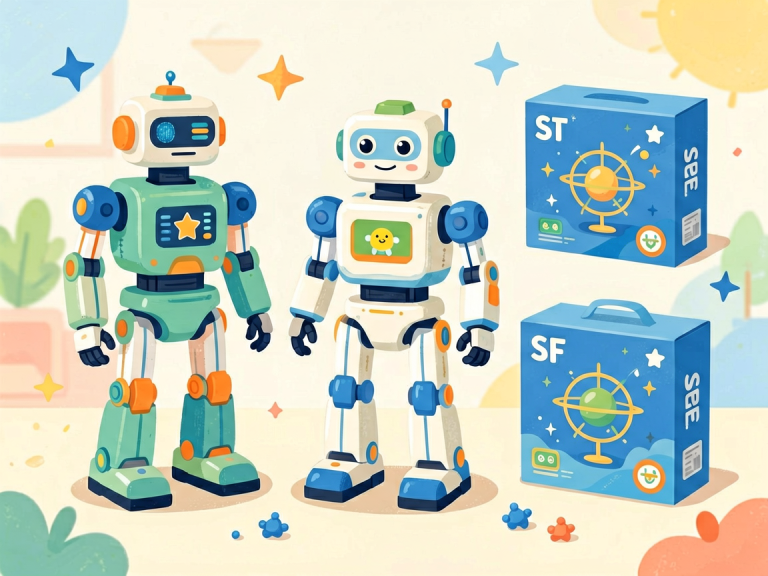
Kindergarteners are fascinated by movement. A kit that includes wheels, axles, hinges, or cranks will hold their attention much longer than static blocks. Simple machines—levers, pulleys, inclined planes, and gears—are perfect for this age because they produce immediately visible results. A lever and fulcrum set lets a child lift a heavy toy using little effort, demonstrating mechanical advantage. A pulley system allows them to hoist a small bucket up a string. Gear sets show how turning one gear spins another in the opposite direction. These experiences build an intuitive understanding of physics long before formal equations appear in school. When selecting a kit, ask: “Can my child see the mechanism working?” For instance, a transparent gearbox or a crank that visibly turns a fan blade is excellent. Avoid kits where the moving parts are hidden inside a closed casing, as the child cannot learn from them. Also, consider motors. Some engineering kits include battery-powered motors. While exciting, these can be disappointing if the motor fails or if the child becomes passive, simply watching the machine move rather than building it. For kindergarteners, manual operation (cranks, hand levers, push buttons) is more beneficial because it reinforces the child’s own role as the machine’s operator.
Color, Theme, and Narrative Appeal
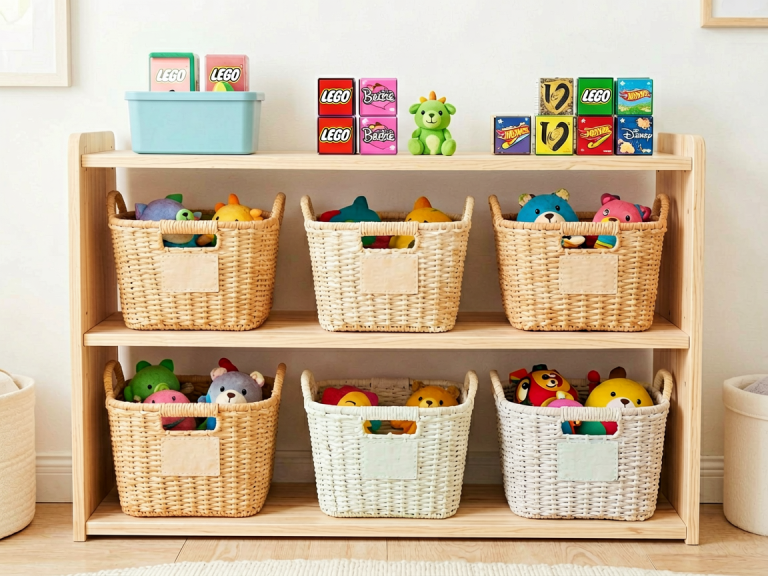
Engineering kits are not just about physics; they are also about stories. A neutral set of gray gears might feel like a chore, but the same gears in bright red, blue, and yellow, paired with animal figurines or vehicle chassis, become irresistible. Look for kits that incorporate familiar themes: construction vehicles, zoo animals, space rockets, or underwater creatures. These themes provide a narrative context for engineering. For example, a kit that asks the child to build a “crane to lift the giraffe” integrates a rescue story with a mechanical problem. The narrative makes the engineering goal meaningful. Furthermore, consider the visual clarity of the kit. Color-coding can help a child identify which parts go where. Some kits use colored pegs to indicate insertion points in a baseplate, reducing frustration. Avoid kits with monochrome parts that require matching shapes—dyslexic or color-blind children may struggle, and even typical children benefit from redundancy in visual cues. Also, think about storage. A kit with a clear, durable storage box and a labeled tray not only keeps pieces organized but also teaches responsibility. A messy pile of mixed parts is a deterrent to play.
Assessing Your Child’s Individual Needs
No two kindergarteners are alike. A highly active child might prefer large-scale building sets that allow them to construct life-sized forts or tall towers. A quieter, detail-oriented child may enjoy a miniature construction set with tiny screws (but only if they have advanced fine motor skills). A child who loves stories may gravitate toward kits with characters and settings. A child who enjoys repetition might benefit from a marble run that can be reassembled in endless paths. Additionally, consider your child’s frustration tolerance. Some kids can handle a failed build and try again; others may throw parts when a joint slips. For the latter, choose kits with very forgiving connections—for example, magnetic tiles that stick easily without perfect alignment. If your child has sensory sensitivities, avoid kits with rough textures, loud click mechanisms, or strong plastic smells. You should also reflect on your own role. Are you willing to sit and build together? Many kindergarteners need a “co-engineer” to model problem-solving. If you prefer independent play, select a kit with self-explanatory pieces and a simple picture guide. But remember: the best engineering learning often happens when an adult asks questions like “What if we move the fulcrum?” or “Why does the wheel spin faster here?” So choose a kit that you, as a parent, find interesting too.
Quality Indicators and Brand Considerations
The toy market is flooded with cheap, poorly designed engineering kits. Before buying, read online reviews specifically from parents of kindergarteners. Look for comments about part looseness, breakage, or unclear instructions. Check photographs of the components—if the plastic looks shiny and brittle, it probably is. High-quality kits often come from reputable educational toy brands such as Learning Resources, LEGO Education, Hape, Jaques of London, or Grimms, but there are also excellent smaller brands. Beware of kits advertised for “ages 4+” that are actually miniatures with choking hazards. A useful check is to search for the kit’s manual online. If the manual relies mostly on written words and small line drawings, it is not designed for kindergarteners. Instead, the manual should consist of large color photographs or pictorial steps with minimal text. Also, consider the expandability of the kit. Some systems allow you to buy additional accessory packs later. This is a great feature because a child can grow with the kit. However, avoid buying a huge set with 500 pieces at once—it can be overwhelming. A smaller starter set that you can gradually expand is more manageable and cost-effective.
Practical Recommendations for Different Types of Kits
To help narrow down your choices, here are four archetypes that work well for kindergarteners, each with distinct strengths.
1. Magnetic Tile Sets (e.g., Magna-Tiles, PicassoTiles): These are incredibly forgiving. Shapes snap together with magnets, require zero alignment precision, and can form 2D and 3D structures. They teach geometry, symmetry, and spatial awareness. They are perfect for open-ended play, but they do not demonstrate moving mechanisms. For a true engineering feel, combine them with a battery-operated motor base (often sold separately) to make spinning carousels.
2. Gear and Crank Sets (e.g., Learning Resources Gears! Gears! Gears!): These sets feature interlocking plastic gears of different sizes and colors, mounted on square baseplates. Turning one crank spins all connected gears. They are superb for teaching chain reactions, rotational direction, and gear ratios. The pieces are chunky and easy to press together. Many sets include flowers, butterflies, or robots for visual interest. A con: the baseplates can be limiting unless you buy expansion packs.
3. Wooden Block and Roller Coaster Kits (e.g., Hape Quadrilla marble run): These use wooden blocks with internal tracks. Marbles roll down, around, and through the blocks. Children learn about gravity, momentum, and trajectories. The pieces are large and safe, and the construction is stable. However, building a functional marble run requires trial and error, which can frustrate some kindergartners. Start with a small set that includes pre-built starting towers to reduce frustration.
4. Flexible Connector Kits (e.g., Strawbees or Brain Flakes): These use plastic straws or discs that connect at various angles. They are extremely versatile—you can build geometric shapes, animal skeletons, or even wearable wings. They teach lightweight structure and tension. The connectors can be a bit stiff for small hands, so check the flexibility. A positive is that they are cheap and allow endless creativity.
Final Tips for a Successful Engineering Play Experience
Once you have chosen a kit, remember that the kit is only a tool. The joy of engineering comes from the process, not the final product. Set up a dedicated building space, even if it is just a tray on a table. Let your kindergartener make mistakes. If a tower falls, resist the urge to fix it immediately. Instead, ask “What made it fall?” or “What could we change?” This simple Socratic dialogue transforms a failure into a lesson. Also, rotate kits. Keep one kit out for a few weeks, then put it away and bring out another. Novelty sparks engagement. Finally, celebrate the engineering mindset. Praise effort, experimentation, and creative solutions rather than just the finished model. Say things like “I love how you tried three different ways to connect that part!” or “You noticed that big gears turn slower—what a great observation!” By doing so, you are not just choosing a toy; you are nurturing a future problem-solver. With the right kit in hand, your kindergartener will not only learn engineering basics—they will believe they are an inventor. And that belief is the most powerful engine of all.