Choosing the Right Toys for Three-Year-Olds: A Guide for Parents
Introduction
The third year of a child's life is a period of remarkable transformation. At three, children are no longer toddlers in the most fragile sense; they are emerging as confident explorers, talkers, and imaginative thinkers. They can pedal a tricycle, hold a crayon with a mature grip, engage in complex pretend play, and ask an endless stream of “why” questions. For parents, choosing toys for a three-year-old is therefore both an exciting and a daunting task. The market is flooded with noisy, flashy, and often overpriced options, all claiming to be “educational.” Yet the best toy for a three-year-old is not necessarily the one with the most lights or the highest price tag. It is the one that meets the child at their developmental level, sparks genuine curiosity, and allows for freedom of exploration. This article explores the key considerations parents should keep in mind when selecting toys for three-year-olds, from safety and durability to developmental benefits and the gentle art of open-ended play.
Safety First, Always
Before considering any educational value or entertainment factor, parents must prioritize safety. A three-year-old is still developing fine motor skills, spatial awareness, and impulse control. They may put small objects in their mouths, run while holding a toy, or try to climb on a toy that is not designed for weight bearing. Therefore, parents should carefully inspect toys for choking hazards, sharp edges, and toxic materials. The American Academy of Pediatrics recommends that toys intended for children under four years old must not contain small parts that can fit into a standard choke test cylinder. Parents should also avoid toys with long strings or cords, which pose strangulation risks, and steer clear of latex balloons, which are a common choking hazard even for older preschoolers.
Additionally, parents should look for sturdy construction. A toy that breaks easily can become a safety hazard, with sharp plastic fragments or loose batteries accessible to curious fingers. When possible, choose toys made from non-toxic, BPA-free plastics, untreated wood, or certified organic fabrics. Checking for age labels and safety certifications (such as ASTM International standards) is a simple but essential habit. Safety is not about wrapping a child in bubble wrap; it is about creating a protected environment where the child can explore without unnecessary risks.
Matching Toys to Developmental Milestones
A three-year-old is on a unique developmental curve. Cognitively, they are beginning to understand simple cause and effect, sorting shapes and colors, and following two- or three-step instructions. Physically, they are improving their balance, coordination, and hand-eye coordination, though they still tire easily and need plenty of gross motor activity. Socially and emotionally, they are learning to share, wait for turns, and express feelings with words—but they often struggle with frustration and impulse control. The best toys for this stage are those that provide a gentle challenge, not a frustrating puzzle.
For cognitive development, parents might choose simple jigsaw puzzles of four to twelve large pieces, shape sorters, matching games, and basic memory card games. Blocks and stacking toys are timeless favorites because they require planning, spatial reasoning, and patience. For language growth, look for toys that encourage conversation: puppets, toy telephones, picture books with thick pages, and simple storytelling figures. For physical development, tricycles, balance bikes, large balls, and floor push toys help strengthen muscles and improve coordination. Jumping, hopping, and dancing to music are also excellent—parents can provide scarves, ribbons, or a small drum to add variety.
However, parents should not be overly rigid about age labels. Some three-year-olds are advanced in one area and behind in another. A child who is a skilled talker may still be clumsy with scissors, and a child who can run fast may not yet use pronouns correctly. The key is to observe the individual child and choose toys that lie within their “zone of proximal development”—just a little beyond their current skill level, but not impossible to master. A toy that is too easy will bore a child, while one that is too hard will lead to tears and abandonment.
The Magic of Open-Ended Play
Perhaps the most important principle in toy selection for three-year-olds is the value of open-ended play. Open-ended toys are those that have no single purpose or predetermined outcome. A set of wooden blocks can become a tower, a bridge, a fence for toy animals, a rocket ship, or a sandwich in a pretend kitchen. A cardboard box can be a cave, a car, a boat, or a castle. Such toys allow children to exercise their imagination, make their own rules, and learn through experimentation. In contrast, closed-end toys—like a plastic robot that spins and flashes when a button is pressed—offer only one way to play. While they may capture attention momentarily, they often fail to foster deep thinking, creativity, or sustained engagement.
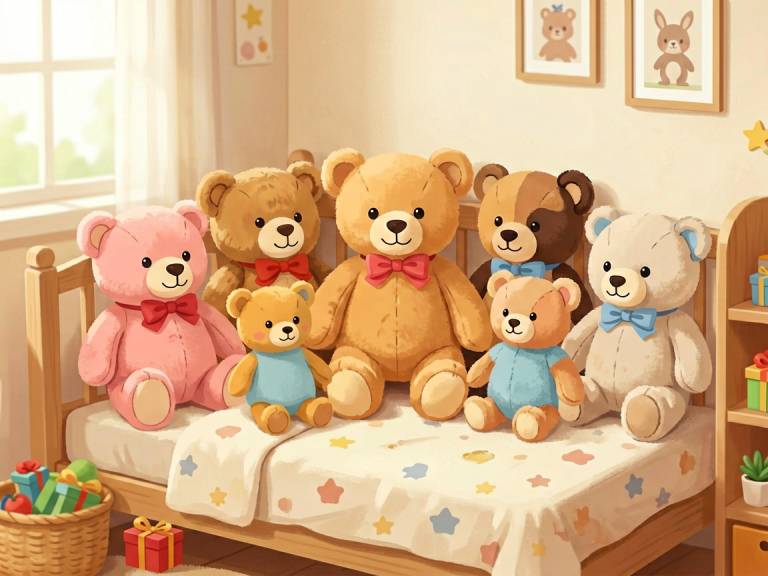
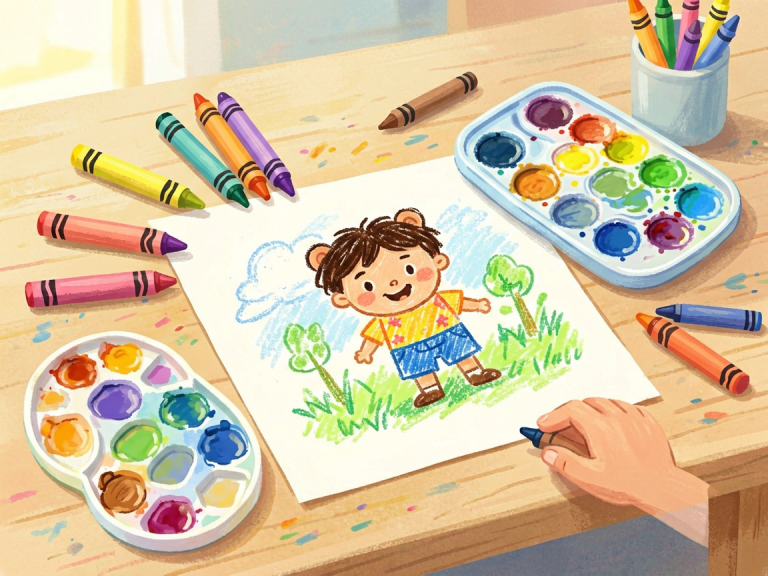
For three-year-olds, open-ended materials are especially valuable because they align naturally with the developmental stage of pretend play. At three, children begin to engage in symbolic thinking—using one object to represent another. A simple cloth can become a cape, a blanket for a doll, or the roof of a house. By providing toys that are flexible and unstructured, parents give their children the raw ingredients for rich imaginative worlds. Some excellent examples include wooden unit blocks, play silk scarves, plush animals, dollhouses, play kitchens with basic utensils, and sets of people, animals, or vehicles. Art supplies such as crayons, finger paints, playdough, and watercolor sets are also wonderfully open-ended, allowing the child to create anything—from scribbles to abstract masterpieces—without fear of getting it “wrong.”
Moreover, open-ended toys tend to have a longer lifespan. A five-year-old may still enjoy a set of blocks or a dollhouse in a different way than a three-year-old does. In an age of planned obsolescence and fast plastic, choosing sustainable, high-quality open-ended toys is both economically and environmentally wise. Parents can even look for second-hand wooden toys, which are durable, safe, and often beautifully crafted.
Avoiding Overstimulation and Clutter
In many homes, toy bins overflow with bright, battery-operated gadgets that beep, flash, and sing. While these toys can be appealing at first, they often overstimulate young children. Excessive noise and rapid visual changes can actually raise cortisol levels and make it harder for a child to focus. For a three-year-old, whose attention span is still short and whose nervous system is developing rapidly, a calm and simple play environment is more conducive to learning. Parents should consider the principle of “fewer, better toys.” Rather than offering dozens of items, rotate a selection of ten to fifteen well-chosen toys in and out of the play area every few weeks. This rotation keeps the toys feeling fresh without overwhelming the child.
When choosing toys, parents should also be wary of those that claim to be “educational” simply because they have ABC buttons or electronic quizzes. True learning at age three comes from hands-on manipulation, social interaction, and open-ended exploration—not from passive watching or pushing a button. A classic toy like a set of nesting cups or a simple shape sorter teaches more about size, space, and problem-solving than a “talking” tablet ever will. Parents should ask themselves: does this toy encourage my child to do, create, imagine, or think? If the answer is only “watch,” it may not be the best choice.
Aligning Toys with Family Values and Practical Realities
Every family has unique values, living spaces, and budgets. A family that lives in a tiny apartment might prioritize compact toys like pegboards, train tracks, or folded play tents. A family with a large backyard might invest in a sandbox, a slide, or a water table. Parents should also consider their own tolerance for mess. Playdough and finger paint are wonderful for development but can be stressful for a parent who hates cleanup. There are plenty of alternatives—such as kinetic sand, which retains shape and is relatively easy to sweep, or washable crayons—that can reduce friction. Additionally, parents should be mindful of gender stereotypes. There is no reason a boy cannot enjoy a doll carriage or a girl cannot love a tool set. Toy selection should be based on the child’s interests and developmental needs, not on narrow cultural expectations. A mixed selection of toys—some for fine motor, some for gross motor, some for pretend play, some for building—provides the most balanced growth.
Budget is another practical reality. The most expensive toys are not necessarily the best. Many excellent toys are inexpensive: a set of mixing bowls, a collection of large buttons (with supervision), cardboard tubes, and old socks for puppets. Parents can also involve the child in making toys, such as decorating a cardboard box as a car or stringing large beads to make a necklace. The joy of play comes from the child’s own creativity, not from the cost of the object. Finally, parents should remember that the greatest toy a child can have is a parent who is willing to play alongside them. A hunk of clay and a parent rolling snakes is more valuable than the fanciest robot. When parents sit on the floor, let the child lead the play, and narrate what is happening, they are not only building stronger bonds—they are also modeling language, creativity, and problem-solving skills.
Conclusion
Choosing toys for a three-year-old is not a simple purchase; it is an act of thoughtful parenting. Safety always comes first, but beyond that, the best toys are those that match the child’s developmental stage, invite open-ended play, and fit the family’s values and lifestyle. Parents should resist the allure of flashy, passive entertainment and instead embrace simple materials that reward imagination—blocks, art supplies, dress-up clothes, dolls, and nature treasures. By providing a few high-quality, versatile toys and, more importantly, the time and attention to play together, parents give their three-year-olds a rich foundation for cognitive, physical, and emotional growth. After all, the ultimate purpose of a toy is not to occupy a child, but to open a door to learning, connection, and joy. And the best toy selection is one that is made with the whole child in mind—curious, capable, and wonderfully full of endless possibilities.