The Ultimate Toy Buying Guide for 2-Year-Olds Under $40: Smart, Safe, and Developmentally Rich Picks
Introduction: The Golden Age of Play
At two years old, a child is no longer a baby, but not yet a preschooler. This is a magical window where curiosity explodes, language blooms, and motor skills sharpen at lightning speed. Toys become more than just entertainment; they are the tools through which a toddler makes sense of the world. However, walking into a toy store or scrolling through online listings can be overwhelming. Bright colors, flashing lights, and celebrity-endorsed characters scream for attention, often at the expense of genuine educational value. Moreover, budget constraints can make parents feel like they must sacrifice quality for affordability. This guide cuts through the noise. We will explore carefully curated, developmentally appropriate toy categories for two-year-olds, all priced under $40. These are not arbitrary items; each has been selected based on child psychology research, safety standards, and real-world parent reviews. By the end, you will have a clear, confident strategy for choosing toys that will delight your toddler, support their growth, and keep your wallet intact.
Safety First: Non-Negotiable Criteria for Under-$40 Toys
Before diving into specific toy types, it is crucial to establish a safety framework. For a two-year-old, the world is a sensory playground, and they will put almost anything in their mouths, throw objects, and test physical limits. When shopping on a budget, it can be tempting to grab the cheapest option from a discount bin, but that is a mistake. Your guiding principle must be the following:
- No Small Parts: Anything that fits entirely inside a toilet paper roll (roughly 1.25 inches in diameter) is a choking hazard. Avoid toys with detachable eyes, buttons, or loose beads.
- Non-Toxic Materials: Look for labels that indicate lead-free paint, BPA-free plastic, and non-toxic finishes. Wooden toys should be splinter-free and sealed with safe, water-based sealants.
- Durable Construction: A two-year-old's play involves dropping, throwing, and stomping. A toy that cracks on first impact can create sharp edges. Squeeze test plastic items; they should not bend or snap easily.
- No Long Cords or Strings: Anything over 12 inches can pose a strangulation risk. Pull toys should have short, fixed handles rather than long, dangling ropes.
- Age Labeling: Always check the manufacturer's recommended age. While some labels are conservative, a "3+" label on a toy with minuscule pieces should be taken seriously for a two-year-old.
The good news? Sticking to these rules does not mean spending more. Many high-quality, budget-friendly brands adhere strictly to international safety standards. For example, simple wooden blocks from Melissa & Doug or Green Toys' recycled plastic cars are consistently under $20 and safety-certified.
Build and Create: Construction Toys That Develop Fine Motor Skills
At age two, a child's fine motor skills are rapidly evolving. They are learning to coordinate their thumb and index finger (the pincer grasp), which is essential for later writing and self-feeding. Construction toys are the perfect vehicle for this development. The best options in this category are not complex LEGO sets (which are a choking hazard), but rather larger, interlocking blocks.
- Large Cardboard or Foam Blocks: These are lightweight, safe, and perfect for stacking towers as tall as the child. They teach early physics concepts—balance, gravity, and spatial awareness. Look for sets of 20 to 40 blocks, often sold for $15-$25. Foam blocks are quiet and soft, making them ideal for indoor play in small apartments.
- Mega Bloks or Similar Jumbo Bricks: These are larger than standard LEGO and designed specifically for small hands. A bag of 80 pieces typically retails for around $20. Children can learn to snap them together, creating simple structures. This action strengthens hand muscles and improves bilateral coordination (using both hands together).
- Snap-Lock Beads or Pop Tubes: Plastic beads that snap together or collapsible tubes offer a different tactile experience. They are usually under $12. Popping them apart and pushing them together satisfies the toddler urge to take things apart, which is a form of active learning.
When selecting construction toys, choose sets that are open-ended—meaning they can be built in infinite ways rather than following a fixed blueprint. This encourages creativity and problem-solving. For example, a set of simple wooden planks and arches can become a bridge for toy cars, a fence for plastic animals, or a cave for a stuffed bear. The price point rarely exceeds $30.
Pretend Play: The Theater of Everyday Life
Two-year-olds are natural mimics. They watch their parents cook, clean, talk on the phone, and care for babies. Pretend play (also called dramatic play) is how they process these observations. Investing in a few high-quality pretend play items will yield enormous cognitive dividends. You do not need a $200 wooden play kitchen; instead, consider these budget-friendly alternatives.
- Miniature Kitchen Sets and Food: A small set of play food (wooden or plastic) with a pot, pan, and a few utensils costs between $15 and $30. Add a cardboard box turned into a "stove" at home, or buy just the play pots and pans for under $15. Role-playing cooking helps develop narrative language ("I am making soup!") and social-emotional skills like sharing and taking turns.
- Dress-Up Accessories: At this age, elaborate costumes are unnecessary. A simple collection of scarves, hats, and oversized adult items (old neckties, purses, sunglasses) encourages imaginative transformation. The store-bought "doctor kits" or "tool sets" with chunky plastic pieces are excellent choices, usually priced around $18-$25. These kits allow the child to "care" for a teddy bear or "fix" a chair, building empathy and problem-solving skills.
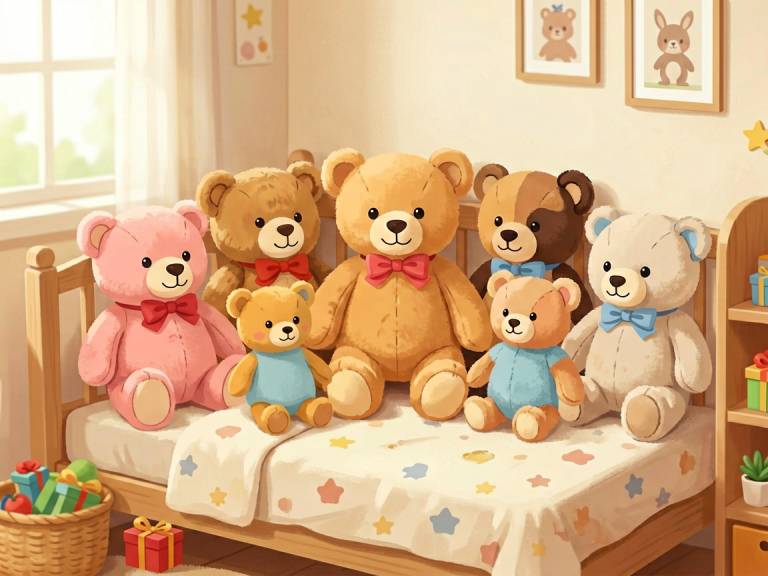
- Dolls and Stuffed Animals with Accessories: A soft, simple doll with a blanket and a small bed (or even just a shoebox) is a powerful tool. Look for dolls with stitched faces rather than plastic button eyes. A doll that you can "feed" with a bottle and "put to sleep" helps a child practice nurturing behavior. Several budget brands offer realistic, cute dolls for under $25.
The beauty of pretend play is that it is not about the toy's realism but the child's imagination. A toy vacuum cleaner that actually has a rolling brush (but makes no sound) at $20 is more valuable than an expensive plastic one with annoying electronic noises because it forces the child to create the sound effects themselves.
Songs and Sounds: Musical Toys for Auditory Development
Music is a universal language, and for toddlers, it is a vital builder of neural connections. Listening to and creating sounds helps with memory, pattern recognition, and emotional regulation. The market is flooded with cheap, plastic tambourines and electronic keyboards, but many are poorly tuned and unpleasant. You can do better on a budget.
- A Sturdy Wooden Xylophone: A high-quality xylophone with a solid wooden frame and metal keys can be found for $20-$35. This is superior to plastic versions because the tones are clearer and more accurate. Children learn cause and effect: hitting a large key produces a low sound, a small key produces a high sound. Many come with a mallet, encouraging grip strength.
- Shakers and Maracas: Small, plastic, egg-shaped shakers filled with beads are perfect for tiny hands. A pair costs under $8. They are ideal for dancing along to music, learning rhythm, and exploring tempo. You can also make your own at home with rice and a sealed container, but the store-bought versions are sturdier.
- A Simple Drum or Bongo Set: Toddlers love to bang, and hitting a drum is a legitimate form of hand-eye coordination practice. A set of two small bongos or a single large drum with a mallet costs $15-$25. Choose drums with a soft, cloth-like head rather than hard plastic to minimize noise damage to little ears. Encourage the child to play loudly and then softly, introducing dynamic contrast.
One crucial tip: avoid toys that only play pre-recorded songs. Instead, choose instruments that the child must play themselves. Passive listening is fine, but active music-making happens when the child is the musician. Singing along with a toy microphone (under $15) is another favorite, even if the "amplification" is fake.
Movement and Gross Motor Fun: Push, Pull, and Ride-Ons
Two-year-olds have an abundance of energy. They are practicing walking, running, climbing, and balancing. Toys that promote gross motor skills are essential for physical health and confidence. Again, you do not need a $100 electric car.
- Pull-Along Animals or Wagons: A classic wooden pull-along duck or a small, sturdy wagon with a handle costs between $15 and $30. These toys encourage walking while holding onto something, which improves balance and posture. Look for pull toys with a fixed, wide handle rather than a thin string. The gentle wobbling or clucking of the toy as it moves is delightful and provides cause-and-effect feedback.
- A Sturdy Ride-On Scooter or Tricycle without Pedals (Balance Bike): For children who are walking confidently, a low-to-the-ground balance bike (also called a "running bike") is a fantastic investment. Many models are available for $35-$40 if you choose a simple, no-frills version. Alternatively, a small plastic ride-on car that the child pushes with their feet (no pedals) is under $30. These toys develop leg strength and spatial awareness. The key is that the child's feet must touch the ground flat so they can stop safely. They learn "brakes" using their feet, which is a vital safety skill.
- A Play Tunnel or Pop-Up Tent: A collapsible fabric tunnel, typically 6 feet long, sells for under $25. Crawling through a tunnel provides proprioceptive input (knowing where your body is in space), which is calming and organizing for toddlers. You can buy a set that includes a tunnel and a small tent for around $35. These fold flat for storage and are excellent for rainy days.
When choosing any movement toy, check the maximum weight limit and the stability of the base. A ride-on that tips easily is dangerous. Look for wide wheel bases and low centers of gravity.
Puzzles and Sorting: Sharpening Logical Thinking
At two, a child is beginning to understand categories, shapes, and problem-solving. The best cognitive toys are those that involve matching, sorting, and fitting pieces together. Avoid anything with a timer or competitive aspect; this should be cooperative, playful learning.
- Peg Puzzles with Chunky, Knobbed Pieces: Look for puzzles with large wooden or plastic pieces that have a handle. Ideal themes include animals, vehicles, or fruits. A good peg puzzle costs $10-$18. The child lifts the piece, identifies the image, and places it in the correct slot. This teaches visual discrimination and spatial reasoning.
- Shape Sorters: While classic wooden shape sorters are excellent (about $12-$20), you can also find innovative jars with lids that have openings for different shapes. The action of rotating a piece to fit through the slot is a serious fine motor challenge. Some sorters come with a string, allowing the child to "lace" them together, adding another layer of skill.
- Color and Size Sorting Bowls: A set of 6 small, colorful plastic bowls, paired with 12 or so large, colored manipulatives (like counting bears or pom-poms), can be used in endless ways. The child can sort by color, count by group, or simply transfer them from one bowl to another using large tweezers (preschool tweezers, not sharp ones). This set can be assembled for under $20. It is open-ended, encourages focus, and is also great for quiet-time play.
Remember, the goal is not to see how many puzzles a toddler can complete, but how they interact with the process. Praising their effort rather than the outcome builds a growth mindset.
Literacy and Language: Books and Interactive Story Toys
Language explodes between two and three years old. To support this, surround the child with words. While you cannot beat a library card, having a few interactive toys that encourage speaking is valuable.
- Board Books with Texture or Sound Buttons: Choose sturdy board books that can withstand rough handling. Books with touch-and-feel elements (bumpy, furry, slimy) like "Pat the Bunny" or with buttons that play animal sounds are highly engaging. You can find excellent board books for $6-$12 each. Buying three to four books fits within a $40 budget.
- A "Conversation" Toy Phone: Many toy phones let the child press buttons to hear the alphabet, numbers, or animal sounds. The best ones are simple, with few lights and no screens. A standard VTech or LeapFrog phone costs $15-$20. These teach cause and effect and introduce phonemic awareness. More importantly, they spark imaginative "calls" to grandma or doggy.
- Alphabet Floor Mats or Foam Letters: Soft, foam alphabet letters that interlock like puzzle pieces are a fantastic multi-sensory tool. They can be used on the floor to practice letter recognition, but also as building blocks. A set of 26 letters costs about $20. Sing the alphabet song while pointing to the letters. However, always supervise to prevent chewing on the foam.
A crucial note on screens: Avoid "smart" toys that require a tablet or smartphone. Research shows that two-year-olds learn best from real human interaction and tangible, physical objects. The best budget toys are the ones where the child is the operator, not the observer.
The Art Corner: Creative Supplies for Under $40
Every two-year-old is an artist. Providing art supplies is one of the highest-value investments you can make in their development. Art strengthens fine motor control, emotional expression, and color recognition. And no, you do not need a deluxe $50 art set.
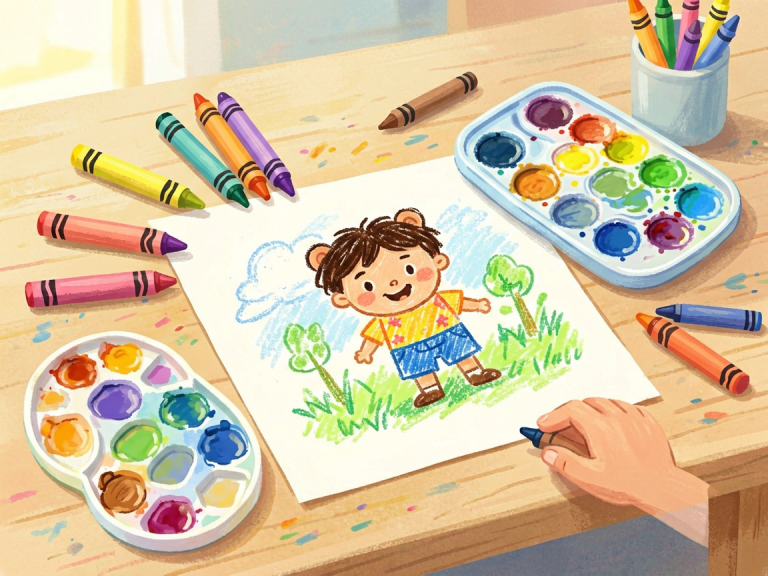
- Washable Crayons, Markers, and Paper: Buy a box of large (egg-shaped or triangular) crayons designed for toddler grips. A set of 8 washable markers from a reputable brand (like Crayola) is non-toxic and washes off skin and most clothing. A stack of large drawing paper (18×24 inches) is better than small sheets because toddlers draw with their whole arm, not just their wrist. Total cost: under $15.
- Finger Paints: Choose non-toxic, washable finger paints in primary colors. A set of 4 jars with a pack of paper costs about $10. Let the child make handprints and swirls. This is a sensory-rich activity that can be messy but is immensely calming.
- Stickers and Large Stamping Sets: Stickers are fantastic for finger dexterity. Buy a pack of large, easy-to-peel stickers (e.g., animals or shapes) for under $5. Let the child peel and stick them onto paper, windows, or cardboard boxes. Stamping with large, chunky stamps (people, vehicles) helps with hand-eye coordination. A set of 6 stamps with an ink pad costs $15.
The ultimate rule for art supplies is: non-toxic and washable. Also, avoid small items like glitter or confetti. And do not expect a finished product; the process is the purpose.
Final Shopping Strategies for the Conscious Parent
Now that you know the categories, how do you actually shop smart under $40? First, prioritize *versatility*. A toy that can be played with in several ways (like a set of blocks) is worth more than a single-purpose gadget. Second, *ignore age labels that are too strict* but respect safety warnings. A "3+" label often refers to small parts, not cognitive difficulty. For a mature two-year-old, a "3+" wooden puzzle might be perfectly suitable if there are no small pieces. Third, *buy used or from sales*. Thrift stores, Facebook Marketplace, and garage sales are goldmines for gently used blocks, trains, and puzzles. Sterilize them with a mild bleach solution, and they are as good as new. Fourth, *avoid noisy, electronic, light-flashing toys*. These often overstimulate and provide rapid dopamine loops that reduce attention span. A child quickly becomes bored with a toy that does everything for them. Conversely, they will play for twenty minutes with a simple cardboard box.
Another strategy is to *set a "toy rotation" system*. Do not buy everything at once. Choose one item from three or four categories, and rotate them weekly. This keeps the toys novel and reduces clutter. Your under-$40 budget can be stretched over two months.
Finally, *involve your child in the toy's play, but do not over-direct*. Sit on the floor and model how to use a new toy, but then let your toddler take the lead. Your attention and praise are far more valuable than the toy's price tag. In fact, a study from the University of Pennsylvania found that the quantity of verbal interactions during play with simple toys was significantly higher than with electronic toys. So, buying a $12 rubber duck and playing "sink or float" in the bath provides more language development than a $40 "interactive" talking robot.
Conclusion: The Best Toy Is Love, Patience, and Presence
In the end, the "toy buying guide for 2 year olds under $40" is not about finding a magical toy that will entertain your child forever. It is about selecting safe, age-appropriate tools that invite exploration, creativity, and connection. Whether it is a set of stacking blocks, a pretend doctor kit, a simple xylophone, or a bag of art supplies, the true value emerges in how you use them together. Your two-year-old does not care about brand names or price tags. They care about the joy of discovery, the satisfaction of making something, and the warmth of having you nearby. So, before you click "buy," ask yourself: Will this toy spark conversation? Will it allow for open-ended play? Is it durable enough for the inevitable drops and throws? If the answer is yes, then you have found a winner—no matter whether it costs $8 or $38. Spend your money wisely, but spend your time even more generously. The best memories are made on the living room rug, building towers that fall down, laughing at silly animal noises, and creating masterpieces with washable markers. That is the ultimate