The Thoughtful Parents Toy Guide for Your Two-Year-Old: Choosing Playthings That Nurture Growth
Welcoming a two-year-old into the world of active play is both a joy and a puzzle. At this age, your child is no longer a baby, but not yet a preschooler. They are curious, energetic, and constantly testing boundaries. For first-time parents, the toy aisle can be overwhelming: flashing lights, noisy gadgets, and hundreds of plastic options all promise to make your toddler smarter. The truth is simpler—and more beautiful. The best toys for a two-year-old are those that encourage exploration, imagination, and fine motor development, while remaining safe and durable. This guide will help you navigate the choices with confidence, focusing on what truly matters during this magical stage of growth.
Understanding the Two-Year-Old Mind
Before you buy anything, it helps to know how your child is developing. At two, toddlers are learning to assert independence. They want to do things “by myself,” even when they cannot. They are also rapidly acquiring language, often putting two or three words together. Their play is mostly parallel—they may play next to another child rather than with them—and their attention spans are short. A toy that works well at this age does not need to do much on its own. Instead, it should invite your child to act, move, experiment, and pretend. The best toys are open-ended, meaning they can be used in many different ways. A cardboard box can become a car, a house, or a spaceship; a set of wooden blocks can become a tower, a bridge, or a line of animals. Avoid toys that have one specific purpose and then are finished. That novelty wears off quickly, leaving parents frustrated and toddlers bored.
Safety First: The Golden Rules
For a two-year-old, safety is non-negotiable. Every toy you choose must pass a simple checklist. First, check for small parts. Anything that fits inside a toilet paper tube is a choking hazard. This includes button eyes, loose wheels, or removable batteries. Second, consider durability. A two-year-old is not gentle. Toys should be well-constructed, without sharp edges or splinters. Wooden toys are excellent because they are sturdy and can withstand rough handling. Third, avoid long cords or strings longer than 12 inches, as they pose a strangulation risk. Fourth, look for non-toxic materials. Toddlers still put things in their mouths, even when they know better. Ensure that paints, plastics, and fabrics are labeled as non-toxic and BPA-free. Finally, supervise play with any toy that involves magnets, deflated balloons, or small batteries. When in doubt, choose simpler over complex. The best toy is one that does not need a warning label.
Building Blocks of Cognitive Development
Construction toys are ideal for two-year-olds because they teach problem-solving, spatial awareness, and cause-and-effect. A classic set of wooden blocks is a must-have. Your child can stack, knock down, sort, and carry them. As they build, they learn about balance and stability. They also learn patience and the satisfaction of creating something. When the tower falls, they try again—that is resilience in action. Look for blocks with different shapes, sizes, and colors. They do not need letters or numbers on them; the blocks themselves are the lesson. Another excellent option is interlocking plastic bricks with larger pieces, designed specifically for toddlers. These help strengthen finger muscles and hand-eye coordination. You can also introduce simple puzzles with large wooden pegs and chunky pieces. A three- or four-piece puzzle featuring animals or vehicles helps your child match shapes and recognize objects. Do not worry if they want to do the same puzzle over and over; repetition is how they master concepts. The goal is not to finish quickly, but to enjoy the process of thinking and fitting things together.
The Power of Pretend Play
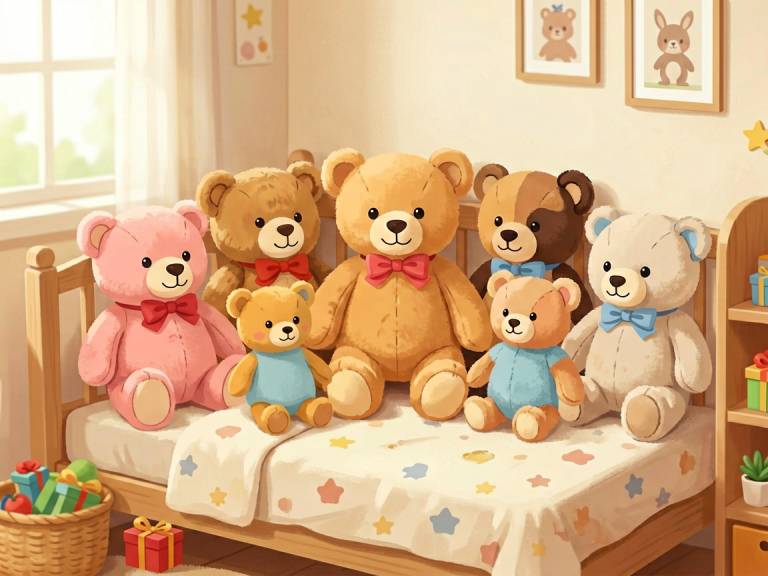
At two, your child’s imagination begins to bloom. Pretend play is not just fun; it is essential for language development, social skills, and emotional understanding. A simple toy kitchen or a set of plastic dishes lets them imitate you. They will stir a pot, feed a stuffed animal, and offer you a cup of invisible tea. These actions help them make sense of the world and practice caring for others. Similarly, a doll or a soft stuffed animal becomes a “friend” that they can hug, rock, and put to bed. This teaches empathy and nurturing. You do not need a full playroom. A few everyday props work wonders: a wooden spoon, a plastic bowl, a doll blanket, or a toy telephone. One of the most powerful pretend toys is a dress-up box. Add an old hat, a scarf, an apron, and some oversize shoes. Your child will love transforming into a firefighter, a princess, or a chef. When you play alongside them, follow their lead. If they say the block is a phone, pick it up and talk. This validates their creativity and builds a strong bond between you.
Art and Sensory Exploration
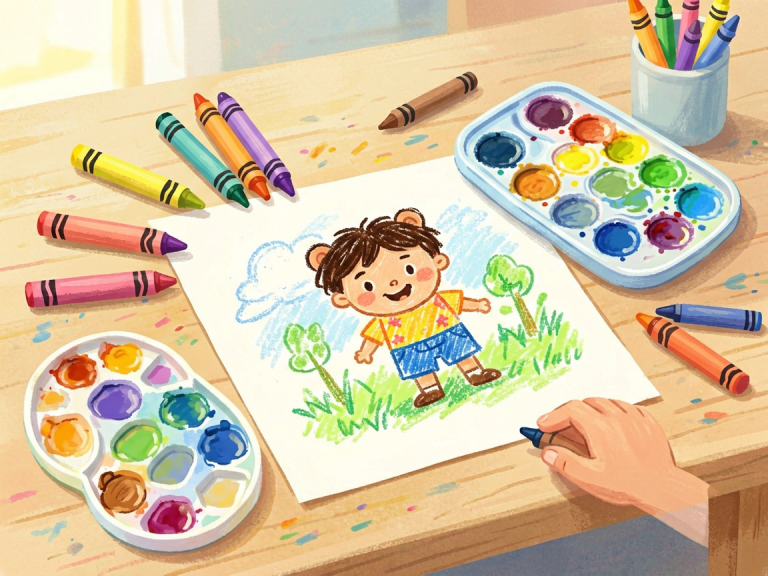
Two-year-olds are natural artists. They love to smear, pound, paint, and squish. Art supplies should be non-toxic and washable. chunky crayons, large washable markers, and finger paints are perfect. Give them big sheets of paper, or even better, tape butcher paper to the floor or table. Let them draw scribbles, dots, and lines. Do not expect recognizable shapes. The process is more important than the product. Scribbling strengthens the small muscles in their hands, preparing them for writing later. Play-dough is another essential. It can be rolled, pinched, flattened, and cut with plastic scissors. This sensory experience is calming and helps develop fine motor skills. You can make your own dough at home with flour, water, salt, and cream of tartar. Sensory bins are also wonderfully engaging. Fill a plastic bin with rice, dried beans, or kinetic sand, and add cups, spoons, and small toys. Be prepared for a mess, but know that this mess is meaningful learning. Your child is exploring texture, weight, and volume. They are learning how to pour and scoop, which builds hand-eye coordination. Always supervise sensory play to ensure nothing is eaten.
Active Play and Gross Motor Skills
Two-year-olds need to move. Their gross motor skills are developing rapidly, and they love to run, jump, climb, and kick. Toys that encourage physical activity are crucial for health and confidence. A soft, low ball is perfect for rolling, throwing, and chasing. A ride-on toy without pedals, such as a balance bike or a push scooter, helps with balance and coordination. Always choose one with a wide base and low seat, and ensure your child wears a helmet when using it outdoors. For indoor play, consider a small indoor slide or a toddler trampoline with a safety handle bar. These provide huge bursts of energy and fun. You can also create an obstacle course with pillows, tunnels, and stepping stones. Play along with them—your child will want to show you how they can jump off a step or crawl through a tunnel. Active play not only builds muscles but also improves spatial awareness and risk assessment. It helps your child understand where their body is in space, which prevents falls in the long run. Avoid toys that require precise coordination too early, like bicycles with pedals or jump ropes. They will frustrate your child. Instead, choose activities that let them experience success easily.
Books and Language-Building Toys
Never underestimate the power of a good book. At two, children love board books with bright pictures, simple stories, and rhymes. Reading together should be a daily ritual. Choose books with touch-and-feel elements, flaps to lift, or repeated phrases. Your child will memorize their favorites and may even “read” them aloud by turned pages. This is a sign of strong comprehension. Aside from books, you can use puppets or finger puppets to act out a story. This makes language come alive. Another great language toy is a simple set of picture cards with animals, foods, or everyday objects. You can play matching games or ask “Where is the cat?” This builds vocabulary and listening skills. Music is also powerful. Get a small, safe drum, a shaker egg, or a xylophone. Sing songs together and do actions. Rhythm and rhyme improve phonological awareness, which is the foundation for reading. The key is not to overwhelm your child with too many toys. Better to have a few high-quality items that you rotate every few weeks. When a toy reappears after being stored, it feels new and exciting again. This keeps interest high without buying more.
Navigating the Commercial Toy Trap
As a first-time parent, you will face constant advertising for toys that claim to be “educational” or “interactive.” Many of these toys flash lights, play songs, and talk to your child. While they may seem impressive, they often do too much for the child. The child becomes a passive observer, not an active participant. When a toy sings, your child does not have to sing. When it moves on its own, your child does not have to push it. This type of play does not build critical thinking. In contrast, a simple wooden car or a set of nesting cups requires your child to use their own mind and muscles. There is no screen, no noise, no preset script. That silence is golden. It invites imagination and deep focus. Likewise, avoid battery-operated toys with loud or startling sounds. They can overstimulate a two-year-old and make it harder for them to engage in calm, sustained play. If a toy has a switch, think twice. The best toys are quiet, open-ended, and made of natural materials like wood, cloth, and wool. They are also easier on the environment and often last longer. Your child does not need a room full of plastic; they need a room where they can explore with all their senses.
Final Tips for Choosing and Using Toys
Start by observing your child. What do they love to do? Are they drawn to physical movement, or do they prefer to sit and stack? Let their interests guide your purchases. Resist the urge to buy age-inappropriate toys just because they are on sale. The right toy is the one that matches your child’s current abilities and challenges them just a little bit. Always check for recalls and reviews. Online parent communities can be invaluable for honest feedback. When you bring a new toy home, do not dump it on the floor with everything else. Instead, introduce it slowly. Sit with your child and show them how it works, then let them take over. Rotate toys regularly to keep the play area fresh. And remember: you are your child’s favorite toy. Your attention, your smile, and your willingness to play together matter more than any expensive gadget. A two-year-old learns through you. When you model curiosity, they become curious. When you show kindness, they learn kindness. So, with every toy you choose, know that you are creating the stage for their growth. Choose wisely, but above all, choose playfully. The days are long, but the toddler years are short. Enjoy the blocks, the giggles, and the messy paint. This is the foundation of a joyful childhood.