Remote Control Cars vs. Robot Toys for Preschoolers: Which Sparks Better Development?
Introduction: The Toy Box Dilemma
Walk into any toy store today, and you will find two brightly colored aisles battling for the attention of parents and their preschoolers. On one side, sleek remote control (RC) cars promise speed, crashes, and instant excitement. On the other, interactive robot toys wave their arms, speak in cheerful voices, and light up with programmable commands. Both categories are wildly popular, yet they represent very different philosophies of play. For a parent or educator, the choice between remote control cars and robot toys is not merely about which one looks cooler. It is a decision that touches on motor skills, cognitive development, social interaction, emotional regulation, and even the early seeds of STEM learning. This article dives deep into the science and practicalities of both toy types, helping you understand what each offers to a child between the ages of three and five—and, ultimately, how to make an informed choice that matches your child’s unique developmental stage.
Understanding Remote Control Cars for Preschoolers
The Thrill of Mastery and Physical Coordination
Remote control cars are, at their core, tools for practicing cause and effect in a physical, kinesthetic way. For a preschooler, holding a chunky controller and steering a car around a carpet or a driveway is an exhilarating experience. The toy responds immediately to finger and thumb movements, which helps develop fine motor precision. Unlike a traditional push-toy car, an RC car requires the child to coordinate visual tracking with manual dexterity—watching the car while simultaneously adjusting the trigger or wheel. This bilateral coordination (using both hands, often in different ways) is a critical skill for later tasks like writing, using scissors, or riding a bicycle.
Moreover, RC cars teach spatial awareness. A three-year-old quickly learns that if the car points toward the sofa leg, it will bump into it unless they steer away. These micro-decisions happen in fractions of a second, building neural pathways associated with reaction time and judgment. For children who are naturally energetic, an RC car can be an excellent outlet; it allows them to direct motion without running and crashing themselves, which is safer for crowded living rooms. However, there is a significant limitation: the child’s role is primarily that of an operator, not a creator. The play narrative is confined to “driving.” Without adult prompting, most preschoolers will not invent elaborate stories around the car; they simply revel in the thrill of speed and control.
Social Play Potential and Its Limits
RC cars can be surprisingly social. Two preschoolers can race their cars, pretend they are police chasing a robber, or take turns navigating an obstacle course. These interactions teach sharing, turn-taking, and basic competition (“I won! You were close!”). Yet, because each car requires a separate controller, conflicts over the “best” car or the controller’s position are common. Also, the toy itself does not encourage conversation. In fact, it often leads to parallel play—children side by side, each absorbed in their own vehicle. To make RC car play socially rich, an adult must actively scaffold scenarios. Without that, the toy remains a solitary activity, which is fine for independent exploration but less optimal for language development.
The Appeal and Benefits of Robot Toys
Interactive and Responsive: A Different Kind of Engagement
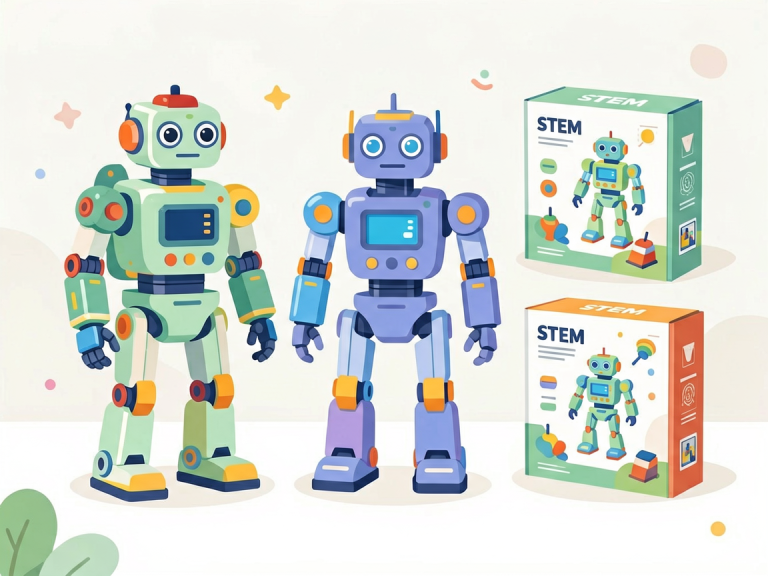
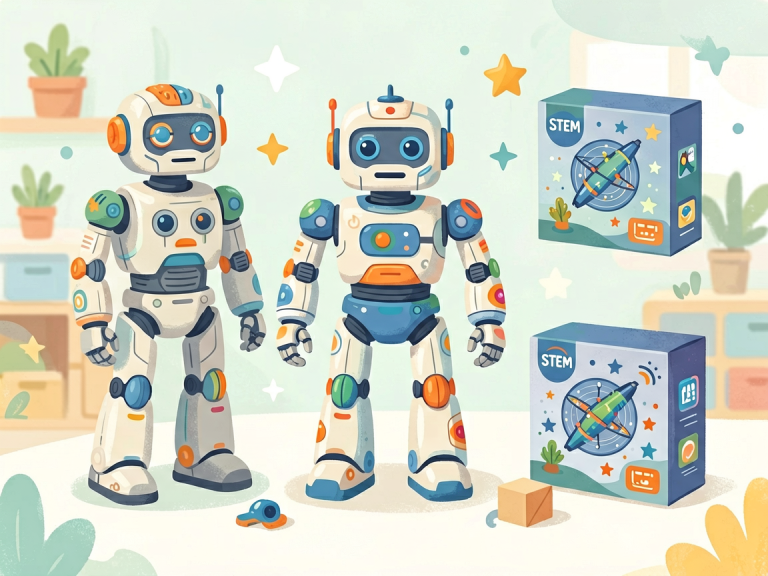
Robot toys for preschoolers have evolved dramatically. They are no longer just static, battery-operated creatures with blinking eyes. Modern robot toys—like those that respond to voice commands, follow simple paths, or invite children to press buttons for songs and dances—offer a conversational and responsive layer that RC cars lack. A robot like a popular “Botley” or “Coji” can be programmed with arrows or basic commands, introducing the concept of coding without screens. For a child who loves to ask “why,” a robot’s reactions to their commands provide immediate, fascinating feedback. This is a powerful cognitive experience: the child acts, the robot responds, and the child’s brain begins to construct a model of the unseen rules governing the toy. That is the foundation of computational thinking—not in a STEM-lab way, but through natural exploration.
Robots also tend to have more open-ended play value. While an RC car is a car, a robot can be a friend, an alien, a dance partner, a pet, or a teacher. Because robots have expressive faces (or at least movable parts), they invite emotional projection. Preschoolers often talk to robots, scold them, hug them, or put them to bed. This kind of pretend play is crucial for emotional regulation and empathy. The robot becomes a “safe other” through which a child can process feelings like anger or fear. For example, a child who is afraid of the dark might tell their robot, “I’ll protect you,” thereby externalizing courage and practicing a confident role. Robots also support language development more naturally: children speak to them, name them, and narrate their actions. Parents can listen and learn an enormous amount about their child’s inner world from these playful conversations.
Coding Foundations and Frustration Tolerance
Many robot toys are designed with simple programming interfaces. For instance, a child might press “forward,” “left,” “right,” and “go” to make the robot navigate a maze. Unlike the instant gratification of an RC car’s steering, programming demands sequencing and patience. If the child inputs “forward, forward, left,” the robot will follow exactly that—and if it bumps into a wall, the child must retrace their steps to find the error. This process develops logical reasoning and persistence. It teaches a crucial life lesson: when something goes wrong, you can adjust your instructions and try again. RC cars, by contrast, offer instantaneous correction—turn the wheel and you avoid the wall. Neither approach is “better,” but they nurture different problem-solving styles. The robot’s slower-paced trial-and-error is particularly valuable for children who become easily frustrated because it gives them a clear path to improvement. However, some preschoolers may find programming frustrating if the robot is not intuitive. A good robot for this age group must have oversized, clearly labeled buttons and immediate, obvious feedback (sounds, lights, or movements).
Key Developmental Considerations: Comparing Both
Motor Skills: Fine vs. Gross Precision
When comparing both toys, it is important to distinguish between the types of motor skills they exercise. Remote control cars are exceptional for gross motor coordination in the hands and arms, especially if the controller is shaped like a steering wheel. They also promote visual tracking and hand-eye synchronization at a rapid pace. Robot toys, on the other hand, often require more deliberate, fine motor control. Pressing a sequence of buttons or tapping a tablet screen to program a robot uses wrist stability, finger isolation, and pincer grasp. Over time, this can improve the same muscles used for drawing and eventually handwriting. A balanced toy chest might include both: one RC car for fast, big-motion play, and one robot for slow, precise fine-motor practice. But if you are limited to one, consider your child’s current needs. A child who avoids fine motor tasks may benefit more from a robot, while a child who needs to burn off energy and hone reflexes might thrive with an RC car.
Language and Cognitive Growth
Robots clearly have the edge in language and cognitive growth. Because robots can imitate words, ask questions, and respond to voice cues, they create a back-and-forth dialogue that normal toys rarely achieve. This is especially beneficial for preschoolers who are early talkers or who need extra practice in conversational turn-taking. An RC car gives no verbal feedback; it is entirely mechanical. Parents can add language by narrating (“Vroom! The car is speeding! Slow down!”), but the toy itself does not prompt conversation. Conversely, robots with built-in phrases can model sentence structure and new vocabulary. Some advanced robots even tell simple stories or lead the child in counting games. This is not to say RC cars are worthless for cognition—acting out a traffic jam with signs and ramps can teach sequencing and problem-solving. Yet robots provide a richer, more scalable platform for learning.
Emotional and Social Development
Let’s examine emotional development honestly. RC cars are about power and mastery—driving fast, crashing, and recovering. These experiences are thrilling and build confidence in handling a moving object. But they also encourage a certain kind of solitary power fantasy. Robot toys, with their anthropomorphic features, encourage caring and empathy. A child who takes care of a robot—feeding it virtual batteries or pressing its “sleep” button—practices nurturing skills. For boys especially, our culture often steers them away from dolls, but a robot offers a socially acceptable way to practice caretaking. This is a strong argument for choosing robots if your goal is to develop empathy and social communication. However, robots can also become passive entertainment if the child simply watches the robot perform pre-programmed routines. The key is whether the robot allows input. A robot that only dances and sings on its own is no better than a TV. Therefore, when selecting a robot, look for one that requires the child to make choices—e.g., pressing buttons to select different songs, or moving the robot with directional commands.
Safety and Suitability: Age-Specific Recommendations
For preschoolers aged three to four, safety is paramount. Both RC cars and robots can have small parts, so always check age labels. RC cars with tiny wheels or antennas can break off and become choking hazards. Fast electric RC cars are not appropriate for this age; they should have speed limits below 5 mph and be able to withstand impacts without sharp edges. The controller should fit comfortably in small hands, with large buttons and no complex switches. For robots, avoid any with detachable eyes or magnetic parts. Look for rounded bodies, smooth edges, and non-toxic materials. Also, consider noise levels; some robots emit loud, high-pitched sounds that can be overstimulating. A volume control or mute button is a must.
Another safety aspect is physical activity. RC cars encourage children to run after them, which is great exercise, but they also tempt children to play close to stairs, water, or road traffic. Parental supervision is necessary. Robots are normally used on a tabletop or floor and require less chasing, making them safer in cluttered environments. However, robots with wheels can trip up a child if they move suddenly. Both toys should have clear, simple instructions for parents to explain to the child. For a three-year-old, an RC car might be frustratingly difficult because steering requires synchronized left-right inversion (when the car faces you, turning left means actually moving the controller right). This mental rotation is a high-level spatial skill that many preschoolers haven’t mastered. If you buy an RC car, choose one with a “360-degree” controller that allows relative steering, or practice with your child using verbal cues. Robots with directional arrows are easier because they don’t require perspective-taking; pressing “forward” always moves the robot away from the child, regardless of orientation.
How to Choose: Matching the Toy to the Child
The final recommendation is not about declaring a winner. It is about understanding your child’s temperament and needs. If your child is highly active, loves movement, and has an easier time expressing themselves through action than words, a remote control car can be a fantastic tool. It lets them lead play at their own speed and builds spatial confidence. Pair it with ramps and blocks to extend the play into engineering. If your child is more verbal, imaginative, or socially curious, a robot toy will likely captivate them longer. Robots offer a companion for pretend play and gently introduce sequencing and logic.
Parents should also consider their own involvement. An RC car is easy to use; even a busy parent can interact for five minutes without much prep. A robot, especially a programmable one, often benefits from co-play: a parent can set up mazes, ask questions, and encourage the child to “debug” the robot’s path. Neither is better or worse—they just demand different levels of engagement. The ideal preschool toy box likely contains both. On a Monday, let your child race an RC car down a hallway to release pent-up energy. On a Tuesday, sit together and program a robot to deliver a letter to a stuffed animal. This variety stimulates multiple brain areas and avoids the monotony of any single toy.
Finally, consider longevity. RC cars tend to lose their novelty once the child masters driving. Robots, especially those with upgradeable programming, can grow with the child. Many quality robots offer levels from free-play to advanced coding, meaning a four-year-old and a seven-year-old can both enjoy them. RC cars rarely have this depth. However, RC cars are often cheaper and more easily replaceable. If you are on a budget, a mid-range robot with multiple modes may be the better investment. If you are buying a gift, ask the parents about the child’s favorite activities. A child who loves building blocks and puzzles will likely adore a robot. A child who loves moving vehicles and chasing balls will adore an RC car.
Conclusion: Enriching Play, Not Choosing Sides
In the great debate of remote control cars versus robot toys for preschoolers, the most genuine answer is that both have vital roles. RC cars foster motor dexterity, quick decision-making, and a joyful sense of physical power. Robot toys foster language, empathy, logical reasoning, and the early sparks of computational thinking. The wrong choice is not picking one over the other; it is choosing a toy that does not fit the child’s developmental stage or interests and then expecting it to “teach” all by itself. Preschoolers learn best through interaction with caring adults. So whether you are steering a car around a pillow or coaching a robot through a cardboard city, your presence, patience, and curiosity are the real magic. Ultimately, the right toy is one that makes your child ask questions, try again, and smile—and both remote control cars and robot toys can do exactly that when used with love and intention.