Safe Play, Smart Choices: Toys to Avoid for Babies
Every parent wants to give their baby the world—and that often starts with a pile of colorful, cheerful toys. Toys are more than just entertainment; they are tools for learning, sensory exploration, and motor skill development. Yet the same objects that spark joy can also pose serious dangers to infants and toddlers. Babies explore primarily through their mouths, and their coordination, judgment, and physical resilience are still developing. As a result, many toys that are perfectly fine for older children become hidden hazards for babies. Understanding which toys to avoid is not about being overly cautious; it is about making informed, life-saving decisions. This article outlines the most common categories of dangerous toys for babies, from choking hazards to toxic materials, so that caregivers can confidently curate a safe and enriching play environment.
Choking Hazards: Small Parts and Loose Pieces
The leading cause of toy-related death and injury among babies is choking. Babies instinctively put objects in their mouths, and their airways are remarkably small—roughly the diameter of a drinking straw. Any toy or component that fits entirely inside a baby’s mouth, or that can be broken into smaller pieces, poses a direct risk. Avoid toys with small buttons, beads, eyes, wheels, or detachable limbs. Even seemingly harmless items like rattles can fall apart if poorly constructed, releasing tiny pellets or foam fragments. Also beware of toys with loose stuffing or batting, which can be pulled out and ingested. A simple, reliable test is the toilet paper roll test: if any part of the toy can pass through a standard toilet paper roll, it is too small for a baby under three years old. Avoid toys marketed for older children that may have small game pieces, miniature figures, or puzzle bits. Even balloons, while not toys, are notorious for causing fatal choking when inflated or broken pieces are inhaled. Always inspect toys for wear and tear, as daily chewing and pulling can loosen joints that were initially secure.
Toxic Materials and Unsafe Chemicals
Babies are not just putting toys in their mouths—they are also licking, sucking, and even chewing on them for extended periods. Therefore, the materials used in a toy matter enormously. Avoid toys made from polyvinyl chloride (PVC) or other plastics that contain phthalates, which are used to soften plastic and have been linked to hormonal disruption and developmental issues. Look for labels that say “BPA-free” and “phthalate-free.” Also avoid toys painted with lead-based paint or coatings, which are still found in some imported or vintage toys. Lead poisoning can cause severe cognitive and physical impairments, and even a small amount of dust from a chewed surface is dangerous. Similarly, avoid toys with cadmium, arsenic, or other heavy metals, which may appear in cheap jewelry, metallic paint, or glazed ceramics. Wooden toys should be finished with non-toxic, water-based paints or natural oils, not varnishes that contain volatile organic compounds (VOCs). Another hidden danger is batteries: toys with accessible battery compartments can leak corrosive acid or cause burns if punctured. Battery-powered toys should have secured, screw-locked compartments, and ideally, babies should not have access to any toy that requires batteries at all.
Strings, Cords, and Strangulation Risks
A forgotten hazard in many nursery rooms is the simple string. Toys that have pull-cords, long ribbons, or attached straps can easily wrap around a baby’s neck, especially when the baby is in a crib or playpen and rolls over. Strangulation can occur silently and quickly. Avoid toys with strings longer than 12 inches (about 30 centimeters), which is the safety standard for crib toys and pull toys. This includes mobiles that hang over the crib—they should be out of the baby’s reach and removed entirely once the baby can sit up, as the cords pose a strangulation and climbing hazard. Also avoid toys that can be tied to crib bars or pacifiers with long ribbons. Beaded necklaces, teething necklaces worn by caregivers, and even clothing with drawstrings should not be given to babies as toys. Additionally, be wary of toys with elastic cords that can snap back and cause injury, or that can become taut around a small limb and restrict circulation. When in doubt, cut off and remove all cords and strings before giving a toy to a baby, and never hang any toy across a crib or play yard.
Loud Noises and Sensory Overload
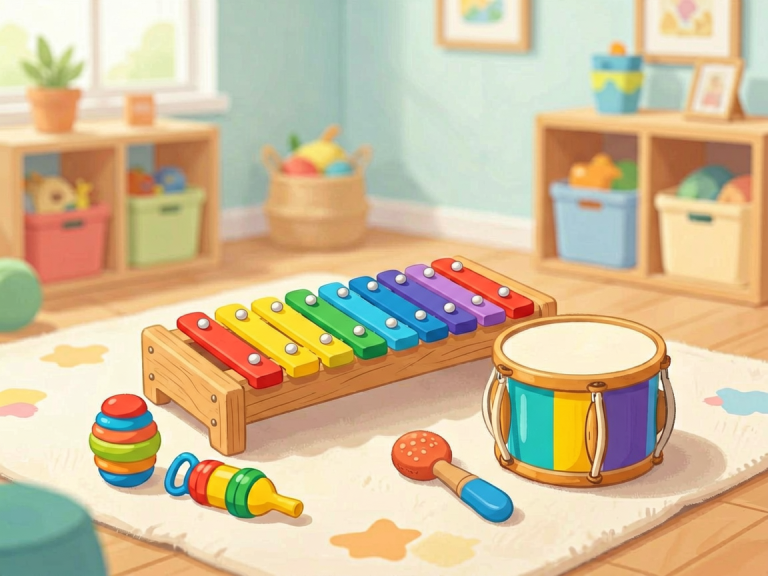
Not all dangers are physical; some are auditory. Many toys, especially electronic ones, are designed to be loud—but they are often far louder than is safe for a baby’s delicate hearing. A baby’s ear canal is shorter and more sensitive than an adult’s, so sounds that seem merely annoying to us can be damaging to them. Avoid toys that emit sudden, high-pitched sirens, explosive sounds, or music above 85 decibels—which is roughly the level of a blender or heavy city traffic. This is especially concerning because babies naturally hold toys close to their faces and ears, amplifying the noise. The American Academy of Pediatrics advises that toys with a volume control should be set to the lowest level, and any toy that produces a loud bang or pop should be removed. Also avoid flashing lights that strobe excessively, as intense, rapid light sequences can trigger seizures in photosensitive infants and cause visual discomfort. Sensory overload from too-bright colors, chaotic movements, and overstimulating lights can also interfere with a baby’s ability to focus and calm down. Simple, quiet toys—wooden blocks, soft cloth balls, rattles that make a gentle shaker sound—are preferable to electronic gadgets that assault the senses.
Projectiles and Sharp Edges
Babies are clumsy by definition, and toys that require throwing or launching should be strictly avoided. Toys such as dart guns, slingshots, flying discs, or any toy that propels objects can cause eye injuries, bruises, or even chipped teeth. Even a toy lawn mower with a whirling plastic blade can cut small fingers. Avoid toys with sharp points, jagged edges, or rough surfaces that can scratch or puncture delicate skin. This includes some wooden toys that are poorly sanded, plastic toys with flashing (excess plastic left from the molding process), and metal toys with sharp seams. Also avoid toys that are heavy or have hard corners, as a baby may lose grip and drop the toy on themselves. A classic example is a solid wooden block with a sharp edge; it can become a missile when thrown in a moment of excitement. Look for rounded edges and smooth surfaces, and always run your fingers over a toy to feel for any rough or pointed parts. Remember that babies often wave toys around wildly, so anything with a pointed handle or protruding antenna is a risk to their own eyes and the eyes of others.
Secondhand and Recalled Toys
One of the most overlooked sources of dangerous toys is the secondhand market. Hand-me-downs, garage sales, and thrift stores can be treasure troves, but old toys may not meet current safety standards. They may have been made with lead paint, phthalate-laden plastic, or parts that have become brittle and crack easily. They could also be recalled but still on the shelf of someone’s home. Before passing down any toy, research its model and brand online to check for recalls. The U.S. Consumer Product Safety Commission (CPSC) maintains a searchable database of recalled toys, as do many other national safety agencies. Also be cautious with toys that have been repeatedly washed, as fabric may have degraded, releasing loose fibers or stuffing. Avoid toys that are rusty, cracked, or have splintered wood. Even a slightly damaged toy can quickly break into hazardous pieces during play. When in doubt, do not give it to your baby. It is also worth noting that “vintage” toys, though charming, often predate modern safety laws and are almost never appropriate for babies. Similarly, collectible toys, decorative toys, or toys that came as promotional items from fast-food restaurants are not designed for infant use and should be kept out of reach.
Conclusion
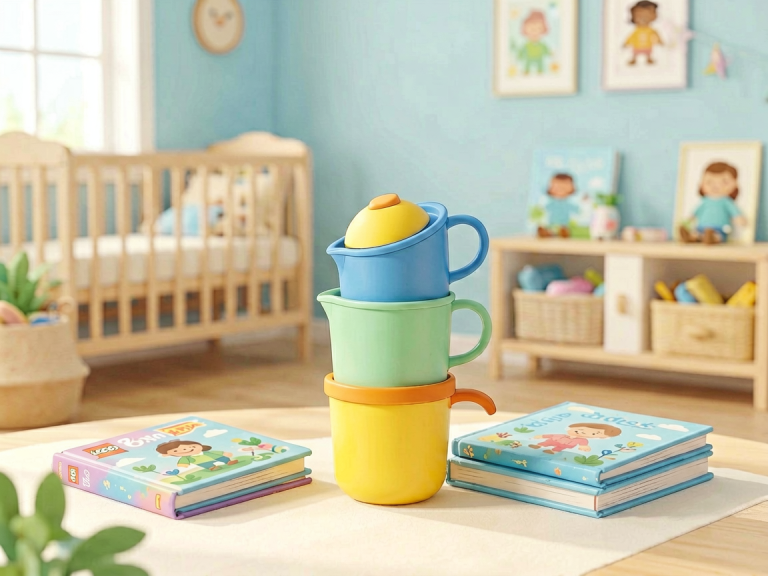
Choosing toys for a baby is not about banning all fun—quite the opposite. The goal is to provide joyful, developmentally appropriate play while eliminating avoidable risks. By steering clear of toys with small parts, toxic materials, long cords, excessive noise, projectiles, sharp edges, and unknown histories, caregivers can create a safe environment where a baby can freely explore, learn, and grow. Always read labels, follow age recommendations, and inspect toys regularly for wear and tear. And remember that the best toys are often the simplest: a soft fabric ball, a set of sturdy nesting cups, a well-made wooden rattle, or even a cardboard box. These timeless objects stimulate creativity and motor skills without posing hidden dangers. In the end, the most valuable toy you can give your baby is your attention and your judgment. A safe toy is more than a fun toy—it is a foundation of trust, allowing your little one to discover the world with confidence, while you rest assured that their playtime is truly safe. Stay informed, stay vigilant, and let the joy of play flourish without the shadow of preventable harm.