The Paradox of Fragile Toys: Why We Keep Buying Breakable Playthings for Five-Year-Olds
Introduction: A Shelf Full of Snap
Every parent of a five-year-old knows the scene. The toy aisle gleams with colorful boxes promising adventure, creativity, and hours of engagement. You pick up a plastic spaceship, turn it over, and notice the impossibly thin wings. You see a dinosaur with joints that look like they might pop out on the first twist. You buy it anyway. Three days later, you are sweeping up a jagged piece of fuselage from under the couch, while your child sobs over a decapitated T-Rex. And yet, ten days later, you are back in the same aisle, buying another fragile toy. This is not a personal failure; it is a structural paradox. We know these toys will break. We buy them anyway. Why? And what does this cycle of purchase, breakage, and disappointment do to our five-year-olds? This article explores the strange economics, psychology, and developmental consequences of buying toys that break easily for five-year-olds, and offers a path toward more honest, durable play.
The Allure of the Inevitable Breakage
The first reason we buy fragile toys is that they are often the most visually appealing. Toy manufacturers understand that a five-year-old’s attention is captured by realistic details, moving parts, and shiny surfaces. A robust, solid wooden truck lacks the flashing lights and articulated robot arms of its cheap plastic counterpart. In the store, the fragile toy wins the “wow” factor every time. It appears more exciting, more alive. The child reaches for it, and the parent, eager to see that glow of joy, reaches for their wallet.
But there is a deeper allure: the illusion of value. A toy that costs less but has more features feels like a bargain. The package boasts “6-in-1” transformations or “20 sound effects.” What those features do not boast is their lifespan. The tiny hinges, the thin connectors, and the battery compartment held together by a single screw are all engineered to fail. This is called planned obsolescence, and it is not limited to electronics. In the toy industry, it is a silent business model. The cheaper the construction, the faster the breakage, and the sooner the parent returns to buy a replacement. For the manufacturer, the breakage is not a bug; it is a feature. For the parent, however, the allure quickly turns into a mirage. The excitement of the first hour is paid for by the heartbreak of the first crash.
What Five-Year-Olds Actually Learn from Broken Toys
We often comfort ourselves by saying that children learn resilience from broken toys. And indeed, there is some truth to that. When a toy breaks, a five-year-old confronts loss, frustration, and the limits of their own physical power. They may try to fix it. They may cry. They may move on. These are valuable emotional experiences. But the lesson is not as simple as “loss teaches strength.” The lesson that actually gets learned is often one of disposability. When a toy breaks immediately, a child learns that objects are cheap, replaceable, and not worthy of careful stewardship. They learn that it is normal for things to fall apart. This is the opposite of sustainability.
Moreover, the type of play that fragile toys invite is different. A durable toy—say, a set of wooden blocks—can be dropped, thrown, stacked, and unstacked in a thousand ways. It adapts to the child’s imagination. A fragile toy, by contrast, demands caution. It tells the child, “Don’t touch me too hard.” It teaches fear of use. A five-year-old who is constantly told to be careful with a flimsy spaceship learns that play is dangerous, that enjoyment comes with stress. Instead of building a world, the child merely watches the toy, waiting for it to break. This is not play; it is surveillance.
Yet there is an even subtler lesson. When a toy breaks, parents often respond with, “It’s okay, we’ll get you a new one.” This phrase, meant to comfort, actually communicates that relationships with objects are transactional and temporary. The child begins to understand that nothing is permanent, and that the solution to all disappointments is consumption. By age five, this is a dangerous seed. We are not raising careful children; we are raising future consumers who learn to cope with emotional pain through shopping. The broken toy is not a teacher of resilience; it is a trainer of impulse buying.
The Psychology of Parents: Buying Hope, Not Durability
Why do we, as parents, keep making this mistake? The answer lies in our own psychology. We are not buying a toy; we are buying a moment of peace, a glimpse of our child’s happiness, and a brief respite from our own guilt. Many parents work long hours and feel that they do not spend enough time with their children. A new toy is a tangible apology, a way to say “I love you” without having to say “I’m sorry I’m too tired to play.” The fragility of the toy is irrelevant at the moment of purchase because we are not thinking about its future. We are thinking about the immediate expression on our child’s face.
Additionally, parents themselves were raised in the age of cheap, mass-produced toys. We have internalized the idea that toys are disposable. Our own childhoods are full of memories of broken plastic, lost pieces, and quickly forgotten gadgets. We survived, and so we assume our children will too. But the psychological cost is not about survival; it is about value systems. When we repeatedly buy fragile toys, we model a certain relationship to matter. We show our children that the physical world is unimportant, that things are here to be used and discarded, and that our only responsibility to them is consumption.
There is also a social pressure at play. Birthday parties and holiday lists are filled with the latest licensed characters, almost all of which come in cheap, breakable forms. Parents buy them because they fear their child will feel left out if they don’t have the same toy as their friends. But the irony is that the most popular toys—those based on movies or cartoons—are often the most fragile, because they are designed for media tie-ins, not for play. The child does not need another Spider-Man figure; they need a friend to play with. Yet we buy the figure because it is easier than arranging a playdate.
A Call for Mindful Consumption
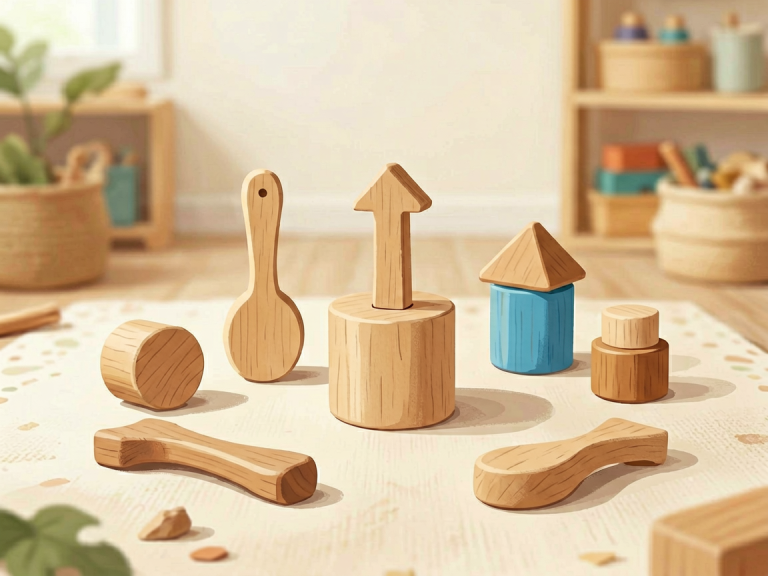
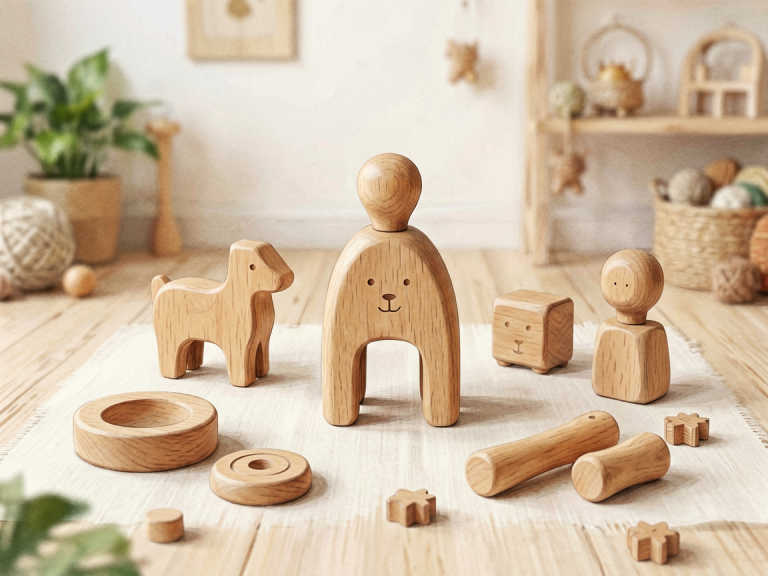
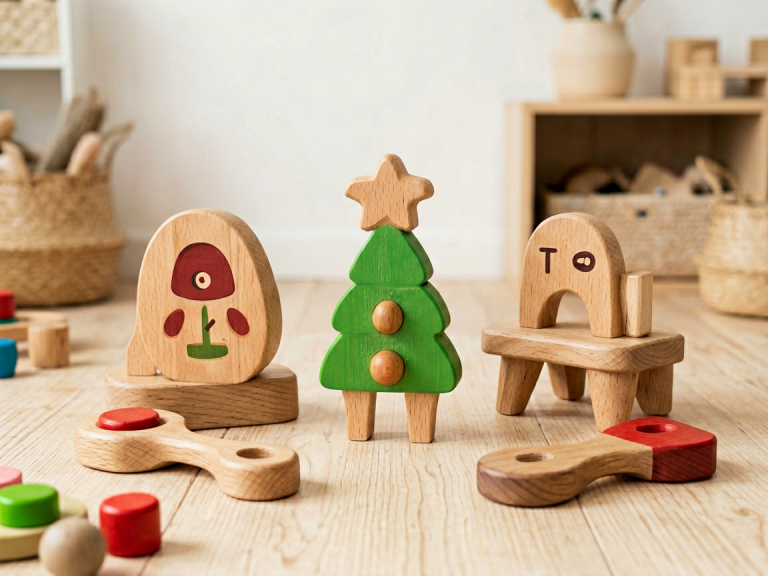
So what is the alternative? It is not to stop buying toys altogether, nor to become joyless minimalists. The alternative is to assume that a toy will break, and then to buy only those toys whose breakage we can accept. This means shifting priorities from novelty to durability. A well-made wooden train, a set of sturdy building bricks, a canvas of paints and paper—these are toys that do not break easily, and if they do, they can be repaired. They also invite open-ended play that develops problem-solving skills, creativity, and patience.
But mindful consumption goes beyond the material. It requires a change in what we tell our children. When we buy a toy, we should say, “This is made to last. We will take care of it, and if it breaks, we will try to fix it together.” This simple sentence sets a different tone. It teaches stewardship rather than disposability. It also teaches that the joy of a toy is not in its initial novelty, but in the relationship built over time. A well-loved teddy bear that has been sewn up a dozen times is infinitely more valuable than a shiny robot that works for one afternoon.
We must also consider the child's perspective. A five-year-old does not need a huge quantity of toys. They need a modest selection of high-quality objects that respect their motor skills and their imagination. The American Academy of Pediatrics has actually recommended simple, “low-tech” toys for young children, precisely because those toys encourage active play and social interaction. A fragile, battery-powered gadget, by contrast, turns the child into a passive observer. Buying fewer, better toys is not a deprivation; it is a gift of focus.
Finally, we need to break our own habit of using toys as quick fixes. When we feel guilty, we should sit down and play with our child instead of handing them a plastic pawn. When we feel tired, we should take them to the park instead of letting a screen entertain them. The greatest toy of all is a parent’s attention, and that never breaks, never runs out of batteries, and never requires a trip back to the store.
Conclusion: The Lasting Smile
The next time you stand in the toy aisle, holding a brightly colored object that you know will be in the trash can within a week, pause. Ask yourself: what am I really buying? If the answer is “a moment of happiness,” remember that the happiness of a five-year-old is not in the object itself, but in the experience. A toy that breaks easily is an experience of sadness and waste. A toy that lasts is an experience of continuity and care. We deserve better, and our children deserve better.
We will never eliminate breakage—children are children, and things will get dropped, scraped, and dented. But we can choose toys that break rarely, that break safely, and that break in ways that can be healed. And when a toy finally does reach the end of its life, we can honor it: we can throw it away together, with a small ceremony of thanks. That, not the cheap replacement, is the true lesson for a five-year-old. It is the lesson that things matter, that care matters, and that the joy of playing is not measured by how many hours a toy survives, but by how much love was poured into those hours. Let us buy toys that last, and in doing so, let us teach our children that love, too, is not meant to be disposable.