Building Blocks of Genius: Are Engineering Kits Worth It for 5-Year-Olds?
In an age where screens dominate childhood entertainment and structured activities crowd the calendar, parents are constantly searching for toys that offer more than fleeting fun. Engineering kits—those boxes of colorful gears, snap-together beams, and plastic screws—promise to turn playtime into a lesson in logic, creativity, and perseverance. But when the target audience is a five-year-old who still puts toys in their mouth and has the attention span of a hummingbird, the question becomes pressing: are engineering kits worth it? The answer, as with most parenting dilemmas, is nuanced. When chosen wisely and used with guidance, these kits can be transformative. When mismatched to a child’s developmental stage, they can end up as expensive dust collectors. This article explores the real-world benefits, potential pitfalls, and practical considerations of introducing engineering kits to kindergarten-age children.
Cognitive Benefits: More Than Just Building
At five years old, a child’s brain is undergoing a remarkable period of neural growth, particularly in the prefrontal cortex, which governs executive functions like planning, attention, and impulse control. Engineering kits directly stimulate these areas. When a child follows a pictorial instruction manual to connect a wheel to an axle or snaps a red block onto a blue one in a specific sequence, they are practicing sequential thinking and pattern recognition. These are foundational skills for mathematics and reading.
Moreover, many high-quality engineering kits introduce basic physics concepts through direct manipulation. A five-year-old who builds a simple lever or a ramp and watches a marble roll down is not just playing—they are internalizing cause-and-effect relationships. Research in early childhood education consistently shows that hands-on, experiential learning is far more effective for long-term retention than passive instruction. A kit that requires a child to figure out why their structure keeps falling over cultivates a mindset of experimentation and iteration. They learn that failure is not an endpoint but a data point. That lesson alone, delivered through joyful play, can be worth the price of admission.
However, not all kits are created equal. Some overly complex sets with dozens of tiny pieces can overwhelm a five-year-old’s working memory, leading to frustration rather than learning. The sweet spot lies in kits that offer a clear goal (e.g., “build a car that can roll”) but allow for open-ended exploration. Brands like LEGO Duplo, Magna-Tiles, or beginner sets from Learning Resources or Thames & Kosmos are specifically designed for this age group. They emphasize large, easy-to-grip pieces and limit the number of steps per project.
Fine Motor Skills and Hand-Eye Coordination
One of the most immediate, observable benefits of engineering kits is the development of fine motor skills. At age five, children are refining their pincer grasp, learning to manipulate small objects with precision, and building the hand strength needed for writing. The act of snapping plastic bricks together, twisting a screw with a plastic tool, or aligning a gear with its counterpart requires coordinated finger movements and bilateral hand use (using both hands together). These are exactly the same motor pathways that will later be used for holding a pencil, tying shoelaces, or playing a musical instrument.
Unlike passive screen-based activities, engineering kits demand physical engagement. The tactile feedback—the “click” of a piece locking into place or the resistance when turning a knob—sends rich sensory information to the brain. This sensory-motor integration is crucial for developing body awareness and spatial reasoning. For example, when a child rotates a piece in their hand to see which orientation fits into a connector, they are practicing mental rotation, a skill strongly linked to later success in STEM fields.
Yet parents should be realistic about the level of frustration. A five-year-old’s hand muscles tire quickly. If a kit requires excessive force to snap pieces together, the child may lose interest or develop an aversion to building. It is essential to choose kits with pieces that are deliberately easy for small hands to connect. Also, supervising an adult can gently guide a child when they struggle with a particularly stubborn joint, turning a moment of potential defeat into a lesson in persistence.
Fostering Creativity and Problem-Solving
Critics sometimes argue that engineering kits are too structured—that they stifle a child’s natural creativity by prescribing specific designs. But this criticism misses the mark when applied to the right products. A well-designed kit for a five-year-old is a system of constraints, not a script. The child learns that certain shapes fit together in certain ways, but within those boundaries, infinite variations are possible. They can build the model shown on the box, then modify it, combine it with other toys, or create something entirely new.
This is where the magic happens. A five-year-old who has built a simple car might decide to attach a paper sail to it, or add extra wheels, or create a “garage” out of blocks. They are engaging in divergent thinking—coming up with multiple solutions to a single problem. Moreover, when the kit includes functional parts like gears, pulleys, or wheels, the child begins to think in systems. They realize that turning one gear makes another spin, or that a taller ramp makes the ball roll faster. These are early engineering design concepts: trade-offs, efficiency, and cause-effect relationships.
The open-ended nature of many modern engineering kits also encourages storytelling. A structure becomes a castle for a toy knight, a rocket ship bound for Mars, or a bridge for stuffed animals. This narrative play is vital for language development and social-emotional growth. So rather than inhibiting creativity, a good engineering kit acts as a scaffold, providing enough structure to prevent total chaos while leaving ample room for imagination.
Social and Emotional Growth
Contrary to the stereotype of the solitary engineer building alone in a basement, many engineering kits shine brightest when used in a social setting. Five-year-olds are egocentric by nature, but collaborative building projects teach turn-taking, negotiation, and verbal communication. “Can I use the red piece next?” or “Let’s make the tower taller together” are small phrases that carry big social lessons. Sharing a limited set of parts, deciding who will hold the base steady while the other adds blocks, and celebrating a completed project together all build emotional regulation and empathy.
Furthermore, completing a challenging build instills a powerful sense of accomplishment. For a five-year-old, there are few feelings more satisfying than the moment when a wobbly structure finally stands upright, or the little car rolls across the floor on its own. This boosts self-efficacy—the belief that “I can solve hard problems.” Repeated successes, even small ones, build resilience against future frustrations. When a structure collapses, the child learns that they can try again, adjust their approach, and succeed. That emotional learning is far more valuable than any specific engineering fact.
The Role of Parental Involvement
The worth of an engineering kit for a five-year-old is heavily influenced by how an adult engages with it. Simply handing the box over and expecting independent mastery is a recipe for frustration. A five-year-old lacks the reading skills to interpret complex instructions and the fine motor control to execute precise steps alone. Instead, the kit becomes a platform for joint attention and guided discovery.
Parents can model problem-solving language: “Hmm, that piece doesn’t fit there. What if we try turning it around?” or “I wonder why the tower keeps falling. Maybe the base is too small?” These verbalizations teach children how to think aloud and approach problems methodically. Moreover, sitting together and building creates quality bonding time, free from screens and distractions. The shared experience—of struggling, laughing, and eventually succeeding—strengthens the parent-child relationship.
However, there is a delicate balance. Overbearing guidance can turn the activity into a chore and deny the child the sense of ownership. The best approach is the “sit on your hands” method: offer encouragement and ask open-ended questions, but resist the urge to fix every wobble or correct every mistake. Let the child experience small failures; they are the best teachers.
Cost vs. Value: Are They Worth the Investment?
Engineering kits vary wildly in price, from under $20 for a simple set of interlocking blocks to over $100 for elaborate motorized kits. For a five-year-old, the most expensive options are rarely the best. High-end kits often include tiny electronic components, fragile parts, or complex assembly steps that are beyond a kindergarten’s patience and dexterity. Instead, look for kits that are durable, washable (because, yes, toys will end up in the sink), and extendable—meaning you can add more pieces later without buying a whole new system.
Consider the cost per play session. A $40 kit that is used weekly for two years offers far better value than a $20 kit that is abandoned after one afternoon. Reputable brands like LEGO Duplo, Magna-Tiles, and PicassoTiles hold their resale value and last through multiple children. Additionally, many public libraries and toy lending programs now offer engineering kits for checkout, allowing you to test interest before making a purchase.
On the other hand, if the kit is simply added to an already overflowing toy box and never engaged with, it is a waste of money regardless of price. The worth of an engineering kit is not in its packaging or marketing claims but in the quality of interaction it inspires. For a five-year-old who already loves building with blocks or playing with puzzles, an engineering kit that adds new challenges (like gears or movable parts) is likely a hit. For a child who prefers imaginative, unstructured play with dolls or cars, a kit that imposes specific build sequences might feel restrictive.
Potential Drawbacks and How to Choose Wisely
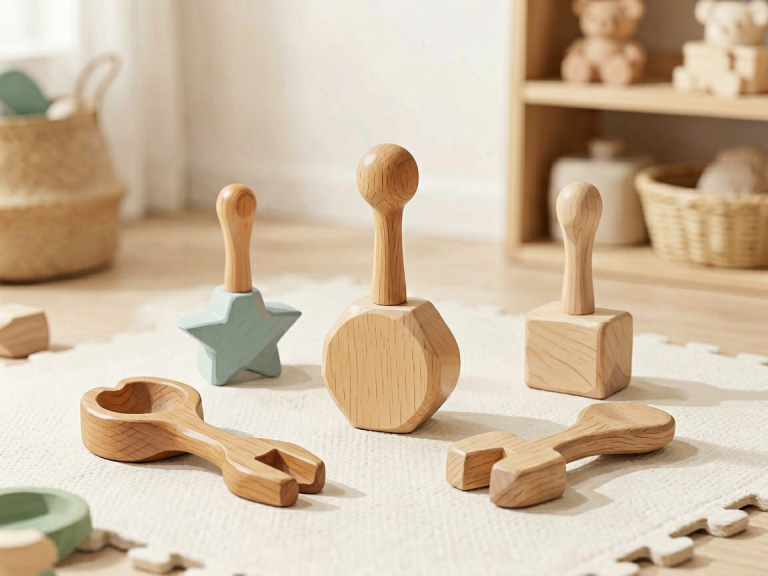
No product is perfect, and engineering kits come with potential downsides. Small pieces pose a choking hazard; always check the age recommendation and supervise play. Some kits rely heavily on plastic; for eco-conscious families, there are now wooden building sets like Tegu or Grimm’s. Another common issue is the “one-and-done” problem: a child builds the model once, then loses interest. To combat this, choose kits that explicitly encourage multiple builds, offer challenge cards, or can be combined with other sets.
Another concern is the pressure to create a “STEM prodigy.” Some parents buy engineering kits hoping to fast-track their child into a high-paying career. This is misguided. At five years old, the goal should not be to teach engineering principles but to foster a love of tinkering, curiosity, and persistence. If the child simply enjoys stacking blocks without following instructions, that is just as valuable as building a functioning crane. The kit should be a tool for exploration, not a curriculum.
Conclusion: A Yes, But with Conditions
So, are engineering kits worth it for five-year-olds? The evidence strongly suggests yes—when chosen with care, introduced with patience, and used as a springboard for shared creativity and problem-solving. They offer cognitive, motor, social, and emotional benefits that few other toys can match. They turn abstract concepts into tangible experiences and plant the seeds of a growth mindset long before a child ever steps into a classroom.
But the key is mindful selection and thoughtful engagement. A cheap, poorly designed kit with stiff parts and confusing instructions will do more harm than good. An expensive, overly complex set will frustrate a five-year-old who just wants to play. The ideal engineering kit for this age is simple, safe, open-ended, and fun—one that provides just enough challenge to keep a child curious but not so much that they give up. When those conditions are met, the investment is not just worth it; it is one of the most valuable purchases a parent can make for a young child’s development. After all, every skyscraper starts with a single block, and every engineer with a single spark of wonder.