The Hidden Treasures: Why Used Toys Are the Perfect Choice for 7-Year-Olds
In a world saturated with glossy advertisements, unboxing videos, and relentless consumer pressure, the concept of giving a used toy to a seven-year-old might seem outdated or even stingy to some. Yet, as any experienced educator, pediatric psychologist, or savvy parent will attest, the “gently loved” playthings that have already lived a life in another child’s hands often hold far more value than their brand-new counterparts. At age seven, children stand at a unique developmental crossroads: they have outgrown the need for constant, simple sensory stimulation, yet they still crave imaginative play, rule-based games, and opportunities to master complex skills. Used toys, when chosen wisely, can satisfy these needs in ways that fresh-from-the-box items rarely can. They offer not only economic and environmental benefits but also profound educational, social, and emotional advantages that are especially suited to the mind of a seven-year-old.
The Developmental Sweet Spot: Why Seven-Year-Olds Benefit Most
Seven-year-olds are in what developmental psychologists call the “middle childhood” stage. Their cognitive abilities are expanding rapidly: they can follow multi-step instructions, understand cause-and-effect relationships, and engage in sustained logical thinking. Their social world is also broadening—friendships become more important, cooperative play takes precedence over parallel play, and they begin to grasp concepts like fairness, negotiation, and turn-taking. Emotionally, they are more capable of handling delayed gratification and understanding the value of belongings beyond mere novelty.
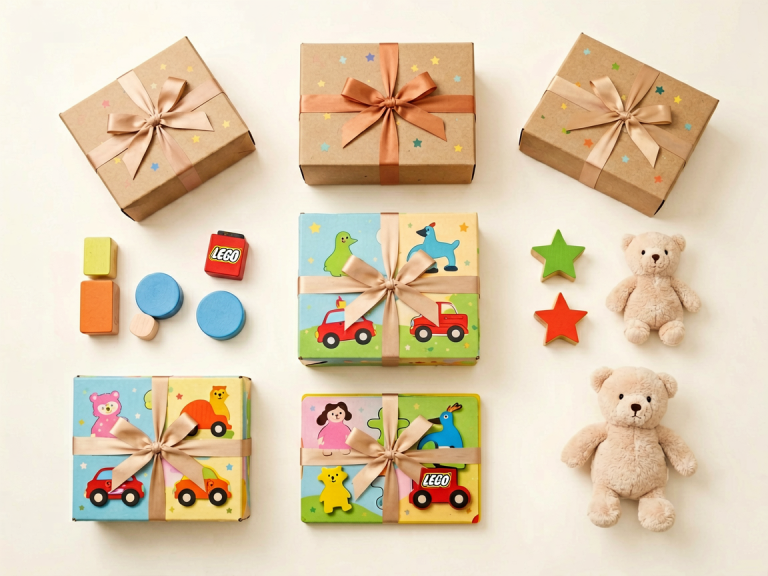
Used toys fit perfectly into this stage because they often come with a history that sparks curiosity. A well-worn board game, for instance, might have a missing pawn or a slightly torn instruction booklet, inviting the child to problem-solve and improvise. A second-hand Lego set, even if it lacks the original box, challenges the child to sort, invent, and build without the guiding hand of a glossy instruction manual. Moreover, seven-year-olds are beginning to develop a sense of nostalgia and attachment—they cherish items that feel “real” and lived-in. A used stuffed animal with a faded ribbon or a plastic dinosaur chipped from countless adventures becomes a character in their own imaginative narratives, not just a product fresh off a factory line.
Environmental Stewardship Begins at Play
One of the most compelling arguments for choosing used toys for a seven-year-old is the lesson in sustainability that comes woven into the fabric of play. Children at this age are remarkably receptive to concepts like waste, recycling, and caring for the planet—especially when these ideas are presented not as abstract lectures but as tangible, everyday actions. When a parent says, “This toy used to belong to another boy who loved it, and now it’s your turn to take care of it,” the child learns that objects have life cycles. They begin to differentiate between “disposable” and “lasting.”
The environmental toll of the toy industry is staggering: according to some estimates, nearly 80 percent of all toys end up in landfills, incinerators, or the ocean. Plastic toys, in particular, can take centuries to decompose. By opting for pre-owned items, families directly reduce the demand for new plastic production, packaging waste, and shipping emissions. For a seven-year-old who is just beginning to understand that their actions affect the world beyond their bedroom door, seeing a parent deliberately choose a used toy over a new one is a powerful, unspoken lesson in stewardship. It is a form of education that no textbook or documentary can replicate.
Economic Wisdom Without the Guilt
Let’s be honest: the cost of raising a child, especially in the era of viral toy trends and seasonal merchandise, can be astronomical. Seven-year-olds are not immune to peer pressure—they see classmates with the latest video games, action figures, or craft kits and feel the pull of wanting. Yet, at this age, they are also old enough to grasp basic economic concepts: money is finite, choices have consequences, and sometimes you get more value for less. Used toys offer a bridge between these two realities.
For the price of one brand-new, heavily marketed toy, a family can often buy a treasure trove of pre-owned items—several books, a complete board game, a jigsaw puzzle, and a set of building blocks. This abundance does more than simply fill a toy bin; it provides variety, which is critical for cognitive development. When a child has access to many types of play materials, they are more likely to explore different modes of thinking: strategic, creative, physical, and social. The used market also allows families to invest in higher-quality, durable brands (like wooden trains, classic magnetic tiles, or heirloom-quality dolls) that might be prohibitively expensive if purchased new. These better-made toys last longer, perform better, and often inspire deeper, more sustained play.
Cultivating Creativity Through Imperfection
There is a subtle but powerful psychological phenomenon at play when a child interacts with a toy that is not perfect. A brand-new toy arrives with a specific purpose designed by a marketing team—it is meant to be used in a certain way, with certain accessories, and often with a prescribed narrative. A used toy, by contrast, is an open canvas. It may have missing pieces, scratches, or faded paint, all of which invite the child to fill in the gaps with their own imagination.
For a seven-year-old, this is golden. Their brains are wired for “what if” thinking. A used plastic horse with a broken leg becomes a valiant warhorse rescued from battle. A board game missing two tokens inspires the child to invent replacement rules. A half-finished puzzle bought at a garage sale challenges the child to complete a picture they have never seen before. In each case, the imperfection is not a deficit—it is a prompt. Research in developmental psychology suggests that slightly open-ended, less-than-perfect materials stimulate more creative and flexible thinking than fully furnished, ready-to-play items. The used toy market, by its very nature, delivers precisely this kind of material.
Social Learning Through Pre-Loved Playthings
Seven-year-olds are increasingly aware of social hierarchies, sharing, and fairness. Used toys can play a surprising role in this social-emotional education. When a child receives a toy that another child once loved, they become part of a chain of generosity. Parents can tell stories about the toy’s previous life—where it came from, who played with it, how it was cared for. This narrative builds empathy: the child learns to treat the toy with respect because it mattered to someone else.
Furthermore, used toys are often the best catalysts for cooperative play. A second-hand board game like “Sorry!” or “Mousetrap” that shows signs of many previous battles teaches patience, resilience, and gracious losing. A used set of doctor’s tools or toy kitchen equipment invites role-playing with siblings or friends, where a seven-year-old can practice negotiation, turn-taking, and conflict resolution. Many of the most cherished toys in childhood—the ones that get passed from sibling to sibling, friend to friend, or even generation to generation—are used. They carry the warmth of shared history.
Safety Considerations for Second-Hand Toys
Of course, any discussion of used toys must include a responsible note about safety. Children at age seven are old enough to handle small parts responsibly in most cases, but parents should still exercise caution. Before giving a pre-owned toy to a seven-year-old, it is wise to inspect it for sharp edges, loose magnets, peeling paint (especially lead-based paint on older toys), and worn-out batteries or wiring in electronic items. Stuffed animals should be checked for intact seams and cleaned thoroughly. Board games should be examined for missing small pieces that could be a choking hazard for a younger sibling in the house.
That said, many used toys sold through reputable second-hand shops, consignment stores, online marketplaces with safety guidelines, or directly from trusted friends and family are perfectly safe—often safer than cheap new toys made of questionable materials. The key is to apply the same common sense one would use for any new toy: check age recommendations, look for durable construction, and avoid items with known recalls (which can be easily verified through government websites).
How to Choose the Best Used Toys for This Age Group
Not every used toy is a winner for a seven-year-old. To maximize the benefits, parents and gift-givers should focus on a few categories that align with seven-year-old development. Construction sets (Lego, K’NEX, magnetic tiles) are ideal—they encourage engineering, problem-solving, and creativity, and the missing pieces can be replaced or improvised. Board games that require strategy, reading, or counting (such as “Catan Junior,” “Ticket to Ride: First Journey,” or classic games like “Clue” or “Monopoly Junior”) build cognitive and social skills. Art and craft supplies—used markers, paints, clay, or even a child’s loom—unlock visual and tactile exploration.
Books are perhaps the most underrated used toy for this age. Before seventh graders dive headlong into digital reading, a seven-year-old’s mind is perfectly attuned to chapter books, illustrated stories, and non-fiction picture books. Used bookstores and library sales offer cheap, varied, high-quality reading material that can ignite a lifelong love of stories. And don’t overlook outdoor toys like used bicycles, scooters, balls, or jump ropes—they provide the physical activity that seven-year-olds desperately need, often at a fraction of the cost of new sports equipment.
A Gentle Rebellion Against Consumer Culture
In an age where children are bombarded with advertising from YouTube, social media, and television, choosing used toys becomes a quiet but potent act of resistance. It sends the message that happiness does not come from a shiny new package, but from the joy of discovery, the thrill of making something old your own, and the satisfaction of a bargain. Seven-year-olds are at the perfect age to absorb this lesson because they are old enough to compare, yet young enough to shift their values before peer pressure fully hardens.
Parents who model the habit of buying used—explaining where the toy came from, why it was a good choice, and how it benefits the planet and the family budget—are teaching critical thinking about consumption. They are raising children who will one day ask, “Do I really need a new one, or can I find something that already exists?” That question, for a generation growing up in an era of climate crisis and overconsumption, is perhaps the most valuable skill of all.
Conclusion: The Timeless Value of a Second Life
To dismiss used toys as merely “hand-me-downs” or “cheap alternatives” is to miss the full picture. For a seven-year-old, a pre-loved toy is an invitation to creativity, a lesson in sustainability, a tool for social development, and a source of economic wisdom all rolled into one. It carries the warmth of someone else’s childhood and the promise of your own child’s inventiveness. In a world that constantly urges us to buy newer, brighter, and faster, the used toy stands as a quiet champion of deeper values: resourcefulness, patience, gratitude, and love.
So the next time you are searching for the perfect gift or addition to a seven-year-old’s playroom, do not overlook the dusty bin at the garage sale, the shelf at the thrift store, or the listing on a second-hand marketplace. Look at those toys with fresh eyes. They are not someone else’s trash; they are potential treasures waiting for their next adventure. And for a seven-year-old, whose imagination can transform a scratched marble into a magical gem or a worn teddy bear into a loyal companion, that is the best kind of gift of all.