Engineering Kits for 18-Month-Olds: A Worthwhile Investment or a Waste of Money?
Introduction
In the age of early STEM education, parents are constantly bombarded with advertisements promising to turn their toddlers into miniature engineers. Among the most eye-catching products are “engineering kits” designed for children as young as 18 months. These kits often come with oversized plastic gears, soft building blocks, snap-together connectors, and brightly colored components that claim to develop problem-solving skills, spatial awareness, and fine motor control. But the central question remains: are they actually worth it for a one-and-a-half-year-old?
At 18 months, a child is in a unique developmental window. They are walking (or running), beginning to speak a handful of words, and exploring the world primarily through sensory and motor experiences. Their attention span is fleeting—often measured in seconds or a few minutes. The idea of “engineering” at this age seems almost paradoxical. Yet many toy companies market these kits as essential for early cognitive development. In this article, I will examine the pros and cons of engineering kits for 18-month-olds, drawing on developmental psychology, parent experiences, and practical considerations. By the end, you will have a clear framework to decide whether such a purchase makes sense for your toddler.
—
Understanding the Developmental Stage of an 18-Month-Old
Before evaluating any toy, it is crucial to understand what an 18-month-old can and cannot do. This age is often called the “toddler” stage—a period of rapid growth in mobility, language, and social-emotional skills.
- Motor Skills: Most 18-month-olds can walk independently, carry objects, and begin to climb. Fine motor control is still developing: they can pick up small objects with a pincer grasp, but they struggle with precision tasks like aligning two pieces or applying force to snap something together.
- Cognitive Abilities: Object permanence is well established. Toddlers understand cause and effect in simple ways—for example, that pushing a button makes a noise. However, they have no concept of planning, sequencing, or following multi-step instructions. Their play is primarily exploratory: they bang, stack, drop, and mouth objects.
- Attention Span: A typical 18-month-old can focus on a single activity for about 3–5 minutes, though this varies widely. They are easily distracted and often prefer repetitive actions (e.g., emptying a container over and over) rather than goal-directed building.
- Social-Emotional: This age is characterized by intense curiosity but also frustration. Toddlers want to do things independently but lack the skills to succeed, leading to temper tantrums.
Given this profile, an “engineering kit” must align with these abilities. If it requires precision, patience, or following instructions, it will likely end up ignored—or worse, thrown across the room.
—
What Are Engineering Kits for Toddlers?
Engineering kits marketed for 18-month-olds are typically simplified versions of construction toys. Common examples include:
- Gear sets: Large, interlocking plastic gears that fit onto a baseplate. Toddlers can place gears on pegs and spin them.
- Magnetic building blocks: Soft, chunky blocks with magnets that click together.
- Snap-together balls or connectors: Large plastic pieces that require moderate force to join.
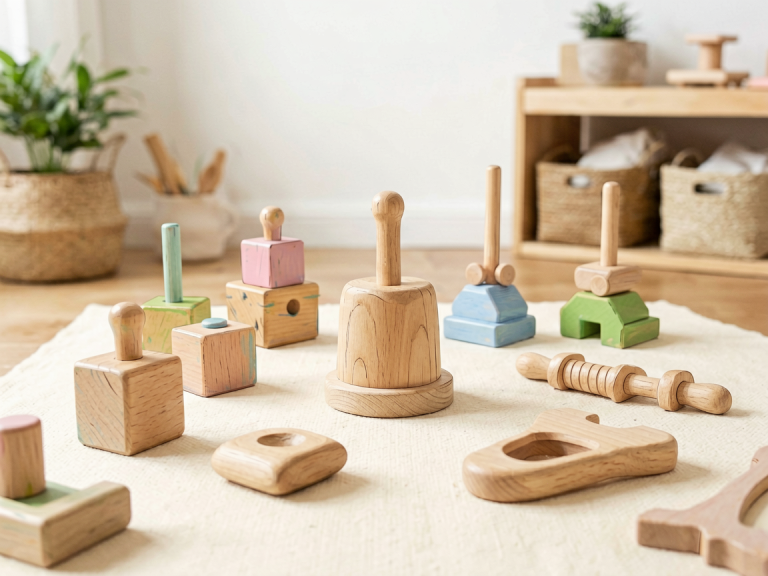
- Wooden puzzles with pegs or shapes: Simple matching boards that encourage spatial reasoning.
- Stacking towers with rings or cups: Classic toys, but sometimes repackaged as “engineering.”
The key feature of any quality toddler engineering kit is that the pieces are large (to prevent choking), lightweight, and easy to manipulate with small hands. They often have no sharp edges and are made of non-toxic materials. However, not all kits meet these criteria; some are designed for older children (3+ years) but are mistakenly bought by parents eager for early STEM exposure.
—
Potential Benefits: Why Some Parents Swear by Them
Proponents of engineering kits for 18-month-olds point to several developmental advantages:
1. Fine Motor Skill Refinement
Even simple actions like picking up a gear and placing it on a peg require hand-eye coordination and finger dexterity. While the same can be achieved with traditional blocks, gear sets introduce a slightly more complex motion (twisting or pushing). Regular practice can strengthen the small muscles in the hands and fingers, preparing the child for later writing and tool use.
2. Early Cause-and-Effect Understanding
When a toddler turns a gear and sees another gear spin, they learn that their action produces a visible result. This fundamental concept of cause and effect is the bedrock of engineering thinking. Magnetic blocks that click together provide similar feedback: “When I bring the pieces close, they snap.”
3. Spatial Awareness and Problem-Solving
Stacking blocks or fitting gears onto pegs requires the child to judge distance, orientation, and balance. Over time, toddlers begin to understand that a block will fall if placed off-center. This spatial reasoning is a precursor to geometry, physics, and design thinking.
4. Language and Social Interaction
If parents play alongside the child, engineering kits can spur vocabulary development: “Push the blue gear,” “Let’s put the circle here,” “Can you find the yellow one?” The shared activity also strengthens the parent-child bond and introduces turn-taking—a critical social skill.
5. Engagement and Curiosity
Many toddlers are naturally drawn to bright colors, moving parts, and novel challenges. A well-designed engineering kit can capture their attention longer than a simple stuffed animal, providing rich sensory stimulation.
—
Potential Downsides: Why You Might Want to Skip Them
Despite the rosy picture painted by marketers, there are several reasons to be cautious about investing in a specialized engineering kit for an 18-month-old.
1. Low Usability Due to Skill Mismatch
The most common complaint from parents is that their toddler cannot actually use the kit as intended. Gears may be too stiff to turn, magnetic blocks may require too much force to separate, and snap connectors may frustrate a child who lacks the hand strength. Instead of building, the child merely chews on the pieces or scatters them on the floor. The kit then sits unused, collecting dust.
2. Overwhelming Number of Pieces
Many engineering kits come with 20, 30, or even 50 pieces. For an 18-month-old, this is not a treasure trove of creativity—it is a recipe for sensory overload. Toddlers often become more interested in dumping the entire bin on the floor than in building anything. The sheer quantity of pieces can lead to meltdowns when a favorite piece goes missing, or to parental frustration during cleanup.
3. Limited Open-Ended Play Value
Unlike simple wooden blocks, which can be stacked, knocked down, sorted, or used as pretend food, many engineering kits have a narrow range of actions. For example, a gear set is essentially about placing gears on pegs and spinning them. After a few repetitions, the novelty wears off. At 18 months, children thrive on open-ended exploration—rolling a ball, filling a cup with sand, banging a drum. A kit with a single mechanical purpose may not hold their interest long-term.
4. Cost vs. Benefit Ratio
Quality engineering kits for toddlers are not cheap. A set of large magnetic tiles can cost $30–$60, while a branded gear set may run $25–$40. In contrast, a set of basic wooden unit blocks (which offer far more versatility) can be purchased for similar or less money. Given that a toddler’s attention span is short and their play is non-constructive, the return on investment may be poor.
5. Risk of Frustration and Negative Associations
If a child repeatedly fails to achieve the intended result (e.g., the gears won’t turn, or the magnets don’t align), they may become frustrated. At 18 months, frustration tolerance is extremely low. Such experiences can lead to throwing toys, crying, or even a temporary aversion to construction play. It is better to offer toys that guarantee success most of the time.
6. The “STEM Hype” Trap
There is no scientific evidence that an 18-month-old who plays with an engineering kit will grow up to be a better engineer. Cognitive development at this age is holistic—running, climbing, singing, and cuddling are just as important for brain growth as structured problem-solving. The push for early STEM can create unnecessary pressure on both parents and children.
—
How to Choose (or Not) an Engineering Kit for Your 18-Month-Old
If you are still considering an engineering kit, here are practical guidelines to maximize its value—or decide against it.
Consider These Alternatives First
Before buying a specialized kit, ask yourself whether your child already has access to:
- Simple wooden blocks (various sizes)
- Nesting cups or stacking rings
- A shape sorter with large, chunky pieces
- A push-pull toy (e.g., a wooden car on a string)
- Musical instruments (shakers, drums)
These classic toys provide equivalent or superior developmental benefits at a lower cost and with more longevity. If you already own them, an engineering kit may be redundant.
If You Buy, Look for Key Features
- Extra-large pieces (at least 2 inches in diameter) to eliminate choking hazards and ease gripping.
- Minimal pieces (5–10 total) to avoid overwhelm.
- No small magnets that could be swallowed; prefer sealed magnetic tiles.
- Smooth, rounded edges and non-toxic materials (BPA-free, phthalate-free).
- One-step actions (e.g., simply place a gear on a peg, or snap two halves together). Avoid kits that require twisting, aligning, or pressing hard.
- Open-ended possibilities (e.g., magnetic tiles that can be stacked in many ways, not just one fixed design).
How to Introduce the Kit
- Start by playing with the kit yourself while the child watches. Demonstrate simple actions like spinning a gear or stacking two blocks.
- Do not expect the child to “build” anything. Let them explore the pieces freely—mouth them, bang them, drop them. This is their way of learning.
- Use the kit for just 5 minutes at a time. Put it away once interest wanes, and bring it out again later. Rotate toys to keep novelty alive.
- Join in the play, but let the child lead. Narrate what they are doing: “You put the red gear on. Now it’s spinning. Wow!”
When to Skip the Kit Entirely
- If your child still puts everything in their mouth (common up to 24 months), avoid kits with any smaller parts, magnets, or plastic pieces that could chip.
- If your child is easily frustrated or has a very short attention span, wait until 2–2.5 years old when fine motor skills have improved.
- If you are on a tight budget, spend the money on a family trip to the playground or a set of board books instead. Outdoor physical activity and language exposure are far more valuable at this stage.
—
Conclusion: Are Engineering Kits Worth It?
The honest answer is: usually not, but it depends.
For the vast majority of 18-month-olds, a dedicated “engineering kit” is an unnecessary luxury. The developmental benefits touted by marketers can be achieved just as effectively—or better—with simpler, cheaper, and more versatile toys like wooden blocks, nesting cups, and stacking rings. Moreover, many engineering kits on the market are poorly designed for toddler abilities, leading to frustration, short-lived interest, and wasted money.
However, there are exceptions. If you find a high-quality kit with large, easy-to-manipulate pieces and a very limited set (say, 5–8 pieces), and if your child is particularly curious about cause-and-effect toys, then such a kit can be a fun addition to a well-rounded toy collection. The key is to view it as a novelty tool—not a curriculum. It will not turn your toddler into a child prodigy, but it may provide a few minutes of engaging, interactive play.
Ultimately, the best “engineering” experience for an 18-month-old is not a box of plastic gears. It is real-world exploration: turning a door handle, stacking pillows, rolling a ball, digging in the sandbox. These everyday activities teach physics, mechanics, and problem-solving far more effectively than any kit. So before you click “add to cart,” ask yourself: would your toddler rather have a shiny new toy, or an afternoon with you at the park? The answer might surprise you.
*Word count: ~1,750*