The Ultimate Toy Guide for First-Time Parents of an 18-Month-Old: Nurturing Growth Through Play
—
Introduction
Congratulations, new parents! The journey through your baby’s first year and a half has been a whirlwind of milestones—first smiles, first steps, first words. Now, at 18 months, your toddler is a curious, vibrant explorer who is rapidly developing motor skills, language, and a sense of independence. Play is not just a pastime at this age; it is the primary engine of learning. Choosing the right toys can feel overwhelming, especially with the endless aisles of colorful products promising everything from “brain development” to “creative genius.” This guide is designed specifically for first-time parents of an 18-month-old. We will break down what developmental areas to focus on, which types of toys are most beneficial, and which ones to avoid. By the end, you will feel confident in selecting toys that are safe, engaging, and supportive of your child’s unique growth journey.
—
Safety First: Non-Negotiable Guidelines
Before diving into the fun stuff, let’s establish the golden rule: safety is paramount. At 18 months, children put almost everything in their mouths, test their limits by throwing objects, and climb with fearless enthusiasm. Here are the key safety checks for any toy you consider:
- Size matters: Avoid any toy or removable part that can fit through a toilet paper roll (approximately 1.5 inches in diameter). This prevents choking hazards.
- Material quality: Look for non-toxic, BPA-free plastics, water-based paints, and untreated wood. Avoid toys with lead-based paint or phthalates.
- Sturdy construction: Ensure no sharp edges, pinch points, or loose parts that could break off. Test the durability of wheels, handles, and seams.
- Age labeling: Always check the manufacturer’s recommended age. Toys marked “for ages 3+” often contain small parts that are dangerous for an 18-month-old.
- Supervision: Even the safest toys require adult presence. At this age, play is interactive, and a parent’s watchful eye prevents accidents.
—
Understanding the 18-Month-Old Mind and Body
At 18 months, your child is typically in the midst of what developmental psychologists call the “sensorimotor stage” transitioning into “preoperational thought.” They are learning through direct interaction with their environment. Key milestones include:
- Gross motor skills: Walking steadily, running with some wobbles, climbing onto furniture, and kicking a ball.
- Fine motor skills: Picking up small objects with thumb and forefinger (pincer grasp), scribbling with crayons, stacking two to four blocks.
- Language: Using about 10–20 words, pointing to objects when named, and understanding simple commands like “give me the ball.”
- Cognitive: Recognizing familiar people and objects in pictures, imitating activities, and beginning to solve simple problems (e.g., fitting a shape into a hole).
- Social-emotional: Showing attachment to caregivers, experiencing separation anxiety, displaying pride in accomplishments, and starting to assert independence with “mine” and “no.”
The best toys for this age support these emerging abilities without overwhelming the child. They offer open-ended play opportunities, sensory feedback, and opportunities for repetition—a toddler’s favorite way to learn.
—
Toys for Gross Motor Skills: Move and Explore
Gross motor development is a top priority at 18 months. Toddlers are refining their balance, coordination, and strength. Here are toys that encourage active play:
Push and Pull Toys
A classic favorite. Look for a sturdy wooden or plastic push toy (like a lawn mower-shaped or animal pull toy) that your child can grasp while walking. These toys provide stability for new walkers and encourage forward movement. For pull toys, ensure the string is short (no longer than 12 inches) to prevent tripping. Examples include a wagon with blocks or a wooden duck on wheels.
Ride-On Toys with No Pedals
A low, stable ride-on toy (like a small car or animal that moves by the child’s feet pushing) strengthens leg muscles and teaches coordination. Choose models with a wide base to prevent tipping. Avoid ride-ons with pedals—they are too advanced and can frustrate an 18-month-old.
Soft Play Balls
Lightweight, textured balls (6–8 inches in diameter) are perfect for rolling, tossing, and chasing. Playing catch (even if it’s just rolling) improves hand-eye coordination. Use balls that are soft enough not to hurt if they bounce off a face.
Climbing and Crawling Structures
A small foam climbing triangle or a soft play tunnel invites crawling and climbing, which builds upper body strength. Always place these on carpet or a thick mat. Supervise closely because toddlers love to climb higher than they can safely descend.
—
Toys for Fine Motor Skills: Little Hands, Big Progress
Fine motor control is essential for future skills like writing, buttoning, and using utensils. Toys that require precise hand movements are ideal.
Simple Shape Sorters
A shape sorter with 3–4 chunky shapes (square, circle, triangle) is a classic. At 18 months, your child may struggle initially, but the joy of success is immense. Look for sorters with clear openings and large blocks that are easy to grip. Some come with a hammer (like a peg pounding shape sorter), which adds an extra element of cause-and-effect fun.
Stacking and Nesting Toys
Stacking rings on a cone or nesting cups of different sizes teaches spatial awareness and hand-eye coordination. Wooden stacking blocks with colorful patterns also encourage creative building (though towers may only reach 3–4 blocks before tumbling, which is fine!).
Large Beads and Threading
Choose beads that are at least 1.5 inches in diameter with a large hole, and a stiff lace with a wooden “needle” tip. Threading beads is a challenging but rewarding activity that strengthens finger muscles. Start by letting your child just hold and drop the beads, then model threading for them.
Markers, Crayons, and Finger Paints
Yes, it gets messy, but this is crucial for pre-writing. Offer thick, washable crayons that are easy to grasp. Finger painting (using non-toxic, edible paints) provides sensory input and builds hand strength. Tape a large sheet of paper to the floor or a low table and let your toddler go wild.
—
Toys for Cognitive Development: Think, Solve, Discover
Cognitive toys stimulate problem-solving, memory, and understanding of cause and effect.
Simple Puzzles
Choose wooden puzzles with chunky 2–4 piece inserts featuring farm animals, vehicles, or familiar objects. The knobs should be large enough for small hands. This teaches matching, shape recognition, and patience. Encourage your child to turn the pieces over and try different angles.
Cause-and-Effect Toys
Toys that produce a result when a specific action is taken are mesmerizing at this age. Examples include:
- A pop-up toy where you press levers or push buttons to make animals jump up.
- A musical instrument, like a xylophone or drum, that makes sound when struck.
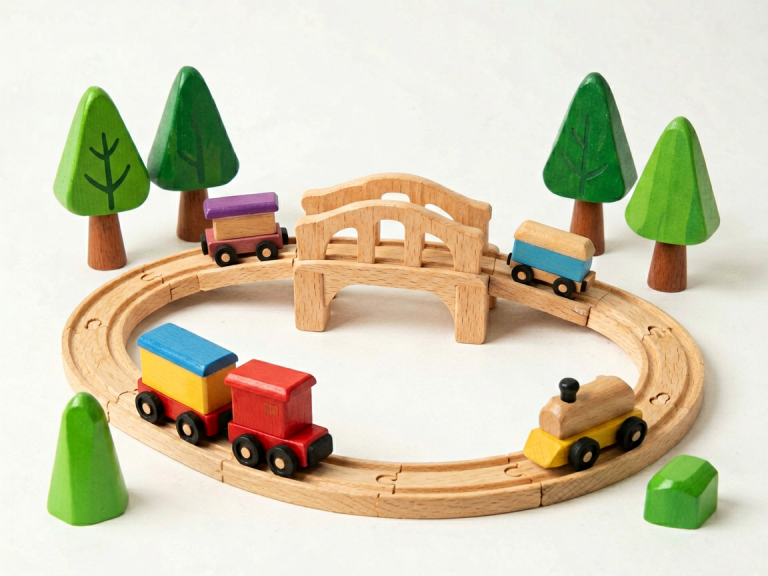
- A ball ramp or rolling toy track where you drop a ball and watch it cascade down.
Matching and Sorting Games
Simple picture cards (two identical sets) can be used for a memory game (start with just two pairs). Alternatively, a toy that asks the child to sort colored bears into matching bowls. This builds categorization skills, a foundation for math.
Pretend Play Props
At 18 months, imitation is a key cognitive skill. Toy telephones, plastic food, doctor kits (with soft, non-realistic instruments) allow your child to mimic adult actions. You can play along—dial the phone, take a bite of the toy apple, and say “yum!” This builds narrative thinking and social understanding.
—
Toys for Language and Communication: Talk, Listen, Connect
Your toddler’s vocabulary is exploding, and toys can be powerful speech facilitators.
Board Books with Real Photos
Choose sturdy board books featuring bright, real-life images of babies, animals, family members, and everyday objects (e.g., “Baby’s First Words” type books). Read together, point to pictures, and name them. Ask simple questions: “Where’s the dog?” Pause to give your child a turn to point or say a sound.
Interactive Sound Books
Books that play animal sounds, music, or spoken words when a button is pressed are very engaging. They reinforce cause and effect and expose your child to new vocabulary. Supervise use to prevent button mashing (which is also learning, but limit to short sessions).
Simple Hand Puppets
A soft hand puppet (like a puppy or bunny) can “talk” to your child. You can make the puppet ask questions, sing songs, or act out simple scenarios. This encourages back-and-forth communication and often elicits giggles and babbling in response.
Mirror Toys
A toddler-safe, unbreakable mirror (perhaps mounted low on a wall or part of a play center) helps your child recognize themselves and practice making faces. Talk about “baby in the mirror,” point to their nose, and play peek-a-boo with the reflection.
—
Toys for Social and Emotional Development: Empathy and Independence
As your child develops a sense of self, toys that nurture emotional understanding and social interaction are valuable.
Dolls and Stuffed Animals
A simple, soft doll with no hard parts (or a plush animal) encourages nurturing play. Your toddler may hug it, feed it pretend food, or put it to bed. This fosters empathy and emotional regulation. Choose a doll with simple features; avoid those with many accessories that can be lost or dangerous.
Toy Kitchen or Tool Bench
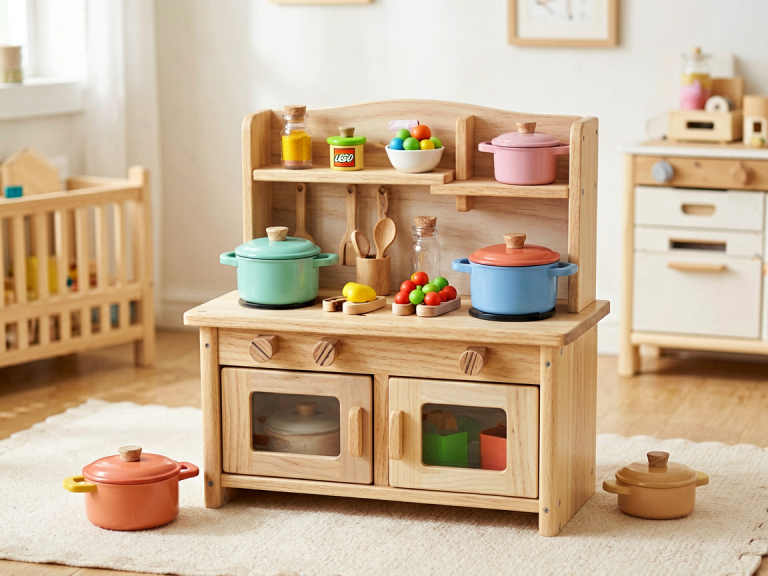
A small play kitchen (with a few pots, plastic fruits, and a spoon) lets your child imitate you. They will “cook” for you and serve imaginary meals. This cooperative play builds social skills and provides a safe outlet for exploring independence.
Musical Instruments for Group Play
Maracas, tambourines, and bells are perfect for making noise together. Sing along to a song and play together. This teaches turn-taking (you shake, then I shake) and group participation.
Duplo or Mega Bloks
These large, interlocking blocks are safer than standard LEGO (no choking hazard). Your child will likely just stack them or knock them down initially, but you can model building a tower together. This two-person activity encourages sharing and cooperation.
—
How to Choose the Right Toy: A Practical Guide
With so many options, how do you narrow down? Here is a decision-making framework:
- Observe your child’s current interests: Does your toddler love balls? Then invest in a variety of balls. Are they fascinated by closing and opening drawers? A shape sorter or latch board might thrill them. Pay attention to what captivates them in daily life.
- Prioritize open-ended toys: Toys that can be used in multiple ways (blocks, balls, cardboard boxes, play scarves) grow with the child. A cardboard box can become a car, a house, or a drum. Open-ended toys promote creativity and problem-solving.
- Consider the toy’s “longevity”: Will it still be interesting in three months? For example, a simple puzzle may be perfect now, but a more complex one with 4–6 pieces might be needed later. Look for toys with adjustable difficulty levels.
- Check reviews and real parent experiences: Online forums and parenting groups often share which toys are hits and which collect dust. Avoid buying every trendy product.
- Think about storage and cleanup: At 18 months, toddlers love dumping everything. Toys with many small parts (like hundreds of plastic beads) can be overwhelming and messy. For now, stick to sets with fewer pieces.
- Balance digital and analog: Avoid electronic tablets and screens for this age. The American Academy of Pediatrics discourages screen time for toddlers under 2 (except video calls). Instead, choose hands-on, sensory toys that require manipulation and physical interaction.
—
Toys to Avoid: What Not to Buy
As important as what to buy is what to skip. Here are categories of toys that can cause frustration, harm, or developmental delays:
- Toys with small, detachable parts: Beads that are less than 1.5 inches, doll shoes, or magnetic pieces that can be swallowed. Choking is the leading cause of toy-related injury for this age.
- Toys that make loud, jarring noises: Some battery-operated toys produce sounds at decibels that can damage hearing. If a toy sounds uncomfortably loud to you, it is too loud for your child. You can tape a piece of cardboard over the speaker to soften the sound.
- Toys with long strings or cords: Pull toys with strings longer than 12 inches can wrap around a child’s neck. Similarly, crib mobiles with hanging cords must be removed once the child can stand or sit.
- Toys that are too advanced: Attempting to introduce a puzzle with 20 pieces or a board game with complex rules will only lead to frustration. Your child will likely toss the pieces and walk away.
- Research “screen-based” learning toys: Some so-called “educational” tablets or talking books claim to teach letters and numbers. At 18 months, the best learning comes from real-world interaction with caregivers. A plastic toy that speaks for itself often reduces back-and-forth conversation.
- Battery-operated vehicles: While a battery-operated car that a child sits in and “drives” might look fun, it can be dangerous if the child cannot control the speed. Stick to manual push or ride-on toys.
—
Conclusion: Play Together, Grow Together
Selecting the perfect toy for your 18-month-old does not have to be a source of stress. Remember that the most important element of any toy is the interaction it facilitates between you and your child. A simple cardboard box, when you sit inside it and pretend to be on a spaceship, can be more valuable than the most expensive educational gadget. Your presence—your voice, your laughter, your patience—turns any object into a learning tool.
As you build a toy collection, rotate toys regularly to maintain novelty. Keep only a few available at a time and observe which ones spark the most engagement. Support your toddler’s efforts, celebrate their successes (even if the shape sorter piece goes in the wrong hole), and allow them to make mistakes.
Parenting an 18-month-old is a journey of constant discovery, for both you and your child. By choosing toys that align with their developmental needs and your family’s values, you are laying a strong foundation for curiosity, confidence, and joy. Now go out there, pick up a ball, stack a block, or read a book—and enjoy the beautiful mess of play.