The Essential Toy Guide for 18-Month-Olds: What Parents Should Buy to Foster Development
Introduction
The 18-month mark is a magical and transformative stage in a child’s life. Toddlers at this age are no longer passive infants; they are curious explorers, budding communicators, and determined little movers. They are mastering walking, testing language, and beginning to understand cause and effect. The toys they interact with during this critical window do more than entertain—they shape cognitive, motor, social, and emotional development. However, with an overwhelming array of products on the market, parents often struggle to distinguish between what is merely noisy and what is truly nourishing for their child’s growth. This article provides a comprehensive, research-backed guide to the toys that 18-month-olds genuinely benefit from. By focusing on safety, simplicity, and developmental appropriateness, parents can make informed choices that turn playtime into a powerful learning experience.
1. Toys That Support Gross Motor Skills: Encouraging Movement and Balance
At 18 months, most toddlers are walking independently, though some may still be unsteady. Many are starting to run, climb, and even kick a ball. Gross motor development is a top priority, as it builds strength, coordination, and confidence. Toys that promote these skills should be sturdy, low to the ground, and designed for active play.
- Push and Pull Toys: Classic pull-along animals or push carts are excellent. They encourage walking while providing a sense of purpose. Look for pull toys with a short string (no longer than 12 inches to avoid entanglement) and push toys with a wide base to prevent tipping. For example, a wooden bee that wobbles when pulled teaches cause and effect while refining balance.
- Ride-On Toys Without Pedals: A small, foot-powered ride-on car or a balance bike (or “push bike”) helps toddlers develop leg strength and steering skills. These toys are safer than tricycles at this age because children can touch the ground easily. They also build a sense of spatial awareness.
- Soft Climbing Blocks or Foam Play Mats: Simple foam blocks or low wooden stepping stones allow toddlers to practice stepping up, jumping off (with supervision), and navigating uneven surfaces. These toys support both motor planning and risk assessment.
Parents should avoid ride-on toys with batteries or motors. At 18 months, self-propelled movement is far more beneficial for developing core stability and proprioception.
2. Toys That Enhance Fine Motor Skills and Hand-Eye Coordination
Fine motor control is rapidly developing during the second year. Toddlers can now grasp small objects with a pincer grip, stack blocks, and turn pages. Toys that challenge these dexterity skills prepare the hands for future tasks like drawing, writing, and self-feeding.
- Large Wooden Shape Sorters: A classic shape sorter with chunky, wooden pieces is perfect. The child must rotate the shape to match the hole, which teaches spatial reasoning and problem-solving. Choose one with only three or four distinct shapes (circle, square, triangle) to avoid frustration.
- Stacking Rings or Nesting Cups: Simple stacking toys with graduated sizes help toddlers understand comparing sizes (big/little, taller/shorter). Nested cups can also be used for pouring water in the bath or sand at the beach, adding sensory benefits.
- Fat Crayons or Chubby Markers: Many parents overlook art supplies at this age, but offering non-toxic, washable crayons with a thick grip encourages mark-making. Toddlers won’t draw recognizable pictures yet, but the repetitive motion strengthens hand muscles and introduces cause and effect: “When I press, a line appears.”
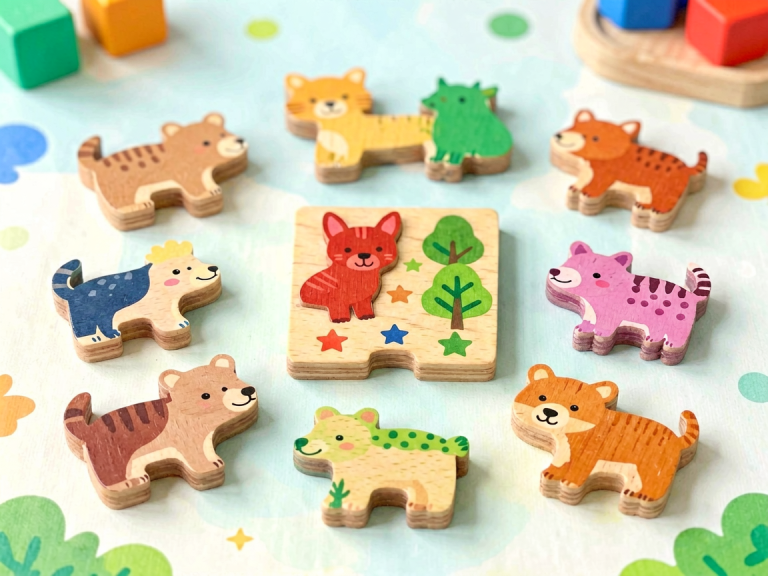
- Puzzles with Large Knobs: Single-piece puzzles (e.g., a wooden board with cutouts for a duck, a cow, a car) where each piece has a knob for easy grabbing help refine the precision of the thumb and index finger. They also introduce the concept of matching shapes and pictures.
Avoid toys with very small parts that could be swallowed. At 18 months, mouthing is still common. All items should be at least 1.25 inches in diameter to prevent choking hazards.
3. Sensory and Cause-and-Effect Toys: Fueling Curiosity and Learning
The 18-month-old brain is a sponge for sensory input. Toys that engage multiple senses—touch, sound, sight, and sometimes smell—help build neural connections. Equally important are toys that demonstrate cause and effect, a foundational cognitive concept.
- Sensory Balls and Textured Toys: Balls with bumps, ridges, soft spikes, or smooth surfaces offer varied tactile experiences. Rolling them, squeezing them, or even dropping them teaches the physics of movement and gravity. Some balls have bells inside for an auditory reward.
- Simple Musical Instruments: Wooden maracas, a small tambourine, or a rubber-headed drum let toddlers produce their own sounds. Unlike electronic toys that play pre-recorded songs, these instruments require action from the child to create a result, reinforcing agency and creativity.
- Pop-Up Pals or Surprise Boxes: Toys with buttons, levers, or switches that cause a character to pop up or a door to open are deeply satisfying. They teach that specific actions lead to predictable consequences, helping toddlers understand control over their environment. Choose ones with large, easy-to-press mechanisms.
- Water and Sand Play Sets: A small water table (or even a large plastic bin with water and floating toys) provides endless sensory learning. Pouring, scooping, and stirring involve fine motor work and basic scientific concepts like volume and flow. Always supervise water play closely.
Electronic toys with flashing lights and loud sounds are often overstimulating and limit the child’s role to passive observation. Instead, opt for toys where the child’s own action produces the sensory effect.
4. Language and Cognitive Development: Toys That Spark Communication
At 18 months, vocabulary typically explodes from about 10 words to 50 or more. Toddlers begin to understand simple commands and point to named pictures. The right toys can significantly accelerate language development by providing rich, repetitive opportunities for naming, describing, and interacting.
- Picture Books and Board Books: Soft or hard cover books with bright, realistic photographs of everyday objects (animals, foods, vehicles) are ideal. Interactive books with flaps, textures, or mirrors invite conversation. While reading together, parents can point and say “dog,” then wait for the child to attempt the word. Repetition builds neural pathways.
- Animal or Vehicle Figurines: A set of durable plastic or wooden animals allows for pretend play and labeling. The parent can model language: “The cow says moo. Where is the cow?” This kind of dialogue encourages the toddler to respond, even if only with a point or a grunt.
- Simple Play Telephones or Toy Phones: Even a classic rotary toy phone (without sound) encourages imitation of everyday conversations. Toddlers love to babble into the phone, practicing turn-taking and intonation. This is a prelude to real dialogue.
- Household Item Toy Sets: A mini broom, dustpan, or pretend spoon and bowl copies real-life activities. When the child “sweeps” or “cooks,” parents can narrate: “You are sweeping the floor. Good job!” This ties language to action, making words more meaningful.
Avoid passive toys like tablets or videos. The American Academy of Pediatrics recommends zero screen time for children under 18 months (except video chatting). Live, interactive play with an adult is far superior for language acquisition.
5. Social and Emotional Play: Toys That Teach Sharing and Self-Regulation
Although parallel play (playing alongside others) is typical at 18 months, toddlers are beginning to notice peers and experience emotions like frustration, joy, and jealousy. Toys that facilitate gentle social interaction and emotional expression are valuable.
- Soft Dolls or Stuffed Animals: A simple baby doll with a soft body and no hard parts allows the toddler to practice nurturing behaviors. Pretending to feed, rock, or put the doll to sleep imitates adult caregiving and helps children process their own feelings. This is early empathy training.
- Miniature People or Character Sets: A set of small, unbreakable people (e.g., a family of wooden peg dolls) can be used for simple role-play. The parent might say, “The daddy is tired. Let’s put him to bed.” This introduces emotional vocabulary and social scripts.
- Cooperative Games (Non-Competitive): At this age, games with rules are too advanced. However, a large ball that two toddlers can roll back and forth encourages turn-taking and shared attention. A set of large building blocks that two children can stack together (with adult guidance) teaches the basics of collaboration.
- Mirrors: A safe, shatterproof mirror mounted at toddler height is a surprisingly powerful toy. Watching their own expressions helps children develop self-recognition and emotional awareness. They might make faces, laugh, or imitate their own movements.
Avoid toys that encourage competition (like racing games or “first one to finish”) because 18-month-olds lack the cognitive ability to understand winning and losing, which can lead to tears and frustration.
6. Practical Considerations: Safety and Sustainability
When shopping for 18-month-olds, parents must prioritize safety and longevity. Check for certifications: look for ASTM (American Society for Testing and Materials) or EN71 (European safety standard) labels. Avoid toys with long cords, loose batteries, sharp edges, or toxic paints. Wooden toys are often a great choice because they are durable, natural, and non-toxic if unfinished or treated with water-based sealant.
Additionally, consider toys that grow with the child. A set of sturdy unit blocks, for example, can be used for simple stacking now and for complex structures at age three. A busy board with latches and zippers can challenge a toddler now but remain interesting as they learn to fasten buttons later.
Rotate toys regularly. At 18 months, a limited number of well-chosen toys (around 6–8) is better than an overwhelming quantity. When a toy is put away for a few weeks, it becomes fresh and exciting again, extending its learning value without additional cost.
Conclusion
Choosing toys for an 18-month-old is not about buying the most expensive or the trendiest items. It is about selecting tools that respect the child’s natural developmental trajectory—tools that invite movement, curiosity, communication, and connection. From the wobbling pull-toy that steadies a first step, to the chunky crayon that sparks a first scribble, each toy plays a role in building competence and confidence. By focusing on open-ended, simple, and sensory-rich options, parents can create a play environment that nurtures the whole child. The best toy is one that holds a child’s attention for more than a minute—not because it blinks or beeps, but because it responds to the child’s own action and imagination. In the end, the most important factor is not the toy itself, but the loving interaction that happens around it. So put down the phone, sit on the floor, and watch your 18-month-old discover the world through play—one toy at a time.