Beyond the Screen: The Best Alternatives to Learning Tablets for 1-Year-Olds
In an era where digital devices are marketed as essential tools for early childhood development, many well-intentioned parents find themselves wondering whether a learning tablet is the right investment for their one-year-old. The bright colors, interactive animations, and promises of accelerated cognitive growth are tempting. Yet pediatricians, child development specialists, and early childhood educators consistently warn against introducing screens to children under the age of two. The American Academy of Pediatrics recommends no screen time for children younger than 18 to 24 months, except for video chatting. Why? Because a one-year-old’s brain is wired to learn through real-world, hands-on, multi-sensory experiences—not through pixels and touchscreens. If you are looking for the best alternatives to learning tablets for your one-year-old, you are already on the right track. This article explores a rich array of developmentally appropriate, engaging, and research-backed substitutes that will nourish your child’s growing mind, body, and spirit—without a single battery.
Why Learning Tablets Fall Short for One-Year-Olds
Before diving into the alternatives, it is crucial to understand why learning tablets, despite their popularity, are not optimal for a twelve- to twenty-four-month-old child. At this age, neural connections are forming at a breathtaking rate—over one million new connections per second. The brain is most receptive to learning through direct interaction with people, objects, and the environment. A tablet screen provides a two-dimensional, passive experience that lacks the depth of real-world exploration. For example, when a baby touches a rough texture, hears the rustle of paper, or feels the weight of a wooden block, multiple sensory pathways are activated simultaneously. A tablet can simulate a sound or an image, but it cannot replicate the tactile feedback, the spatial awareness, or the cause-and-effect learning that occurs when a child physically interacts with an object. Moreover, excessive screen time at this age has been linked to delayed language development, reduced attention span, and even sleep disturbances. The alternatives we propose are not just “less bad” than tablets—they are actively better.
Sensory Play: The Foundation of Cognitive Growth
One of the most powerful alternatives to a learning tablet is simple, unstructured sensory play. For a one-year-old, the world is a symphony of textures, sounds, smells, and tastes. Sensory bins filled with safe, non-toxic materials offer endless opportunities for discovery. Fill a shallow plastic tub with dry rice, oatmeal, or cooked spaghetti (cooled to safe temperature). Add scoops, small cups, and a few large, child-safe spoons. Let your child dig, pour, squish, and explore. This type of play strengthens fine motor skills, hand-eye coordination, and problem-solving abilities far more effectively than any app. Water play is another sensational alternative. During bath time, provide cups, strainers, and floating toys. On a warm day, set up a small basin of water outdoors with a waterproof apron. The sensory input from water—its temperature, movement, and splash—teaches physics concepts like volume, displacement, and flow in a way a screen never could. Even messy play with edible finger paints (yogurt mixed with natural food coloring) encourages creativity and sensory integration. Remember, the goal is not to “teach” in the traditional sense, but to allow the child to lead their own exploration.
Books: The Original Interactive Learning Device
Long before tablets, there were books—and they remain one of the most effective tools for language acquisition, bonding, and cognitive development. For a one-year-old, board books with bright, high-contrast images, simple text, and tactile elements are ideal. Look for books with flaps to lift, textures to feel (fuzzy animals, bumpy trucks), and mirrors to peek into. Reading together should be a cozy, interactive ritual. Point to pictures, name objects, make animal sounds, and let your baby turn the pages (even if they chew on them). This back-and-forth interaction, known as “serve and return,” is essential for building language pathways in the brain. Unlike a tablet, a book does not compete for your child’s attention—it invites shared focus. Furthermore, the physical act of holding a book, feeling the weight, and turning pages develops fine motor control and a sense of accomplishment. To maximize the benefit, create a small, accessible bookshelf at your child’s eye level. Rotate books weekly to maintain novelty. You can also introduce cloth books, bath books, and even “indestructible” books made of tear-resistant material. Each reading session is a mini lesson in narrative structure, vocabulary, and emotional connection—lessons no algorithm can replicate.
Musical Exploration: Rhythm, Rhythm, and More Rhythm
Music is a universal language that speaks directly to a baby’s developing brain. Instead of a tablet with a music app, offer real, child-safe musical instruments. A simple wooden shaker, a small drum, a set of jingle bells, or a plastic maraca can provide hours of auditory and kinesthetic joy. Let your one-year-old bang, shake, and explore sounds. Sit with them and create simple rhythms—tap your knees, clap your hands, and encourage imitation. This builds auditory discrimination, timing, and memory. Singing nursery rhymes and lullabies is equally powerful. When you sing to your child, they are not just hearing words; they are learning about pitch, melody, and emotional tone. The interactive nature of songs like “Itsy Bitsy Spider” or “Row, Row, Row Your Boat” (with hand motions) combines language, movement, and social connection. Additionally, you can create a “sound basket” filled with everyday objects that make interesting noises: a metal whisk, a wooden spoon on a pot, crinkly paper, a rainstick. Allow your child to experiment freely. The open-ended nature of musical exploration encourages creativity and problem-solving, as the child learns that different actions produce different sounds. This is far more engaging than a pre-programmed tablet song.
Gross Motor Activities: Building Strong Bodies and Brains
A one-year-old is naturally driven to move. Crawling, cruising, walking, climbing—each milestone is a triumph of brain-body coordination. Learning tablets, which require a child to sit still and focus on a small screen, actively counteract this essential physical development. Instead, create a safe, stimulating environment that encourages movement. Set up a low climbing cushion or a soft play mat with ramps and tunnels. Provide push toys like a sturdy wooden cart or a baby stroller that your child can load with blocks and push around the room. Obstacle courses made from pillows, cardboard boxes, and blankets challenge balance and spatial awareness. Outdoor time is non-negotiable. A grassy slope to tumble down, a sandbox to dig in, or a simple walk where your child can stop to examine a leaf or a pebble are all rich learning experiences. These activities strengthen large muscle groups, improve vestibular (balance) and proprioceptive (body awareness) systems, and release endorphins that boost mood. Moreover, physical play often involves social interaction—chasing a parent, playing peek-a-boo around a tree, or sharing a toy with a sibling. These moments teach empathy, turn-taking, and emotional regulation in ways no screen can.
Building and Construction: The Original STEM Toy
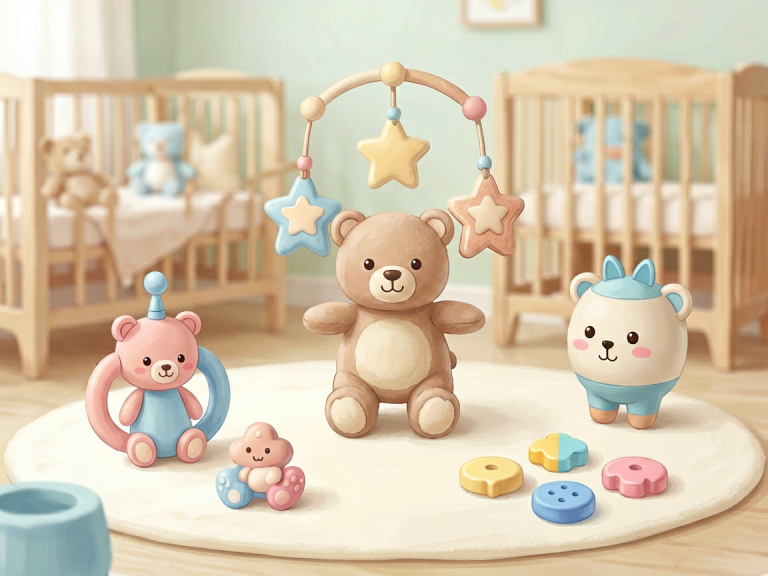
Stacking blocks, nesting cups, and shape sorters are classic toys for a reason. They offer precise, hands-on lessons in geometry, gravity, cause and effect, and problem-solving. A one-year-old can spend twenty minutes (an eternity in toddler time) trying to fit a square peg into a square hole. When they succeed, they experience a genuine sense of mastery—far more rewarding than the instant gratification of a tablet app. Wooden blocks of various sizes and colors encourage creativity: a tower becomes a castle, then knocks down with a satisfying crash. This “destructive” play is actually constructive learning about stability and force. Magnetic tiles (with adult supervision for safety) allow even very young children to build simple structures that snap together magnetically. Unlike a screen, these materials provide immediate physical feedback. The block feels heavy; the tower wobbles; the magnet clicks. Each interaction teaches a lesson that is encoded in the child’s body as well as their mind. To enhance the experience, join your child on the floor. Narrate what you see: “You put the red block on top. Now it’s tall! Oh, it fell. Let’s try again.” This language-rich interaction supports vocabulary growth and emotional resilience.
Practical Life Activities: Learning Through Real Work
One of the most overlooked alternatives to learning tablets is giving a one-year-old the opportunity to participate in everyday household tasks. Children at this age are desperate to imitate adults and feel a sense of contribution. Provide safe, child-sized tools: a small dustpan and brush, a soft cloth for wiping surfaces, a wooden spoon for stirring a bowl of water. Allow your child to “help” with simple tasks like putting laundry into the basket, handing you vegetables at the grocery store (from the safety of the cart), or watering a houseplant with a small spray bottle. These activities are rich in learning: fine motor control, sequencing, responsibility, and language (naming objects and actions). Moreover, they build confidence and a sense of purpose. When a child wipes a table and sees the clean surface, or places a spoon in the drawer and hears it clink, they experience a direct cause-and-effect outcome that is more meaningful than any digital reward system. These moments also strengthen the parent-child bond through collaborative, joyful interaction. Instead of handing your child a tablet to keep them occupied, invite them into your world. You might be surprised at how engaged and capable they are.
Nature Play: The Ultimate Open-Ended Classroom
Nothing—not the most expensive tablet—can compare to the richness of nature. A one-year-old’s senses are fully engaged when they are outdoors. The feel of grass under bare feet, the sight of clouds moving, the sound of birds, the smell of rain-soaked earth. Take your child to a park, a garden, or even your own backyard. Let them touch safe plants (avoid toxic ones), collect sticks and pinecones, watch ants march, or splash in a puddle. These experiences are not merely pleasant; they are essential for developing attention, calmness, and a sense of wonder. Nature provides unpredictable, ever-changing stimuli that demand active attention—unlike the predictable, algorithm-driven content of a tablet. A simple walk can become a treasure hunt: “Can you find a yellow leaf? A feather? A round stone?” This kind of guided exploration builds observation skills and vocabulary. Even just lying on a blanket and watching the trees sway in the wind can be a profound learning experience for a one-year-old, helping them understand the world’s rhythms and patterns.
Social Interaction: The Irreplaceable Human Element
Finally, the most important alternative to any device is the presence of a loving, attentive caregiver. One-year-olds learn best when they are engaged in back-and-forth communication with a real person. Face-to-face interaction—making eye contact, smiling, mirroring expressions, responding to babble—is the foundation of emotional intelligence and language development. Play peek-a-boo, make funny faces, blow bubbles together, or simply sit facing each other and “chat” even if the words are nonsense. These interactions teach turn-taking, empathy, and the joy of connection. Playdates with other toddlers, even if they engage in parallel play, expose the child to social cues and shared experiences. Also, don’t underestimate the power of simply being held and talked to during daily routines—diaper changes, meals, and bedtime. Your voice, your touch, your attention are the most potent learning tools your child will ever have. A tablet can never replicate the warmth of a hug or the comfort of a familiar lullaby.
Conclusion: The Screen-Free Path to Thriving Development
Choosing the best alternatives to learning tablets for a one-year-old is not about deprivation; it is about abundance. Instead of a single, passive device, you are offering a world of sensory richness, physical challenge, creative expression, and genuine human connection. Sensory bins, books, musical instruments, gross motor play, building toys, practical life activities, nature exploration, and above all, your loving presence—these are the tools that truly build a strong foundation for learning. They develop the whole child: cognitive, physical, social, and emotional. They respect a one-year-old’s natural developmental timeline, which prioritizes movement, touch, and relationship over digital stimulation. As your child grows, they will have plenty of time for screens. But in these precious early months and years, give them the gift of real, three-dimensional, hands-on discovery. That is a learning experience no tablet—no matter how advanced—can ever match.