Dolls vs. Plush Toys for Preschoolers: A Comparative Exploration of Developmental Impact
Introduction
The preschool years, typically defined as ages three to five, are a critical period for emotional, social, cognitive, and physical development. During this stage, children engage in a tremendous amount of play, which is not merely a pastime but a fundamental vehicle for learning. Among the vast array of toys available, dolls and plush toys (stuffed animals) stand out as two of the most beloved and enduring categories. Both are soft, cuddly, and often anthropomorphized, yet they serve distinct psychological and developmental functions. While a parent might see a teddy bear and a baby doll as interchangeable, research in early childhood development and play therapy reveals nuanced differences. This article aims to provide a detailed, evidence-based comparison of dolls and plush toys for preschoolers, examining how each influences emotional maturity, imaginative play, social skills, gender identity, and safety. Understanding these distinctions can help caregivers, educators, and toy manufacturers make more informed choices that support a child’s holistic growth.
Emotional Development and Comfort
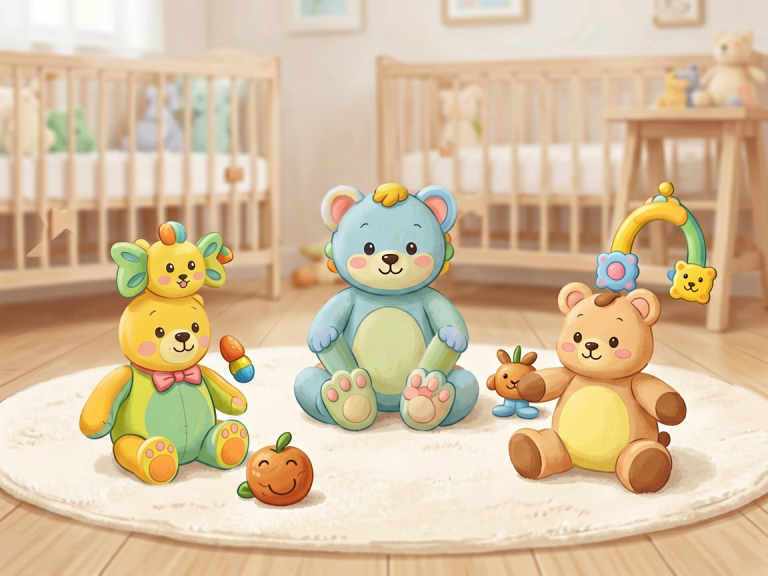
One of the most profound roles of soft toys in early childhood is providing emotional security. Both dolls and plush toys frequently serve as “transitional objects,” a concept introduced by pediatrician Donald Winnicott. A transitional object helps a child bridge the gap between the secure, familiar world of the mother and the unfamiliar external environment. Plush toys, especially those with soft fur, rounded shapes, and no hard edges, excel in this role. A plush bear or bunny can be hugged, squeezed, and carried everywhere, absorbing a child’s tears and offering silent companionship during moments of stress, such as the first day of preschool or a thunderstorm. Their neutrality—they do not have a fixed expression or posture—allows the child to project any emotion onto them. A teddy can be sad, angry, or sleepy depending on the child’s inner state, making plush toys incredibly versatile emotional sponges.
Dolls, on the other hand, often have more defined facial features, arms, and legs, and sometimes come with posable joints. While dolls can also serve as comfort objects, they tend to invite a different kind of emotional engagement. A doll’s human-like face encourages a child to engage in reciprocal caregiving. For example, a preschooler might feed a doll, put it to bed, or scold it for crying. This “nurturing” play is essential for developing empathy and emotional regulation. Dolls help children practice social scripts about comfort, anger, and reconciliation. However, because dolls are more explicitly human, they may feel less universally comforting than a soft, shapeless plush creature. A child who is distressed may prefer the tactile simplicity of a plush toy that does not demand a particular form of interaction. In clinical settings, plush toys are often used in trauma therapy precisely because they are non-directive, while dolls are used in role-play therapy to explore specific interpersonal scenarios.
Cognitive and Imaginative Play
Imaginative play is the engine of cognitive development in preschoolers. Both dolls and plush toys fuel this engine, but they steer it in different directions. Plush toys, due to their animal or fantasy shapes, often inspire narratives rooted in nature, adventure, and magic. A plush lion might be the king of the living room jungle; a plush unicorn can fly to a castle of clouds. This type of play tends to be more open-ended and abstract. The child must invent the entire backstory and rules, which strengthens divergent thinking and creativity. For instance, a child using a plush puppy might have to decide whether the puppy is a real dog that can talk, or a stuffed animal that comes to life only at night. Such ambiguity requires higher-order cognitive flexibility.
Dolls, particularly baby dolls or fashion dolls, lean toward realist, domestic, or social scenarios. A preschooler with a doll is likely to imitate adult behaviors: cooking, cleaning, putting the doll in a stroller, or taking it to a pretend doctor. This form of play is crucial for developing schemas about everyday life, sequencing (first you change the diaper, then you feed the baby), and cause-and-effect reasoning (the doll cries because it is hungry). Doll play also often involves language more directly. Children tend to speak to dolls in the first or second person, practicing dialogue, tone, and vocabulary. A child may say, “Are you hungry? Let me get you some milk,” which is a richer verbal interaction than the typical monosyllabic comforting sounds offered to a plush toy. Research from the University of Cambridge (2018) found that doll play, compared to other toys, activates brain regions associated with social processing and theory of mind—the ability to understand others’ mental states. This is a direct benefit for preschoolers learning to navigate peer relationships.
Social Skills and Gender Roles
The debate around dolls and plush toys often intersects with gender socialization. Traditionally, dolls have been marketed more to girls and plush animals to both genders, but with strong gendered variations (e.g., fierce animal plushies for boys, cute kittens for girls). For preschoolers, however, both toys offer opportunities to break or reinforce stereotypes. Dolls, especially those with diverse skin tones, body types, and disabilities, can help children develop inclusive attitudes. A boy who plays with a baby doll learns caregiving and fatherhood roles, which counters rigid masculinity. Conversely, a girl who builds a castle for her plush dragon learns about strength and adventure. The key is the quality of play, not the toy itself. Studies show that children often assign gender roles to their toys based on cultural cues, but guided play with cross-gender toys can reduce prejudice.
In terms of social interaction, dolls are particularly effective for collaborative play. Two children playing with dolls can negotiate who plays the mother, the child, or the doctor. This requires sharing, turn-taking, and conflict resolution. Plush toys, being more individualistic, sometimes encourage parallel play—two children each playing separately with their own stuffed animals. However, plush toys can also be used in group games, such as a teddy bear picnic, which requires cooperation to set up the scene. Ultimately, dolls tend to provoke more direct role plays involving human relationships, while plush toys support fantasy worlds that can be either solitary or shared. For a preschooler who struggles with social cues, a plush toy might be a less intimidating first step toward interactive play, as it can be held close without the demand of verbal exchange.
Safety and Practicality
From a safety standpoint, plush toys generally have an advantage for very young preschoolers (ages 3–4). They are softer, have no hard plastic parts, and fewer small components that could be choking hazards. However, not all plush toys are created equal; those with glued-on eyes, buttons, or loose fur can be dangerous. The American Academy of Pediatrics recommends that all soft toys for young children should have embroidered features and no removable parts. Dolls, especially those with plastic limbs, hair, or accessories like shoes and pacifiers, present more potential risks. A doll’s arm can break off, or a small shoe can be swallowed. For a preschooler who still puts objects in their mouth (a common behavior at age three), plush toys are safer.
On the practical side, plush toys are easier to clean? Many can be machine-washed, while dolls with plastic heads often cannot. Dolls with hair (especially rooted hair) can become tangled, sticky, and difficult to maintain. For parents, this might influence choice: a plush toy that survives frequent washing may be preferred for a child who sleeps with it every night. Yet dolls have the advantage of durability in other ways; a hard plastic doll can withstand being dropped, thrown, or stepped on without losing shape, whereas a plush toy may become lumpy or develop bald patches.
Educational Value and Milestone Support
Both toys are powerful educational tools, but they target different domains. Plush toys excel in sensory learning. Their varied textures—furry, smooth, ribbed—stimulate tactile exploration, which is important for neural development. Many plush toys are also used in early childhood classrooms to teach animal names, sounds, and habitats. For example, a set of plush farm animals can help a preschooler learn about cows, pigs, and sheep, and then practice counting them. Plush toys also support physical development; a child must use fine motor skills to hug, squeeze, and manipulate them, and gross motor skills to carry heavy ones.
Dolls are exceptionally strong for fostering self-help and daily living skills. Dressing a doll with buttons, zippers, or snaps helps a preschooler practice fine motor coordination that translates directly to dressing themselves. Bottle-feeding a doll uses hand-eye coordination. Dolls can also be used to teach body parts, emotions, and routines. A parent can say, “Let’s brush the doll’s teeth” to encourage the child to brush their own. Potty-training dolls, which can “drink” and then “wet,” are designed specifically for this purpose. For preschoolers with developmental delays, therapists often use dolls to model appropriate social behaviors.
Conclusion
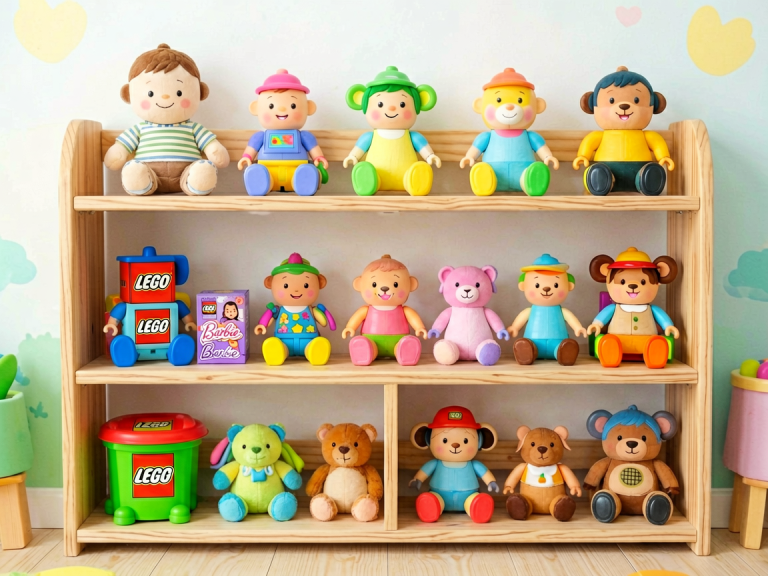
In the dolls-versus-plush-toys debate, there is no universal winner. Each serves a unique and complementary role in the preschooler’s world. Plush toys are the gentle guardians of emotional comfort, the launchpads for fantasy adventures, and the safest tactile companions for the youngest children. Dolls are the mirrors of human relationships, the coaches of empathy and language, and the hands-on teachers of real-world routines. The ideal playroom for a preschooler includes both. A child who is upset may reach for a plush bunny; that same child may later feed a doll pretend soup. Together, these toys help the child navigate the complex journey from toddlerhood to school age. Caregivers should not see them as rivals but as partners in development. The best approach is to observe the child’s individual temperament and needs, offer a variety of both types, and encourage free, unstructured play without imposing gender stereotypes. In doing so, we allow the doll and the plush toy to do what they do best: spark the imagination, heal the heart, and prepare the mind for the challenges of a wider world.