Beyond the Screen: The Best Alternatives to Learning Tablets for Educational Success
In recent years, learning tablets have become a staple in classrooms and homes, promising interactive lessons, gamified quizzes, and instant access to a universe of information. Yet as parents, educators, and researchers examine the long-term effects of screen time on young minds, a growing number are questioning whether these shiny devices are truly the most effective tools for learning. The reality is that tablets can be distracting, isolate children from hands-on experiences, and even hinder the development of critical thinking and motor skills. Fortunately, there are powerful alternatives that nurture deep learning, creativity, and social interaction without the pitfalls of digital dependency. This article explores the best substitutes for learning tablets, each backed by educational theory and practical results.
—
1. Traditional Books and Physical Libraries
There is perhaps no more timeless alternative to a learning tablet than the printed book. Unlike a screen that bombards the brain with notifications and hyperlinks, a physical book offers a linear, focused reading experience. When a child holds a book, turns its pages, and runs a finger along the text, they engage multiple senses—touch, sight, and even smell—which strengthens memory retention and comprehension. Research consistently shows that reading from paper leads to better deep reading and information recall compared to reading from a backlit display.
Moreover, physical libraries provide a rich, immersive environment that no tablet can replicate. The act of browsing shelves, selecting a book by its cover, and discovering an unexpected topic fosters curiosity and autonomy. Libraries also offer storytimes, book clubs, and reading challenges that build social skills and a love for learning. For young children, board books with textures, flaps, and pop-ups develop fine motor skills and spatial awareness. For older students, reference books, atlases, and encyclopedias encourage systematic exploration without the temptation of switching to a video game or social media. In an age of digital overload, returning to the printed page is not a step backward—it is a leap toward sustained attention and intellectual depth.
—
2. Building Blocks, Puzzles, and Construction Toys
Learning tablets often claim to teach logic and problem-solving through apps, but nothing compares to the tactile, open-ended challenges presented by physical construction toys. Products like LEGO bricks, magnetic tiles, wooden blocks, and 3D puzzles require children to manipulate objects, test hypotheses, and persevere through failure—all in the real world. These activities engage the prefrontal cortex, the part of the brain responsible for planning, decision-making, and impulse control, in ways that screen-based games cannot.
For instance, when a child builds a tower from wooden blocks, they must consider balance, weight distribution, and gravity. When they connect magnetic tiles to form a geometric structure, they internalize principles of symmetry and engineering. Unlike tablet apps that often provide instant rewards and hints, physical building toys demand trial and error, patience, and creative thinking. This process strengthens neural pathways and builds resilience. Furthermore, these toys are inherently social: two children working together to construct a castle learn negotiation, cooperation, and communication—skills that a solitary tablet experience cannot teach. For families looking for a screen-free learning alternative, a simple set of wooden blocks or a box of LEGO is an investment in cognitive and emotional development.
—
3. Science Experiment Kits and Hands-On STEM Activities
One of the biggest drawbacks of learning tablets is that they simulate experiences rather than providing real ones. A child can watch a video about chemical reactions or use an app to mix virtual liquids, but they miss the thrill of actually seeing baking soda fizz when vinegar is added, or feeling the heat of a small exothermic reaction. Hands-on science experiment kits—such as crystal-growing sets, simple circuit boards, microscopes, and chemistry lab sets—offer authentic discovery that ignites a lifelong passion for science.
These kits do more than demonstrate facts; they teach the scientific method. A child hypothesizes, tests, observes, and refines. If an experiment fails, they learn that failure is part of discovery—a lesson that is often sanitized in digital simulations. Moreover, many STEM kits are designed to be modular and reusable. For example, a robotics kit allows a child to build a moving vehicle, program its behavior, and then rebuild it in a different configuration. This iterative process develops computational thinking and engineering intuition far more effectively than tapping on a screen.
Parents can also supplement these kits with everyday household items—measuring cups, magnets, seeds for growing plants, or simple tools for building a birdhouse. Such activities not only teach STEM concepts but also foster manual dexterity and a sense of accomplishment. For children who struggle with attention, the tangible results of a hands-on project can be far more motivating than the ephemeral points and badges offered by learning apps.
—
4. Board Games and Educational Card Games
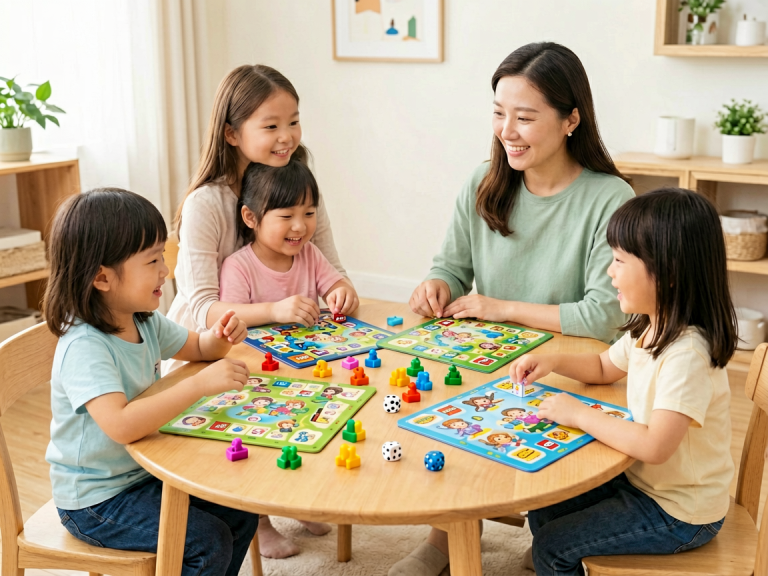
In the quest for alternatives to learning tablets, board games are an underestimated powerhouse. Many modern board games are specifically designed to teach reading, arithmetic, strategy, and vocabulary in a context that is social and engaging. For example, games like *Scrabble* or *Bananagrams* build spelling and word recognition; *Settlers of Catan* teaches resource management and negotiation; *Math Dice* and *Sum Swamp* make arithmetic playful; and *Codenames* or *Dixit* encourage creative thinking and communication.
Unlike a tablet, which isolates the learner, a board game brings people together around a table. Players take turns, follow rules, handle defeat gracefully, and celebrate others’ success—essential life skills that no app can impart. Additionally, many board games require critical reading of instructions, which improves literacy. Younger children benefit from games that involve matching, sequencing, and pattern recognition, all while developing social and emotional intelligence.
The physical components of board games—cards, tokens, dice, and boards—also provide sensory feedback that reinforces learning. Rolling a die and counting the dots, moving a piece along a path, or arranging cards in a sequence are concrete actions that help internalize abstract concepts. For families seeking an alternative that promotes family bonding, laughter, and genuine educational growth, a well-chosen board game is a superior choice to any learning tablet.
—
5. Art Supplies, Musical Instruments, and Creative Outlets
Learning tablets often emphasize academic drills at the expense of creative expression. Yet creativity is a foundational skill for innovation, emotional well-being, and problem-solving. Instead of a drawing app, give a child real paint, brushes, and paper. Instead of a virtual piano, offer a small keyboard, a ukulele, or a simple recorder. Art and music stimulate the brain in ways that digital tools cannot duplicate.
When children paint, they experiment with color mixing, brush strokes, and texture. When they play an instrument, they develop hand-eye coordination, auditory discrimination, and discipline. These activities also provide an outlet for emotions that might otherwise be suppressed or expressed through screen addiction. A child who learns to express anger through a drumbeat or joy through a watercolor painting gains self-regulation skills that no app can teach.
Furthermore, creative materials are open-ended—they allow for infinite exploration. A box of crayons, a lump of clay, or a set of beads for jewelry-making can occupy a child for hours, fostering patience and self-directed learning. Unlike a tablet that suggests what to create next, real art supplies leave the initiative entirely with the child. This autonomy builds confidence and a sense of ownership over learning.
—
6. Nature Exploration and Outdoor Learning Kits
Perhaps the most overlooked alternative to learning tablets is the natural world itself. A child who spends time outdoors—identifying insects, collecting leaves, tracing cloud shapes, or building a fort—is engaging in authentic, multisensory learning that far surpasses any nature app. Outdoor exploration develops observation skills, scientific curiosity, and physical fitness. It also reduces stress and improves attention, a phenomenon known as "nature-deficit disorder" recovery.
Parents can enhance outdoor learning with simple tools: a magnifying glass for examining bark and bugs, a compass for navigation, a field guide for identifying birds or flowers, or a simple notebook for sketching observations. These tools teach children to notice details, ask questions, and record data—all fundamental scientific practices. Nature also offers inherent unpredictability: a sudden rain shower, a squirrel’s mischief, or a changing season provides spontaneous lessons in biology, meteorology, and ecology.
For urban families, even a small balcony garden or a window box with herbs can offer similar benefits. Planting seeds, watering, and watching them grow teaches patience, responsibility, and the cycle of life. Unlike a tablet’s glossy simulations, real nature provides real consequences and rewards. It is, without question, one of the most powerful and accessible learning environments available.
—
7. Interactive Whiteboards and Low-Tech Classroom Tools
For formal educational settings, learning tablets are often used as inexpensive alternatives to interactive whiteboards or projectors. However, a large-format whiteboard or chalkboard—paired with colorful markers, magnets, and manipulative objects—can be far more effective for group instruction. Teachers can draw diagrams, write equations, and invite students to the board to solve problems physically. This collaborative, kinesthetic approach engages the whole class and allows for real-time feedback.
Similarly, low-tech tools like flash cards, abacuses, fraction circles, and felt boards offer hands-on learning without the distractions of a screen. These resources are often cheaper, more durable, and easier to modify than digital apps. They also require no batteries, updates, or internet connection—making them reliable in any environment. For teachers and parents who want to integrate technology thoughtfully, a simple document camera that projects paper worksheets onto a screen can be a middle ground, but the core activity remains physical and interactive.
—
Conclusion: Choosing Real Engagement Over Digital Distraction
The best alternatives to learning tablets are not more advanced gadgets, but tools that reconnect children with the physical world, with each other, and with their own innate curiosity. Books, building toys, science kits, board games, art supplies, nature exploration, and low-tech classroom tools all provide deep, meaningful learning experiences that tablets often promise but rarely deliver. They require patience, creativity, and real human interaction—qualities that are increasingly precious in a digital age.
Of course, this is not to say that learning tablets have no value. For children with specific learning disabilities, or for quick access to reference materials, they can be useful supplements. But as a primary educational tool, they fall short. The most effective learning happens when a child is an active participant, not a passive consumer. By turning away from screens and toward these rich, tangible alternatives, we give our children the greatest educational gift of all: the chance to learn through doing, failing, creating, and connecting. And that is a lesson no tablet can teach.