Unpacking the Hypothesis: Are Science Kits Good for Problem Solving?
Introduction: The Promise of Hands-On Learning
In recent years, science kits—pre-packaged boxes containing materials, instructions, and guided experiments—have flooded the educational market. From chemistry sets that let children grow crystals to robotics kits that teach basic coding, these products promise to make science accessible, fun, and educational. But beneath the colorful packaging and enthusiastic marketing lies a critical question: Are science kits genuinely effective at developing problem-solving skills, or do they merely offer a scripted form of entertainment? This essay explores the cognitive, pedagogical, and practical dimensions of science kits, examining both their potential and their limitations in fostering the kind of adaptive, creative problem solving that educators and employers increasingly value.
1. The Mechanics of Problem Solving: What Does “Good” Mean?
Before evaluating science kits, we must define what “good for problem solving” entails. Problem solving is not a monolithic skill; it encompasses several sub-competencies: identifying a problem, generating hypotheses, designing experiments, analyzing data, troubleshooting failures, and iterating solutions. Effective problem solvers are also comfortable with ambiguity, tolerate frustration, and can transfer strategies from one domain to another. A truly “good” tool for problem solving should therefore encourage open-ended exploration, require active cognitive engagement, and provide opportunities for learning from mistakes.
Traditional science kits often fall into two categories: “recipe-based” kits that guide users step-by-step to a predetermined outcome, and “open-ended” kits that supply components but leave the design and goal largely to the user. The difference is crucial. A crystal-growing kit that tells you exactly how much water to add and how long to wait may teach patience and following instructions, but it offers little room for genuine problem solving. In contrast, a kit that provides a handful of LEDs, resistors, and a breadboard, and asks you to create a circuit that blinks in a specific pattern, demands hypothesis testing, debugging, and creative reconfiguration.
2. The Case for Science Kits: Structured Scaffolding
One of the strongest arguments in favor of science kits is that they lower the barrier to entry. For a child or a novice adult, the blank slate of “solve this problem” can be paralyzing. A well-designed science kit provides just enough scaffolding to transform an overwhelming challenge into a manageable puzzle. This aligns with Vygotsky’s concept of the Zone of Proximal Development: learning is most effective when tasks are slightly beyond one’s current ability but are supported by tools or guidance. Kits that include clear instructions, labeled parts, and background explanations can help learners understand the underlying principles before they attempt to modify or extend the experiment.
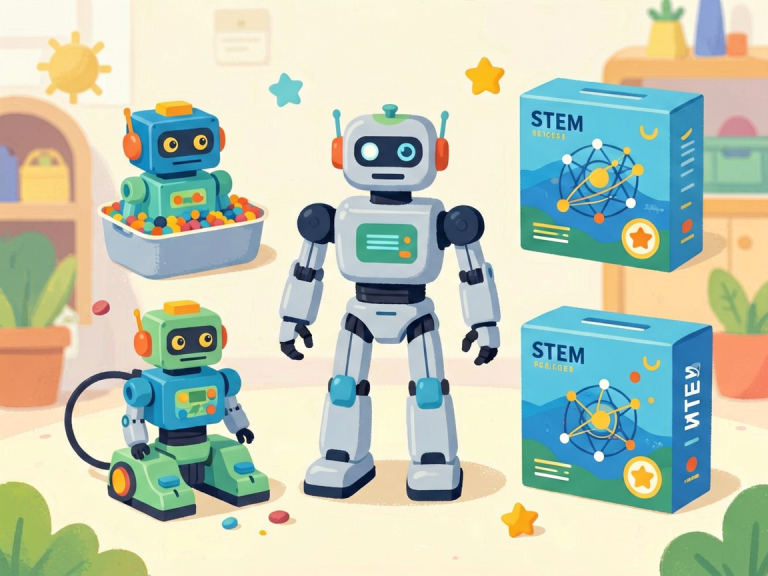
Moreover, science kits often simulate real-world problem-solving cycles. Take a typical robotics kit: the user assembles a motor, attaches sensors, and then writes a simple program. If the robot does not move as expected, the user must isolate the problem—is it a wiring issue? A code bug? A mechanical obstruction? This troubleshooting process is a microcosm of scientific inquiry. In controlled studies, children who used hands-on science kits showed improved ability to formulate hypotheses and identify variables compared to those who only received textbook instruction (e.g., Kirschner et al., 2006, though the debate on minimal guidance remains active).
Another benefit is the immediate feedback loop. In a school setting, students might have to wait days or weeks for a teacher to grade a lab report. With a science kit, the outcome is instantaneous: the volcano erupts or it doesn’t; the circuit lights up or remains dark. This rapid feedback encourages iterative thinking. The learner can quickly see the consequences of their actions, adjust their approach, and try again—a core component of effective problem solving.
3. The Counterargument: Scripted Kits as Cognitive Crutches
Despite these advantages, many science kits are designed for entertainment rather than education. The market is saturated with “instant gratification” kits that produce impressive results with minimal effort—think of a model volcano that fizzes with pre-measured vinegar and baking soda, or a slime-making kit that simply requires mixing two pre-formulated liquids. These kits often have a single correct path, and any deviation leads to failure without explanation. In such cases, the learner engages in procedural reproduction, not problem solving. The cognitive load is low because the kit does the thinking; the user is merely a pair of hands.
Worse, some kits discourage curiosity. When a child asks, “What happens if I add more baking soda?” the kit’s instructions may not address that, and the child may fear “breaking” the experiment. The very structure of a pre-packaged kit can inadvertently signal that science is about following rules rather than asking questions. As educational researcher Mitchel Resnick of the MIT Media Lab has argued, the best learning tools are those that encourage “creative thinking, not just following instructions.” A kit that provides only a single recipe is akin to a paint-by-numbers set: it might produce a pretty picture, but it does not teach one how to paint.
Furthermore, science kits often isolate the problem-solving experience from the messy reality of real scientific work. Real-world problems rarely have a materials list or a step-by-step guide. A scientist must define the problem, seek resources, adapt to unexpected constraints, and collaborate with others. A kit that supplies everything—including the answer—may inadvertently teach learners that problems come with pre-packaged solutions, a dangerous misconception in an era defined by complex, ill-structured challenges.
4. Balancing Structure and Freedom: What Makes a Kit “Good”?
To answer whether science kits are good for problem solving, we must shift from a binary yes/no to a contextual evaluation. Some kits are excellent; others are detrimental. The key differentiators are the degree of open-endedness, the quality of the scaffolding, and the presence of metacognitive prompts.
4.1 Open-Endedness
The most effective kits are those that provide a “low-floor, high-ceiling” experience. For example, Snap Circuits allow users to build hundreds of different circuits by snapping components together on a grid. The initial projects are simple (a light bulb, a fan), but advanced users can create combination circuits, add sensors, or even program microcontrollers if the kit includes that capability. This open-endedness forces users to engage in genuine problem solving: they must decide which components to use, predict how changes will affect the circuit, and troubleshoot when the circuit fails. Similarly, many robotics kits like LEGO Mindstorms or VEX offer programmable bricks and a variety of sensors; users must design a solution to a specific challenge (e.g., “make the robot follow a black line”). This is fundamentally different from assembling a pre-designed model.
4.2 Scaffolding That Fades
Good kits do not simply dump instructions on the user; they teach problem-solving strategies. For instance, a chemistry kit might first present a well-guided experiment on acid-base reactions, explaining the concept of pH. Then it might offer a “challenge” where the user must neutralize an unknown acid using only clues. The scaffolding gradually fades, transferring ownership of the problem to the learner. This approach mirrors the “gradual release of responsibility” model in education (Pearson & Gallagher, 1983) and is known to build independent problem-solving skills.
4.3 Metacognitive Prompts
Some of the most innovative science kits now include reflection prompts integrated into the instructions: “Why do you think the liquid turned blue?” or “What would you try if this didn’t work?” These prompts encourage learners to think about their own thinking—metacognition—which is a hallmark of expert problem solvers. Unfortunately, such features are rare in commercial kits, which tend to prioritize spectacle over pedagogy.
5. Empirical Evidence: What Does Research Say?
The research on science kits and problem solving is mixed, partly because the term “science kit” encompasses vastly different products. A 2019 meta-analysis by Van Uum et al. on inquiry-based science education found that hands-on activities significantly improved students’ inquiry skills (questioning, experimenting, analyzing) compared to traditional instruction, but only when the activities were structured to promote reasoning rather than rote execution. A study by Hmelo-Silver (2004) showed that students who used guided-inquiry kits outperformed peers on problem-solving transfer tasks—but those kits were carefully designed by researchers, not off-the-shelf toys.
On the other hand, a study published in the Journal of Research in Science Teaching examined off-the-shelf chemistry kits and found that most children simply followed the instructions without generating their own questions or testing variables. The researchers concluded that without adult mediation or complementary instruction, the kits did little to improve problem-solving abilities. This suggests that the social context matters: a kit is a tool, not a teacher. If a parent or educator uses the kit as a springboard for conversation, asking “What do you think will happen if we…?” or “Can you design your own version?”, the kit becomes a powerful problem-solving instrument. Used in isolation, it may be little more than a toy.
6. Practical Recommendations: Maximizing the Problem-Solving Potential of Science Kits
Given the above analysis, here are concrete ways to ensure that science kits serve as genuine problem-solving tools rather than scripted activities:
- Choose kits that emphasize design and iteration. Look for words like “build your own,” “challenge,” “create,” or “invent” rather than “make this exact model.”
- Supplement kits with open-ended questions. Even a simple volcano kit can be turned into a problem-solving challenge: ask, “Can you make the eruption last longer?” or “Can you change the color using different substances?”
- Encourage failure. Many children become frustrated when an experiment fails. Reframe failure as a learning opportunity: “Great—now you know what doesn’t work. What will you try next?”
- Combine multiple kits. A single kit may be limited; combining parts from different kits can spark creativity. For example, using a motor from a robotics kit with a light sensor from an electronics kit to build a daylight-activated alarm.
- Integrate journaling. Have the learner keep a simple log: what they predicted, what happened, what they changed, and what they learned. This metacognitive practice is where the deepest problem-solving gains occur.
Conclusion: A Tool, Not a Panacea
Science kits are neither automatically good nor bad for problem solving. They are tools whose effectiveness depends entirely on design and use. A kit that presents a closed, single-solution recipe can actually hinder problem-solving by reinforcing procedural compliance. In contrast, a kit that offers open-ended possibilities, fading scaffolding, and metacognitive prompts can be an excellent vehicle for developing adaptive expertise. Ultimately, the question “Are science kits good for problem solving?” might be better reframed as: “Under what conditions do science kits foster problem solving?” The answer, supported by cognitive science and educational research, is clear: when they challenge, confuse, and inspire—never when they merely instruct. For parents, educators, and hobbyists, the responsibility lies not in buying the most popular kit, but in using it with intention, curiosity, and a willingness to let the learner own the problem.