Unlocking Minds: Do Science Kits Cultivate Critical Thinking?
Introduction: The Appeal of Science Kits
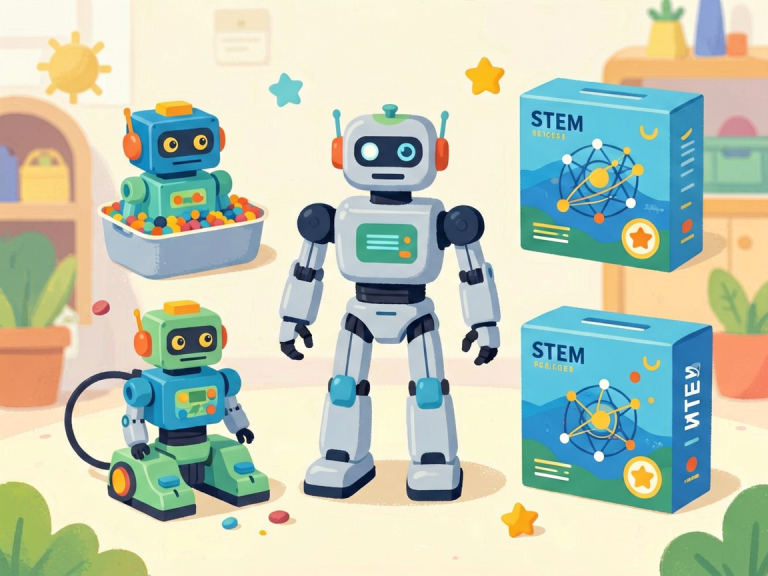
In recent years, science kits have flooded the educational market, promising to transform children—and even adults—into budding scientists. From crystal-growing experiments to robotic building sets, these kits offer a seemingly effortless way to engage with STEM (Science, Technology, Engineering, and Mathematics) concepts. But beneath the colorful packaging and glossy instructions lies a deeper question: Are science kits truly beneficial for developing critical thinking, or do they simply encourage rote following of steps? This article explores both the potential and the pitfalls of science kits as tools for fostering analytical reasoning, hypothesis testing, and independent problem-solving.
Critical thinking is widely regarded as a cornerstone of modern education—the ability to evaluate evidence, question assumptions, and draw logical conclusions. In an age of information overload, teaching people to think rather than merely memorize is paramount. Science kits, with their hands-on approach, seem like a natural vehicle for this goal. Yet the reality is nuanced: the design of a kit, the way it is used, and the learner’s mindset all determine whether it becomes a springboard for inquiry or a recipe for passive consumption.
The Case for Science Kits: Hands-On Inquiry and Hypothesis Testing
Proponents argue that science kits excel at making abstract concepts tangible. When a child mixes chemicals to create a volcano eruption or wires a circuit to light an LED, they experience cause-and-effect directly. This concrete interaction can spark curiosity and prompt questions: “What if I add more vinegar? What if I use a different resistor?” Such questions are the seeds of critical thinking.
Moreover, many kits explicitly require hypothesis testing. For example, a kit designed to teach plant growth may ask users to predict how varying light levels affect germination. The learner must form a hypothesis, set up controlled experiments, record observations, and compare outcomes with predictions. This mirrors the scientific method—a structured approach that inherently trains critical reasoning. Unlike passive video-watching or textbook reading, the tactile nature of a kit forces the brain to engage multiple senses, reinforcing cognitive pathways associated with analysis.
Another advantage is the immediate feedback loop. When a rocket fails to launch because the fins were attached incorrectly, the builder must diagnose the problem. Troubleshooting is a high-order critical thinking skill: it involves identifying variables, testing alternative solutions, and learning from failure. Many science kits, especially those in engineering or robotics, are designed to fail spectacularly if assembled incorrectly, providing a powerful lesson in iteration and persistence. The learner is not just following instructions; they are actively engaging in a cycle of plan-test-revise, which is the essence of critical thought.
The Hidden Danger: Over-Directed Kits and Passive Learning
Despite these benefits, not all science kits are created equal. A significant number of commercially available kits are essentially “paint-by-numbers” experiences. The box contains every piece pre-cut, the steps are numbered in large font, and the outcome is guaranteed to look exactly like the picture on the front. In such cases, the learner’s role reduces to that of an assembly line worker. There is little room for deviation, no ambiguity, and therefore no genuine problem-solving. The “aha!” moment is pre-packaged, and the critical thinking muscle receives minimal exercise.
Research in educational psychology suggests that when instructions are too rigid, learners tend to focus on compliance rather than comprehension. They follow steps mechanically without understanding the underlying principles. For instance, a child who perfectly assembles a solar-powered car may not grasp why the motor rotates or how the solar panel converts light to energy. The kit becomes a magic trick rather than a lesson. Worse, repeated exposure to this style of learning can condition the brain to expect clear-cut answers and avoid the discomfort of uncertainty—the very discomfort that drives deep critical thinking.
Moreover, many kits are marketed as “complete,” which discourages improvisation. If a part breaks or a step is missed, the user feels the experiment has failed, rather than viewing it as an opportunity to improvise or redesign. This fixed mindset undermines the flexibility required for true scientific inquiry. In contrast, authentic scientific exploration often involves missing pieces, ambiguous data, and open-ended questions—elements that most pre-packaged kits deliberately eliminate.
The Role of Facilitation: How Adults and Educators Make the Difference
The effectiveness of a science kit in promoting critical thinking depends heavily on how it is mediated. A curious child left alone with a kit may lose interest after following the steps once. However, when a parent, teacher, or mentor actively engages with the learner, the kit can become a powerful tool. For example, asking open-ended questions like “Why do you think the blue solution turned yellow?” or “What would happen if we swapped these two parts?” forces the learner to think beyond the instructions.
Guided facilitation also allows for “productive failure.” Instead of rushing to fix a mistake, a good facilitator encourages the learner to explore the error. “How did you know that connection was wrong? What clues did you see?” This metacognitive questioning builds self-awareness and analytical habits. An effective adult can also introduce modifications: “Let’s try using a different type of wire. What do you predict will happen?” In this way, even a simple battery-and-bulb kit can become a rich exploration of resistance, voltage, and circuit design.
In classroom settings, teachers can pair kits with journaling, prediction logs, and group discussions. By asking students to explain their reasoning to peers, the knowledge is consolidated and challenged. Science kits used as a launchpad—rather than a destination—offer the best chance to nurture critical thinking. Unfortunately, such facilitation requires time, training, and intention, which many parents and educators lack.
Balancing Structure and Freedom: What Makes an Ideal Kit?
To genuinely foster critical thinking, a science kit must strike a delicate balance between guidance and openness. The most effective kits provide a scaffold—enough structure to prevent chaos, but enough ambiguity to require thought. For example, a kit that gives you a bag of random electronic components and a challenge (e.g., “build a device that buzzes when it detects darkness”) forces the user to design, test, and iterate. This type of kit, sometimes called “invention kits” or “open-ended engineering kits,” is far superior to those that spell out every step.
Another feature of good kits is the inclusion of “what if?” scenarios or extension activities. A biology kit, for instance, might provide basic instructions for growing crystals but then prompt the user to experiment with different temperatures or additives. The inclusion of a blank data sheet and a suggestion to record variables encourages scientific documentation. Some high-quality kits even include deliberately incomplete instructions, requiring the user to deduce missing steps through logic.
Furthermore, digital integration can enhance critical thinking. Kits that pair with apps that ask reflective questions—like “How did your results compare to your prediction?” or “What would you change next time?”—promote metacognition. The best kits treat errors not as failures but as data points. If a kit’s design includes multiple possible outcomes depending on user choices, it inherently fosters decision-making and evaluation.
In an ideal world, science kits should be seen as tools, not curricula. They should be complemented with books, documentaries, and real-world observations. The true test of a kit’s value is not whether the experiment works, but whether the learner emerges with more questions than answers. Because critical thinking is fundamentally about questioning, a kit that leaves a user curious and eager to explore further has succeeded.
Conclusion: Science Kits as Catalysts, Not Shortcuts
Are science kits good for critical thinking? The answer is not a simple yes or no. In the right context, with proper facilitation and a design that encourages exploration, they can be powerful catalysts. They can break down the wall between theory and practice, making scientific reasoning tangible and engaging. However, when used passively or with overly rigid instructions, they risk becoming empty routines that reinforce compliance over curiosity.
Ultimately, the responsibility lies with the user—and the person guiding them. A science kit is a tool, and like any tool, its impact depends on how it is wielded. For parents and educators, the key is to select kits that offer room for creativity, to ask probing questions, and to celebrate mistakes as learning opportunities. When used thoughtfully, science kits can indeed unlock young minds, training them not just to follow recipes, but to think like scientists. And in a world that desperately needs problem-solvers, that is a goal worth pursuing.