The Hidden Treasures: Embracing Second-Hand Toys for Your 18-Month-Old
Introduction: A Sustainable Path to Play
When my niece turned 18 months old, her living room looked like a miniature toy warehouse. Bright plastic cars, talking bears, and light-up musical instruments covered every surface. Yet within minutes of arriving, she ignored most of them and gravitated toward a chipped wooden block that had once belonged to her cousin. That simple, worn cube kept her attention for an hour—far longer than any electronic gadget. This experience made me wonder: why do we often overlook the value of second-hand toys for toddlers, especially for curious 18-month-olds who are at a critical developmental stage?
In an age of consumerism, where advertisements bombard parents with messages that only new, shiny, and expensive toys can stimulate a child’s mind, the humble pre-loved toy rarely gets the spotlight it deserves. Yet for an 18-month-old, second-hand toys can be not only safer and more sustainable but also surprisingly rich in developmental benefits. This article explores why embracing used toys for this specific age group is a wise, thoughtful choice—and how to do it safely.
Why Second-Hand Toys Make Sense for Toddlers
Economic Benefits That Free Up Resources
Raising a child is expensive. Between diapers, clothing, and healthcare, parents of 18-month-olds already face a substantial financial burden. Toys, especially those marketed for key developmental stages, often come with premium price tags. A simple wooden stacking ring from a boutique brand can cost upwards of 30 dollars. At an age when attention spans are short and interests change rapidly, buying new toys every few weeks is neither practical nor budget-friendly.
Second-hand toys offer a practical solution. Thrift stores, garage sales, online marketplaces like Facebook Marketplace or eBay, and parent-to-parent exchange groups are treasure troves of affordable playthings. A bag of well-loved Duplo blocks that might cost 50 dollars new can be found for under 10 dollars used. The money saved can be redirected toward experiences, books, or savings for future needs. Moreover, because toddlers grow out of toys quickly, the resale value of second-hand items is often maintained, allowing parents to recoup some investment when they pass them on again.
Environmental Impact: Less Waste, More Play
Every year, millions of tons of plastic toys end up in landfills, where they take centuries to decompose. The production of new toys consumes petroleum, water, and energy, and the shipping process adds carbon emissions. By choosing second-hand toys for your 18-month-old, you are actively reducing demand for new manufacturing and extending the life of existing products. This small act of conscious consumption teaches children an early, implicit lesson about valuing resources—though they may not understand it yet, the habit of reusing becomes a family norm.
Furthermore, many vintage or older second-hand toys are made from sturdier materials than their modern counterparts. Wooden toys from the 1980s or 1990s, for example, are often crafted from solid hardwoods rather than particleboard, and they can withstand the enthusiastic banging and throwing of an 18-month-old far better than cheap plastic alternatives. Choosing pre-loved toys means choosing durability and longevity.
Unique Learning Opportunities That New Toys Can't Offer
There is a certain charm to a toy that has been loved before. A slightly faded picture book carries the memory of another child’s fingers turning its pages. A wooden train with a chipped edge tells a story of countless journeys. For an 18-month-old, these subtle imperfections don’t matter; what matters is the sensory experience, the feel of different textures, and the discovery of how things work.
But beyond nostalgia, second-hand toys often include designs that are no longer in production. Classic shape sorters, for instance, used to feature more varied geometric shapes than many modern versions, which sometimes simplify learning. A vintage pull-along snail that clicks as it moves may offer a different sound quality than today’s battery-operated toys—a sound that engages a toddler’s hearing without overstimulation. In this sense, second-hand toys can provide richer, more open-ended play experiences.
Safety First: What to Look for in Pre-Loved Toys
Age Appropriateness and Developmental Match
Not all second-hand toys are suitable for an 18-month-old. At this age, children are rapidly developing gross motor skills (walking, pushing, pulling) and fine motor skills (grasping, stacking, pincer grip). They are also exploring cause and effect and beginning to understand object permanence. Toys that are intended for older children may contain small parts that pose choking hazards, or they may require complex steps that frustrate a toddler.
When selecting second-hand toys, always check the original age recommendation if possible. If the label is missing, use common sense: avoid toys with pieces smaller than a toilet paper roll, as these can be swallowed. For 18-month-olds, look for toys that are large enough to grip but not too heavy to lift. Push toys should have stable bases and not tip over easily. Pull-along toys should have short cords (no longer than 12 inches) to prevent strangulation. Remember that at 18 months, many children still put toys in their mouths, so any toy must be free of loose parts or detachable components.
Materials and Paint Safety: The Hidden Risks
One of the biggest concerns with second-hand toys is the potential presence of harmful substances. Older toys, particularly those manufactured before the 2008 Consumer Product Safety Improvement Act in the United States (or equivalent regulations in other countries), may contain lead paint, phthalates, or other toxic chemicals. The problem is most acute with painted wooden toys, plastic figures, and costume jewelry from the 1970s and 1980s.
To mitigate this risk, stick to toys made after 2008 if you are uncertain about their origin. You can also test painted surfaces with home lead-testing kits available at hardware stores. Alternatively, focus on toys that are naturally unpainted, such as plain wooden blocks, silicone teethers, stainless steel cups, or fabric toys that can be washed. Avoid any second-hand toy that has chipped, flaking paint, a strong chemical smell, or sticky residue. If you find a beautiful vintage wooden toy with peeling paint, it is safer to sand it down and repaint it with child-safe, non-toxic paint than to let your toddler use it as is.
Structural Integrity: Checking for Wear and Tear
An 18-month-old can be surprisingly destructive. A toy that was perfectly safe for a two-year-old might have weak joints, loose screws, or cracked plastic that could break under a toddler’s weight or force. Before bringing a second-hand toy home, inspect it thoroughly. Pull on all parts to see if they are securely attached. Check for sharp edges, splinters in wood, or bent metal pieces. Battery compartments should have screws that are tightly sealed, as leaked battery acid is highly toxic. Avoid any toy with rust, mildew, or mold, as these can cause respiratory issues.
If a toy has fabric parts—like a stuffed animal or a doll’s clothing—look for loose threads that could wrap around fingers or toes, and check that the seams are intact. For plush toys, a simple squeeze test can reveal if stuffing is compacted or lumpy, which could indicate hidden dirt or pests. When in doubt, pass it up. There are plenty of affordable second-hand toys available; you don’t need to settle for one that looks questionable.
Best Types of Second-Hand Toys for 18-Month-Olds
Wooden Blocks and Stackers: The Classics
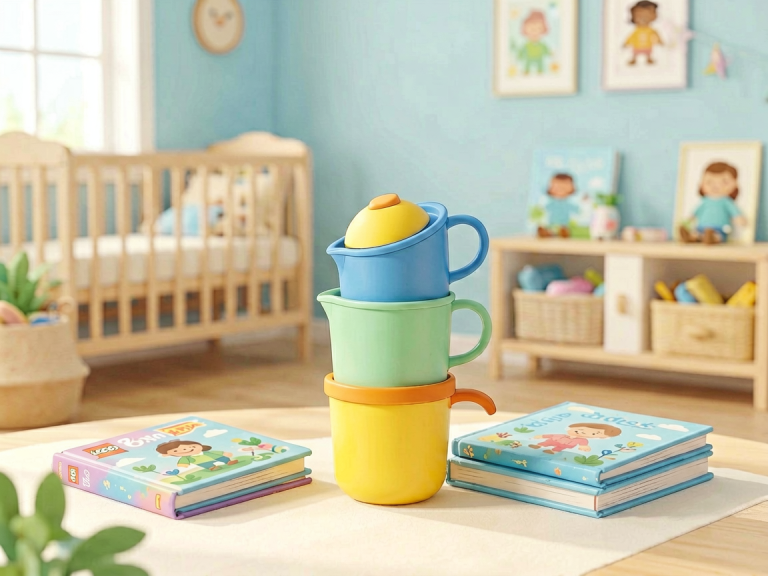
Wooden blocks are arguably the most versatile second-hand toys for this age group. They encourage spatial awareness, balance, and creativity. A set of second-hand unit blocks (the simple rectangular, square, and triangular ones) can be found at almost any thrift store. For an 18-month-old, start with a small set of large blocks (at least 2 inches in any dimension) to prevent choking. Stacking rings, sorters, and nesting cups are also excellent second-hand finds. Check that the paint is intact and non-toxic, and sand down any rough edges.
Push and Pull Toys: Supporting Early Walking
At 18 months, many children are walking confidently but still wobble. Push toys—such as wooden lawnmowers, shopping carts, or doll strollers—provide stability and encourage forward motion. Second-hand push toys are often built like tanks; a vintage Fisher-Price push cart from the 1990s can last for decades. Before purchasing, test the wheels to ensure they roll smoothly and do not wobble. Pull toys (like a string-pulled wooden duck) help with balance and coordination, but again, check the cord length.
Sensory and Musical Toys: Without the Batteries
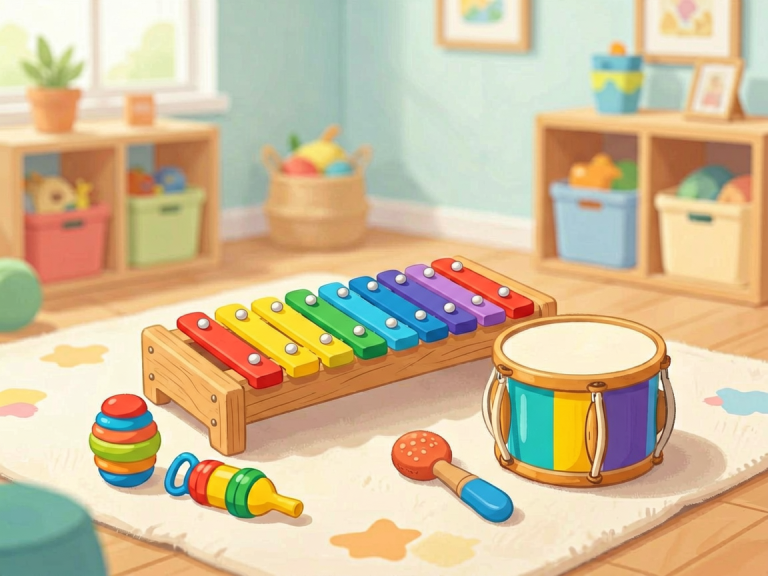
Musical toys that require batteries often end up in the trash when the batteries die or when the sounds become annoying. Second-hand acoustic instruments—such as wooden maracas, hand drums, xylophones, or rain sticks—offer rich sensory input without electronic noise. For an 18-month-old, simple shakers and bells that are securely sealed (so no small beads escape) are perfect. Harmonica-style toys with wide holes are also good, as long as they are made of food-grade plastic or wood. Avoid any second-hand instrument that has a small mouthpiece that could detach.
Board Books and Soft Cloth Books: Stories with History
Board books are indestructible—almost. Second-hand board books are often priced at a dollar or less, and they can be cleaned with a disinfecting wipe. Look for books with sturdy pages, no torn flaps, and bright colors (even if slightly faded). The benefit of used books is that they often have a wider variety of titles than what you might find in a store. For 18-month-olds, choose books with simple pictures of familiar objects, animals, or faces. Avoid books with metal staples that could rust, and always wipe them down thoroughly.
Simple Balls and Rolling Toys
Balls are a universal favorite. A second-hand rubber ball, a fabric beanbag, or a small bowling set can provide endless fun for an 18-month-old who loves to chase, throw, and roll. Avoid balls with holes that could trap a finger, or balls made of hard rubber that could be too heavy. Check that the material is free of cracks and is not sticky from age.
Cleaning and Restoring Second-Hand Toys: A Practical Guide
Disinfecting Methods That Are Safe for Toddlers
Because 18-month-olds put everything in their mouths, thorough cleaning is non-negotiable. Non-porous toys (plastic, metal, painted wood) can be washed with warm water and mild dish soap, then wiped with a mixture of one part white vinegar to three parts water. Avoid bleach if the toy has painted surfaces, as it may strip the color. For wooden toys, do not soak them; instead, use a damp cloth and dry immediately to prevent warping. For plastic toys that can be submerged, use a dishwasher on a gentle cycle if the toy is dishwasher-safe (check for any labels).
Stuffed animals and cloth books should be checked for washing instructions. Most can go into a washing machine on a delicate cycle with cold water and a gentle detergent. Use a mesh laundry bag to protect them. After washing, dry thoroughly—either in a dryer on low heat or by air drying in the sun, which also helps kill germs. For toys that cannot be washed, such as musical instruments with glued parts, use a disinfectant spray that is safe for toys (look for EPA-approved products labeled for fabric or wood) and let them air out completely.
Dealing with Minor Wear and Tear
A small chip on a wooden block doesn’t ruin it, but you can sand the chipped area to soften it. For loose screws in wooden toys, tighten them with a child-safe screwdriver. If a battery-operated toy has corroded terminals, clean them with a cotton swab dipped in lemon juice or vinegar, then dry thoroughly. If the corrosion is severe, it’s safer to dispose of the toy. For fabric toys with loose stitching, you can sew them up by hand—just use a strong thread and make sure there are no loose ends.
If you find a toy that has strong odors (musty or chemical), leave it outside in a well-ventilated area for a few days. Sunlight naturally deodorizes and kills many bacteria. If the odor persists, it might indicate mold inside the toy, in which case it is best to discard it.
The Social and Emotional Benefits of Pre-Loved Toys
Beyond the practical and safety considerations, second-hand toys carry a subtle emotional advantage. When parents choose second-hand toys, they often involve the child in a small act of “rescuing” an object. While an 18-month-old cannot understand this concept, the parent’s attitude toward gently used items can influence the child’s developing sense of generosity and resourcefulness. Research in environmental psychology suggests that children who grow up seeing reused and repaired items develop a stronger sense of stewardship and reduced materialism.
Moreover, second-hand toys often come with a story—a story that parents can narrate. “This little car drove around your cousin’s room when he was your age,” or “This doll was loved by a girl who lived far away.” These simple narratives connect the child to a larger world and foster a sense of continuity. At 18 months, language comprehension is rapidly expanding; hearing these stories, even if they don’t fully understand the words, builds emotional bonding and early literacy.
Additionally, second-hand toys are less likely to be “trendy” or associated with specific characters that might limit imaginative play. A plain wooden block can be a car, a phone, a cookie, or a building. In contrast, a licensed Paw Patrol toy strongly dictates the play scenario. Open-ended toys, which are abundant in the second-hand market, encourage creativity and problem-solving—exactly what an 18-month-old’s developing brain needs.
Conclusion: A Thoughtful Choice for Your Child's Future
The world of second-hand toys for an 18-month-old is not merely a budget-friendly option; it is a philosophy of intentional parenting. By choosing pre-loved toys, you are voting for a world with less plastic waste, less consumer pressure, and more space for imagination. You are giving your child access to timeless, durable playthings that have already proven their worth through years of use. And you are teaching—even before words can form—that value lies not in newness, but in care, attention, and love.
Of course, safety must always come first. With careful inspection, proper cleaning, and a focus on age-appropriate items, second-hand toys can be every bit as safe and stimulating as their store-bought counterparts—and often more so. So next time you pass a garage sale or browse a local thrift store, take a moment to consider the worn wooden block, the faded picture book, the classic pull-along duck. In those humble objects lies the potential for hours of joyful discovery, for your 18-month-old and for the planet they will inherit.