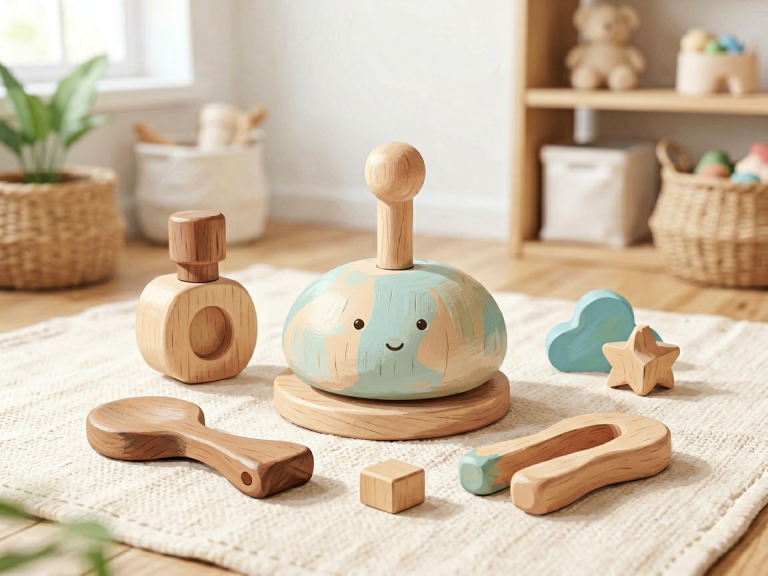
Are Wooden Blocks Worth It for Babies? A Comprehensive Analysis
Introduction
Walking into any baby toy aisle can be overwhelming. Shelves overflow with flashing lights, electronic sounds, plastic gadgets, and plush animals, all promising to boost your child’s development. Amidst this sensory overload, a simple, timeless object quietly holds its ground: the wooden block. For generations, parents have reached for these humble cubes, but in today’s fast‑paced, tech‑saturated world, the question remains: are wooden blocks worth it for babies? The short answer is yes, but the full answer requires a careful look at developmental science, safety, cost, and long‑term play value. This article examines every angle so you can make an informed decision for your little one.
Developmental Benefits: More Than Just Stacking
Wooden blocks are often dismissed as “basic,” but their simplicity is precisely their strength. From around six months of age, babies begin to explore objects with their hands and mouths. A wooden block offers a rich sensory experience: its weight, texture, temperature, and the sound it makes when dropped all provide important feedback. This tactile exploration stimulates neural pathways and helps babies understand cause and effect.
As babies grow into toddlers, blocks become tools for building critical cognitive skills. Stacking, knocking down, and rebuilding teach early physics concepts—balance, gravity, and stability. When a toddler tries to place a block on top of another and it falls, they learn to adjust their grip and alignment. This process, known as “trial and error,” is the foundation of problem‑solving. Studies in child development have shown that block play enhances spatial reasoning, a skill later linked to success in mathematics and science. Furthermore, when children begin to create structures that resemble houses, towers, or bridges, they engage in symbolic thinking—a precursor to reading and storytelling.
Language development also receives a boost. As parents narrate play (“You put the red block on the blue block!”), babies absorb vocabulary related to colors, shapes, sizes, and positions. Older toddlers use blocks to act out scenarios (“This is the garage for the car”), which builds narrative skills and social understanding.
Motor skills are perhaps the most obvious beneficiary. Grasping, lifting, carrying, and stacking blocks require both fine motor control (small hand muscles) and gross motor coordination (balancing while reaching). Unlike many electronic toys that require only a button‑press, wooden blocks demand active physical engagement. This helps strengthen the small muscles in a baby’s hands, preparing them for later tasks like holding a pencil or using scissors.
Safety and Material Quality: Wood vs. Plastic
One of the primary concerns for any baby product is safety. Wooden blocks, when made from untreated or non‑toxic materials, offer distinct advantages over plastic. High‑quality wooden blocks are typically made from sustainably harvested hardwoods like maple or beech. They are sanded smooth to prevent splinters, and their edges are rounded. Many brands use water‑based, non‑toxic paints or dyes, and some leave the wood unfinished for babies who naturally put everything in their mouths.
Plastic blocks, on the other hand, often contain bisphenol A (BPA), phthalates, or other chemicals that can leach out when chewed. While many manufacturers now advertise BPA‑free products, the long‑term effects of other additives remain unclear. Additionally, plastic blocks can develop sharp edges if cracked or broken, whereas solid wood is less likely to splinter when dropped. Hardwood blocks are also denser, which means they are less likely to be swallowed whole (though supervision is still necessary for very young babies).
Another safety feature is weight. Because wooden blocks are heavier than most plastic alternatives, babies gain a natural sense of proprioception—the awareness of how much force to apply. This helps prevent accidental injuries from throwing lightweight objects that could travel far. However, the heavier weight also means that if a baby stumbles while holding a block, the impact could be more significant. Therefore, always supervise play and ensure the blocks are age‑appropriate in size: large enough not to be a choking hazard (at least 1.5 inches in diameter for babies under three).
Longevity and Open‑Ended Play
A major factor in determining whether something is “worth it” is how long it will be used. Wooden blocks are arguably the most durable toy in existence. A set purchased for a six‑month‑old can still be played with by a five‑year‑old, and even by older siblings. Unlike battery‑operated toys that lose their novelty after a few weeks, wooden blocks offer what child development experts call “open‑ended play.” There is no right or wrong way to use them. A block can be a car, a phone, a piece of cake, or a building brick. This flexibility stimulates creativity and prevents boredom.
Compare this to many modern toys: a singing plastic robot may hold a baby’s attention for a few days, but once the songs become repetitive, the toy is abandoned. Wooden blocks evolve with the child. A one‑year‑old will enjoy simply holding and banging them. A two‑year‑old will stack towers. A three‑year‑old will build castles and create stories. Even a four‑year‑old can use blocks to learn basic math concepts like counting, sorting, and symmetry. This extended lifespan makes wooden blocks a cost‑effective investment, even though the initial price may be higher than a pack of cheap plastic blocks.
Potential Drawbacks and Considerations
No toy is perfect, and wooden blocks do have limitations. The first is cost. A high‑quality set of 100 solid hardwood blocks can range from $30 to $60 or more, whereas a similar‑sized set of plastic blocks might cost $10 to $20. For families on a tight budget, this upfront expense can feel prohibitive. However, considering that plastic blocks often break or lose their color, and that they may be outgrown more quickly, the per‑month cost of wooden blocks often works out to be lower.
The second drawback is noise. Wooden blocks dropped on hardwood floors create a loud, clattering sound that may disturb others in the household or cause a baby to startle. Placing a soft rug under the play area can mitigate this, but it’s something to keep in mind if you live in an apartment with thin floors.
Third, wooden blocks are not waterproof. If a baby chews on them excessively, saliva can cause the wood to swell and eventually crack. Cleaning is also trickier—you cannot simply place them in the dishwasher. Instead, you must wipe them with a damp cloth and mild soap, then let them air dry thoroughly to prevent mold. This extra maintenance is manageable but requires a habit of regular care.
Finally, some babies may initially prefer the bright, flashy, interactive nature of electronic toys. Wooden blocks demand that the child bring the imagination; they do not provide built‑in rewards. For a very young baby (under six months), the blocks might not hold interest for long compared to a rattle or a crinkly fabric toy. However, as the baby grows, the appeal of open‑ended play typically overtakes the fleeting attraction of electronic gadgets.
Comparing with Other Popular Toys
To truly answer “are wooden blocks worth it,” it helps to compare them with other common baby toys. Consider stacking rings: they teach size ordering and hand‑eye coordination, but the play possibilities are limited. A baby can only stack them in one way. Wooden blocks offer far more variety.
Consider shape sorters: they teach shape recognition, but again, the task is predetermined. Once the baby masters sorting, the toy loses its challenge. Blocks, by contrast, have no fixed endpoint.
Consider battery‑operated activity tables: these often have lights, sounds, and moving parts. They can be engaging for short periods, but they do not encourage creative thinking. Furthermore, they require batteries and can break easily. Blocks have no electronics to fail.
One might also think about building sets like LEGO Duplo, which are plastic and also offer open‑ended play. Duplo bricks are excellent, but they are more complex (requiring precise alignment) and can be more expensive per piece. Additionally, the small pieces can pose a choking hazard for younger babies, whereas wooden blocks are typically larger and chunkier. For infants under one year, wooden blocks are often the safer, simpler option.
Environmental and Ethical Dimensions
Many modern parents are concerned about sustainability. Wooden blocks, especially those made from FSC‑certified wood, are a renewable resource. They are biodegradable, unlike plastic, which can persist in landfills for centuries. The production process for wooden toys generally has a lower carbon footprint than plastic manufacturing, and many artisan manufacturers use eco‑friendly finishes. If you value reducing plastic waste and supporting responsible forestry, wooden blocks align with those values.
There is also the question of ethical production. Cheap plastic toys are often mass‑produced in factories with questionable labor practices. High‑quality wooden blocks are frequently crafted by small businesses or in countries with fair‑trade certifications. Although not all wooden blocks are ethically sourced, you can find brands that prioritize transparency.
Practical Tips for Choosing Wooden Blocks
If you decide that wooden blocks are worth it, here are guidelines for selecting the right set:
- Size matters. Blocks should be at least 1.5 inches (3.8 cm) in any dimension to prevent choking. For babies under one, consider larger “chunky” blocks that are easy to grasp.
- Look for natural finishes. Opt for blocks made from solid hardwood with water‑based, non‑toxic paints—or no paint at all. Avoid blocks with a strong chemical smell or glossy varnish.
- Check for smoothness. Run your hand over all surfaces. They should be splinter‑free with rounded edges.
- Start with a small set. A set of 20–30 blocks is enough for a baby. As your child grows, you can add more for larger constructions.
- Consider shape variety. Basic cubes are great, but including rectangles, arches, triangles, and cylinders expands creative possibilities.
Conclusion: The Verdict
So, are wooden blocks worth it for babies? The evidence overwhelmingly says yes—for their developmental benefits, safety advantages, durability, and open‑ended play potential. They are one of the few toys that truly grow with a child, offering value from infancy through early school years. While the initial cost and maintenance may give some parents pause, the long‑term return on investment is remarkable. Wooden blocks encourage creativity, problem‑solving, motor skills, and language—all in a safe, non‑toxic package. In a world of fleeting digital distractions, these simple pieces of wood remind us that the best toys are often the ones that leave the most room for a child’s imagination. If you can afford a quality set and are willing to supervise and care for them, wooden blocks are not just worth it—they are one of the best purchases you can make for your baby’s early development.